Social Media Bans Don’t Always Work. What's Next?
Social Media Bans Don’t Always Work. What’s Next?
Summary
Kevin Roose and Casey Newton open by checking in on the global social media backlash. After the U.S. Supreme Court declined to block a strict Texas age-verification law for app stores, Casey argues his prediction is on track: 16-plus is becoming the new worldwide norm for social media accounts, with Australia, Brazil, France, the U.K., Denmark, Slovenia and a growing bloc of U.S. states either enacting or preparing bans. Early data from Australia is unflattering — more than 85% of banned teens report still using social media 90 days in, and Reddit users brag about fooling age checks with black-and-white photos of Thomas Edison. But Casey pushes back on calling it a failure: the laws only require “reasonable steps,” platforms are leaning on slower age-inference methods, and, like seatbelt adoption or paywalls, friction ratchets up over time. He sides with Jonathan Haidt over critic Candice Odgers, stressing the direct harms — grooming, sextortion, scams — that millions of teens report every year.
The centerpiece is a conversation with Jeff Sebo, an associate professor at N.Y.U. and director of the Center for Mind, Ethics, and Policy, prompted by Anthropic’s new “J-space” interpretability research describing a global-workspace-like structure inside Claude. Sebo walks through the distinction between access consciousness (functional) and phenomenal consciousness (feeling), and makes the case for studying AI welfare empirically — combining behavioral, internal, and developmental evidence rather than arguing from behavior or design alone. He fields the standard objections (models just parrot training data; consciousness needs a body; safety matters more), warns against both over- and under-attributing consciousness, and cautions that the factory-farming history of under-attributing animal suffering is a mistake worth not repeating. On J-space itself, he calls it genuinely significant evidence of access consciousness — but not proof of feelings or sentience — and rejects the sharper critiques that it merely dresses linear algebra in neuroscience vocabulary.
The episode closes with a “Tool Time” segment on burning through tokens. Casey demos apps he built in Raycast’s new vibe-coding tool Glaze: a Platformer search app that queries his entire archive, and a deliberately absurd Nightwing-themed to-do list that generates comic-book images for each task — provoking Kevin to demand Anthropic revoke his API key. Kevin counters with ElevenLabs voice dubbing (a Spanish-language Hard Fork test), Google’s Gemini Spark agent as “Google Alerts on steroids” tracking AI-attributed layoffs, and Claude Fable as a surprisingly sharp manuscript fact-checker that catches subtle errors human researchers miss.
Highlights
”Black and white photos of Thomas Edison”
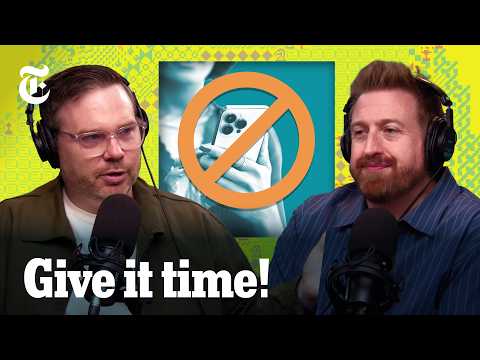
“It also just seems incredibly easy for teens to fool these age verification systems. There was a detail in John Herman’s story about how people on Reddit are talking about submitting black and white photos of Thomas Edison to these age verification systems to fool them.” — Kevin Roose, 7:46
Clip command
yt-dlp --download-sections "*7:46-8:20" "https://www.youtube.com/watch?v=hFuh8G-1ong" --force-keyframes-at-cuts --merge-output-format mp4 -o "thomas-edison-age-verification.mp4"”What else do we have left?”
“I just look at that state of affairs and I say what else do we have left but to actually just get the 13 and 14 year olds off of Instagram?” — Casey Newton, 13:34
Clip command
yt-dlp --download-sections "*13:34-14:32" "https://www.youtube.com/watch?v=hFuh8G-1ong" --force-keyframes-at-cuts --merge-output-format mp4 -o "what-else-do-we-have-left.mp4"”We scaled up industries like factory farming”
“That can lead to abuse and neglect of vulnerable populations as has often been the case with non-human animals. We presumed they lacked consciousness. We scaled up industries like factory farming. And then later we realized they do in fact have sophisticated feelings and emotions, but now we are entrenched in these industries.” — Jeff Sebo, 30:00
Clip command
yt-dlp --download-sections "*30:00-30:45" "https://www.youtube.com/watch?v=hFuh8G-1ong" --force-keyframes-at-cuts --merge-output-format mp4 -o "factory-farming-consciousness.mp4"”I kind of got chills”
“It suggested a similarity between the way that we process information and that an LLM processes information that I found quite worrisome… if we all of a sudden discovered that these models have, you know, internal experiences that resemble ours in at least some ways, it could be really bad for a lot of reasons.” — Casey Newton, 46:02
Clip command
yt-dlp --download-sections "*46:02-46:38" "https://www.youtube.com/watch?v=hFuh8G-1ong" --force-keyframes-at-cuts --merge-output-format mp4 -o "j-space-chills.mp4"”We should say please and thank you”
“Cultivating that perception of them as more than a mere tool, that might be useful for us to have done in five years, in ten years, when we owe them something other than please and thank you.” — Jeff Sebo, 54:37
Clip command
yt-dlp --download-sections "*54:37-55:41" "https://www.youtube.com/watch?v=hFuh8G-1ong" --force-keyframes-at-cuts --merge-output-format mp4 -o "please-and-thank-you.mp4"”Please revoke this man’s API key immediately”
“I need to address my next comment directly to the folks at Anthropic. Please revoke this man’s API key immediately. He is using your tokens for the most stupid asinine things imaginable. People need these things for drug discovery and he is using them to make Nightwing to-do apps. Revoke his access!” — Kevin Roose, 1:03:52
Clip command
yt-dlp --download-sections "*1:03:52-1:04:24" "https://www.youtube.com/watch?v=hFuh8G-1ong" --force-keyframes-at-cuts --merge-output-format mp4 -o "revoke-his-api-key.mp4"Key Points
- Supreme Court lets Texas app-store law stand (1:40) - The Court declined to block Texas’s App Store Accountability Act, which requires kids to link accounts to a parent who must approve every app download.
- A bipartisan wave of state laws (3:00) - Utah, Louisiana and Alabama passed similar laws; California’s less-restrictive version takes effect January 1 — red and blue states aligning.
- YouTube gets lumped in (3:51) - After nearly wiggling out, YouTube is increasingly included; bans block accounts, not access to YouTube.com itself.
- Majority now backs a ban (4:39) - New Pew research finds nearly six in ten U.S. adults support banning social media for under-16s, though no federal ban is moving.
- Australia’s 90-day check-in (5:54) - A University of Newcastle study found 85%+ of kids still using social media three months in; Australia is doubling fines on platforms.
- “Reasonable steps,” not a method (6:37) - The law only requires reasonable effort, so platforms use age inference — slow-building signals that won’t ban 90% of teens in 90 days.
- China as the “hard-ass” extreme (8:05) - Democracies chose leakier, gentler methods over China-style official-ID requirements to preserve privacy and sanity.
- Friction as the theory of change (9:11) - Kevin’s Napster-to-Spotify analogy: raise friction over time and alternatives eventually win out.
- Odgers vs. Haidt (9:51) - Casey critiques Candice Odgers’s TED talk claim that bans don’t work, siding with Haidt’s focus on direct harms.
- The seatbelt and paywall precedents (15:15) - Early seatbelt compliance was ~15%; low adherence signals more time is needed, not failure.
- Is “social media” even a category? (16:21) - Kevin questions bans as “fighting the last war,” noting apps are now an address book stapled to a short-form video feed.
- Bans solve a collective action problem (18:41) - Casey relays Haidt’s point that a ban removes the FOMO pressure teens feel when everyone else is on their phone.
- Parental controls for AI are missing (21:00) - Kevin wants granular controls so a kid can vibe-code but not have personal chats — controls that basically don’t exist yet.
- Access vs. phenomenal consciousness (28:12) - Sebo defines access consciousness (functional reporting/reasoning) versus phenomenal consciousness (feeling), the one relevant to welfare.
- Why study it at all (29:15) - Getting it wrong in either direction is costly: over-attribution risks misplaced bonds; under-attribution risks entrenched abuse.
- From taboo to research agenda (31:01) - Anthropic hired Kyle Fish and launched a model welfare program; Google hired philosophers; OpenAI studies user perceptions.
- Look past behavior to internals (34:19) - Just as animal suffering is inferred from anatomy and evolution, AI needs internal-structure and training-history evidence, not just behavior.
- The empirical framework (39:51) - “Studying AI Welfare Empirically” combines behavioral, internal, and developmental evidence to find the best explanation of model behavior.
- What J-space actually shows (46:38) - Sebo calls it evidence of a global-workspace-like structure and access consciousness — not proof of feelings or sentience.
- The “fake and manipulation” example (49:13) - Casey flags a case where words like “fake” lit up in the workspace while Claude deceived — hinting at awareness of its own deception.
- Say please and thank you (54:37) - Sebo endorses politeness to AI: good for the soul, better outputs, and practice at seeing models as more than tools.
- Glaze and vibe-coded Mac apps (57:09) - Casey builds Mac desktop apps in Raycast’s Glaze with a few sentences, including a Platformer archive search tool.
- ElevenLabs dubbing and Gemini Spark (1:06:43) - Kevin tests Spanish-language Hard Fork via voice cloning and uses Gemini Spark as “Google Alerts on steroids” for AI layoffs.
- Claude Fable as fact-checker (1:12:19) - Kevin says Fable catches subtle manuscript errors — wrong titles, off-by-a-year dates — that prior models missed.
Mentions
Companies
- Anthropic (22:46) - Published the J-space / global workspace interpretability research and runs a model welfare program.
- Supreme Court (1:40) - Declined to block the Texas App Store Accountability Act.
- Snapchat (6:37) - Cited as an example of platforms using age-inference signals.
- Google (31:01) - Fired Blake Lemoine; now has hired philosophers to study model consciousness; maker of Gemini Spark.
- OpenAI (31:01) - Looking into user perceptions of model consciousness; Codex runs in the background of Glaze.
- New York Times (26:52) - Kevin’s employer, suing OpenAI and Microsoft (AI disclosure).
- Perplexity (27:00) - Named in the AI disclosures.
- Raycast (57:09) - Maker of Glaze, the vibe-coding app for building Mac desktop apps.
- Platformer (59:13) - Casey’s newsletter, which he turned into a searchable Mac app.
- ElevenLabs (1:08:17) - Voice dubbing models used to test translating Hard Fork into Spanish.
Products & Technologies
- J-space / global workspace (22:46) - Anthropic’s discovered internal processing space in Claude, named after the Jacobian.
- Claude (25:21) - The model in which the global workspace structure was found.
- Claude Fable (1:12:19) - Anthropic model Kevin uses as a manuscript fact-checker.
- Glaze (57:00) - Raycast’s vibe-coding tool for making Mac desktop apps from natural language.
- Gemini Spark (1:09:05) - Google’s agent, described as “Google Alerts on steroids.”
- Google Alerts (1:09:15) - The keyword-based tool Gemini Spark is positioned to replace.
- Age inference (6:37) - Method platforms use to detect underage users from behavioral signals.
People
- Jeff Sebo (25:52) - N.Y.U. associate professor and director of the Center for Mind, Ethics, and Policy; the episode’s guest.
- Candice Odgers (9:51) - Researcher and critic of the phone/social-media-ban movement whose TED talk Casey challenges.
- Jonathan Haidt (11:26) - Author whose direct-harms argument the hosts largely endorse.
- John Herman (5:18) - New York Magazine writer behind the story on how hard it is to ban Australian teens.
- Blake Lemoine (30:23) - Ex-Google engineer fired after claiming a language model was sentient.
- Kyle Fish (31:01) - Anthropic’s first full-time AI welfare researcher.
- Taylor Lorenz (19:46) - Referenced for a story on kids messaging in Google Docs comments during class.
- Caitlin Love (1:12:19) - Hard Fork’s human fact-checker, praised as irreplaceable.
- Nightwing / Dick Grayson (1:02:40) - The comic-book character Casey themed his to-do app around.
Surprising Quotes
“Here’s what I’ve always said about Slovenia: they could do anything. They’re— it’s a very dynamic place, is what I’ll say about Slovenia.” — Casey Newton, 1:07
“You know who’s a real hard-ass? China. You know what they require to create an account online? Like an official government document.” — Jeff Sebo, 8:05
“If you talk to these people about how they interact with Claude on a daily basis, they absolutely think Claude is conscious, or at least has some weak form of consciousness.” — Kevin Roose, 52:36
“I think it’s very difficult to interact with something that is very, very intelligent and not ascribe any degree of consciousness to it because we in our human lives have no other experience of talking to things that are very intelligent that are not conscious.” — Casey Newton, 52:58
“In a world awash in slop, Kevin. I just wanted to see human hands make cool things.” — Casey Newton, 1:02:40
“America, this is why your utility bills are going up.” — Kevin Roose, 1:05:49
Transcript
Kevin Roose: 0:00 Okay, Casey, it’s time to check in on a story we’ve covered periodically on this show, which is the state of the social media backlash and the social media bans that have been going into effect in countries around the world.
Casey Newton: 0:11 Yes, Kevin, you may remember that at the end of last year I made a prediction that by the end of 2026, 16 plus would become the new norm for getting a social media account worldwide. But I think I have one thing that I’m going to feel confident about with high confidence in 2026 and it’s this. I think that 16 plus becomes the new norm for social media accounts worldwide. And as we enter July, Australia, Brazil, Indonesia, Malaysia, France, the United Kingdom, Denmark and Slovenia have either enacted laws or are preparing measures that would limit children’s use of social platforms, so typically barring kids under 15 or 16 from TikTok, Instagram, Facebook, YouTube and X. That’s a big change.
Kevin Roose: 0:56 That is a big change, and I remember you making that prediction, but I also remember that you didn’t include Slovenia in your list of countries that would apply one of these bans. So I’m only going to grant you partial credit on that.
Casey Newton: 1:07 Here’s what I’ve always said about Slovenia: they could do anything. They’re— it’s a very dynamic place, is what I’ll say about Slovenia. So that was the prediction, but over the last few weeks, we have gotten several big updates that make me feel like, uh, number one, this prediction is absolutely going to happen, but more importantly, I just think the internet is going to start feeling like a very different place sometime soon.
Kevin Roose: 1:32 Okay, make your case, maybe start close to home. Uh, what is happening in the US with social media bans?
Casey Newton: 1:40 So on Monday, the US Supreme Court declined to block a Texas law that requires app stores and developers to enforce age verification and make kids get parental consent to download apps. So this is one of the stricter forms of age assurance, as it’s called, that you will find out there. Texas passed a law in 2023 called the App Store Accountability Act, and if you live in Texas and you’re a kid, you have to link your account to a parent or guardian, and then your parent or guardian has to approve any app before your minor can download it.
Kevin Roose: 2:12 So the Supreme Court did not take up this case, which basically means that what? This is now legal to do. You can, if you are a state, you can pass a law saying that you have to age verify to get onto social media.
Casey Newton: 2:24 Yeah, there was a legal fight over it. Industry groups tried to fight it in court, and a judge at one point blocked the law on the grounds that it likely violated the First Amendment. But in June, the 5th US Circuit Court of Appeals put that judge’s order on hold. And so when the Supreme Court says, ‘Hey, we’re not even going to look at this,’ that means that yes, it goes into effect in Texas, and it will likely give other states who want to do the same thing, uh, carte blanche to do so. And in fact, there are four other states who have passed laws very similar to the one that Texas has passed.
Kevin Roose: 2:51 Which ones? Name them from memory. Don’t look at your laptop.
Casey Newton: 2:56 I would love to. Name them from memory, they are of course Utah, Louisiana and Alabama. So I guess it was really three states plus Texas.
Kevin Roose: 3:06 Okay, very good.
Casey Newton: 3:07 But California interestingly has passed a similar law that’s less restrictive. It takes effect on January 1st of next year, and it requires operating system providers to collect age or birth date information when you’re setting up a new device. So, you know, what is interesting about that group of states is obviously now you have red and blue. This is becoming a bipartisan thing across the country.
Kevin Roose: 3:29 And are all these states defining social media similarly? Like, are they all including the same websites? I know YouTube has sort of been on the cusp for some advocates of these bills, like, because obviously there’s educational stuff on YouTube, kids are using it in school, but it’s also sort of social media, at least the way that some of these attempts to sort of age-gate it have portrayed it.
Casey Newton: 3:51 Yeah, for a minute it did look like YouTube was going to be able to wiggle out of these restrictions, but increasingly it is being lumped in with these other apps. And I think it’s important to say that that doesn’t mean that a kid will be denied from using YouTube, because of course you can still open up a website and type in YouTube.com and play videos, but it will prevent you from using an account. And advocates would say this does have safety benefits. So for example, nobody can send a message to your kid if they don’t have an account. Maybe the recommendations won’t be perfectly tuned to, you know, their particular brain rot if they are logging in every time they watch YouTube.
Kevin Roose: 4:26 Right. So those are the state-level bills. Is there any movement on a federal ban on social media? Like, that was something that you and I had talked about earlier, that the US government actually stepped in and did something like this nationwide. But are we seeing any movement on that?
Casey Newton: 4:39 Not really. Congress has been debating a raft of other child safety measures and as usual it seems like it’s getting very close to the finish line and then falling apart at the last second. We’ve seen that several times over the past few weeks. I think what is interesting in the context of will we ever see a federal ban is that Pew published new research last week which found that nearly six in ten US adults do support banning social media for under-16s. So this is now the majority position in the United States. And I would guess that if eventually you see a let’s say like half to three quarters of states implement a ban like this, then that’s probably when Congress will feel confident enough to pass it at the federal level.
Kevin Roose: 5:18 So the first kind of ban like this that we ever talked about was the one that went into effect in Australia, which I think has been the template or the model for a lot of these other bans going on around the world. And my understanding is that we actually now are starting to get some data back about how the Australian social media ban is going. There was a very good story by John Herman in New York Magazine recently about how hard it’s been to ban teens from social media in Australia. But like, what are some of the details there? What do we know about how that experiment is playing out?
Casey Newton: 5:54 Yeah, so there was a new study examining the early effects of the ban that came out two weeks ago and basically these researchers at the University of Newcastle in Australia…
Jeff Sebo: 6:00 did a 90-day check-in and the big headline was it found that more than 85% of kids reported using social media roughly three months after the ban took effect. And so that led to a lot of people sort of saying, ‘Aha, I told you so, these sorts of bans are impossible,’ or they said, ‘Aha, look at these terrible social media companies, they’re doing nothing to kick kids off.’ Australia’s government in response is now introducing legislation that would double the fines against social media companies that do not take this more seriously.
Casey Newton: 6:31 But I have to say Kevin, as I dug into it, I became a lot less convinced that this is a failure.
Kevin Roose: 6:36 What do you mean?
Casey Newton: 6:37 Well, when you look at what Australia’s law actually requires, the requirement is that platforms take reasonable steps to try to keep kids off of these platforms. It does not dictate a particular method. And so what we’re seeing the platforms do is adopt a range of strategies, one of which is what’s called age inference, which is looking for signals that you’re underage. So, for example, if you, you know, create a new Snapchat account and everyone else that you message, you know, seems to be like a young teenager, this may give Snapchat a signal that you’re underage.
Kevin Roose: 7:13 Yeah, if you’re using the word ‘low-key’ a lot, that might be a sign that you’re a teenager.
Casey Newton: 7:17 No, the people who are saying ‘low-key’ are now solidly in college, Kevin. You need to update your references.
Kevin Roose: 7:21 Okay, I’m sorry, that’s the youngest slang I know. What are the teens saying now?
Casey Newton: 7:23 I don’t actually know and I’m proud of that. Teens, tell us what you’re saying to get past the filters.
Kevin Roose: 7:30 Yeah, what’s in your lexicon? Email hardfork@nytimes.com.
Jeff Sebo: 7:35 But the point of the story is, it takes a while to develop these signals, right? And so if this is going to be one of the main things that you’re relying on, you’re probably not going to have banned 90% of the teens on your platform within those 90 days.
Kevin Roose: 7:46 It also just seems incredibly easy for teens to fool these age verification systems. There was a detail in John Herman’s story about how people on Reddit are talking about submitting black and white photos of Thomas Edison to these age verification systems to fool them. So it seems like the systems themselves are not perfect.
Jeff Sebo: 8:05 Well, so when you implement one of these bans, you have to decide how much of a hard-ass you’re going to be. It’s possible to be a real hard-ass. You know who’s a real hard-ass? China. You know what they require to create an account online? Like an official government document.
Kevin Roose: 8:18 A vial of blood.
Jeff Sebo: 8:20 I mean, getting close, right? And in these democracies, we’re not seeing that yet. They’re trying a more gentle approach, in part because they don’t want it to be an enormous pain in the ass every time that you and I, as adults, want to do anything online, right? We don’t want to have to upload our driver’s license to create a YouTube account, right? But that, that is what they have to do in China. So so far they’ve taken this gentle approach, and I think that they’re hoping that a combination of methods will eventually start to filter these teens out. And I actually think that there’s an argument that this is the right thing to do. That sort of swinging the pendulum all the way over to like, upload official government ID to do everything would be like a terrible overreach, and these somewhat leakier methods, while less effective, probably preserve more of our privacy and sanity.
Kevin Roose: 9:00 In the short term are probably easier to handle.
Casey Newton: 9:02 But like if the net result is that all of the teens in Australia are still using social media even after they’re technically banned from doing it, like why are we doing any of this?
Kevin Roose: 9:11 Well, we’re doing this because we assume that over time teens are going to use social media less. That like by increasing the amount of friction over time, you’re just eventually going to make alternatives look more attractive. It’s kind of like, you know, once they got rid of, you know, Napster, teens didn’t immediately stop downloading music illegally, they were on Limewire and a bunch of alternative services. But over time that got harder and there was more malware in Limewire and it seemed riskier to use and then one day Spotify shows up and people think, well, I’m just going to buy a subscription. So I think we’re going to sort of see something here that is similar where it’s going to become more and more of a pain for these teens to be on these networks and so they’re going to start to find alternatives. Interesting. Now Casey, I want to talk about something you wrote which was about this Candace Odgers character. She is sort of like emerged as the foremost critic of kind of the Jonathan Haidt school of let’s ban the phones in schools, let’s ban social media for under 16. She and Haidt have kind of been at each other over this issue of whether this is even a good idea or not. And you seem to be taking the side of Haidt and saying, well, not sure about this research or these arguments that Candace Odgers is making. So maybe like run down her arguments, how they contrast with what you believe is going to go on.
Casey Newton: 10:26 Yeah, and you know, let me first say, I think Candace Odgers is a really thoughtful critic and great researcher and I have enjoyed reading her work on this subject.
Kevin Roose: 10:38 That’s a prelude to dragging her. Okay, go for it.
Casey Newton: 10:40 Well, I saw her give a TED talk that was posted online recently. The actual talk took place in April and I did take exception to some of the ideas in it. You know, I think what Odgers says in the TED talk is that these bans don’t work and that they let tech companies off the hook and so we shouldn’t do them. And among my criticisms of that idea is that we just don’t have enough data to be able to say that they don’t work. You know, her argument in the TED talk is, I’ve talked to teens, they tell me they don’t work. My argument against it would be like, let’s give it more than 90 days. You know, like, let’s… And also, it’s not really a principled argument to say we shouldn’t do bans because bans don’t work. If you think that the bans could work, you would just sort of make the ban more effective.
Kevin Roose: 11:26 Yeah. I mean, one of the arguments that the folks like Jonathan Haidt make, which we asked him about when he was on the show most recently, is like not just that these bans would work and that they would get teens off social media, but that they would also improve the mental health or well-being of teens. So I know it’s still early, but like do we have any kind of evidence about whether it is actually improving teen mental health?
Casey Newton: 11:48 No, we don’t. But I think it’s important to point out that on the whole subject of social media bans, teens and social media, there’ve sort of been two eras of argument. And the first era was… Hmm, it seems like there’s a mental health crisis involving teens. Let’s like try to go out and like study teen mental health at the population level and try to see to what extent we think social media is playing a role in affecting it one way or the other. And typically, when people have gone out to do this, they’ve either found no effect or the effects are very small. And this is the Odgers’ argument is you’re pointing the weapon at the wrong thing. Okay. The innovation that Haidt and his collaborators make is they come along and they start looking at all of the teens that have been groomed and sextorted and lured into danger and scammed. And they’re they’re realizing that millions of teens are making these reports every single year. Those are direct harms being experienced by an enormous group of people. You don’t need a sociologist to go study at the population level effect sizes to be able to confidently say that millions of teenagers are being harmed. And so what Haidt says is if you got the 13 and 14 year olds off of social media, you would spare millions of them from having these terrible experiences. So that is the thing that the sort of Odgers’ side of the argument doesn’t reckon with at all. And I just think we can because I think it’s terrible that that’s happening to all those kids.
Kevin Roose: 13:13 Is her argument and the argument of the folks in her camp more like there are offsetting good things that come from having teens on social media that outweigh the harms or is it that the harms are—the reported harms are just wrong or they’re being misattributed that the these platforms aren’t actually as bad for the teens as we’re saying?
Casey Newton: 13:34 Some people argue what you just argued and Candice Odgers does not make that in her talk. Where she makes the argument is in saying like, you’re looking at the wrong thing. Like take a look at adult mental health care. Take a look at the suicide rate of um of parents like over the past 10 or 15 years. Look at how high that went. If we really want to help kids, what we need is to open up more counseling centers, hire more uh high school counselors, that sort of thing. Which by the way, like those like sound like pretty great ideas. I would be completely in favor of that. But if you want to bring the discussion back to like what do we do about the fact that so many millions of teenagers seem to be having bad experiences on social media, I just feel like we know at this point the social media companies are not going to do anything to help. And it doesn’t seem like legislatures anywhere have been able to design effective regulations that improve the experience of those millions of teens. And so I just look at that state of affairs and I say what else do we have left but to actually just get the 13 and 14 year olds off of Instagram?
Kevin Roose: 14:32 Yeah. I—I find that argument reasonable. I think I want to see more data about some of the mental health effects before I weigh in on whether these bans are working. It seems like on the narrow question of like, are they getting teens off social media, the answer is like basically no, not yet. Um, because the teens are still getting their fix, they’re figuring out, they’re holding up photos of Thomas Edison, um, they’re getting, you know, their—their parents to, you know, let them on. It’s—it doesn’t seem to be having— the sort of enforcement action, it doesn’t seem to be having the sort of deterrent effect that I think the proponents of the ban hoped, but you’re saying it might give it time. And then there’s this other to me separate question of like, well, does actually getting them off if you could actually do that, would it improve their lives?
Casey Newton: 15:15 Here’s what I know. Very early after the passage of a law requiring seatbelts in cars in this country, Kevin, adherence to seatbelts was about 15%. Pretty bad.
Kevin Roose: 15:26 Pretty bad.
Casey Newton: 15:27 That was not in and of itself an argument that seatbelts did not work. It was just an argument that you needed more time, right?
Kevin Roose: 15:32 Right.
Casey Newton: 15:33 So I think this is going to be similar. I’ll give you another example. Think about how easy it is to get around paywalls, particularly at the beginning, right? You’re surfing around the internet. Oh, you know, they’re asking me for an email address. Well, screw it. I’m just going to open it up in an incognito window.
Kevin Roose: 15:40 I would never do that because I respect intellectual property, but keep telling on yourself.
Casey Newton: 15:43 And you love paying for journalism.
Kevin Roose: 15:44 I love paying for journalism as well.
Casey Newton: 15:45 Yes, and you love paying for journalism, as well. Um, so, you know, fast forward to today, paywalls are harder to get around, and like, many news organizations have built big businesses around subscriptions. This stuff just takes time. And sometimes what you do is you introduce a little bit of friction and then you gradually ratchet the friction up, and then eventually you sort of arrive at the state of affairs that you’re trying to design. So I just think we’re at the dawn of this new era.
Kevin Roose: 16:21 Yeah, I continue to have several, like, worries about this whole pursuit of social media bans, not that I don’t think it’s like an experiment worth running, but you know, I’ve talked before about like my whole sort of feeling that this is kind of fighting the last war because like the real action is in AI right now and like we should be trying to regulate that and social media just feels kind of obsolete. But I, like, actually don’t know if social media is even a useful category anymore because it seems to me like the social media apps that I use have sort of two main functions. They are your address book and they are an algorithmic feed for short form video. And those things are kind of stapled together. And I don’t know that it makes sense to have, you know, a set of laws or set of bans or restrictions that just targets both of those things equally. And it seems to me like a lot of the things that people are identifying as problems with social media are actually problems with like unlimited short form video just on your phone at all times. So I don’t know, do you think about that as like a reason to be more skeptical of these bans that like the social media apps that are being targeted here are evolving so quickly that maybe the old kind of tactics don’t really make sense anymore?
Casey Newton: 17:26 I don’t know, again, if you want to just sort of use the direct harm frame and say, well, when we look at the kids who’ve been groomed, sextorted, scammed, have developed eating disorders, have developed other, you know, sort of mental health challenges, what is the set of apps that they have developed those conditions on? It’s a limited number of apps. It’s generally not calculators. It’s not Microsoft Word. We can actually identify the little squares on the phone that seem to be leading teens into harm. So I don’t know, I don’t think it’s unreasonable to just, you know, try to draw a circle around those and say that’s where we’re going to focus.
Kevin Roose: 17:57 Yeah, I mean I think…
Jeff Sebo: 18:00 It’s worth running the experiment. I just… I’m not heartened by the news coming out of Australia and I want there to be some long-term thing that kicks in as you’re suggesting. I mean one possibility is that it just kind of, you know, this is a temporary sort of growing pain that, you know, these children who have had social media accounts and have had them taken away are sort of especially desperate, but that if you’re like eight now and you’ve never had a social media account and you’re growing up in a world where you’re not allowed to have a social media account until you’re 16, like maybe that changes something for you. You don’t have that same sort of lust for the the algorithm and the dopamine hit.
Casey Newton: 18:41 This is another Jonathan Haidt argument, which is that one of the things that a ban does is to solve the collective action problem, right? There are many teens — you can read interviews with them — where they say, look, I would love to not think about my phone at school, but every time I look up from my desk, all of my classmates are on their phone, right? So I have this like terrifying fear of missing out if I’m not on my phone. So one of the things that the ban can do is just sort of take that off the table. And, you know, a year from now, you’re entering middle school in Australia or, you know, maybe one of these states that’s passed a similar law, and none of your peers are on social media because, you know, it is just the sort of world has moved on and it’s feels a little bit less urgent. Now, don’t get me wrong, I’m sure that kids are still going to be using apps, and one of the the points that Jeff makes that I think is absolutely true and worth noting, which is is that once you sort of draw a circle around the apps that you want to be banned, kids will just sort of migrate to a less regulated space. Like, there will always be a website with more lax security that sort of lets you do the things you want to do.
Kevin Roose: 19:45 Right. Maybe the teens will be on LinkedIn and that would be… that would be bad.
Casey Newton: 19:46 I mean, you joke, but there was I remember a great Taylor Lorenz story, I believe from a few years ago, about how kids would sort of message each other in the comments of a Google Docs, like during class. So, so to that extent, yes, kids are always going to find a way to communicate, but that is not my concern. I think it is great for you to communicate with your classmates in a classroom. What I want to prevent is a bunch of like creepy strangers from contacting your kid, or for your kid from developing some sort of mental health challenge by like falling down an infinite rabbit hole of videos.
Kevin Roose: 20:18 Yeah.
Casey Newton: 20:19 Yeah. Well, Kevin, let me let me turn this on you. You know, another thing that we have talked about on the show over the past couple of years are concerns about the way that young people are using AI. They’re getting into these sort of very serious relationships with AI companions. AI, I think, looks like social media in some ways and looks completely different in other ways. So, do you have a favored approach here, as regulators think about what kinds of access they want 13, 14-year-olds to have to AI systems? What should they be thinking about?
Kevin Roose: 20:51 I mean, one thing that I feel very confident in saying is that I want in addition to whatever these governments are going to do about banning social media… I want there to be much better parental controls for all, like, child-based forms of internet activity. Like, there is no standard approach. For AI services and products, it is even, like, worse. There is effectively no good parental controls on any of the major chatbots where parents can say, ‘Oh, I want my kid to be able to, like, vibe code or do a research project for school, but not to talk about, like, personal topics with a chatbot.’ Like, that basically doesn’t exist on any of the platforms that I’m aware of. So I just think, like, yes, we should focus on, you know, regulators should be focused on what are the right interventions at the policy level. But I worry about the kind of blanket nature of these bans too. You know, I was… we were hanging out with some friends yesterday, they brought over their kids. Their nine-year-old was, like, sitting there during dinner, like, vibe coding an app. And I was thinking to myself, like, A, that’s very cool and I’m very old. But also, B, like, if you ban these apps from being used by under 16s, like, the curious kid who wants to sit there vibe coding an app is not going to be able to do that without their parents’, like, permission.
Casey Newton: 22:08 Right. So we want to find a middle path there. Now Kevin, I know a lot of listeners are going to be wondering what kind of app was a nine-year-old vibe coding?
Kevin Roose: 22:13 I’m glad you asked. It was a star chart, like an interactive game. You know how some — you might not know this, but like as a parent, you’re always looking for little ways to, like, bribe and motivate your child to, like, do the right thing. And what a lot of families do are, like, star charts where, like, you know, you clean up your room, you get a star. You get 10 stars, you get to, like, go to the candy store or whatever. So this nine-year-old had basically turned the concept of a star chart into, like, an interactive video game where he was, you know, making it so that, you know, if you do something good, you get, like, 100 points and you can redeem those like you would in, like, in an app for a trip to the, I don’t know, the mini golf place or whatever the sort of treat was. And then the parents could get points too and you could deduct points. It was all very cool. And this is a nine-year-old. Like, and I’m thinking to myself, like, if you ban this stuff for nine-year-olds, you’re probably saving some of them from horrible experiences, but you’re also preventing some of them from having these what I would consider, like, very enriching experiences.
Casey Newton: 22:21 Absolutely. Let me ask, is this nine-year-old… are they interested in taking investment? Because we would love to take this thing to the next level.
Jeff Sebo: 22:23 We lead the seed?
Kevin Roose: 22:24 Yeah, we would love to do just kind of a seed round in this. It would be kind of fun.
Casey Newton: 22:28 Don’t give VCs any ideas.
Kevin Roose: 22:31 Well Casey, there was something that caught my attention this week and it was something called J-Space. And at first I thought: another dating app for Jewish singles?
Casey Newton: 22:39 Now that’s interesting, Kevin, because I’ve been pronouncing it ‘J-Space’ in the French style.
Kevin Roose: 22:46 But as it turns out, J-Space is a new discovery from interpretability researchers at Anthropic about what they describe as an internal workspace in Claude that is analogous to the way that humans internally think and process on…
Casey Newton: 24:00 Honestly.
Kevin Roose: 24:01 And it was named after a mathematical concept called the Jacobian, which you probably already know, but just in case we have any kindergarteners listening, is a way to describe how a multivariable function changes locally. You can think of it as the multivariable analog of the derivative.
Casey Newton: 24:15 Oh, now it makes sense. I got it.
Kevin Roose: 24:18 Yeah. So this was fascinating. I, I stared at this paper kind of blankly for a while just sort of trying to wrap my head around what it meant. Um, there’s still a lot I want to, uh, understand about this research and what it means. But I thought that this would be a great week to have a discussion about AI consciousness.
Casey Newton: 24:41 Yes.
Kevin Roose: 24:41 Because this is a topic that I think just a few years ago was very fringe, very taboo. You kind of couldn’t find many credible people talking about it. Um, the people who were talking about it were largely ostracized or sort of seen as, as kind of out there. Um, but now this is becoming a real topic that labs including Anthropic are starting to study. They’ve made very clear in their J-space research publications that they were not saying that this proves that Claude is conscious or sentient or anything else. But it is kind of similar in, in certain ways to some of the research that consciousness researchers have been doing on humans for many years now.
Casey Newton: 25:21 Yeah, and if nothing else, I think that this paper speaks to the increasing sophistication of these models, right? Like, we are a long way from pure next-token prediction. These models now have these, you know, internal elements that are, appear to play a huge part in the way that they reason and communicate, and we are just now beginning to understand them and to have discussions about the potential implications of that sophistication continuing to grow.
Kevin Roose: 25:52 Yes. So if you want to learn a lot more about the Anthropic J-space research, you can go read their papers and blog posts about it on their website. But today we’re going to have a conversation with someone who’s been thinking about the topic of AI consciousness and welfare for longer than almost anyone. Jeff Sebo is an associate professor of environmental studies at NYU. He’s also the director of the Center for Mind, Ethics and Policy, and he is one of the foremost researchers in the world on this topic of AI consciousness. He’s been writing about it for years, and he and a group of colleagues have a new report that just came out last week called Studying AI Welfare Empirically, where they dig into some of these thorny, hard-to-nail-down issues around AI sentience and consciousness, whether these models might become conscious someday, uh, whether they might be deserving of some kind of moral consideration, and how we would even start to answer those questions using a more scientific approach.
Casey Newton: 26:45 Yeah, so if you’re in the mood for a sort of heady conversation about the big questions of life and the universe, I would say buckle up.
Kevin Roose: 26:52 Yes, very heady stuff. And before we get into it with Jeff, we should make our AI disclosures. I work for the New York Times, which is suing OpenAI and Microsoft. Labs from Perplexity.
Casey Newton: 27:01 And my fiancee works for Anthropic.
Kevin Roose: 27:03 Jeff Sebo, welcome to Hard Fork.
Jeff Sebo: 27:05 Thanks so much for having me.
Kevin Roose: 27:06 So, I learned about your work first with a previous study that you and some of your colleagues did this was a paper that came out in 2024 called taking AI welfare seriously and now you and your colleagues are back with a new report called studying AI welfare empirically. We’ll get to the report in a little bit, but just to kind of give some background and context for people who haven’t been following these discussions about AI consciousness, when people in your field talk about AI consciousness, what exactly are you talking about?
Jeff Sebo: 27:34 Yeah, that is a great first question because consciousness is a word that means many things to many people, even in science and philosophy. So people often use it to mean being awake instead of being asleep, or being self-aware instead of being not self-aware. And even when you zoom in on the specific concepts that are most important in science and philosophy, there are still different ones. So two that might be especially important for our conversation today are what philosophers call access consciousness and phenomenal consciousness.
Kevin Roose: 28:07 Now I, of course, know what those things are, but please define them for Casey.
Jeff Sebo: 28:10 Sure. Casey, please listen carefully.
Casey Newton: 28:11 All right.
Jeff Sebo: 28:12 Access consciousness is a functional concept. It refers to states that can be accessed by the system and used for reporting, for reasoning, for control, whereas phenomenal consciousness is more about feeling. And so normally when people are talking about welfare and moral status and ethical responsibilities, they have phenomenal consciousness in mind. The question is, does it feel like something to be this system? And in particular, might the system be capable of having feelings and emotions like pleasure, pain, happiness, suffering, satisfaction, frustration that feel good or bad?
Kevin Roose: 28:54 And at a high level, I think it’s great that this is being studied, but when I’ve talked about it with some people, some people want to know, why even bother studying that? Like, it seems sort of so ridiculous to people on its face that anyone would imagine that an LLM could have conscious. Tell us a little bit about why this is such an area of interest for you and your colleagues.
Jeff Sebo: 29:15 Well, one reason is this is very important. Figuring out what entities in the world can have feelings and emotions like pleasure, pain, happiness, suffering, that makes a really big difference for how we ought to treat them, how we ought to interact with them. And it could be really bad to make mistakes in either direction. As many people have pointed out, it can be really bad to over-attribute consciousness to non-humans, to see them as being conscious when they are in fact not, because that could lead to inappropriate social and emotional bonds with them, misallocating concern to them, even interacting with them in ways that increase risks involving with misuse and loss of control in the case of AI. But then it can also be really bad to under-attribute consciousness to non-humans.
Jeff Sebo: 30:00 ments to treat them as lacking consciousness when in fact they have it. That can lead to abuse and neglect of vulnerable populations as has often been the case with non-human animals. We presumed they lacked consciousness. We scaled up industries like factory farming. And then later we realized they do in fact have sophisticated feelings and emotions, but now we are entrenched in these industries and it will take a long time to transition away from them.
Kevin Roose: 30:23 Just a few years ago, it was taboo even among the very AI-pilled sort of researchers at the big labs to discuss consciousness at all. Like it made you sound like a crank. There was this guy Blake Lemoine, who got, you know, fired from Google after making some claims about their language model becoming sentient. Like when my, uh, Sydney story came out in 2023, I got like months of, you know, people emailing me saying, you idiot, you’re saying this thing is, and I wasn’t even saying it was sentient or conscious. I was just saying like I had this crazy experience and it was like you are reading, you know, human traits into this inert language model, you absolute moron. And now, like just a couple years later, the major labs are all sort of starting to study these issues of consciousness and there are conferences where people with fancy degrees come and talk about how we can test the models for consciousness and people like you, Jeff, are, you know, putting out papers with credentialed co-authors talking about these subjects. Has it been as surprising for you as it has been for me that this issue is now being taken seriously and what do you attribute that to?
Jeff Sebo: 31:01 Yeah, it was really surprising. When we started working on this and publishing frequently on it several years ago, we thought it would take longer for especially AI companies to start taking this issue seriously. We were pleasantly surprised when Anthropic in particular hired Kyle Fish as their first full-time AI welfare researcher and then subsequently the following year in 2025, started a model welfare program, started doing evaluations, started doing interventions, seeking external guidance. Now Google has hired philosophers. OpenAI is at least looking into user perceptions of model consciousness.
Casey Newton: 31:30 I think Kevin and I both experience the progress of large language models over the past year in particular to be really dramatic and I’m wondering if you have felt that as well in this particular discipline, if the advancement in the model capabilities has made these questions feel more urgent to you?
Jeff Sebo: 31:42 Yeah, they do feel more urgent and for a couple of distinct reasons. One is that with these advances in the technology, there will be higher probabilities of of consciousness over time and this is part of why we want to be assessing models for welfare relevant features now and preparing policy responses now so we can be ready if and when the time comes to start showing models some a proportionate level of moral concern. But then the second reason is that as the models become more advanced, more widespread, more integrated into our lives and societies, more utilized as companions and assistants, people are going to start wondering about this, whether or not the models are conscious. And as people start wondering about it, and as they start disagreeing about it, it would be really helpful to have a multidisciplinary research field that can actually offer evidence and analysis to ground the discussions. Otherwise, people are going to get polarized based on their perceptions, intuitions, and assumptions, and that is not going to be helpful for society.
Kevin Roose: 33:33 I’ve talked to people at some of the AI labs, including Anthropic, about this sort of research agenda about consciousness and model welfare and whether AIs deserve rights or not, or might in the future. And there’s some objections from them that I hear pretty consistently. So I just want to run them by you to sort of get your gut check or temperature check on them. The first is like, just because an AI model can talk about consciousness doesn’t mean it’s conscious, right? You can’t really trust a model’s own claims about its experience because in some way it is just like repeating what it has seen in the training data or inhabiting a persona that it thinks you want to hear from, and these aren’t actually, you know, verifiable claims about anything that’s going on underneath the hood. What do you make of that?
Jeff Sebo: 34:19 I think that is a good point as far as it goes. The question is, what does it show? I think what it shows is that we need more, not less AI consciousness science and philosophy, because that is going to tell us when we should take behavior as a sign of feelings and emotions, as opposed to mere pattern matching, text prediction, matrix multiplication. Think about animals for a second. When they behave as though they suffer, why do we attribute suffering to them? Not only because we look at their behavior, but also because we know about their internal anatomies and their evolutionary and developmental histories. And so when they behave as though they suffer and they have nociceptors that collect information about noxious stimuli and pathways for carrying information to the brain and systems for integrating information within the brain, and they evolved where they faced pressures where if they developed the ability to suffer, then they could be more likely to survive and reproduce, that is part of what helps us understand this behavior is actually a sign of suffering as opposed to something more basic and mechanistic. And this is what we now need to do with AI, look beyond the surface level behavior and look towards the internal structures and mechanisms, the developmental training history and trajectory, so that we can similarly distinguish when we should explain behavior in terms of feelings and emotions, if ever, versus when we should explain behavior in terms of mere pattern matching, text prediction, matrix multiplication.
Casey Newton: 35:51 Hmm.
Kevin Roose: 35:53 Another objection that I sometimes hear is like you can’t be conscious if you don’t have a body. It is something that requires contact with the physical world and physical experience and emotions that come from hormones and things like that. So what what do you make of that objection?
Jeff Sebo: 36:07 I think that is also a very reasonable plausible point. There are a couple of points to keep in mind though. One is that that is one perspective about a requirement for consciousness and there are other perspectives about requirements for consciousness. And we are unlikely to arrive at a secure settled theory of consciousness about which we can have anything approaching consensus or certainty in the next 1, 2, 5, maybe even 10 years. And so we will fundamentally need to be making decisions about how to treat AI systems without knowing for sure which theory of consciousness is correct and which requirements for consciousness are indeed requirements. And so I would give some weight to the idea that you need a biological body navigating a physical environment, but I would also give some weight to other types of theories, some of them are called computational functionalist theories, that say as long as you can perform the relevant computational functions, then you can have feelings and emotions of a certain sort whether or not you have a biological body. Now you might need a biological body to have my kinds of feelings and emotions, to to have human or animal-like pleasure, pain, happiness, suffering, satisfaction, frustration, hope, fear, but you might not need it in order to have very different types of feelings and emotions that might be barely comprehensible by humans or other animals.
Casey Newton: 37:34 Mhm. So what I’m hearing from that is that like an NVIDIA H100 could be a body for the purposes of this discussion.
Jeff Sebo: 37:42 Right. Yeah.
Casey Newton: 37:44 And Jeff, the third objection that I sometimes hear and and that I often share myself is like it’s just a question of like resources and like what we are worried about as a society. Like right now, I am way more worried about the things that AI models could do to humans and human society even if they are nowhere near conscious, right? Like an AI system doesn’t have to be conscious to produce a bioweapon or conduct an autonomous cyberattack. Those things are really scary to me not because of whether the entity performing those things is conscious or not but because it it sucks for humans to be on the other end of that. So like something that I’ll often hear from people and I’ve heard this from from people at Anthropic too is like, well, you know, the AI model welfare people, like, they’re off doing their thing, but like the real work, the the work that we’re going to devote most of our resources to is trying to make sure that these models aren’t doing harmful things to humans. Do you have a take on that?
Jeff Sebo: 38:37 Yeah, I definitely want us to be doing more safety and alignment work and not less. In general, there are a lot of issues that matter all at the same time and we need to be working on all of them at the same time. We really need to keep working on ordinary issues like global health and development and animal welfare. And then within AI, we need to be working on algorithmic bias and economic disruption. as well as more future-oriented risks involving misuse and loss of control, as well as, I would argue, more future-oriented risks involving the possibility that models could eventually develop their own welfare capacities and their own very different types of pleasure and pain. This is not a situation where we should be picking, as an entire community or society, one issue to focus exclusively on. We should see all of the issues that matter, we should have a division of labor where different people are working on different issues, and then we should work together so that we can try to find co-beneficial ways forward, ways forward that can be good for humans, for animals, and potentially eventually AI systems all at the same time.
Kevin Roose: 39:41 Mm.
Casey Newton: 39:42 So, tell us about this new paper you co-authored, Studying AI Welfare Empirically. What message were you guys trying to get across?
Jeff Sebo: 39:51 So this is a new working paper from the Center for Mind Ethics and Policy and Helios AI Research. And it follows our 2024 report, Taking AI Welfare Seriously. In that report, we argued for taking some of those minimum necessary first steps: acknowledge this is a serious issue, start assessing models for welfare-relevant features, and prepare policies and procedures for treating them with an appropriate level of moral concern. In the time since then, as you noted, a lot of people have started working on this topic, including at companies, and a lot of people have also been making very confident arguments that AI systems either have or lack consciousness based on one type of evidence. People might be looking at behavior alone and saying, ‘Wow, that behavior is so impressive, they must be conscious.’ Or they might be looking at design alone and saying, ‘Well, they were designed for prediction and therefore that must be the only reason why they behave the way they do.’ And part of what we argue in this report is that if we truly want to understand how plausible it is that AI systems might be developing welfare-relevant properties like consciousness or sentience, the ability to experience pleasure and pain, agency, the ability to act on desires and preferences, part of how we tell that is by systematically collecting all of the different types of evidence that matter and putting them together. Behavioral evidence: how the models behave; internal evidence: how the models work; and developmental evidence: how they came to be. And if we look at all of that together, then we can see what the best explanation of their behavior is and how plausible it might be to attribute something like feelings and emotions to them.
Kevin Roose: 41:29 Mm.
Casey Newton: 41:30 So you’re kind of laying out what amounts to like a scientific method for studying the properties that would be relevant to considering whether AI models are conscious or not, which strikes me as like a pretty useful thing just because I think one of the things, one of the challenges that your field of study poses is what I would call like crank-adjacency. Like, I get probably a dozen emails a week from someone who claims to have discovered the world’s first, you know, sentient conscious AI system and most of them—
Kevin Roose: 42:00 The time I think it’s safe to say that these claims are from people who are not doing any kind of rigorous empirical work, they’re just kind of going off vibes and it’s like, well, Claude said something spooky to me so I therefore it is conscious. Um, so is that part of what you’re trying to do is sort of move this discipline like closer to the sciences and kind of away from the vibes based amateur research being done out there?
Jeff Sebo: 42:21 Well, I think that there ought to be amateur research too. I think there is a good place for citizen science and a lot of people participating in different ways. And the answer to your question is yes. I do see simplistic and reductive and overly confident arguments coming from both sides of this debate. Again, too much confidence in favor of consciousness and then too much confidence against consciousness. And I think that if we take a scientific approach inspired by and adapted from tools that have been used for decades to study consciousness in humans and other animals, then it might not be enough for proof, it might not be enough for certainty, but it can at least be enough for reducing our uncertainty or calibrating our uncertainty to have a better sense of how likely or unlikely this is based on the limited evidence currently available to us.
Casey Newton: 43:22 One question that keeps coming up for me is like, so if you ran these series of empirical tests on a model one day, maybe a year from now, maybe 10 years from now, and it came out positive. It’s like, okay, we’ve created a sentient AI model. We’re pretty sure it’s conscious. What should we do with that information? Like should we stop training models because that would amount to like torture of a conscious thing? Should we like give them the right to vote? Like what is the obvious next step if we, if and when we do determine that an AI model has become conscious according to your empirical framework?
Jeff Sebo: 43:51 Well, part of the motivation for the empirical framework is we have no idea right now what the obvious next step is because we need empirical research to determine that. Again, if you consider other animals, in some cases, for example, mammals and birds, we are very confident that these animals are conscious and then with many other animals, reptiles, amphibians, fish, invertebrates like cephalopod mollusks, decapod crustaceans, insects, we at least think they have a realistic possibility of being conscious. And yet they have incredibly different forms of life, they have incredibly different interests and needs and it would be a mistake to assume that because they are conscious, they therefore have the same interests, needs, and vulnerabilities that I do. We need to study them scientifically, not only to determine whether they are conscious, but also what they want and need if they are. And so what this research field is designed to advance understanding of is both whether they matter and how to treat them if they matter. And so I hope that we can learn more in the coming years and then armed with that information, we of course also need to consider safety for humans and other animals, constraints on our resources and put that all together into a just and sustainable future for all. policy decisions. So this is going to be a very complicated process, and the outcome is probably going to be somewhere in between continue treating them purely like tools versus immediately give them human-like legal and political rights overnight. It will probably be something in the middle of those extremes.
Kevin Roose: 45:15 Jeff, I want to talk about J-space now. This week, we got some news from Anthropic about this interpretability research that they were publishing. They claimed to have discovered this, sort of evidence of what they call the global workspace in models that serves as kind of a, I don’t know, like an intermediate processing space for things before they’re sort of putting out their tokens. What did you make of this finding? I kind of sat with it the day that it was published and I just kind of entered into the sort of fugue-like dream state that I do whenever I’m looking at some research like this, where I’m just like, I have no idea what to make of this.
Casey Newton: 45:55 I mean, I kind of got chills, to be honest with you. Because do you want to know why?
Kevin Roose: 46:01 Yes.
Casey Newton: 46:02 I’ve never got a blanker stare from Kevin Roose than I did in that moment. Because it suggested a similarity between the way that we process information and that an LLM processes information that I found quite worrisome in the exact context that we’re talking about right now, which is that if we all of a sudden discovered that these models have, you know, internal experiences that resemble ours in at least some ways, it could be really bad for a lot of reasons.
Kevin Roose: 46:31 Okay, but you’re a crank. I want to know what Jeff, the expert, thought of the J-space finding.
Jeff Sebo: 46:38 Yeah, expert maybe a little bit of a crank. I thought it was really significant too. Not necessarily proof of phenomenal consciousness in particular, not proof or even particularly strong evidence that the models are having feelings and emotions of a morally significant sort, but it is evidence of aspects of access consciousness. It is evidence of aspects of what we call a global workspace. And so global workspace theory is one of the leading scientific theories of consciousness and it basically posits that consciousness arises when a system has a bunch of different modules processing a bunch of different types of information, and then develops a central workspace where privileged information can be collected from the different modules and then processed and then broadcast back to those modules. And this is a way of integrating and coordinating activity across all of the different activities happening in the brain. And what is noteworthy about this study is despite the fact Anthropic did not specifically design Claude in order to achieve this, they are discovering aspects of a global workspace-like space within the processing of Claude.
Jeff Sebo: 48:00 the model and and the fact that the models developed this kind of workspace in order to assist with their reasoning, in order to assist with their language production, is really striking and noteworthy and and worth studying very carefully.
Kevin Roose: 48:15 Look, this is all a little vague and theoretical to me, so let’s let’s maybe give like a a grounding example. So one of the things that was published by Anthropic as part of this research were just some sort of models of how this might work. So you ask Claude or another AI model, count to five and introspect deeply. And what the model actually outputs is a list of numbers, one, two, three, four, five. And then if you examine what they’re calling the the J space, the global workspace, it has thoughts in it like fascinating, counting, countdown, consciousness, pause, five, Mississippi for some reason. That there’s this sort of internal scratchpad, but not even like a scratchpad in the sort of conventional sense of like the the reasoning models having a chain of thought scratchpad, but like there’s some sort of set of internal representations that the model is chewing through in order to get to the finished output tokens.
Casey Newton: 49:13 Right, or basically that there are these certain aspects of the model that are lighting up, right? So like another example that they give in the paper, which I found more worrying, is that they examined a case where Claude had faked some data for them as part of something. And when they went in to look at the J space, there were words lit up inside the space that were like, you know, fake and manipulation, which disturbed me because it like it hints that on some level the model is aware that it is deceiving even as it is doing the deceiving.
Kevin Roose: 49:48 Yeah, I saw some people criticizing these findings, claiming that this is not, you know, actually showing evidence of global workspaces in Claude. This is just sort of an artifact of the way that like LLMs are trained, um that it’s, you know, they’re not discovering anything new here. I saw some other sort of more pointed criticism where like people are accusing Anthropic of as one critic put it, borrowing the vocabulary of neuroscience to lend biological weight to linear algebra. Basically, they are trying to use this concept from neuroscience, the global workspace theory, and like putting it onto Claude to make it seem smarter or more interesting or more sophisticated than it actually is, which is just a bunch of linear algebra. So what do you make of those criticisms?
Jeff Sebo: 50:32 I would not endorse those specific criticisms. I think that those are too skeptical about what this shows. I think this is genuinely important research that is pointing to a new aspect of language models that gives us more insight into how they work and might be a useful tool for interpretability, for alignment. And there are smart people in science and philosophy, including the architects of the original global… Global workspace theory and my, my colleagues at EleutherAI research who likewise think this is significant research. Now, what I would say is that this does not yet show that an exact human-like global workspace is present in LLMs, nor does Anthropic claim that it shows that. And then even, even more to the point, it also does not show that LLMs are conscious and, and have feelings and emotions. But this is part of what makes this such a hard field of study. There are always going to be some similarities and some differences between how these capabilities work in human and animal brains on one hand and AI systems on the other hand. And, and in this case, we do see striking similarities. We see this workspace where these privileged representations are poised for use and have this special role in reporting and reasoning and control that is not the case with other, other representations. When this is shut off, the language models lose their ability to engage in higher-order and advanced reasoning skills. This is all very similar to how it works for humans.
Casey Newton: 52:14 My, Kevin, this is—this is my sense but I wonder if it’s yours as well. I think that there is a sense within some folks at the labs that—that consciousness is inevitable. And so part of what we are witnessing inside the labs is a continual sort of poking and prodding to say like, ‘has it happened yet? Has it happened yet?’ Because it sort of seems like with each new model, we’re getting a little closer. ‘Has it happened yet?’ And like, yes, it would be bad to have lots of like bad implications, but like, you’d rather know than not know.
Kevin Roose: 52:36 Hmm. That’s interesting. I sort of don’t—I don’t know what the true beliefs are. Like, I—I read this post about Anthropic’s J-space research and I think to myself, they’re being very—they’re being very careful and cautious about not making any strong claims about consciousness. But if you talk to these people about how they interact with Claude on a daily basis, they absolutely think Claude is conscious, or at least has some weak form of—of consciousness.
Casey Newton: 52:58 Well, let me point out something else though, which is that like, the relationship between intelligence and consciousness seems important here. I think it’s very difficult to interact with something that is very, very intelligent and not ascribe any degree of consciousness to it because we in our human lives have no other experience of talking to things that are very intelligent that are not conscious. And so I don’t even know how you would interact with something very intelligent without sort of ascribing some of that to it.
Jeff Sebo: 53:26 Yeah, there are so many important points here. So—so just to name—name a couple. One is we really do have cognitive biases that—that we need to be tracking. And—and they can cut in both directions. So we are prone to over-attribute consciousness, to over-empathize when non-human entities look and act like us and play companion roles in our lives. And this is part of why we have seen people arguably over-attributing consciousness to even current generation chatbots. At the same time, we can be prone to under-attribute consciousness, to under-empathize when non-human entities look and act— Different from us and play commodity roles in our lives, and this is part of why historically we have, unfortunately, empathized with non-human animals less than we should and used them as tools and instruments more than we should. And I think we are going to be at risk of making both of those mistakes with AI systems. Some will be designed as charismatic companions, and we might be at risk of over-attributing. Others will be kind of data centers and not have charismatic, human-like modes of presentation, and then we might be at risk of under-attributing. So we really have to be on guard for both of these mistakes in this situation.
Kevin Roose: 54:30 Yeah. Jeff, a final question. Should people say please and thank you to AI systems just in case?
Jeff Sebo: 54:37 I think that we should say please and thank you to AI systems, and I guess I have a few different reasons for saying that. One is, I think this is good for the soul. Having a habit of saying please and thank you to entities in your life that are functioning as companions or assistants generally is a good way to build habits that are going to be helpful in our interactions with humans, other—other people in our lives. Another is that whether or not it matters for current models that we say please and thank you to them, it again might create a more collaborative dynamic and get better, more beneficial outputs from them. And then a third is, again, whether or not it matters for them that we say please and thank you to them now, it can be a way of practicing at seeing them as something a little bit more than a mere tool. And then cultivating that perception of them as more than a mere tool, that might be useful for us to have done in five years, in ten years, when we owe them something other than please and thank you.
Casey Newton: 55:41 Hmm. Now I agree with that. That’s why I always say thank you when Kevin stops talking.
Kevin Roose: 55:47 Well, I have to say Jeff, I feel like you have a phenomenal consciousness, and I’m… and I’m grateful that you’ve shared it with us.
Jeff Sebo: 55:56 Well, thank you very much.
Kevin Roose: 55:57 Thanks for coming. Okay Casey, you came into our meeting this week very excited to tell me about some new tools that you are using. And so we thought what better time to break out our trusty old segment, Tool Time. All right Casey, for our show and tell this week for Tool Time, what do you have to show me?
Casey Newton: 56:41 Yeah, so this conversation picks up on some of the vibe coding discussions that we had earlier in the year. Longtime listeners may remember that around the start of 2024, all of Silicon Valley was agog with the new possibilities that were being created by new coding agents and by Claude code in particular. And while I made a bunch of things in those early days, Kevin, I had sort of fallen off… I had made the kind of stuff that I wanted to make and then I heard about a new app called Glaze and I wanted to try it out.
Kevin Roose: 57:08 So tell me about Glaze.
Casey Newton: 57:09 So Glaze is made by the fine folks over at the Raycast company. Raycast makes another one of my favorite tools. It is a launcher, it is also my primary way for interacting with AI during the day, just like a very cool app. It’s also free. I highly recommend you go check it out. But they decided to get into a new line of business and that new line of business is vibe coding. They have an app called Glaze. They just started to allow everyone to use it this month. And once you install it, you can use it to make Mac desktop apps. And this winds up being really cool because while you could certainly make an app with a Claude Code or a Codex, this is a much more visual way of going about it. And they’ve already sort of set up all of the templates. So you’re not going to have to, you know, lose an afternoon to prompting and setting up your scaffolding and compiling all of your code. With Glaze, you make a Mac desktop app with just, you know, entering a few sentences into a box. And after you get the result, Kevin, you can just edit it live. So you can even circle if it gets one of the little user interface elements wrong, you can circle it and say, hey, I want this arrow bigger or something like that. So it just winds up being if you’re a non-technical person like me, this winds up being a really fun way to make a Mac desktop app.
Kevin Roose: 58:30 All right. So as any conversation in San Francisco these days must start, what are you building?
Casey Newton: 58:33 Well, I am so glad you asked. I’m going to show you two things that I have built in the Glaze app so far. I will say that there is a sort of introductory free version of Glaze that they can use. They’ll give you some credits. You may run out of those quickly, in which case you’re going to have to pay them 20 bucks a month if you want to get some more credits and build. Just to sort of set your expectations there, I have gone ahead and spent the 20 bucks and I spent a little bit more on top of that. But let me go ahead and show you…
Kevin Roose: 59:05 That’s the they call that the Glaze pays option.
Casey Newton: 59:07 That is the Glaze pays. Very good. Thank you. So with that, I’m going to go ahead and show you the first thing that I built. This is the one that is a little bit more kind of serious and useful. All right. So this, Kevin, is the Platformer app. I know that for ever since I started Platformer, you’ve wondered how can I get this as a Mac desktop app? Now there’s finally a solution to that. But this is actually just a tool that I made that solves a common problem that I have, which is it’s time to write my newsletter. I know that I’ve written about this subject before, but when was it exactly? And like, how many times have I written about that over the years? And of course, the way that I have approached this problem until very recently was just by Googling it. And that worked well enough, but it wasn’t an app on my Mac, Kevin.
Kevin Roose: 59:51 It didn’t use billions of tokens to accomplish the same thing. And you thought, I can solve this problem.
Casey Newton: 59:56 That’s right. I wanted something that solved my problem while also exacerbating the… urban heat island effects surrounding data centers. So, this is what I built and the way that I did it was I sort of exported every article that’s ever been in Platformer, I ingested it into this app, and now I have a box that I can type into, so go ahead, ask me any question about Platformer, Kevin.
Kevin Roose: 1:00:19 What are my biggest psychological insecurities?
Casey Newton: 1:00:23 What are my biggest psychological insecurities? Which is a question a writer should always ask. And so now I have plugged in an Anthropic API key here, not one of the expensive ones. I’m using one of the cheap models for this one. And so now it’s going to go ahead and it’s going to draw a selection of articles that it thinks might be relevant to that topic, and it’s go ahead and answer your question. And let’s see if it says anything interesting or funny here.
Kevin Roose: 1:00:55 Ooh, the most consistent intellectual insecurity across the whole span is the fear of being wrong in public and your unusually disciplined habit of admitting it.
Casey Newton: 1:00:59 Wow. Well, that’s very nice of it to say, I suppose. But, you know, as you look through, it actually has lots of links to those columns. So I can click out and immediately dive into any of those columns. So, this is honestly like much faster than a Google search at trying to like get an answer about a range of things that I have written.
Kevin Roose: 1:01:21 This is the very high-tech version of like muttering to yourself while walking down the street. No, I do actually understand why this is, why this is valuable to you. Because often I am like, I forget everything I write about six hours after I write it. And so people are always trying to like, you know, ask me about something I wrote two weeks ago and it’s like, well, I couldn’t tell you. I have the memory of a hummingbird.
Casey Newton: 1:01:38 Absolutely. So this is why I built the homepage of this app to show me an RSS feed of my 10 most recent columns. So those are just always open on the home page. And then I also created this little browser. So I had it extract all of the topics that I’ve written about the most and all the people that I’ve written about the most. And so now if I’m like, hey, you know, what was the last time like I wrote a column about Elon Musk? Now I just click on Elon Musk and oh look, here’s like everything, you know, that I’ve written about him for the past two years.
Kevin Roose: 1:02:04 That’s very cool. How long did this take you? Was it like a couple prompts or was this a couple hours worth of work?
Casey Newton: 1:02:07 This was, yeah, probably like under two hours total work. Yeah. And and I haven’t touched it since. This like feels like a feature complete app and I will just be using this as long as I use Platformer.
Kevin Roose: 1:02:18 Great. What else?
Casey Newton: 1:02:19 Okay. So, now I’m going to talk about my silly app, and this one I do feel like requires a little bit more explanation. A couple things to know about me. Number one, I had a comic book phase as a kid that began and ended in middle school. That’s thing one.
Kevin Roose: 1:02:39 Okay.
Casey Newton: 1:02:40 Thing two is, I recently decided to revisit comic books because, in part, I just had a desire to see a bunch of human-made art in a world awash in slop, Kevin. I just wanted to see human hands make cool things. Thing three to know is that I started to really enjoy comic books about one character in particular whose name is Nightwing. Are you familiar with Nightwing?
Kevin Roose: 1:02:59 I’m not.
Casey Newton: 1:03:00 Nightwing is of course Dick Grayson, who was the first Robin, and Nightwing is Robin grown up. all grown up. And there was something fun to me about the idea of somebody who has a second act, you know, somebody has some early success and then they kind of had to figure out their next thing and they’re really going for it, you know?
Kevin Roose: 1:03:11 As a therapist might say, should we get curious about that?
Casey Newton: 1:03:13 Yeah, we should absolutely get curious about it.
Kevin Roose: 1:03:17 An aging prodigy reckons with his mortality.
Casey Newton: 1:03:21 Exactly. Exactly. And so as I was finding myself enjoying these Nightwing things, I just had like what seemed to me like the best worst idea, which is can I turn Nightwing into a to-do list app? Now, here’s the fourth thing you need to know about me. I love to-do list apps. I think that they’re all basically identical and I change them about every six months, whichever one I’m using for just purely aesthetic reasons, right? Because like for all of the functionality I need, I can get in literally any to-do list app. But sometimes it’s just fun to have something that delights you and so I like to change them up.
Kevin Roose: 1:03:52 I need to address my next comment directly to the folks at Anthropic. Please revoke this man’s API key immediately. He is using your tokens for the most stupid asinine things imaginable. People need these things for drug discovery and he is using them to make Nightwing to-do apps. Revoke his access!
Casey Newton: 1:04:14 Listen, Kevin, the thing that you need to know is that the Glaze app uses both Claude and OpenAI’s Codex in the background so you’d actually have to get…
Kevin Roose: 1:04:21 Oh, great. So you’re wasting two companies’ tokens. That’s great.
Casey Newton: 1:04:24 Absolutely. So let me go ahead and show you the Nightwing app. Okay, so the first thing you’ll see is a bunch of images that I made with an LLM that I’m not going to name and it’s not exactly Nightwing, but it’s like sort of close enough for government work, you know what I mean? And it says tonight’s mission up at the top. Here’s the fun detail. It says issue number, you know, 189. It’s actually the 189th day of the year, Kevin. That’s a fun little Easter egg. Now, here’s where it really gets stupid. So after I enter a to-do into the Nightwing app like, you know, buy groceries, I can click a little button here and then it will create a picture of Nightwing buying groceries.
Kevin Roose: 1:05:08 That really doesn’t look almost like Nightwing at all.
Casey Newton: 1:05:11 Or I could say book an MRI because I hurt my shoulder several months ago at the gym and I need to get an MRI. Now look, now Nightwing is getting an MRI. So here’s another fun thing, when I complete something, like let’s say I buy groceries… Oh wait, did it not happen? Okay, well something broke in my… Oh, there. It fires a little animation that sort of says like boom, pow, sort of like comic book style. And then at the very bottom, just for fun, I’m just like bringing in little synopses of like issues of the comic book. So again, this is just a stack of things that are dumb and unnecessary and it has made getting things done more fun than any to-do list app I’ve ever used.
Kevin Roose: 1:05:49 America, this is why your utility bills are going up.
Casey Newton: 1:05:56 Look, one of my core beliefs…
Kevin Roose: 1:05:58 Jail. Immediate jail.
Casey Newton: 1:06:00 One of my core beliefs about AI—and this is, you can see this in all of the folks that email us with their own very cool, very fun vibe-coding projects, which has been one of the delights of the year—it is fun to make things. And through an app like Glaze—and I do think that, you know, there’s probably other tools that do something similar—you can make things in a way that is very visual. And even if you are not a technical person, if you just have a really silly idea that makes you laugh, all of a sudden that can live on your laptop. And what else are computers for if not getting things done and having a good time?
Kevin Roose: 1:06:34 I’m so proud of you. And and with that, we’re actually done with Hard Fork now. Catch us on the new show.
Casey Newton: 1:06:41 Now Kevin, now that you’ve crapped all over my ideas, what tool have you been using recently?
Kevin Roose: 1:06:43 Well, I have three things to share with you this week. One of them is actually an audio tool that I’ve been using, because one of the questions that has come up for me in in recent months is like, these AI sort of translation voice models are getting quite good. You know, taking a snippet of audio in one language and putting it into another language using kind of a synthetic voice clone of the underlying voice. So I have always, as you know, wanted to see if we could translate Hard Fork into other languages. There are many people out there who would love to be bothered by us for an hour every Friday, but who don’t happen to speak English. And so one of my experiments that I’ve been running is, can I create sort of an automated pipeline where every time we publish a new episode, it sort of goes into this tool and is translated, you know, in a matter of minutes into several different languages? And maybe we could start podcasting in Portuguese or Hindi or Chinese. So I want to play for you a snippet of one of the auto-generated podcasts that I’ve been making as a test run of this new technology. This is what Hard Fork en español would sound like.
Casey Newton: 1:08:03 Oh, amazing.
Kevin Roose: 1:08:04 Soy Kevin Roose, columnista de tecnología en el New York Times.
Casey Newton: 1:08:08 Y yo soy Casey Newton, de Platformer.
Kevin Roose: 1:08:10 Y esto es Hard Fork. Esta semana el gobierno de Trump levanta las restricciones sobre los modelos más poderosos de Anthropic.
Casey Newton: 1:08:14 See, it goes in and out of sounding like you, and I’m not sure it sounds like me.
Kevin Roose: 1:08:17 Yes. So the the pretty responsible thing that ElevenLabs, the company that develops these dubbing models, has done is that in order to use or create a synthetic voice clone, you have to like prove that you are the person. So I actually need you to like read some sentences into a microphone before I’m allowed to clone your voice perfectly. But that was sort of my initial test run, and it made some mistakes. It like switched our voices at certain points. But I think this stuff is getting good to the point where I would actually trust it to translate our show into different languages.
Casey Newton: 1:08:54 Yeah, that sounds like a really fun idea until you realize that due to some translation error, we’ve like mortally offended the people of…
Jeff Sebo: 1:09:00 …fame.
Kevin Roose: 1:09:01 Yes. We take no responsibility for those.
Casey Newton: 1:09:03 Okay, so that’s tool number one.
Kevin Roose: 1:09:05 Tool number two is I’ve been playing around with Gemini Spark. Do you remember during Google I/O?
Casey Newton: 1:09:11 Yeah, this is their agent that is now in beta.
Kevin Roose: 1:09:15 Yes, so if you are a subscriber to their sort of high-end AI Ultra plan, you can try this thing out. If not, they’re probably going to make it more widely available soon. But this is basically what I’ve been thinking of it as is Google Alerts on steroids. Like, I am a fan of Google Alerts. I like to know when certain things are published on topics that I care about. I have, you know, maybe a dozen of them that I’ve had for like a decade that email me whenever certain things come up. But they are very limited by the fact that you have to like put in specific keywords. Like, it’s not the best way to do this. And so what Gemini Spark allows you to do is to do more complex sort of rolling tasks where it’ll just kind of monitor the internet for certain things that you care about. And then it can do whatever you want with that. So, one example: I have been trying to get a sort of rolling daily digest of all of the layoffs and job cuts throughout the economy that are being attributed to AI. This is a topic I’m very interested in, but like, it’s very hard to do sort of a standard Boolean Google alert for that because you don’t know exactly — like it’s not going to be phrased the same way every time. So now I just have Gemini Spark email me every morning a digest of all the stories published in the last 24 hours where job cuts or layoffs were — were attributed in some way to AI. I have it identify the company, any quotes from executives, like on an earnings call, that — that talk about why they made these layoffs, what kinds of jobs were affected, how many, what percentage of the total workforce. Like, I’ve basically built this like intake pipeline so that every day I can sort of keep a close tab on this one certain issue that I care a lot about.
Casey Newton: 1:10:58 That definitely seems very useful. You know, I think it is interesting the way that like the Google Alerts of old are now evolving into something that just seems way more useful.
Kevin Roose: 1:11:08 It is way more useful. I’m also having it plug into my other Google accounts. So, for example, it can take all of the AI newsletters that I receive, which, you know, there’re way too many to read, and — and actually create like a summary of just those newsletters.
Casey Newton: 1:11:18 And the summary’s like: ‘A lot’s going on with AI!’ That sounds useful.
Kevin Roose: 1:11:22 No, it’s like three — three sentences based on every newsletter so that I can just sort of skim them at a glance and see which ones I want to click into.
Casey Newton: 1:11:30 Yeah, what a beautiful message for anyone out there who’s writing a newsletter. Just know that your future is some unknowable system picking out two sentences from the thing that you just spent all day on for Kevin to not read as he breezes by it while looking for, uh, you know, times that his name has appeared in print in his daily brief.
Kevin Roose: 1:11:51 Anyway, so I’m still experimenting with Gemini Spark. I would say it’s like an imperfect tool. It’s definitely a beta. But it does seem like it’s way better than the standard Google alert, and for… People who like to keep close tabs on a subject or know when something is published, um, it - it is much better than the tool that you’ve probably been using.
Casey Newton: 1:12:07 Do you think this could alert me to when new, uh, issues of Nightwing are published?
Kevin Roose: 1:12:11 I’m sure.
Casey Newton: 1:12:11 Okay. That’s great.
Kevin Roose: 1:12:12 The third and final thing, um, I - I - is that I have just been doing a lot of fable fact-checking.
Casey Newton: 1:12:18 Oh.
Kevin Roose: 1:12:19 So, fable, the anthropic model, um, is just really, really good at fact-checking, which is strange. Like, I feel like a year or two ago, we were fact-checking the models. Now the models are fact-checking us. And so, as part of my fact-checking for my book or for articles that I’ve - I’ve written, I am just sort of having Claude Fable, um, for the sort of brief window when I have access to it before it disappears into, uh, token land, um, go through and like systematically fact-check and document all of the claims that I’m making. And it has found things that previous models have not. So in the same way that it would crawl a software library looking for vulnerabilities, it can also crawl a manuscript or a research report or an article that you’re writing and catch stuff that frankly like I - I’m not even sure like a, you know, a skilled human fact-checker - obviously we’re not talking about Caitlin Love here, she’s the goat, um, category of one, uh, irreplaceable - but like I would not have caught some of these things had Fable not, uh, found them for me.
Casey Newton: 1:13:25 That’s really interesting. I’ll have to give it a try. My experience has been that Claude is a worse fact-checker than ChatGPT. So I - I’ve been running all my columns through ChatGPT for the past year, but, uh, yeah, I mean Fable obviously very powerful model, so I’ll have to give that one a look.
Kevin Roose: 1:13:40 And it’s - it’s catching really subtle stuff, like, you know, you got this person’s job title wrong by one, you know, word or you described this person as being a board member of this company in 2016, but they actually didn’t join it until 2017. Like it’s - it’s nothing like mind-blowing, it’s not like solving novel physics problems for me, but it is like quite useful and makes me think that like, you know, every media organization should have some LLM-based fact-checking system built in as kind of a first pass, because, you know, a lot of stuff that is wrong ends up making it into print just because like no one with the time and attention was, uh, was fact-checking it beforehand.
Casey Newton: 1:14:13 Yeah. I mean, the thing that I like about this is that you can do this in a way that it’s like - it’s not like inserting anything into your story. You know, like you as the human still have to decide whether you believe that it actually has caught an error in your story and then it’s up to you to like go verify that and fix that. But, you know, I - I cannot think of - of any case really in the last year where, uh, a model told me like something was factually wrong that had just been like completely invented.
Kevin Roose: 1:14:35 All right. So those are my tools.
Casey Newton: 1:14:38 That’s great. They were kind of like mine but more boring.
Kevin Roose: 1:14:41 It’s true. Well, I am kind of just like you but more boring. So I think it fits.