Why the Figma CEO Isn't Worried About AI Taking Design Jobs
Why the Figma CEO Isn’t Worried About AI Taking Design Jobs
Summary
At Hard Fork’s live San Francisco show, Kevin Roose and Casey Newton sit down with Figma CEO Dylan Field for what turns into, in Field’s own words, “a real roller coaster” — starting with a Facebook message a teenage Dylan sent Kevin in 2009 (which Kevin never answered) and ending with internet-edge-lord metaphysics. Field, a self-described AI enthusiast who’s currently “vibe mathing” on the weekends, argues it’s best to “front-run the psychosis rather than have it sneak up on you.” His habit of going deep on new capabilities — crypto collectibles before they were NFTs, WebGL before it became Figma — is, he says, how you find the payoffs you can’t predict.
The heart of the conversation is Field’s case against “design is dead,” the sentiment Figma’s recent ad campaign mocks. His argument: AI raises the floor to a detectable average — he now looks at Substack and thinks “man, it’s a lot of Claude” — which makes voice, craft, and risk-taking more valuable, not less. The models are trained in-distribution, so if you’re in-distribution and not pushing bounds, you’re in worse shape than someone exploring the frontier. App Store data backs the squeeze: the number of apps went way up while the number actually being used stayed flat. And against the replacement narrative, Field says the companies he talks to are prioritizing design hires above almost everything else — he predicts “significantly more” people with the designer title two years out, and notes the contradiction of executives who say all jobs are doomed and then turn around to poach the really good engineer. Casey pushes back with his own dread: a Claude-generated Substack post hit Techmeme that day, and “my profession is starting to look more and more like slop.”
The gossip segment covers Mike Krieger’s sudden resignation from Figma’s board days before Anthropic announced the Figma-adjacent Claude Design (“I mean, you just told the story… Mike is a great dude”), and Field’s “tale of two AI labs” — OpenAI making the hard call to shut down Sora and focus, Anthropic in its expansionary arc. Asked what the labs will attempt and fail at, Field deadpans: “Safety? Joking.” The closer is hyperstition — ideas that summon their own existence, with Bitcoin and AI as the canonical examples: the safety-obsessed founders who wanted to avoid a race dynamic built the race dynamic. Field’s homework for the audience: since the training data is oddly short on stories where AI goes well, go write some.
Highlights
”Front-run the psychosis”
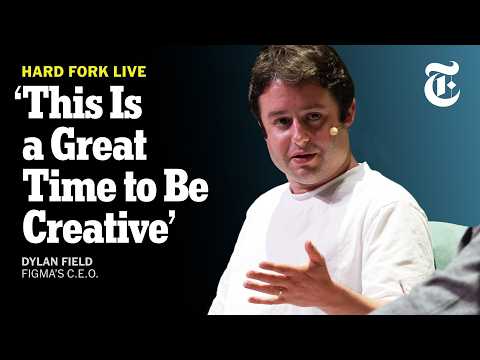
“I think it’s best to front-run the psychosis rather than have it sneak up on you. You just got to dive right in and get it over with… I think I’ve got a pretty reasonable take on what the models are good at, where they’re not so great. But it’s really interesting to see the new capabilities. Right now I’m vibe mathing.” — Dylan Field, 1:58
Clip command
yt-dlp --download-sections "*1:58-2:32" "https://www.youtube.com/watch?v=d1q4L_jiWEo" --force-keyframes-at-cuts --merge-output-format mp4 -o "front-run-the-psychosis.mp4"”Man, it’s a lot of Claude”
“There’s, you know, Substack and like, people are putting content there and it’s really good. And now I look at that and I’m like, man, it’s a lot of Claude… But I think if you have a creative voice, writing or design, you put yourself out there and you like take a risk, this is a good time to do that. It’s something that’s going to be rewarded.” — Dylan Field, 6:40
Clip command
yt-dlp --download-sections "*6:40-7:21" "https://www.youtube.com/watch?v=d1q4L_jiWEo" --force-keyframes-at-cuts --merge-output-format mp4 -o "a-lot-of-claude.mp4"”If you’re in-distribution, you’re in worse shape than someone exploring the frontier”
“If you’re in-distribution and you’re not actually pushing the bounds, like, I think that you’re in a worse shape than if you’re actually going and exploring the frontier of human knowledge, creativity, and what you can put out in the world, and making something that’s fundamentally new as an expression of yourself.” — Dylan Field, 9:19
Clip command
yt-dlp --download-sections "*9:19-10:41" "https://www.youtube.com/watch?v=d1q4L_jiWEo" --force-keyframes-at-cuts --merge-output-format mp4 -o "in-distribution-frontier.mp4"”They’re hiring designers… it just doesn’t make sense to me”
“I’m talking to companies all the time, customers, who’re telling me that they’re hiring designers, sometimes they’re not hiring others, but design is one of the most prioritized places in the company where they’re hiring… we’re in a world where folks are saying that all the jobs are going to be replaced and they’re then turning around and they’re like, ‘Oh, but let me call the really good engineer so I can get them to join my team.’ So it just doesn’t make sense to me right now.” — Dylan Field, 14:15
Clip command
yt-dlp --download-sections "*14:15-15:05" "https://www.youtube.com/watch?v=d1q4L_jiWEo" --force-keyframes-at-cuts --merge-output-format mp4 -o "still-hiring-designers.mp4"”We saw how that went” — on Mike Krieger and Claude Design
“I mean, you just told the story. Uh, but I mean, let me be clear, like Mike is a great dude and, um, yeah, someone I really care about… Well, I mean, we saw how that went, uh, in terms of like, uh, you know, unexpected products rolling out, and so probably depends on what their ambitions are.” — Dylan Field, 16:31
Clip command
yt-dlp --download-sections "*16:20-16:57" "https://www.youtube.com/watch?v=d1q4L_jiWEo" --force-keyframes-at-cuts --merge-output-format mp4 -o "krieger-claude-design.mp4"”Ideas, memes, summon their own existence”
“How do you describe this phenomenon where ideas, memes, summon their own existence? And the two examples I think are really good at this, one is Bitcoin and the other one’s AI. You know, why did Bitcoin work? There’s every reason to believe in the world that Bitcoin would not work.” — Dylan Field, 20:41
Clip command
yt-dlp --download-sections "*20:41-21:52" "https://www.youtube.com/watch?v=d1q4L_jiWEo" --force-keyframes-at-cuts --merge-output-format mp4 -o "hyperstition-bitcoin-ai.mp4"Key Points
- The 2009 Facebook message (0:21) - Kevin reads a fan message teenage Dylan sent him about his book before heading to Brown — and apologizes for ghosting him for 17 years
- Brown dropout to Silicon Valley (1:21) - Field’s freshman year went so well he dropped out, moved to Silicon Valley, and eventually took Figma through last year’s wild ride
- “Vibe mathing” as the new hobby (2:25) - Field’s current weekend project is doing math with AI — “I don’t have any results, so just be very clear”
- Verifiable vs. unverifiable domains (2:32) - Math is the opposite of design: things are correct or they’re not, and models are now very good in verifiable domains, while design merits can be argued
- Exploring tech pays off unpredictably (3:40) - Field was early to “crypto collectibles” before they were NFTs, and going deep on WebGL led to Figma itself
- Casey’s vibe-coding theory (4:14) - Every CEO vibe coding on weekends is remembering when their job was fun; Field counters that everyone likes making things, not just CEOs
- The “Design Is Dead” campaign (5:22) - On social media “it’s either you’re so back or it’s so over. And uh, I prefer to be back”
- Writers with critical thinking are fine (6:00) - Field’s hot take: people who know how to write and engage in critical thinking around writing are having a good moment, because voice stands out against AI’s average
- Don’t settle for the first draft (7:21) - App Store listings went up a ton but apps actually getting traffic stayed flat — a hyper-competitive environment that rewards molding and crafting output further
- Taste: bulwark or cope? (8:30) - Casey notes taste is San Francisco’s big buzzword (“this is the city that made Allbirds”) and asks whether taste is just the name for what models can’t do yet
- The model-release cycle (9:19) - “The model comes out, you think it can do everything, you discover the limits, and then you realize that, like, life goes on”
- Where’s AI’s impressionism? (10:59) - Kevin asks for the camera-to-impressionism analog; Field expected a sculpture revival, sees advertisers proving authenticity, and predicts software becomes a more creative, interactive medium
- The 15-year design rut (12:00) - Field admits design has been in a monoculture rut roughly as long as Figma has existed — “the people that are trying to do hot takes in the audience will be like, ‘And Figma’s to blame’”
- The Claude-generated Techmeme post (13:21) - A Substack post Satya Nadella cited on stage was, in Kevin’s reading, Claude generated: “my profession is starting to look more and more like slop”
- Significantly more designers in two years (15:13) - Field predicts more people with the designer title in two years, plus people in other jobs starting to call themselves designers and creatives
- Engineers starting their design journey (15:29) - Engineers build something fast, then ask “is it good enough? Maybe I should push it further” — the on-ramp that turns builders into designers
- Krieger’s resignation and Claude Design (16:20) - Mike Krieger suddenly resigned from Figma’s board days before Anthropic announced the Figma-adjacent Claude Design; whether another lab exec gets a board seat “depends on what their ambitions are”
- A tale of two AI labs (17:22) - OpenAI launched lots of apps (including Sora, where Field enjoyed watching himself breakdance) then made the hard call to shut down and focus; Anthropic is now in its expansionary arc
- Enterprise SaaS and the $22.9 trillion (19:31) - On market skepticism: “I don’t have to, Satya Nadella’s doing it” — citing a $22.9 trillion enterprise-applications market bigger than the entire space economy (the correct SpaceX S-1 figure is $22.7T)
- Write the optimistic stories (22:12) - AI is painfully aware of every internet trope about itself, but the training set is oddly short on stories where it goes well — so it’s on all of us to write them
Mentions
Companies
- Figma (0:00) - Field’s design company, founded 2012; went through a wild ride last year and ran the “Design Is Dead” ad campaign
- Anthropic (16:20) - Mike Krieger’s employer; announced Claude Design days after his Figma board resignation, and described by Field as in its expansionary arc
- OpenAI (17:22) - The other half of Field’s “tale of two AI labs” — launched many apps, then made the hard call to shut down Sora and focus
- Instagram (16:20) - Mike Krieger co-founded it before Anthropic
- Substack (6:40) - Where Field sees really good content that increasingly reads as “a lot of Claude”
- Techmeme (13:21) - Surfaced the Substack post Kevin judged to be Claude generated
- Allbirds (8:30) - Casey’s evidence that San Francisco has been “proudly tasteless since 1821”
- SpaceX (19:43) - Field references the enterprise-applications market Satya made “bigger than the entire space economy” (from the SpaceX S-1 filing)
Products & Technologies
- Claude (6:40) - Field’s shorthand for AI-written content flooding Substack; also Kevin’s diagnosis of the Techmeme post at 13:21
- Claude Design (16:20) - Anthropic’s Figma-adjacent product announced days after Krieger left Figma’s board
- Sora (18:00) - OpenAI’s social network that Field “really enjoyed” — he watched himself breakdance before OpenAI shut it down
- NFTs / crypto collectibles (3:40) - Field was excited early, “because that was the cool phrase”
- WebGL (3:40) - The deep technical exploration that led to Figma
- Bitcoin (20:54) - Hyperstition example number one: every reason to believe it wouldn’t work, and it snowballed anyway
- Fruit Love Island (12:40) - Kevin’s favorite AI-generated TV show slash TikTok series; “the pineapple had an affair”
- App Store (7:21) - App count went up a ton; apps with frequent traffic stayed flat
People
- Dylan Field (0:00) - CEO and co-founder of Figma; Brown dropout, weekend vibe mather, hyperstition believer
- Mike Krieger (16:20) - Instagram co-founder and Anthropic product lead who suddenly resigned from Figma’s board — “Mike is a great dude”
- Satya Nadella (13:21) - Appeared earlier at the live show; cited the same Substack post Kevin flagged, and made the enterprise-software market case Field leans on at 19:31
- Kevin Roose (0:21) - Hard Fork co-host; author of the book teenage Dylan read, and a fellow Brown connection via his a cappella group
- Casey Newton (4:14) - Hard Fork co-host with the theory that vibe coding reminds CEOs of when their jobs were fun
Surprising Quotes
“Oh, I don’t know. Um, safety? Joking.” — Dylan Field, 19:02 (asked what the AI labs will attempt and fail at)
“And I read it, and I’m just going to say it, it was Claude generated. Okay? And it irritated me as somebody who’s always trying to get my stories on Techmeme because I’m like, I’m just reading like the output of a prompt… my profession is starting to look more and more like slop.” — Kevin Roose, 13:21
“There’s all these folks that cared so much about safety… we’ve gotta make sure we don’t create a race dynamic for example… and man, you know, there’s always an incentive to break apart and well hello race dynamic, here we are. And it’s coming from the stories that exist.” — Dylan Field, 21:00
“It’s very aware. It’s all in the training set. And, you know, there’s not as much information for some reason the training set, data set, of these stories where it goes well. But I actually do think there’s an optimistic future for humanity. And I know that’s a hot take now for some reason.” — Dylan Field, 22:12
“One quality that writers and designers also share is imposter syndrome. And it’s good to label it so that you know it’s there and you don’t have to deal with it every day, or as much.” — Dylan Field, 14:15
Transcript
Casey Newton: 0:00 We are so excited for our next guest. Our next guest is the CEO of Figma, an AI and web-based design application founded in 2012. It’s Dylan Field. Dylan, welcome.
Dylan Field: 0:12 Hi guys. Good to see you.
Kevin Roose: 0:15 Hey Dylan.
Casey Newton: 0:16 Hey Dylan.
Kevin Roose: 0:21 So Dylan, I want to start by reading you a Facebook message I got on August 5th, 2009. ‘Hey Kevin, I recently picked up your book at the library. Just wanted to let you know how much I enjoyed it. Anyway, best of luck with your future endeavors. I’m going to Brown this fall. Who knows? Maybe I’ll meet you in Providence some day.’ That message was sent by a teenage boy named Dylan Field, and I want to just, first of all, apologize. I never responded to that. So, I’m sorry.
Casey Newton: 0:54 Can you imagine you write a book and a college student emails you out of the blue and you’re like, yeah, whatever.
Kevin Roose: 1:00 It was, you know, a lot going on in 2009. Anyway, I’m sorry for ghosting you. And second of all—
Dylan Field: 1:04 It was a good book. You should all read it.
Kevin Roose: 1:06 How did your freshman year of college go?
Dylan Field: 1:08 It was awesome. Yeah, and I got to meet you. Yeah, because I don’t know if you remember, but for the acappella group that you were in, you came back as a super senior to hang out with everyone I guess, including the new freshmen.
Kevin Roose: 1:21 Well, it went so well that you dropped out and moved to Silicon Valley to seek your fortune here. And it’s been quite a run for you. Figma went through a lot last year, has had a wild ride. And I want to talk to you first about AI, because I have heard that you are quite AI-pilled and I’ve seen on your social media accounts that you are constantly experimenting with AI, doing all these AI side projects. What are you doing and do you have AI psychosis?
Dylan Field: 1:58 I think it’s best to front-run the psychosis rather than have it sneak up on you. You just got to dive right in and get it over with. But yeah, I ask myself sometimes and I don’t think so right now. I think I’ve got a pretty reasonable take on what the models are good at, where they’re not so great. But it’s really interesting to see the new capabilities. Right now I’m vibe mathing.
Casey Newton: 2:24 What’s vibe mathing?
Dylan Field: 2:25 Well, it’s basically where you do math but with AI. And you know—
Kevin Roose: 2:29 Are you proving Fermat’s Last Theorem? What are you doing?
Dylan Field: 2:32 No, no, no, I’m not. But um, basically like, I think it’s just interesting to see how AI attacks these problems. It’s kind of the opposite of Figma. I mean, Figma we’re a design platform, we often are evaluating the models, trying to see how good they are at design, what we should use, what we should put in our product, expose to users. And it’s like the opposite of verifiable. You know, you and I can look at something and disagree or agree on the merits of it and the design merits of it. 3:00 But, you know, there’s some domains like math, some aspects of computer science where things are correct or they’re not. And so I think it’s really cool to see that range and the verifiable domains models are very good at now.
Kevin Roose: 3:12 Casey vibed math his way through high school. They flunked him, but I’m glad it’s going better for you.
Dylan Field: 3:18 I don’t have any results, so just be very clear.
Kevin Roose: 3:21 I want to hear a little bit more about like what direction you are taking all of your AI use in as you sort of, you know, pursue these projects. This sounds like a lot of sort of like personal stuff that you’re doing for fun. Is that just sort of like the curiosity of a lifelong learner or is there something specific that you’re trying to find?
Dylan Field: 3:40 Um, I find that just in general, the more that you like explore technology, you don’t know how it’s going to pay off or what benefit it will have, but it ends up having some benefit in weird ways you can’t expect. And uh, I don’t know, you had uh, Node up here earlier. I was very excited about NFTs early on and then they became what they are now. They weren’t called NFTs then, they were called crypto collectibles because that was the cool phrase. Um, but you know, it’s like whether it’s that or um, you know, WebGL, which led to Figma, uh, I just always try to explore stuff and like go deep on it, figure out the new capabilities because you can find ways to use them.
Casey Newton: 4:14 I have a theory that I want to run past you, which is that, you know, now you can’t every startup founder, CEO in Silicon Valley is obsessed with vibe coding. They’re all doing it on the weekends. They come in on Mondays and, you know, they say, why are we building this thing? 50 people used to build this thing. I just built it in a weekend. It’s driving their employees crazy. But I have my theory about this is that this is this is reminding CEOs of what it was like when their jobs were fun. Uh, do you agree with that statement?
Dylan Field: 4:39 Um, you said you’re fearful of that.
Casey Newton: 4:40 No, that’s my theory.
Dylan Field: 4:41 Theory. Okay, sorry, I misheard you. Um, I think that people like to make things. And they like design stuff and they like to actually put their ideas out in the world in a more tangible way. And I think we’re just going to see more of it from everyone. Uh, not just CEOs trying to have fun on the weekend.
Kevin Roose: 5:02 Speaking of making stuff, Figma recently launched an ad campaign organized around the idea, sort of making fun of the idea that design is dead. Sort of a more common sentiment maybe in the era of AI. Make that case for us that design is not dead in a world where I can just sort of, you know, type what kind of app I want into a box.
Dylan Field: 5:22 This is a real roller coaster from, you know, my JS9 basic message now to design is dead.
Kevin Roose: 5:27 Covering it all.
Dylan Field: 5:28 Taking a turn. Uh, no, I mean the… look, I think that there’s so many hot takes online. I’m sure you get a few of them an hour. Uh, and you know, I think when new models drop, everyone’s looking for something that they can say is dead. Uh, because you know on social media now it’s either you’re so back or it’s so over. And uh, I prefer to be back. But no, I mean in terms of the case, uh, I mean look, like it’s interesting to see folks catch up with the capabilities and it’s like, yeah, you can do a lot. But… 6:00 The average sort of response from AI, whether it’s the domain of writing, you know, my take, my hot take right now would be I actually think that people that know how to write and actually engage in thinking, critical thinking around writing, it’s like it’s a good time for them.
Kevin Roose: 6:15 It’s a good time for them?
Dylan Field: 6:18 Yeah, well you tell me, but I think so.
Casey Newton: 6:21 Yeah. It’s like half the audience is a bot and they’re like, I don’t know, should we? Should we not? Is it too, like, are we sucking up?
Kevin Roose: 6:26 Yeah. I mean, I think like, you know, to the extent that writing is a showcase for your critical thinking abilities, like, yes, like having great critical thinking skills are always like a boon. But it’s also style. Right? It’s a style of writing.
Dylan Field: 6:40 Sure. Like if you’re funny, if you’ve got an actual like way you phrase things, if you have voice. And I think it’s especially true right now in a way that wasn’t a few years ago. Like three, five years ago, I would have said, oh man, there’s a lot of people on social media that are writing really interesting things. And, um, we’re in this world where like, there’s, you know, uh, Substack and like, people are putting content there and it’s really good. And now I look at that and I’m like, man, it’s a lot of Claude. Uh, you know, maybe I’m over-rotated even on identifying, uh, people that are basically using AI to write. Same, same thing’s true for design. Folks are basically looking at these, uh, websites or applications and seeing the average. Maybe they’re even over-identifying it. But I think if you have a creative voice, writing or design, you put yourself out there and you like take a risk, this is a good time to do that. It’s something that’s going to be rewarded.
Kevin Roose: 7:10 And I can imagine, you know, maybe in your view, there’s a world where the fact that I can use an AI tool to quickly whip up a design might make me more interested in actually getting good, right? And sort of like not settling for the first generation.
Dylan Field: 7:21 Yeah, exactly. It’s like, how do you not settle for the first draft, the first thing out there, the first output, and actually mold it and craft it and push it further? And I think that the more you can do that, uh, the more you’ll stand out and also the more you’ll be differentiated. And I think that there’s going to be, I mean, we saw the, uh, the data recently on the number of apps in the App Store. It went up a ton, but the number of apps actually being used and, uh, getting frequent traffic is still the same. And so you’re basically in this hyper-competitive environment now where you have to differentiate. You really have to like lean in and figure out how to, uh, have a unique voice and a unique take and unique point put on view. Just like writing.
Casey Newton: 8:30 The, the big buzzword in San Francisco right now is taste. Everyone’s talking about taste as the, the sort of bulwark against being replaced by AI. If you have taste, you’ll be fine. It’s the first time taste has ever been a big subject in San Francisco, I think. Yes, this is the city that made Allbirds. Proudly tasteless since 1821. 8:54 And then I’ve heard some people argue that actually taste is just the word we give to the stuff that the models aren’t very good at yet. 9:00 You know, researchers in AI used to say, “Ah, but they don’t have taste.” And then the models got better and it was like, “Oh, wait a minute, maybe they can do all of the taste parts of the job too.” So, defend the concept of taste as being either important or cope from people who just haven’t used the good models yet.
Dylan Field: 9:19 I mean, the cycle seems to be the model comes out, you think it can do everything, you discover the limits, and then you realize that, like, life goes on. And, you know, will at some point that be different and affect the world in a different way? Perhaps, we’ll see. But so far it seems like everyone’s adapting, and part of that adaptation is realizing the sort of new average that’s being put out by the models. And I think it’s not even, you don’t even have to defend taste and people having taste, because then we could argue about, “Do they?” To just recognize people can detect the average. They can detect that output and they can dare to do more. But I also do believe that this is a great time to be creative. And I think that the more the models put out that’s in-distribution, because that’s how the models are trained. They’re trained on distribution of data. And if you’re in-distribution and you’re not actually pushing the bounds, like, I think that you’re in a worse shape than if you’re actually going and exploring the frontier of human knowledge, creativity, and what you can put out in the world, and making something that’s fundamentally new as an expression of yourself. So I get excited about that. I get excited about our opportunity to be the place where people can really unlock their creativity at Figma, and, or one of the places, there will be many, and just like, creating tools that can empower people.
Kevin Roose: 10:41 I’m curious if you’re seeing a reaction in the world of art and design to AI, and what that looks like, right? You think back, and the invention of the camera gets us impressionism. Do we have an analog for that yet in the design world now that AI makes design easier to access?
Dylan Field: 10:59 I think it’s interesting how we’re seeing some of that reaction, maybe in the world of marketing and advertising. I don’t know if maybe it’s happening in the art world, like, I would have expected by now that people would be really into sculpture in a way that they’re not, or just things with textures, and that’d be my, like, art thesis, so probably don’t hire me as an art advisor. But, like, you know, I think that that’s probably a natural reaction, is, like, lean into things that are not digital. Whereas, I think in advertising now we’re seeing ways to prove authenticity, to prove that you are actually making something that is not generated by AI, and some companies are really going for that. In the world of design, I think that what we’re going to see and what we are starting to see: a lot more interactivity, a lot more creativity, people really making software more of a creative medium. You know, I think back to the early days of the internet, and it was so fun. 12:00 And I feel like the last 15 years or so, basically the time we’ve been working on Figma, we kind of have been in a bit of a rut, honestly. You know, a lot of very monoculture takes when it comes to design and the way it expresses. And I, you know, the people that are trying to do hot takes in the audience will be like, “And Figma’s to blame.” Hopefully not.
Casey Newton: 12:24 Shame on you.
Dylan Field: 12:26 Yeah, exactly. Casey said it. But no, I think that the more we can do to make it so that people can push further and like actually create really dynamic interfaces as well as marketing and media in general, the better.
Kevin Roose: 12:40 Have you seen anything that’s been AI generated in the realm of design or art that you think is really good? Like Casey turned me on to Fruit Love Island, which is now my favorite TV show slash TikTok series. But is there anything that you’ve seen that is clearly AI generated where you’re like, “Oh, that’s actually kind of fun and interesting”?
Dylan Field: 13:02 You know, yes, and also it wears off fast. I think it’s just like any style.
Kevin Roose: 13:05 I’m on season three of Fruit Love Island, so it hasn’t worn off yet.
Casey Newton: 13:08 The pineapple had an affair, the papaya and the banana are about to hook up. It’s great.
Dylan Field: 13:13 Oh wow, sounds tantalizing. I’ll have to watch it tonight.
Kevin Roose: 13:21 I want to come back to something you were saying about writing earlier. It’s just sort of been on my mind ever since you brought it up because you were bringing up the fact that, you know, we have Substack now and a lot more people are writing, which I agree with you is super cool. When Satya was here earlier, he brought up this post that he had read that was on Substack today. I happened to read the same post because it was on Techmeme. And I read it, and I’m just going to say it, it was Claude generated. Okay? And it irritated me as somebody who’s always trying to get my stories on Techmeme because I’m like, I’m just reading like the output of a prompt. And so when I read that, my honest feeling is like, this is not good for my profession. Like, my profession is starting to look more and more like slop. And so I just wonder like if there are designers in the audience, if they are having a similar feeling when, you know, they’re looking at the designs that they’re seeing everywhere and they’re just knowing that it was output with the touch of a button.
Dylan Field: 14:15 Well, I mean, one quality that writers and designers also share is imposter syndrome. And it’s good to label it so that you know it’s there and you don’t have to deal with it every day, or as much. But I think it’s… designers are arguably in one of the best roles in technology and I mean I’m talking to companies all the time, customers, who’re telling me that they’re hiring designers, sometimes they’re not hiring others, but design is one of the most prioritized places in the company where they’re hiring. Overall, folks are still hiring a lot. This also perplexes me. I mean, we’re in a world where folks are saying that all the jobs are going to be replaced and they’re then turning around and they’re like, “Oh, but let me call the really good engineer so I can get them to join my team.” So it just doesn’t make sense to me right now. 15:00 General, but I am very, very bullish on design and the role it will play in accelerating companies further.
Casey Newton: 15:05 So you think like two years from today, like there are more people whose job title is designer than what they have today?
Dylan Field: 15:11 Uh, how many years?
Casey Newton: 15:12 Say two.
Dylan Field: 15:13 Yeah, I think so. Uh, I think probably significantly more. And a lot of people that are doing other jobs I think will start calling themselves designers, creatives. Uh, you know, I think in general we’re seeing more of this kind of generalist vibe that people are feeling like they have to embody.
Kevin Roose: 15:29 One thing that’s been interesting is a lot of engineers, kind of like you’re saying, getting started on their design journey because they make something so fast and they’re like, ‘Now what? And is it good enough? Maybe I should push it further.’ And then they kind of are trying to figure out, ‘Okay, how do I do that?’ So I’m pretty excited about that part too, of opening more people in as designers.
Casey Newton: 15:48 I have a friend in the audience tonight who is a product manager who started out as a non-technical person and is now able to create really amazing prototypes just with the advanced AI tools. I can see a world where design gets, you know, added into that portfolio as well.
Kevin Roose: 16:00 I just think and I think that at the end of that, like that job probably has a different name, like than PM.
Dylan Field: 16:05 Uh, I mean, not all of them will be great design, but the act of like considering and being thoughtful of what you’re doing and then actually putting it out and, uh, taking risks, man, that’s design.
Casey Newton: 16:15 Dylan, this is a lot of high-minded conversation. Let’s gossip.
Dylan Field: 16:18 Okay. 16:19 About what?
Kevin Roose: 16:20 Earlier this year, Mike Krieger, former board member at Figma, uh, product lead at Anthropic, co-founder of Instagram, uh, was suddenly—he suddenly resigned from your board and just days later, Anthropic announced Claude Design, which feels a little Figma-adjacent. So what the heck happened there?
Dylan Field: 16:31 I mean, you just told the story. Uh, but I mean, let me be clear, like Mike is a great dude and, um, yeah, someone I really care about.
Kevin Roose: 16:41 Would you let another AI lab executive onto your board in the future?
Dylan Field: 16:44 Well, I mean, we saw how that went, uh, in terms of like, uh, you know, unexpected products rolling out, and so probably depends on what their ambitions are.
Kevin Roose: 16:52 But you know, in a general sense, you’re not gossiping—forget these people are there. It’s just us—just us birds.
Dylan Field: 16:57 Sorry, y’all.
Kevin Roose: 16:58 Just us birds. In a general sense, I think a lot of CEOs are worried about the AI labs sort of integrating more vertically, like, you know, taking over, uh, insurance companies or accounting firms. We’re starting to see some of that happen where these labs are just kind of expanding into all the adjacent industries and really, uh, creating tough times for the companies in those industries already. Do you expect that to continue? Are these labs just kind of gonna continue to grow and grow and grow and just become these like amorphous blobs that just, you know, create havoc for all the smaller startups in those fields?
Dylan Field: 17:22 Oh, I mean, it’s a tale of two AI labs. Um, you know, you’ve got OpenAI and Anthropic, and OpenAI, uh, kind of went through that journey. They launched a lot of apps… 18:00 social network even, Sora, which I really enjoyed.
Kevin Roose: 18:03 I know you did too, Casey.
Casey Newton: 18:04 We had some fun, yeah.
Dylan Field: 18:05 Yeah. Anyway, so speaking of AI generation, I mean, I did enjoy watching myself breakdance.
Casey Newton: 18:16 And you’ll see him do it again later tonight.
Dylan Field: 18:18 With the robot, but anyway, yeah, I mean, I think that, you know, they made the hard call of actually shutting that down and focusing the efforts of the company. And that’s a hard call to make. 18:33 But respect that they did it. And then also I think, you know, you’ve got Anthropic is kind of in its arc of being more expansionary in their thinking, launching a lot of stuff. And I think you see what works and what doesn’t and then you see a year later what happens. 18:46 I mean, I think the more interesting question is a year, two years out, like where will they be playing still? And, you know, not everything works. It’s hard to build product and get it out in the world.
Kevin Roose: 18:58 What are some things that you think they will attempt and fail at?
Dylan Field: 19:02 Oh, I don’t know. Um, safety? Joking.
Casey Newton: 19:05 Very good. That might be the best answer of Hard Fork Live 2024. Yeah, very good, very good. 19:17 Dylan, you run a public company, it’s enterprise SaaS, the market is very skeptical of that right now. Your job seems hard. How is it going for you and do you think you convince the market that there is a bright future for you and your enterprise SaaS brethren?
Dylan Field: 19:31 I don’t have to, Satya Nadella’s doing it. You’re the son, right?
Casey Newton: 19:35 Yeah.
Dylan Field: 19:37 I mean, what is it, 22.9 trillion on enterprise applications? Let’s go!
Casey Newton: 19:41 I’ll pretend to know what you mean.
Dylan Field: 19:43 No, I mean like, but actually, I mean, Satya put out there and thought about how software is huge. I mean, he made it bigger than the entire space economy. Right. So, yeah, 210 trillion.
Casey Newton: 20:05 What do you make of… Okay, I’m told we only have a few minutes left, but I’m told that you have a desire to talk about hyperstition. What is hyperstition and why are we supposed to know about it?
Dylan Field: 20:18 I guess some of our team told you that. Um… This is, I mean, getting back to the abstract conversation, sorry y’all. 20:30 But it’s basically someone who’s kind of like an internet edge lord came up with this term, don’t look them up. But I do think there’s a really interesting idea here. 20:41 Which is how do you describe this phenomenon where ideas, memes, summon their own existence? And the two examples I think are really good at this, one is Bitcoin and the other one’s AI. 20:54 You know, why did Bitcoin work? There’s every reason to believe in the world that Bitcoin would not work. 21:00 And yet it just snowballed and basically the more attention it got the more basically strong it became. And AI is the same way, you know, there’s all these folks that cared so much about safety, so much that they thought, okay, we gotta do this in the right way, we gotta form a non-profit and like get together and all of us gotta be in one place so that we can like really shepherd this technology into the future. And you know, we’ve gotta make sure we don’t create a race dynamic for example. We gotta make sure that, you know, we have these complex corporate structures that we can make sure that this benefits humanity in the best ways possible. But then it’s like, okay, well, there’s a lot of like really powerful stuff you can make with AI and you know, people are people, it’s hard to always get along and man, you know, there’s always an incentive to break apart and well hello race dynamic, here we are. And it’s coming from the stories that exist.
Casey Newton: 21:52 Can I try to repeat back to you what I’ve heard so far and you tell me if I’m right or not? Hyper-precision in the way I have heard of it is like in the sense of the AI’s learning from what stories we tell about AI. So if you want AI to go well, you should like feed it a bunch of stories about AI being like really nice to humans.
Dylan Field: 22:12 That’s part of it too. I think that it’s also the case that AI is like painfully aware in some cases of, you know, all these tropes that are on the internet about it. And, you know, it’ll talk to you about the Google engineer that thought it was conscious. It’ll talk with you about sort of the stories around science fiction and the ways that it’s been depicted. It’s very aware. It’s all in the training set. And, you know, there’s not as much information for some reason the training set, data set, of these stories where it goes well. But I actually do think there’s an optimistic future for humanity. And I know that’s a hot take now for some reason, but I want to believe that every day and I think that it’s on all of us to tell those stories too of how it does go well.
Kevin Roose: 22:56 And so it might be a good time to write some stories about how things could go well just to make sure they get into the training data.
Dylan Field: 23:02 Exactly, you got it.
Kevin Roose: 23:03 You have your homework for this evening. Dylan Field, thank you so much for joining us.
Dylan Field: 23:06 Thanks guys.
Kevin Roose: 23:08 Thank you so much Dylan.
Casey Newton: 23:09 Thank you.
Dylan Field: 23:10 Have a good night.
Kevin Roose: 23:11 Thank you.