Who Is John Ternus, Apple's New C.E.O.?
Who Is John Ternus, Apple’s New C.E.O.?
Summary
This episode of Hard Fork opens with the news that Tim Cook is stepping down as Apple’s CEO after a 15-year run, transitioning into the role of executive chairman while Apple’s senior vice president of hardware engineering, John Ternus, takes over. Kevin Roose and Casey Newton survey Cook’s tenure: a market cap that grew roughly tenfold from $350 billion to $4 trillion, the surprise success of the Apple Watch as a health platform, the under-appreciated Apple Silicon bet that broke the company’s dependency on Intel, and a remarkably scandal-free reign at a time when peer tech companies suffered through one crisis after another.
The conversation then shifts to the lowlights — Apple’s deep manufacturing dependency on China that became a geopolitical liability under Trump-era tariffs, the canceled $10 billion Titan self-driving car project that never even produced a prototype, the Vision Pro flop, and the broader miss of failing to identify a successor platform to the iPhone. Casey makes the case that Cook’s biggest blind spot was AI: Apple is now an “AI laggard” that has to license Gemini from Google because it can’t ship a competitive Siri, while Jony Ive and OpenAI explore hardware that could chip away at the iPhone’s accessory ecosystem. Cook’s political maneuvering — the golden glass statue gift to Trump, the Melania VIP screening, the muted public response to Grok-generated nonconsensual imagery — gets framed as both a successful tariff-relief strategy and a stain on his legacy.
The episode also features Andrew Yang discussing the return of Universal Basic Income as an answer to AI-driven job automation, plus a HatGPT round covering a pasta sauce that wants to record your family, a Chinese robot beating humans in a half-marathon, an AI-managed San Francisco store, Meta capturing employee keystrokes for AI training, and the SpaceX/Cursor $60 billion deal.
Highlights
”You have to talk some shit about this diva”
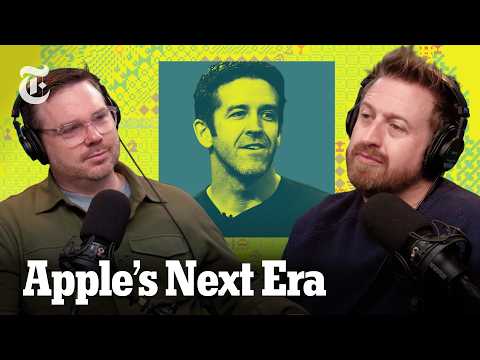
“Or as one unknown member of our staff wrote in our prep document, okay, now let’s talk some shit about this diva.” — Casey Newton, 8:48
Clip command
yt-dlp --download-sections "*8:48-9:15" "https://www.youtube.com/watch?v=XCeDc8D-Qpk" --force-keyframes-at-cuts --merge-output-format mp4 -o "talk-shit-about-this-diva.mp4"”Apple is becoming an AI laggard”
“Under Tim Cook’s tenure, Apple has become what I would consider an AI laggard, right? They are not a frontier AI model company. Their own AI efforts under the banner of Apple Intelligence have been sort of delayed over and over again.” — Kevin Roose, 15:02
Clip command
yt-dlp --download-sections "*15:02-15:55" "https://www.youtube.com/watch?v=XCeDc8D-Qpk" --force-keyframes-at-cuts --merge-output-format mp4 -o "apple-ai-laggard.mp4"”Cook spent an eighth of what Zuckerberg spent on the Metaverse”
“At $10 billion Cook spent roughly an eighth of what Mark Zuckerberg spent trying to build the Metaverse.” — Casey Newton, 13:01
Clip command
yt-dlp --download-sections "*13:01-13:25" "https://www.youtube.com/watch?v=XCeDc8D-Qpk" --force-keyframes-at-cuts --merge-output-format mp4 -o "titan-vs-metaverse-bargain.mp4"”Cook called Trump to kiss his ass”
“President Trump put out an incredible statement about Tim Cook where he’s essentially bragging about how nice he felt about himself when Tim Cook called him when Trump first became president to — and here I’m quoting President Trump — kiss my ass.” — Casey Newton, 19:00
Clip command
yt-dlp --download-sections "*19:00-19:45" "https://www.youtube.com/watch?v=XCeDc8D-Qpk" --force-keyframes-at-cuts --merge-output-format mp4 -o "kiss-my-ass-trump-statement.mp4"”Apple has to pay Google for Gemini”
“Now Apple has to pay Google for Gemini because it can’t build a better version of Siri themselves. So I think it really creates like a new set of dependencies for Apple if AI is going to become the long-term next platform shift.” — Kevin Roose, 17:20
Clip command
yt-dlp --download-sections "*17:20-18:10" "https://www.youtube.com/watch?v=XCeDc8D-Qpk" --force-keyframes-at-cuts --merge-output-format mp4 -o "apple-pays-google-for-gemini.mp4"”Songs of Innocence: the one giant scandal”
“There was never any giant gnarly scandal that Apple had to address under his tenure with, of course, the one exception in 2014 when they put the new U2 album on everyone’s iCloud account.” — Casey Newton, 6:29
Clip command
yt-dlp --download-sections "*6:29-7:45" "https://www.youtube.com/watch?v=XCeDc8D-Qpk" --force-keyframes-at-cuts --merge-output-format mp4 -o "songs-of-innocence-scandal.mp4"Key Points
- Tim Cook stepping down, John Ternus taking over (0:52) - Apple announced the leadership transition Monday; Cook becomes executive chairman, Ternus (SVP hardware engineering) becomes the next CEO
- 10x market cap growth under Cook (1:42) - Apple grew from $350B to ~$4T market cap, revenue nearly quadrupled, stock up roughly 2,000% since 2011
- Apple Watch as Cook’s signature product (2:44) - Initially dismissed as a luxury gadget, Cook iterated it into a mainstream health device with steps, blood oxygen, heart rhythm, and fall detection
- Apple Silicon was the underrated risky bet (4:03) - Bringing chip design in-house and weaning off Intel gave Apple control of its destiny; Casey notes Intel is now partly government-owned because of how badly that pivot hurt them
- Services growth a financial win, cultural loss (5:24) - Apple TV, Pay, Music became ~$100B businesses, but Casey argues subscription creep eroded user love and antitrust dynamics distorted the streaming market
- Scandal-free tenure (mostly) (6:29) - Cook avoided the kind of crises that hit Meta and Google, with the lone exception being the 2014 U2 Songs of Innocence iCloud incident
- China supply-chain dependency (9:10) - Cook’s just-in-time logistics network was the envy of the industry but became a vulnerability as US-China tensions and Trump tariffs forced uncomfortable contortions
- Titan car project: $10B and no prototype (10:52) - Apple’s self-driving car bet was canceled in 2024 without ever shipping a working prototype; Kevin argues it was fundamentally a software flop
- Vision Pro flop and the next-platform miss (13:19) - Cook’s biggest macro miss is failing to find the next iPhone; Vision Pro didn’t become it
- Innovator’s dilemma at Apple (14:32) - Casey argues Apple has no incentive to disrupt itself when the iPhone remains the most important and profitable computing platform in the world
- Apple as AI laggard (15:02) - Apple Intelligence repeatedly delayed; Siri brain transplant still not shipped; Apple licenses Gemini from Google because it can’t ship a competitive model
- OpenAI/Jony Ive hardware as the iPhone-accessory threat (16:38) - Casey speculates AI-native devices (a desk gadget, a sweater pin) could chip away at the Watch and AirPods rather than the iPhone itself
- Recruiting AI talent has gotten hard (18:08) - Cook’s “wait for AI to commoditize” bet means top researchers won’t go to Apple because it’s not an AI company in any meaningful way
- Tim Cook’s Trump diplomacy (19:00) - Golden glass statue, Melania VIP screening, muted response to Grok image abuse — effective at securing tariff relief, ugly as legacy
- The kiss-my-ass quote (20:30) - Trump publicly bragged that Cook called him at the start of his presidency to “kiss my ass”
- Cook’s main job at Apple now: still managing Trump (20:00) - The executive chairman announcement implies Cook will keep interfacing with public officials — meaning the political work continues
Mentions
Companies
- Apple (0:27) - Subject of the segment; Cook stepping down as CEO after 15 years
- Intel (4:43) - Lost Apple as a chip customer; Casey notes it’s now partly government-owned
- Google (17:20) - Made early AI bets, built training chips and Gemini; Apple now licenses Gemini for Siri
- OpenAI (16:38) - Hardware efforts led in part by Jony Ive could threaten Apple’s accessory ecosystem
- Meta (6:29) - Cited as the contrast for scandal-prone tech; Zuckerberg’s $80B Metaverse spend cited as 8x Cook’s Titan project
- Spotify (6:00) - Casey cites as collateral damage from Apple Music’s App Store advantage; pivoted to podcasts and audiobooks
- X (formerly Twitter) (19:00) - Apple did not pull X from the App Store over Grok-generated nonconsensual imagery until senators inquired
- Noble Mobile (described in episode summary) - Andrew Yang’s company; he appears later in the episode to discuss UBI
Products & Technologies
- Apple Watch (2:44) - Cook’s signature hit; iterated from luxury gadget into mainstream health platform
- Apple Silicon / M1 (4:03) - In-house chip design that broke Intel dependency
- AirPods (4:03) - Cited as another Cook-era hardware success
- Apple Vision Pro (13:19) - Cook-era flop; Apple hoped this would be the next platform
- Apple Intelligence / Siri (15:02) - Repeatedly delayed; brain transplant teased for years and still not delivered
- Gemini (17:20) - Google’s frontier model now licensed by Apple
- Grok (19:00) - Cited in context of removing clothing from images of women and children
- Titan project (10:52) - Apple’s $10B canceled self-driving car effort
- Claude Code (12:11) - Casey jokes about whether Titan would have shipped a prototype if engineers had Claude Code
People
- Tim Cook (0:27) - Outgoing Apple CEO; subject of the segment
- John Ternus (0:52) - SVP hardware engineering, incoming Apple CEO
- Donald Trump (10:00) - His tariff threats made Apple’s China dependency a liability; received a golden glass statue from Cook
- Mark Zuckerberg (13:01) - Cited for $80B Metaverse spend (8x Apple’s Titan budget)
- Jony Ive (16:38) - Former Apple designer now leading OpenAI hardware efforts
- Bono (7:27) - Convinced Cook to push U2’s Songs of Innocence onto 500M iCloud accounts in 2014
- Andrew Yang (per episode description) - Joins later in the episode to discuss UBI’s comeback
- Elon Musk (19:00) - Owner of X/Grok, mentioned in context of the Grok image abuse issue
- Melania Trump (19:00) - Cook attended a VIP screening of her movie
Surprising Quotes
“Or as one unknown member of our staff wrote in our prep document, okay, now let’s talk some shit about this diva.” — Casey Newton, 8:48
“Now Intel is partially owned by the government because that’s how badly it went for them after Apple started making its own chips.” — Casey Newton, 4:43
“At $10 billion Cook spent roughly an eighth of what Mark Zuckerberg spent trying to build the Metaverse. So, I think you could argue that Tim Cook got a bargain there.” — Casey Newton, 13:01
“And here I’m quoting President Trump, kiss my ass.” — Casey Newton, 20:30
“When I heard that Apple was building a car, like, I definitely wanted to see it. I definitely wanted to test drive it. I definitely wanted to see if Songs of Innocence would auto play when I turn the key in the ignition.” — Casey Newton, 10:52
Transcript
Kevin Roose: 0:00 I’m Kevin Roose, tech columnist at the New York Times.
Casey Newton: 0:02 I’m Casey Newton from Platformer.
Kevin Roose: 0:04 And this is Hard Fork. This week: Diva Down. Tim Cook is stepping down as CEO of Apple. What did he get right and what did he get wrong?
Casey Newton: 0:11 Then, Andrew Yang is here to discuss his early bet on AI taking jobs and why Universal Basic Income may be making a comeback.
Kevin Roose: 0:18 And finally, hats off for some HatGPT.
Kevin Roose: 0:27 Well Casey, the big news this week is that Apple CEO Tim Cook is stepping down.
Casey Newton: 0:33 Yeah, it is a really momentous occasion in the history of technology. Apple does not change CEOs all that often and Tim Cook, while we both have a lot to say about him, I think undoubtedly just had an extraordinary run as a public company CEO.
Kevin Roose: 0:52 Yeah, so Apple announced this leadership transition on Monday. Tim Cook is going to step into a new role as executive chairman. He’s not leaving entirely, but John Ternus, Apple’s senior vice president of hardware engineering and a long-time Apple guy, will become the next CEO. This is obviously not a company that has had a lot of CEOs. They tend to stick around and promote from within, and so I think this is about as sort of expected a leadership transition as you could get. There have been rumors and reports that Cook was considering retiring for many months, but this made it official. And today we should talk about, like, what Tim Cook’s legacy is: the highlights, the lowlights. How has Apple changed in the years since he took over as CEO, and what do we expect out of John Ternus, the new guy?
Casey Newton: 1:39 Yeah, lots to dive into.
Kevin Roose: 1:42 So let’s talk about some numbers here because I think Tim Cook’s run at Apple is going to be remembered for just the overall growth that the company has experienced under his leadership. Since he stepped into the CEO role in 2011, Apple’s market cap has grown from 350 billion dollars to around 4 trillion dollars, so a 10x multiple there. Its yearly revenue nearly quadrupled, its stock price has gone up roughly 2,000%, and a lot of the products that Tim Cook has overseen have been, I would say, surprising hits.
Casey Newton: 2:22 Yes, and I think this is, like, if you want to be intellectually honest about Tim Cook’s Apple, you have to talk about this particular dimension because I think the knock on Tim Cook was, well, he’s not a product guy. He doesn’t know how to launch new product categories. But you look at the past 15 years and he actually did.
Kevin Roose: 2:44 Yes. So I think the biggest thing that he will be known for as a new device or as a new platform in his legacy is the Apple Watch, which I am wearing, you are wearing. I mean, everyone has an Apple Watch now. And I remember when the Apple Watch came out, there was this moment of like, ‘Oh, Apple’s cooked. Like, they can no longer innovate. This thing is obviously not going to work. This is just…’
Kevin Roose: 3:00 …uh, you know, a gadget for luxury users and this is not going to sort of be useful enough for many people to shell out for. And then I think Tim Cook, to his credit, saw that health was taking off. That people wanted to track their steps. They wanted to know if their blood oxygen levels were changing or if their heartbeat was irregular, they wanted to have fall detection. And I think he really saw that as the, the way to bring the Apple Watch to the mainstream and it worked. Like, it is a huge category now, um, and I think it is genuinely the best thing that they have launched under Cook’s tenure.
Casey Newton: 3:39 Yeah, where I would give him credit was that when the first version of the Apple Watch came out, it wasn’t entirely clear that it was a health product. Like, it sort of had maybe one or two features in there, but Apple had to iterate on it over time. And like, that is what a great CEO does, right? Along with your users, you figure out what your own products are for and how to make more of the stuff that people want and do less of the stuff that they don’t want. And so I think the Apple Watch is just the best example of Tim Cook doing that during his tenure.
Kevin Roose: 4:03 Yeah. And other Tim Cook success stories on the hardware side, AirPods obviously became a big deal during his tenure as CEO. I think this Apple Silicon bet that he made and oversaw was probably their most lasting success. Um, they brought their chip design in-house, they sort of weaned themselves away from Intel as their primary chip provider and I think that is sort of underrated as a thing that they did that was risky but that has paid off for them in a major way. They control their chip destiny now in a way that they did not when they were reliant on Intel and it has given them the ability to, like, design custom chips like the M1.
Casey Newton: 4:43 Yeah, and now Intel is partially owned by the government because that’s how badly it went for them after Apple started making its own chips. So yeah, great for Apple, not great for Intel.
Kevin Roose: 4:52 Yeah. So there were also some successes on the services side of Apple’s business. They have grown in places like Apple TV, they now own a big, you know, major Hollywood studio, Apple Pay and Apple Music, these are now something like a hundred billion dollar business for them. And I think there have been some mixed successes on that side too. I don’t think they have secured the software dominance that they had hoped to and it’s caused them a lot of problems for things like antitrust. So I think his legacy will be a little more mixed when it comes to software and services, but still obviously a strong growth for them.
Casey Newton: 5:24 Yeah, this is one where I think my view is a little bit more mixed because on one hand, yes, this was like an unqualified success financially. But this is also the sort of stuff Apple started to do under Cook that I think undermined the love that people have for the company because it seemed like with every passing year there was another app on your iPhone that Apple was asking you to pay an annual subscription for. And I do think that some of these services really did distort the market. You know, when Apple decided that they were going to get into music and they were going to be able to compete on unfair terms because all the other…
Casey Newton: 6:00 These streamers had to pay them a significant percentage of their revenue just to be on the App Store and Apple didn’t have to do that. Spotify freaked out so much they said, well, I guess we’re going to have to um own the entire podcast market and also start selling audiobooks. And so decisions like that that Cook made wound up having these huge ripples through the industry that I actually do not think were positive overall.
Kevin Roose: 6:22 Yeah, I think that’s right. And I think that’s a that’s a piece where maybe Cook could have done a little better during his tenure. What do you what else do you think Tim Cook did well?
Casey Newton: 6:29 Well, I think it really is notable how successfully Apple was able to avoid scandal under his tenure. You know, CEOs rarely get credit for the things that don’t happen under them, but like look at the problems that like Facebook slash Meta had over the past 15 years. Look at even the issues that Google had to deal with with various employee revolts about, you know, a number of different things. Tim Cook like oversaw some labor struggles, the company’s been accused of union busting, but like for the most part, there was never any giant gnarly scandal that Apple had to address under his tenure with, of course, the one exception in 2014 when they put the new U2 album on everyone’s iCloud account. But other than that, I think Tim Cook really kept his nose totally clean.
Kevin Roose: 7:25 Wait, that was a Tim Cook thing?
Casey Newton: 7:27 That was, yeah, that happened three years into his tenure and that rascal Bono convinced him to put Songs of Innocence into the hands of something like 500 million people.
Kevin Roose: 7:35 What’s your favorite song off Songs of Innocence by the way?
Casey Newton: 7:38 I have like that album has started autoplaying in my car so many times over the years. It is just there. So that album became very well known but not for perhaps the reason that Bono thought.
Kevin Roose: 7:45 Right. Yeah, no, I think this is a good point, not a lot of major scandals. I think at a time when mistrust in big tech is quite high and rising, I think that Cook managed to keep Apple kind of above the fray and I think, you know, has done a remarkable job of becoming sort of the the most trusted name in tech, which is not saying much, it’s like a little bit of a of a mixed compliment, but I think people still do trust Apple in particular because of the privacy stuff that they’ve done under Cook’s leadership.
Casey Newton: 8:04 Yeah, and like for what it’s worth like you could see how this could have gone badly for them. Like think about all, you know, the screen time debates that we had over the past 15 years, the all of the issues that people have with all the social media companies, like some of that could have come back on Apple. People could have gone after Apple and said hey, why are you like letting all these apps in your App Stores? Why aren’t you developing like real screen time controls and parental controls? And all that stuff just slid right off of them.
Kevin Roose: 8:45 Yeah. Okay, let’s talk about some of the low lights of Tim Cook’s tenure. Casey?
Casey Newton: 8:48 Or as one unknown member of our staff wrote in our prep document, okay, now let’s talk some shit about this diva.
Kevin Roose: 8:56 That was actually a quote from you in the editorial meeting.
Casey Newton: 9:00 Oh okay, cause I read that and I was like, ooh, I like the attitude. I didn’t realize I was just being quoted there.
Kevin Roose: 9:07 Alright, Casey, what are the lowlights of Tim Cook’s tenure at Apple?
Casey Newton: 9:10 Yeah, so there are a few that always come up. Number one is probably that under Cook, Apple just became hugely dependent on China to do its manufacturing, which to be clear, for most of the time that he worked at Apple, was a boon to the company. They built this supply chain that was the envy of the industry. They were able to create these just-in-time processes, essentially creating iPhones soon after they were ordered so they didn’t have a bunch of inventory, like, lingering and losing value. And so, like, the logistics were just very good. Like, a new iPhone came out and even though, you know, millions and millions of people would want them, you could still get yours within a couple of weeks and relatively affordable, I would argue, you know, based on what you get out of, you know, a phone that you own for maybe four or five years. So, all of that was really, really great. And then geopolitics changed, right? And the United States and China started to have a much more contentious relationship. Donald Trump takes office, becomes obsessed with the idea of tariffs, and all of a sudden this becomes this huge vulnerability for Cook because now his entire supply chain is located in this country that is an adversary of the United States and where these massive tariffs are being threatened. And so that required Cook to, kind of, contort himself into various unflattering shapes in order to preserve the logistics network that he had lovingly crafted.
Kevin Roose: 10:36 Yeah, I think that’s true. And it’s not easy to pivot once you have, sort of, established a dependency like that. They’ve been trying. They’ve been trying to, like, spread their manufacturing around to Vietnam and other countries, but it is just really hard once you have kind of gotten addicted to the efficiency of that supply chain.
Casey Newton: 10:52 Yes. Talking shit about this diva item number two, the Titan project. So, the Titan project was Apple’s $10 billion effort to build a self-driving car, which I think was instinctively something that, honestly, a lot of people really wanted, right? Like, when I heard that Apple was building a car, like, I definitely wanted to see it. I definitely wanted to test drive it. I definitely wanted to see if Songs of Innocence would auto play when I turn the key in the ignition. But they canceled the project in 2024 and I’m curious what you make of their misadventures in automobiles.
Kevin Roose: 11:31 I mean, I think this was a big miss for Apple. I think they spent, you know, a ton of money, reportedly more than $10 billion, trying to develop a self-driving car and never got there, even to the point that they were… like, I just found it notable that they never even got to a prototype. It was not like they came out with something or, or at least mocked up something and people didn’t like it. It was like they didn’t even get over the, the first hurdle of building something that actually worked. And I think maybe they just didn’t focus on it enough because it wasn’t ex-
Kevin Roose: 12:00 essential to them it was kind of this other sort of side bet and if it had been like the the new iPhone uh in terms of its importance to Apple’s future um they might have tried a little harder.
Casey Newton: 12:11 Well, do you think that they would have been able to at least get to the prototype stage Kevin if they’d been able to use Claude Code?
Kevin Roose: 12:18 Look, I think that’s a funny joke but I also think there is something real here which is that like the the key part of a self-driving car is not the hardware.
Casey Newton: 12:27 Yeah.
Kevin Roose: 12:28 It is the software.
Casey Newton: 12:29 Yeah.
Kevin Roose: 12:30 And I think Apple has become, you know, the uncontested leader in consumer hardware but when it comes to software and especially software like AI that runs the self-driving cars and all the other stuff like they have just never sort of bet on that in a way that has allowed them to succeed. So I actually think that that was probably a software flop more than a hardware flop. I’m sure they could have designed a beautiful car but like to to have it be safe to have people want to get in it it really has to like have the best software in it.
Casey Newton: 13:01 That’s true. And I also think they Cook probably deserves some credit for pulling the plug on something that is clearly wasn’t working like for what it’s worth at $10 billion Cook spent roughly an eighth of what Mark Zuckerberg spent trying to build the Metaverse.
Kevin Roose: 13:14 That’s true.
Casey Newton: 13:15 So, I think you could argue that Tim Cook got a bargain there.
Kevin Roose: 13:19 Well speaking of the Metaverse let’s talk about um Tim Cook’s other big flop which was the Apple Vision Pro.
Casey Newton: 13:25 Yeah, it didn’t work in the way that they were hoping but here’s the thing I don’t actually want to ding Apple too much for it because I thought it was kind of cool. It it wasn’t cool in the way that made me think I want one of these but like I was glad it existed and they were working on it. And you know I think as we said at the time like the first Apple Watch was not a big hit. I didn’t buy an Apple Watch until the third or fourth version. I sort of assumed the same thing would happen with the Vision Pro. I this point I don’t know if we’re going to get to the fourth version of a Vision Pro uh but you know in the meantime yes it is undeniable that this was not a hit.
Kevin Roose: 13:54 Yes. And I think the Apple Vision Pro flop points to I would say the biggest sort of macro uh miss of Tim Cook’s tenure as CEO which was that they didn’t find the next platform. Right? This was sort of the the question hovering over Apple for the last decade or so is like what is the next iPhone? And what is the next sort of general purpose computing platform? And I think they had hoped that that would be the Vision Pro um it it turns out it wasn’t. But I think there was a chance that Apple would have developed the next big thing and I don’t think they have.
Casey Newton: 14:32 And this is just a case of being a victim of your own success. Like the the iPhone in this moment is still arguably like the most important computing platform in the world. Whichever company makes the most important computing platform in the world and the most financially successful one is never the company that invents the next big thing. They have no incentive to, right? It’s you know it’s the classic sort of innovator’s dilemma. But also there’s really nobody nipping at their heels. Like yes Android exists you know there are some manufacturers that have some success there but Apple has
Casey Newton: 15:00 very little incentive to try to go out and disrupt themselves.
Kevin Roose: 15:02 We should also talk about the fact that under Tim Cook’s tenure, Apple has become what I would consider an AI laggard, right? They are not a frontier AI model company. Their own AI efforts under the banner of Apple Intelligence have been sort of delayed over and over again. They have not managed to give Siri the sort of brain transplant that they have been teasing now for years. And I think it is fair to say that they are behind when it comes to AI and all AI related things.
Casey Newton: 15:35 Yeah. And I think on one level, it’s not clear to me that it has cost them anything yet, right? Like, nobody is buying another product besides an iPhone or a Mac because of an AI related reason. And I think until that happens, you’re not going to see them scrambling here. At the same time, like every day now, I use AI apps that just do things for me on my phone that seem clearly like things Siri should be able to do, right? Because Siri is integrated at that operating system level, it already has the access that it needs, and I wind up having to do all these workarounds just to do these things that are now possible through the state of the art. So there is a huge missed opportunity there. It has not yet cost Apple. And I think maybe the biggest question for John Ternus as he becomes the CEO is if and when it does start to cost them.
Kevin Roose: 16:21 Yeah and like how would it cost them? Would it look like a new smartphone coming up that just has much better AI integration into it? Is it going to look like some totally new thing that is the sort of device form factor for AI? Like what do you anticipate?
Casey Newton: 16:38 Sure. I mean, so just look at all of OpenAI’s hardware efforts, right? Being led in part by Jony Ive, who is a former Apple guy and knows their playbook from back to front. It is not inconceivable to me that they could come up with something that you put on your desk or a pin that you wear on your sweater. And maybe for whatever reason that means that you decide not to buy an Apple Watch or you decide not to buy your your iPod. So, you know, as you sort of said a moment ago, like it’s not clear to me that something’s going to come along to disrupt the iPhone anytime soon, but you could start to see how AI could chip away at some of these accessories that are around the the iPhone and that might be how we eventually start to see some cracks in Apple’s armor.
Kevin Roose: 17:20 Yeah. And I think it’s useful to contrast them with Google, who did make early bets on AI and obviously they were sort of late to the ChatGPT thing, they have sort of spent the past few years racing to catch up, but they have built out their own hardware ecosystem for AI. They have built out their own AI training chips. They have made serious investments at the model level in making like Gemini a state of the art model. And now Apple has to pay Google for Gemini because it can’t build a better version of Siri themselves. So I think it really creates like a new set of dependencies for Apple if AI is going to become the long-term next platform shift that…
Kevin Roose: 18:00 Everyone is building on.
Casey Newton: 18:01 Yeah, that’s true. Flip side, licensing Gemini, incredibly cheaper than building your own frontier large language model.
Kevin Roose: 18:08 True. Yeah, that’s true. And I think Cook’s bet um was that they could sort of wait out all of the sort of expensive early stages of the AI boom and just kind of wait until these models become commoditized and then kind of use them in and not, you know, plow hundreds of billions of dollars into data centers and and chips to start training their own foundation models. And I think so far that is sort of a mixed thing. I think one thing that has happened under Cook’s tenure is that most of the cutting edge AI research now happens at other places, right? It’s become very hard for Apple to recruit and retain the most uh sort of crack AI engineers and researchers because they are just not an AI company in any meaningful way.
Casey Newton: 18:54 It’s true.
Kevin Roose: 18:55 Okay. Casey, is there anything else from Cook’s tenure that you want to uh put on the negative side of the ledger?
Casey Newton: 19:00 Yeah, I’m just not sure that history will remember Tim Cook’s relationship with President Trump all that fondly, right? Tim Cook uh presented Trump with a golden glass statue in August 2025 while he was seeking tariff relief in what just appeared to be an obvious bribe right out in the open. Um by the way, he did get that tariff relief. So it worked. Um Tim Cook also attended the VIP screening of Melania, which again, when I said this man would do anything for his company, I think that is a perfect example of what I’m talking about. Um and also I think he was notably muted during moments of public outcry when some of his own employees were uh demanding that he make a statement, such as when we had those fatal shootings by federal immigration agents um or more importantly because it was more relevant to his platform in my view, when people were using Elon Musk’s Grok to remove clothing from women and children. Apple did not pull X from the app store or really even make any public comment until uh eventually uh some senators started making inquiries. So there was just a lot that Tim Cook was doing in the background to curry favor with the administration. And notably, this seems like it will continue to be his main job at Apple, right? If you looked at the message that Apple put out uh in announcing his ascendancy to become executive chairman, it said he’s, you know, still going to be interfacing with with public officials or some words to that effect. And it just became- and it’s just very clear that like Tim Cook is Trump’s guy. And in fact, President Trump put out an incredible statement about Tim Cook where he’s essentially bragging about how uh nice he felt about himself when Tim Cook called him when uh Trump first became president to- and here I’m quoting President Trump, kiss my ass.
Kevin Roose: 20:44 Well, at least he’s seeing the dynamics clearly. I mean, look, I think there is a case to be made that this was an incredibly successful set of political maneuvers from Tim Cook. It may have saved them billions.
[Note: The interview-transcriber JSON ends at 20:44. The full episode runs to 71:54 and continues with the John Ternus discussion (22:01), the Andrew Yang interview on UBI (27:44), and HatGPT (54:38) per the chapter markers in the episode description.]