Machiavelli is the most misunderstood thinker of all time – Ada Palmer
Machiavelli is the most misunderstood thinker of all time – Ada Palmer
Summary
Historian and novelist Ada Palmer returns to give the full historical context for Machiavelli’s The Prince. She argues that early-16th-century Italy was uniquely unstable for two reasons: almost every city-state had recently had its thread of governmental legitimacy cut, guaranteeing wave after wave of overthrows, and the non-hereditary, roughly decade-long papacy produced an unpredictable new monarch every ten years, almost always an enemy of the last. Machiavelli’s hope in dedicating The Prince to Lorenzo di Piero de’ Medici was not that the Medici would unify Italy, but that they would consolidate enough power near Rome to make the papacy negotiate rather than knock over Florence like every other pawn. Palmer reads Machiavelli’s fixation on Cesare Borgia (“Valentino”) — at whose side he served the scariest diplomatic posting in Europe — as the emotional core of the book, right down to the moment the historian’s third-person veil slips and he writes “he told me.”
The middle of the conversation reconstructs the social machinery of the era. Palmer explains how proximity made Italians see “this Pope” (a specific jerk you went to college with) rather than “the papacy,” producing wars where pro-papal cities fought the Pope himself. She lays out patronage as the glue of everything: 99 of 100 capital sentences were quietly commuted because the accused had a protector, Giordano Bruno burned only once he lost his patron, and the people of Rome literally rioted demanding more nepotism because a Pope’s own son was the one commander guaranteed not to betray the papal armies. Cesare Borgia became beloved in conquered cities precisely because, as an outsider with no local faction, he delivered the first neutral justice in generations. Art, meanwhile, was cheaper-than-war diplomacy — a “culture victory game” — and antiquity was the era’s cutting-edge technology, since backwards was forwards.
The final third turns to the book’s afterlife. The Prince was proprietary technology, a job application written for an audience of one while Machiavelli chose to rot in rural exile rather than sell his statecraft to any foreign power — making the word “Machiavellian” a grotesque inversion of one of history’s most selfless patriots. Palmer traces how Renaissance scholars had to smuggle original ideas inside commentaries on the ancients (“200 years of people being wrong about Plato”), how copyright was born from the Inquisition’s book-licensing monopoly, and how figures like Machiavelli, Hobbes, and Spinoza each split into a real thinker and a useful villain-character (Old Nick). Sponsor segments for Cursor (23:05), Jane Street (46:31), and Crusoe (1:14:40) appear mid-episode.
Highlights
”I like you, my guest, I’ll eat you last”
“By that, we buy the boon of Polyphemus, the terrifying promise of the conqueror, I like you, my guest, I’ll eat you last. That’s the republic’s only hope.” — Ada Palmer, 9:00
Clip command
yt-dlp --download-sections "*9:00-9:50" "https://www.youtube.com/watch?v=U1FrhkLQnCI" --force-keyframes-at-cuts --merge-output-format mp4 -o "eat-us-last.mp4"”Something close to fair justice”
“And the answer is for the first time in generations, they have had something close to fair justice.” — Ada Palmer, 51:00
Clip command
yt-dlp --download-sections "*51:00-51:55" "https://www.youtube.com/watch?v=U1FrhkLQnCI" --force-keyframes-at-cuts --merge-output-format mp4 -o "fair-justice-borgia.mp4"”Congratulations Florence, a city famous in hell”
“there’s that wonderful line where he meets yet another group of Florentines and he says, congratulations Florence, a city famous in hell, because he considers his Florentine peers to be particularly hypocritical.” — Ada Palmer, 1:07:51
Clip command
yt-dlp --download-sections "*1:07:51-1:08:45" "https://www.youtube.com/watch?v=U1FrhkLQnCI" --force-keyframes-at-cuts --merge-output-format mp4 -o "city-famous-in-hell.mp4"”Like a nuclear scientist with diplomatic secrets”
“It’s like a nuclear scientist with diplomatic secrets who is faithful to his country and will not sell out and let those secrets fall into other hands.” — Ada Palmer, 1:20:07
Clip command
yt-dlp --download-sections "*1:20:07-1:21:00" "https://www.youtube.com/watch?v=U1FrhkLQnCI" --force-keyframes-at-cuts --merge-output-format mp4 -o "nuclear-scientist-secrets.mp4"”Christianity has the advantage of being true. Period. End of chapter.”
“So says Machiavelli, Roman religion was much better for patriotism and political stability than Christianity. But he says at the end of the chapter, Christianity has the advantage of being true. Period. End of chapter.” — Ada Palmer, 1:39:00
Clip command
yt-dlp --download-sections "*1:39:00-1:39:55" "https://www.youtube.com/watch?v=U1FrhkLQnCI" --force-keyframes-at-cuts --merge-output-format mp4 -o "christianity-true-period.mp4"”The very first version of copyright is the Inquisition”
“And so the very first version of copyright is the Inquisition.” — Ada Palmer, 1:53:44
Clip command
yt-dlp --download-sections "*1:53:44-1:54:40" "https://www.youtube.com/watch?v=U1FrhkLQnCI" --force-keyframes-at-cuts --merge-output-format mp4 -o "copyright-is-the-inquisition.mp4"Key Points
- Why Italy was uniquely unstable (0:25) - Most city-states had recently had their thread of legitimacy cut, guaranteeing repeated overthrows, while the non-hereditary papacy produced an unpredictable enemy-monarch roughly every decade
- Stabilize, not unify (5:29) - Machiavelli wanted the Medici to conquer enough of a chunk that the papacy would fear and negotiate with them, not to unify Italy
- The “he told me” moment (6:16) - When describing Borgia’s fall, Machiavelli’s third-person historian’s veil breaks into first person, revealing how close he stood to Valentino
- Fortune governs half of outcomes (13:21) - We should judge deeds by the most probable outcome before fortune intervened; the Borgias fell to luck, not to their choices
- The means matter enormously (15:09) - Contrary to the “ends justify means” cliché, Machiavelli obsesses over how power is gained because that determines its stability
- Lying is conditionally okay (16:26) - Savonarola’s flip-flops destroyed a power base built on inspiration; Borgia’s betrayals only made his terrified allies more loyal
- First defense of multiple parties (20:03) - Machiavelli is the first in the European tradition to suggest rival parties could coexist and vent tension rather than one exterminating the other
- Bribing kings as an annual budget (22:17) - Florence’s standard tactic was paying off would-be invaders; the question was only whether Maximilian was a serious enough threat to spend on
- “This Pope” vs “the papacy” (24:15) - Geographic proximity strips the abstraction, so pro-papal cities could end up at war with a specific Pope from the rival faction
- The most passive-aggressive letter (31:21) - After the Pazzi conspiracy, Lorenzo sends his son with the message that he can’t attend “since now I have no brother”
- The papacy corrupts by generations (33:00) - Church wealth compounds into a prisoner’s dilemma where every family must manipulate the papacy defensively
- The people demanded more nepotism (36:24) - When Paul III appointed a competent general over his own son, Rome rioted, because only a son would never betray the papal armies
- Patronage as the glue of justice (39:00) - Cruel law codes commuted to fines 99 times in 100 through patrons; justice as a spiritual rehearsal of divine mercy, not proportional punishment
- Bruno burned once he lost his patron (43:24) - Giordano Bruno survived earlier Inquisition trials with protection; less-radical thinkers like Pico and Ficino were shielded by the Medici
- Neutral justice made Borgia beloved (51:00) - As an outsider with no local faction, Cesare Borgia delivered equitable justice for the first time in generations
- Liberty is a system, even an unfair one (54:00) - Machiavelli deems you a slave if any man can point and say “kill him”; even Florence’s unjust system counted as liberty
- Art as cheaper-than-war diplomacy (58:43) - Florence couldn’t out-arm France, so it played the “culture victory game” — art was statecraft, not surplus
- Backwards is forwards (1:01:21) - Antiquity was the cutting-edge technology; neoclassical buildings were high-tech aspiration, not nostalgia
- A sin-and-repent culture (1:07:51) - Pre-Reformation Christianity assumed everyone sins constantly; Saint Julian is the patron saint of murderers who repent
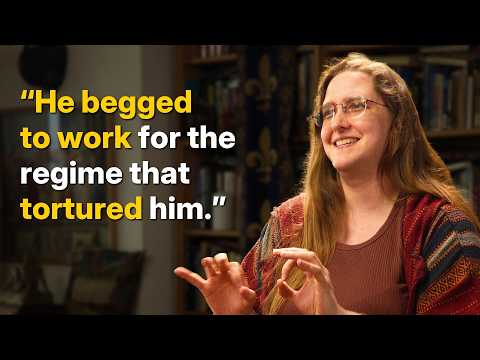
- The Prince as a job application (1:18:18) - Machiavelli chose to rot in exile and beg to serve the very regime that tortured him rather than sell his talents abroad
- Books for an audience of one (1:24:55) - Bespoke handbooks of princes written in a single copy were normal; the author’s fame grew from the secret existing at all
- Why The Prince surged into the canon (1:31:44) - First as a tool to refute Hobbes, then in the 19th century as the founding text of church-state separation
- Religion’s psychological utility (1:39:00) - Machiavelli and Thomas Paine both analyze religion as a tool for forming citizens, not as a state-endorsed truth
- Original ideas couched in antiquity (1:45:12) - Nobody wanted original ideas; scholars smuggled them into commentaries on Livy, Seneca, and Plato
- Copyright born from the Inquisition (1:53:44) - Book-licensing granted a monopoly to the printer who submitted to censorship; England later kept the copyright half
- The Inquisition as Doctors Without Borders (1:57:25) - It had no jails, funds, or arrest power of its own and was only as strong as the local government chose to make it
- Old Nick vs the patriot (2:02:22) - The villain-character “Machiavellian” split off from a real man of immense integrity, useful to us as a thought experiment
Mentions
Companies & Institutions
- The Medici family (5:51) - Dedicatees of The Prince; held the papacy at the time and, as insiders, would spare Florence’s treasures
- The papacy (0:25) - The non-hereditary, decade-cycling institution whose unpredictability drove Italian instability
- The Florentine Republic (9:00) - Machiavelli’s employer; its survival tactic was abject loyalty to Borgia to “buy time”
- The Inquisition (1:52:43) - Began book censorship after 1515; its licensing monopoly became the first copyright
- Cursor (23:05) - Sponsor; recovered corrupted podcast footage using untrunc and realigned the audio (ad segment)
- Jane Street (46:31) - Sponsor; ML researcher Rickson walks through a retired image-corruption puzzle (ad segment)
- Crusoe (1:14:40) - Sponsor; modular AI data-center Spark units assembled in a Colorado factory (ad segment)
Products & Technologies
- The Prince (0:09) - Written as proprietary statecraft for an audience of one, dedicated to Lorenzo di Piero de’ Medici
- Discourses on Livy (48:22) - Machiavelli’s prestige work; framed as commentary on antiquity because original treatises were out of vogue
- Hobbes’s Leviathan (1:31:44) - Hit European thought “like a truck full of bricks”; refuting it revived interest in Machiavelli
- The printing press (1:51:00) - Its arrival before copyright existed left Machiavelli helpless against a printer publishing his work full of typos
- Copyright (1:53:44) - Born as the monopoly half of Inquisition book-licensing, later inherited by England and the Commonwealth
- Lucretius, On the Nature of Things (1:29:…) - Example of a text that drifts for millennia then suddenly answers a century’s questions; Machiavelli hand-copied it
People
- Niccolò Machiavelli (0:00) - The subject; diplomat, patriot, and author whose reputation inverted into “Old Nick”
- Cesare Borgia / Valentino (6:16) - The conqueror Machiavelli observed firsthand; did everything right and fell only to fortune
- Lorenzo de’ Medici (30:14) - Grandfather of the dedicatee; author of the passive-aggressive “no brother” letter after the Pazzi conspiracy
- Pope Sixtus (30:14) - Organized the Pazzi conspiracy to butcher the Medici after receiving Lorenzo’s oath of obedience
- Savonarola (16:26) - Religious demagogue whose fragile, inspiration-based power collapsed when he flip-flopped
- Dante (1:07:51) - Filled his hell with Florentines to warn that everyone breaking the rules would be damned
- Michelangelo (18:00) - Decades later still said of Savonarola’s voice, “I still hear his voice”
- Giordano Bruno (42:00) - Burned by the Inquisition only after his patron turned him in; earlier trials had ended mildly
- Pico della Mirandola (44:30) - More radical than Bruno, but protected by Lorenzo de’ Medici and the Orsini
- Marsilio Ficino (45:00) - Translator of Plato who taught soul-projection and angel-summoning; shielded by patronage
- Thomas Hobbes (1:31:15) - “The Beast of Malmesbury”; his Leviathan drove a 40-year quest to refute him
- Thomas Paine (1:36:52) - Deist who thought all religion pernicious yet mandatory for forming law-abiding citizens
- Spinoza (2:03:54) - Warm, pious monist whose rare excommunication spawned the useful “arch-heretic” character
- Saint Julian the Hospitaller (1:12:06) - Patron saint of murderers who repent; icons all over Renaissance Florence
- King Alfonso of Naples (1:22:34) - Commissioned bespoke single-copy handbooks of princes for each of his children
- Rickson (46:31) - Jane Street ML researcher in the sponsor segment (labeled per transcript speaker field)
Surprising Quotes
“Your Holiness, the people demand more nepotism. You must appoint your illegitimate son to command your armies because your illegitimate son will never betray you.” — Ada Palmer, 36:24
“one saint who’s super popular in the Renaissance, who is not very popular today, is Saint Julian the Hospitaller, patron saint of murderers.” — Ada Palmer, 1:12:06
“when Machiavelli himself was one of the most selfless men I’ve ever read about in the history of the earth, uh, who will give up and sacrifice career, diplomacy, fame, friends, the opportunity to even be in a city and have a nice day, uh, to rot in the countryside to be faithful to his country.” — Ada Palmer, 1:21:00
“here’s a quote from a philosophy department person who actually said this to me: ‘The Renaissance is 200 years of people being wrong about Plato.’” — Ada Palmer, 1:48:00
“the murderous Machiavel as Shakespeare calls him, Old Nick, uh which is a nickname for the devil but becomes popular because Niccolo Machiavelli, Old Nick literally is a synonym for the devil.” — Ada Palmer, 2:02:22
Transcript
Dwarkesh Patel: 0:00 Okay, I’m back with Ada Palmer, who is a science fiction author, composer, historian at the University of Chicago. Ada, this time I want to talk to you about Machiavelli.
Ada Palmer: 0:08 Yes.
Dwarkesh Patel: 0:09 So he writes The Prince, he dedicates it to Lorenzo di Piero de’ Medici in 1513, and he says in the final chapter, you’re the only person who can bring Italy from its current place of ruin and ravage. Why were things so bad? What is the historical context in which he’s writing The Prince?
Ada Palmer: 0:25 So I’m going to give a two-part answer to that, although of course, with any grand view of history, there can be many parts. But the papacy is part of it, and then the city-state structure of Italy is another part of it. And I’ll start with the city-state structure. There’s a principle in politics that when there’s long continuity of a government and the government has been in power a long time, that government has a lot of legitimacy. People believe in its institutions, people are used to it, even if you complain about it, it’s the government, etc. When you break that, when you overthrow the ruler, when you dissolve the republic, when you put in a new thing, it doesn’t have that same staying power. And so it’s very common when there’s one regime change for there then to be five regime changes rapid fire over and over. We see this with how many iterations the French Republic goes through. French Republic and then restored monarchy and then republic and then monarchy. When a long thing cracks, boom, boom, boom, you get chaos. England’s Wars of the Roses are similar. There was one stable dynasty for a long time. The moment that a king is overthrown, then you have overthrow, overthrow, overthrow, overthrow for a long time because the thread of continuity was cut. In Machiavelli’s lifetime, that thread of continuity is cut for the majority of cities in Italy. And that guarantees, from his perspective, that there’s going to be more and more and more and more overthrows in those governments. Because if when Machiavelli was born, there were six or seven city-states in Italy that had had their governments uprooted recently, by the time he’s writing The Prince, it’s dozens, and in fact, the majority of these places. So it’s volatile. Almost no government has staying power. Almost every government is ripe for yet another replacement, yet another replacement, yet another replacement. That’s half the answer of why he perceives there to be this urgency and this guarantee that there cannot be stability. The other half is the papacy. And the papacy, of course, is a long and evolving organism, right? The papacy is one of the oldest institutions in the world now. It was one of the oldest institutions in the world even then, even though this is 500 years ago. And as we all know, when you have power centralized in an authority, especially an executive, there can be changes in how that executive uses that power. And each one sets norms for the next one. And over the course of Machiavelli’s lifetime and just before, a bunch of consecutive popes expanded executive power and especially the military side and launched more wars. 3:00 force. Or did more arbitrary overthrow of governments. Because you have a number of city states that are directly ruled by the papacy, and in theory the Pope can appoint anybody to be ruler of that city. And here is a Pope, he has an illegitimate son, he wants his illegitimate son to be ruler of something so he overthrows the government of a city and puts in his son. The next Pope does it to three cities. The next Pope does it to five. And soon we have a precedent that every new Pope feels he has the authority to knock down every pawn upon the chessboard if he feels like it. Once that is the norm, even a fairly nice Pope still inherits the idea that the Pope is going to overthrow and replace governments. And this creates a unique instability within Italy that no other part of Europe is subject to, because there is no predictability to who’s going to be Pope next. It isn’t hereditary, you can’t plan for it. The next Pope is elected. As is often the case with elections, very frequently the next Pope will be elected by a coalition of all the people who hate the current Pope. And one of the things that electoral politics does is that it tends to swing, in which those outside of power work hard to get into power with the next regime. Which means if we assume that an average length of a papacy is ten years in this period, every ten years you suddenly have a completely unpredictable new monarch who’s almost guaranteed to be one of the enemies of the old monarch, and will therefore rip up and replace all of the things that that monarch tried to do with new things. So Machiavelli, when he’s writing the last chapter of The Prince, is looking around and saying, okay, we have a perfect storm of practically every polity in this region has just had the thread of legitimacy cut. Its institutions have no traditions, its people have no investment in its current rulers. These are all pawns that have been knocked over before and barely stood up again, they’re ready to fall. And meanwhile, nothing will stop the turnover of Popes. The only thing that could stop the turnover of Popes would be one person gaining enough power and ascendancy near this region who has staying power, who has sons that are hereditary, that he can do what Cesare Borgia tried to do and have enough power near the papacy to strongly influence the next Pope to create a kind of stability that’s otherwise impossible.
Dwarkesh Patel: 5:29 Hmm. So he wants the Medicis basically to not unify Italy but stabilize Italy at the very least.
Ada Palmer: 5:35 Exactly. By having conquered enough of a chunk that the papacy fears them and must negotiate with them, as opposed to the papacy being surrounded by small, weakened powers that will constantly be turned over and turned over.
Dwarkesh Patel: 5:49 Right. And the pope now is a Medici, right?
Ada Palmer: 5:51 At that moment, yes.
Dwarkesh Patel: 5:52 So makes it even more plausible. Let’s lay down a little more historical context. So before Machiavelli… 6:00 Machiavelli writes the Prince, he’s a sort of bureaucratic diplomat. And he meets through his career a lot of these famous figures. I want to know what he makes for example of King Louis of France, of Maximilian of Germany, the Holy Roman Emperor. I want to know what he made of Cesare Borgia.
Ada Palmer: 6:16 Yeah. He spends a lot of the Prince in fact trying to veil how much more he cares about Cesare Borgia than everyone else. It’s so interesting. He tries to be balanced. He tries to talk about this example and this example and this example and Valentino, and this example and… and sometimes he just can’t, right? And there’s that incredible magical moment when he’s discussing Valentino’s fall. The moment when he has amassed all this power, he successfully conquered almost everything within Italy and then suddenly both his father, the Pope, and him fall ill at once. And when Machiavelli describes this and he’s saying that everything Cesare Borgia did, he did right. He conquered this kingdom, he would have kept it. The only reason he lost it was fortune. Now what Machiavelli should say is Valentino had planned for every contingency at his father’s death except the possibility that he would also be on death’s door. But that’s not what Machiavelli says. What Machiavelli says is, “He told me that he had planned.” The first person breaks in. Our historian cannot veil himself anymore. He cares too much. “He told me,” first person, that he had prepared for everything at the event of his father’s death except the possibility that he himself would also be incapacitated at the moment. And it’s such a magical moment where the veil between the author and the reader breaks for just that moment. And we’re like, oh yes, all of these others he observed from a distance, but Machiavelli was in the room next to Valentino, at Valentino’s side through this and had the most incredible life-changing first-person view of this man, so unique and charismatic and terrifying. When you read accounts of him, they range from, “This was the most incredible charismatic leader I’ve ever met,” to “This man was supernaturally charismatic to the degree that he must be literally the Antichrist or an incarnation of the angel of death on earth because I have no other explanation of how he could be so persuasive and charismatic.” And Machiavelli was in the room. And every so often you just feel that he’s still in the spell of this incredible figure at whose side he had the scariest job in the world. Right, because Machiavelli’s job dealing with Cesare Borgia is, it’s very clear that the Borgia plan is to conquer the Papal States in the middle of Italy, and Tuscany, Florence’s dominion, is this little notch like a puzzle piece out of the side of the Papal States. And anybody with a map looking at it is like, you gotta conquer this, you just have to conquer this. You can’t have a kingdom without it. You have to. There is no way to stop it. So, what do you do? Machiavelli’s advice to his polity is… 9:00 this time we’re not going to succeed in persuading this conqueror to pass us by. We can’t bribe him into doing something else permanently. But we can buy time. And we can absolutely and abjectly swear to do anything he wants. So we can give him our forces, and we can give him our money, and we can pay him and help him conquer the rest of it, and betray our allies, betray Bologna, which Florence had had a 300-year alliance to defend Bologna. And he says, we have to break it. The whole world is broken right now. We have to break every promise and every hereditary alliance we had. We must be at the side of this man, and the only possible servile mechanism is to win from him through loyalty, through support, and through Machiavelli being at his ear whispering forever, Florence is loyal, Florence is loyal. By that, we buy the boon of Polyphemus, the terrifying promise of the conqueror, I like you, my guest, I’ll eat you last. That’s the republic’s only hope. And that’s Machiavelli’s job, is to stand next to the scariest man who has lived in Europe since Frederick Barbarossa and whisper constantly in his ear, the Florentine Republic will support you and will give your grace anything you ask, just eat us last.
Dwarkesh Patel: 10:21 Doesn’t it contradict what he was saying in the Prince about never rise with the help of great powers for even in success, you have empowered somebody who’s stronger than you and whose mercy you’re at?
Ada Palmer: 10:31 I mean, this is not Florence aiming to rise. This is not Florence expecting that it will gain anything by this. This is Florence knowing it will lose. 10:41 And Machiavelli’s very open about the fact if Alexander had lived another year, Valentino would have finished his conquest and taken Florence and taken it last and it would have been over. But popes are mortal, and buying time is sometimes the survival mechanism. And so Machiavelli has this incredible firsthand experience of being with Valentino through all of these decisions, being with him at the massacre at Senigallia when, you know, rumor had reached Valentino that some of his people were terrified of him and plotting to overthrow him. And then they were so scared of him they decided to abandon the plot. And he heard and he met with them and told them, I forgive you, it’s okay, you know, you’ve renewed your loyalty to me, you’ve passed the test, I trust you, all is well. And then he invites them to the banquet and then massacres them all. The forgiveness is false, the betrayals are punished. There’s this amazing letter that’s a couple months afterward where Machiavelli’s loved ones are writing from Florence because they’ve received a letter from him after the massacre at Senigallia. And they say, oh, thank God, you’re alive! We had no idea. All we heard was that he had massacred a large number of the people who were with him. We didn’t know… 12:00 So as if you were alive because it took months in the chaos the postal system had completely broken down, right? It took months for them to get word that Machiavelli was still alive. They didn’t know whether he had been caught up in the conspiracy. He easily could have been on a list of names of people the conspirators intended to recruit and be gone. So his wife and his loved ones back at home, his children had to wait months to find out whether he too had been slaughtered and it felt to them like a miracle that he hadn’t. But it meant that he watched these incredible deeds of you encounter them, you forgive them, you renew vows of amity, sacred vows taken in the cathedral, and then you slaughter them at dinner violating the laws of hospitality, right? That Dante would say if you do that, you’ve committed such a grave sin that you’re not just regular damned, a devil comes up out of hell and takes your soul out of your body and inhabits you, and that you’re actually already in hell even though your body is still alive on earth. I guess that’s how heinous a sin this is. And yet, it works. And all the rest of Valentino’s men are more loyal to him afterward than ever before and won’t even whisper to each other about dissatisfaction because even the faintest whiff of conspiracy might result in death.
Dwarkesh Patel: 13:19 Mm.
Ada Palmer: 13:21 So why does Valentino’s kingdom, for which he did everything right, ultimately fall apart? Because he happens to eat the same thing that gives him food poisoning as his father and happens to be ill at the wrong moment and also the puppet that he manages to get in power, Pius the Third, dies too fast, and then he’s outmaneuvered by Julius. If all those things hadn’t gone wrong in a row, the kingdom would have stood and indeed he would have conquered Florence. So Machiavelli is constantly reminding us that yes, we have all of these things we can try to do, we can remember it’s better to be feared than loved, we can remember not to be hated. We have power over maximum half of what causes outcomes. The other half is always going to be fortune, right? Because we look at Machiavelli, we know he’s the origin of utilitarian thought and that he says we need to evaluate people’s deeds based on outcome. But he doesn’t just say we need to evaluate their deeds based on outcome. He says we need to evaluate their deeds based on what the most probable outcome was before fortune intervened.
Dwarkesh Patel: 14:30 Mm-hmm.
Ada Palmer: 14:33 And so he says people look at Valentino Borgia and say, ‘But the Borgias fell. They were feared and then they were hated and then they fell and then their enemies took power and then chiseled their coats of arms off of every surface in Rome so that to this day you’re walking through Rome and you sit down at a pizzeria and there’s a weird scar on the wall and that scar is where the Borgia bull is no more,’ right? And people want to make the moral of that be ‘don’t do what the Borgias did, they fell.’ And Machiavelli’s like, ‘No, they did not fall because of their choices. They fell because half of what happens in the world is never in our control.’ 15:00 Everything right and it’s out of your control but we have to evaluate what would have happened and therefore we should imitate them because everything they did right was right.
Dwarkesh Patel: 15:09 I think one misconception about Machiavelli that I had because I had not read these books before um is that he says the means don’t matter, the end matters. And there’s a virtue ethics sense in which maybe he doesn’t think the means matter, but like he is way more concerned about the means than I would have thought. He thinks the means are incredibly important because the means by which you achieve power determine how stable and how fruitful that power will be. Uh in the context of military conflicts he says if you achieve some power with the help of mercenaries or with the help of great powers, people who become stronger than you as a result of you achieving power, that is a very precarious spot to be in. But speaking of Julius, he makes another point that if you achieve your power by lying, by breaking oaths, by being unfaithful, that this is okay because his view is that people will forget that you are unfaithful, they will just take you at your word the next time they encounter you. And so it’s a… it’s actually a very interesting meditation on what by what means can you achieve power that will make that power stable versus not. And the fact that he thinks breaking your word is totally fine…
Ada Palmer: 16:19 Well it’s more subtle, it’s even subtler than that. Because it’s if you are someone who breaks your word and you break it this way, it’ll bite you in the ass.
Dwarkesh Patel: 16:21 Yes.
Ada Palmer: 16:23 And if you break it these ways, it’ll be okay.
Dwarkesh Patel: 16:25 Yeah.
Ada Palmer: 16:26 Because he also does analysis of figures like Savonarola, who would make prophecies and promises and then some of them would happen and some of them wouldn’t, and then he would make new ones and sort of correct what he said yesterday, and he handled his manipulation and untruths badly in Machiavelli’s analysis, in a way that did turn people against him and make him lose power, partly because Savonarola as a religious demagogue, the core of his power was people believing that he was divinely inspired and that he wouldn’t make mistakes and wouldn’t err. And so his power base was fragile vis-a-vis untruth. And for him, because of the specific shape of his power and then the specific way he handled his contradictions, that did hurt him. Whereas if it’s somebody like Cesare Borgia, who will make an alliance and work with that ally for a while and then betray them, because meanwhile he was such an effective conqueror and he was so scare- scary, and everyone was so afraid of him, even when he would betray an ally, his other allies would say, ‘I got to be more faithful to him so that the next person he betrays isn’t me’ and try to work hard to be in the good graces of the prince so that I’m not next, as opposed to turning on him because he was so scary. Savonarola was not scary. Savonarola was charismatic and persuasive and you know had one of these voices that made you… 18:00 who made crowds thrill and women swoon and decades later when people asked Michelangelo what Savonarola had been like, when Savonarola had been dead for decades, right? Michelangelo’s answer was ‘I still hear his voice’. Right? He had one of those charismatic presences, that wasn’t enough when he started flip-flopping on policy and truth. Whereas Valentino was so scary that he could betray his top general and seize his lands and overthrow his city and all of his other generals would say ‘better step even further into line’.
Dwarkesh Patel: 18:34 Yeah.
Ada Palmer: 18:35 So it’s not just that lying is okay, it’s that lying is sometimes okay if you check these other boxes, and it’s not if you don’t. So this is even more reinforcement of he zooms in so much on the means. And if you do A and B, you’re okay, but if you do A and C, you’re not. Looking at the minutiae of different ways you can wield power and different reasons people can have to follow you. If you’re a Prince who’s decided to invest in being loved, you have to keep it up or cultivate being feared alongside it. If you’ve invested heavily in being feared, there are things you can then do that you can’t do if you’re a Prince whose power depends on being loved.
Dwarkesh Patel: 19:13 Yeah. And this actually gets to, so the famous quote in the Prince, ‘is it better to be feared than loved’. What he’s getting at there is I think he’s just like very cynical about people’s nature and if people make you a promise, they’ll just go back on it if your power base depends on people’s promises and loyalties, as soon as your rule seems tattered they’ll go back on it. Whereas if your rule depends on people just having expectation that if they break their oath to you, they’ll be punished, that’s much more stable. But his cynicism about, he basically thinks people will act as badly as they are allowed to. 19:46 I mean, yeah, his whole justification of checks and balances is not dissimilar to the founders of the US and their reason for wanting checks and balances and wanting to put different factions against each other. He’s just kind of cynical and thinks people will just act as badly as you allow them.
Ada Palmer: 20:03 I mean on that topic, Machiavelli is the first person that we have ever in the European tradition to suggest that it could be viable for there to be more than one political party in a state at the same time and that they would compete against each other and sort of vent the society’s tension through competition and vie to try to dominate an election and then the next one. This is what we’re used to. This is innovative in Machiavelli. Machiavelli talks about how competition within a city if the parties are kind of stable, he’s observing Siena as one of the examples of this, can vent local tensions and allow interior adjustments of who has power. And the norm, the standard attitude toward political parties is if there are two political parties in a polity, it will not be stable until one of those political parties is dead and their heads have been cut off and put on spikes and their houses have been burned down and paved over. 21:00 That has been Florence’s solution to political parties before. Uh, Florence massacred its Ghibellines and killed all of them and raked salt into the earth where their houses used to be so nothing can grow there, nothing still grows there. Um, and then when the Black Guelphs and the White Guelphs split into two sub-parties, they immediately started slaughtering each other as well. The standard was one party must wipe out the other party for there to be stability. And there are comparatively few examples, although Florence’s neighbor Siena is one, where political parties managed to not only coexist side by side but be politically helpful.
Dwarkesh Patel: 21:40 One element of governance or of being a good prince at the time I didn’t appreciate that Machiavelli makes a huge point of is how formidable and reputable people consider you to be. And so this is relevant both from preventing others from invading you or from extracting concessions from other people. So in his diplomatic career, he is sent out to a bunch of different foreign polities to basically be like, hey, is this a serious person? So Maximilian is trying to extract a bribe from Florence basically to not invade Florence on his way down to Italy. And Florence says, go check out if this guy’s for real. And he has to make some judgment about this person.
Ada Palmer: 22:17 Well, and it’s useful to remember Florence has paid these bribes a lot, right? Florence’s tactic is, is someone invading the area? Can we bribe them? Uh, because paying somebody to not attack you is a much more sure-fire thing than preparing to actually fight against them, your family’s lands get trampled by soldiers, you suffer economically. So it’s an old Florentine tactic. It’s not a new thing that Maximilian is threatening to invade Italy and trying to extract a bribe. Florence basically every year is like, okay, who do we need to bribe this year to not invade us? Uh, here’s this year’s bribing a king budget. To whom does it go? Is Maximilian a serious threat or are we saving this money in case there’s a threat from somebody more serious like the King of Naples or the King of France or Milan or the Venetians or something?
[Sponsor segment: Cursor]
Dwarkesh Patel: 23:05 A couple weeks ago, Cursor saved a podcast. I was helping some friends record and we shot for several hours. Everything wrapped normally, but when I went to send the footage, one of the video files was corrupted. I tried all the obvious fixes, but I couldn’t get anything to work. So I pointed Cursor at it. Cursor uses a command-line tool called untrunc to recover the video. Untrunc is pretty easy to use, but it only works if you have a clean reference file from the same camera that produced the corrupted footage. Cursor tracked down a viable reference file without any prompting and it used the file’s metadata to make sure that it came from the same camera. Once untrunc recovered the video, I asked Cursor to fix the out-of-sync audio as well. It ran this complicated ffmpeg command that I would have never come up with myself, and it just realigned everything. You should try using Cursor for your daily work. My whole team has been using it for ordinary tasks associated with the podcast. Go to cursor.com/dwarkesh to get started.
[End of sponsor segment]
Dwarkesh Patel: 24:00 At this time, the The Pope is not just a spiritual leader but a temporal power. So he’s like him and his son are literally fighting wars against other Catholics, but the other Catholics are fighting them back. Like, what is it—what does it mean to be a Catholic who is fighting a war against the Pope?
Ada Palmer: 24:15 So here is where geographic proximity is everything. Because from the perspective of if you’re far from Rome, right? When you’re Denmark or Iceland, and the Pope is all the way over there, and the way you interact with him is that occasionally an incredibly impressive papal legate will visit and there’ll be vast pomp and circumstance and the city will rename a street in honor of the fact that somebody sent by the Pope has visited, and he has this great power to say yes or no to petitions. And, you know, different countries have been trying to petition for specific things for ages and the Pope’s legate is here to, you know, interview the Emperor to judge whether the Queen can be Queen or not. And it feels like a big deal and the Pope is very abstract. It’s easy to have a lot of respect for that Pope. Because what do you see that Pope do? You see that Pope in pomp and circumstance, you see that Pope make judgments about fates of Popes and Kings, you see that Pope, um, put out papal bulls and edicts that give theological answers to questions, you see that Pope exercise judgment of life or death over people at a distance. He’s very abstract. And the difference between one Pope and the next Pope is kind of small from your perspective, you don’t see their policy differences. If you’re in Italy, the Pope is that asshole who went to college with your brother and beat him up when they were at college and then, you know, was drunk and irresponsible in middle age and you’ve been negotiating with him in these other jobs and you know this jerk, you know his family, you know the other jerks who are also competitors for this, you’re allied to him, you’re not allied with him, his ancestors are allies of yours or not allies of yours. He’s a specific dude. And you’re much more likely to judge a Pope based on ‘he’s that guy,’ right? This is not Pope Julius II, this is Giuliano della Rovere, and I judge him based on his uncle who put him in power and the actions of his friends and the actions of the city he’s from, and you know all of his dirty laundry and you are subject to the fact that when he moves into power, everyone who’s related to him is going to get promoted within Italy, everybody who’s not is going to get removed from Italy. So it’s much easier for an Italian to see this Pope and it’s actually quite hard to see the papacy. And that’s how you have these fascinating wars where even the cities that are hereditarily incredibly loyal to the papacy will be sometimes be fighting a war against the papacy. So all Italy is divided into these two factions, the Guelphs and Ghibellines. Theoretically, what these two factions mean is that Guelph… 27:00 powers, well families, well cities, they believe the correct successor to the Roman emperors is the Pope. The Pope is the emperor. He has the right to be the the ruler of Italy and indeed of everything that was once Rome’s. He is the ultimate political, the ultimate military power and he is the rightful and only rightful overlord of Italy. 27:23 The Ghibellines believe that in 800 AD when Charlemagne conquered a bunch of stuff and made the empire that we now refer to as the Holy Roman Empire, when the Pope crowned Charlemagne, he delegated the political and military side of his authority to that emperor and made himself be the spiritual authority but the emperor be the political and temporal authority. Right. And therefore the rightful ruler of Italy is the emperor, the successors of Charlemagne. 27:59 These are the two factions for which these parties fought originally. 300 years ago. These days what these factions actually mean is those jerks murdered uncle Tybalt and we will never forgive them. So they are the team that is our enemy and we are this team and they are that team and we hate them and we want to crush them because they want to crush us. 28:27 Which means that sometimes a Pope will be elected who’s from a hereditarily Ghibelline family and the Pope will start promoting people from that anti-papal faction and the pro-papal faction will unite against the Pope. Which makes no rational sense until we remember that they are serving the Pope abstractly. So you get multiple situations where there’s a war between Rome and Florence over the fact that Florence wants to defend papal authority in papal lands against the Pope himself because that individual Pope was from the anti-papal faction.
Dwarkesh Patel: 29:02 Do they not believe that he is the Vicar of Christ on earth? I mean it makes sense in a normal political state for you to think I believe in America but I don’t like the president or something but like isn’t the Pope supposed to be-
Ada Palmer: 29:15 Yes and no. Again, when you’re far away, yes. When you’re close up, you know too much of the dirty laundry of these people. Right, so let me use a fun example. The most passive-aggressive letter ever written in the entire history of time, in my opinion. There’s a type of ceremony that happens when the new Pope is elected, which is the giving of oaths of obedience. A major ambassador from every polity in Christendom comes to Rome and they wait in line for a long time and then they give a speech. A long-winded speech about how great the monarch is that they’re there to represent and how vast his power is, blah, blah, blah and how pious he is and how glad he is, your Holiness, that you’re the Pope now. Congratulations on behalf of my wonderful king. And you’re supposed to…
Dwarkesh Patel: 30:00 This sounds like the highest status possible person who can leave your polity without it falling down. You might send a younger son of the king, you might send a Lord Chancellor. In the case of Florence, you’re going to send the most prominent citizen you can.
Ada Palmer: 30:14 So when Pope Sixtus was elected, it was Lorenzo de’ Medici himself, not the dedicatee of The Prince, the grandfather and namesake of the dedicatee of the prince, who went to deliver this oration of obedience, which means literally prostrating yourself in front of the Pope, literally kissing his feet, and giving this oath. 30:37 Lorenzo did this for Pope Sixtus, with whom he was negotiating to try desperately to get a cardinalship for his brother. Pope Sixtus instead organized the Pazzi conspiracy to try to butcher the Medici family, kill Lorenzo’s brother, killed a number of his allies as well, and attempted to have a coup to take over Florence. 31:00 When the next Pope was elected after Sixtus, Pope Innocent, who was, as everyone knew, a puppet of the same faction that Sixtus was from. So we go from this very dangerous Pope who had tried to wipe out Lorenzo’s family to a puppet of the same faction, Lorenzo sent his son instead of himself to go give this oath. 31:21 And had his son go to deliver the message, “apologize to His Holiness that I could not come myself, but the last time this duty fell upon me, I had a brother upon whom I could leave the burden of the state in my absence. Since now I have no brother, I cannot come in person.” 31:43 It’s a very respectful letter, but it’s also very overt about the fact that he does not trust and will not again trust this faction, right? So they negotiate very carefully how to deal with the fact that the Popes have this great spiritual power, but sometimes the Popes are acting as horrifically selfish warlords. 32:04 That’s also something which has worsened over time. And it’s important for us to remember that the papacy becomes gradually more corrupted over time. This is because with every generation, more people leave donations of wealth to the church, you know, a widow who has no son and has property decides to piously leave this to a monastery, the church gets wealthier and wealthier. 32:28 As the church gets wealthier, with wealth comes power. More and more power is in the state. This makes a stronger and stronger incentive for every ambitious family to send their second son into the church.
Dwarkesh Patel: 32:45 And this goes all the way down, right?
Ada Palmer: 32:47 We have personal letters of Machiavelli writing to and from relatives of his where they’re debating what is the correct sized bribe to offer to buy a priesthood for his little brother Toto. They don’t want to offer too big a bribe. 33:00 It was improper to the family, they don’t want to offer too small a bribe. They’ve heard that another family that’s after this priesthood offered an extra big bribe, that’s kind of not fair. How do they respond to being out-bribed? They just write about this as the most everyday normal thing in the world. And this is a, you know, wealthy merchant prince level family, they are in the top 5% of wealth and power in Florence, but not in the top 1%, right? But for them too it’s normal to talk about paying a bribe to get a priesthood, that’s just how it works. And every generation sees the church get wealthier and have more power and therefore the incentives to corrupt it are even greater. It even becomes a kind of a prisoners dilemma system. Because if you’re the duke and you don’t manipulate the papacy, if you don’t bribe the pope, if you don’t work hard to get your brother to be bishop, and your enemies do, you’re screwed. So you even see it as defensive: I must manipulate the church. It’s the only way my people will be safe. If I don’t manipulate the church, my enemies may manipulate the church and then there’s danger. And this happens all the way up on the scale of kings where popes can make your enemy the most powerful bishop in your kingdom, or can deny you the right to marry because inevitably the person you want to marry is a cousin and you’re going to need a special dispensation to marry them, and the pope can prevent that and mess with your marriage alliance. You need the pope very desperately if you’re a king. You also need the pope all the way down. And that means bribes and other kind of incentives make the papacy more corrupt with each generation. So the papacy is worse in everyone’s lived experience than it used to be even a few popes ago. And you see every generation for 100 years say, popes are much worse now than popes used to be when I was young.
Dwarkesh Patel: 34:54 Mm.
Ada Palmer: 34:55 Right? Everybody says that. Dante says that in 1300. Machiavelli’s grandparent generation are saying that in 1400. Machiavelli is saying that in 1500. In everybody’s lived experience the popes are getting more secular, more military, and more corrupt over time. It’s a gradual accumulation. And it comes to a peak, as such things do, triggering the Reformation, when it becomes so bad that there has to be a massive move against it. And Machiavelli in an interesting way anticipates this, because Machiavelli says, all institutions are gradually corrupted and need to be reformed and returned to their foundations or they will collapse under the weight of their corruption. He says he thinks that the papacy has been undergoing this and that Christianity has been undergoing this. And that if not for the fact that Saint Francis of Assisi, also to some extent Saint Dominic, a couple centuries before his time, reformed the church and brought in a lot more popular support, Christianity would have already cracked under the weight of its own corruption. 36:00 corruption 200 years before. And that it will need such a restoration again, as any institution needs, as city governments need, as republics need, as corruption accumulates over time.
Dwarkesh Patel: 36:13 Mm. One big way in which our world is different from 500 years ago is this uh the focus on patronage and that being the basis of political power. It was much more prominent, right? So in that—that system I think would be interesting to understand.
Ada Palmer: 36:24 Well, it’s—it’s not that it was just more prominent, but it was the fundamental glue of the society as opposed to one of several glues of the society. And, you know, patronage, which is also familial and therefore entangled with nepotism, uh was so fundamental that, you know, for example, when Alessandro Farnese was elected Pope Paul III in the middle of the 1500s, he didn’t corruptly make one of his kinsmen commander of the Papal armies. He instead appointed a really competent experienced general instead of his own not very competent illegitimate son. And there were riots in Rome. Your Holiness, the people demand more nepotism. You must appoint your illegitimate son to command your armies because your illegitimate son will never betray you. And we will know we can trust the Papal armies not to turn on Rome if the Pope’s son is the commander. And we don’t know that about this other commander. He might turn against Your Holiness. And there might be a rift between the Pope and the Papal armies if he’s not somebody that rises and falls with you the way your son does. Therefore, by popular demand, the people want more nepotism because the system depends on it. Right?
Dwarkesh Patel: 37:42 Mm.
Ada Palmer: 37:43 And that’s how you see how the system depends on—there are levels of trust that the patronage system creates because it involves multi-generational entanglement of families where if these families rise, they rise together, if they fall, they fall together, which creates levels of trust that can sustain things like this world where the oath of a soldier is to his commander, not to the polity that he serves.
Dwarkesh Patel: 38:22 Mm.
Ada Palmer: 38:23 And in modernity, we realize another solution to that is the oath of the soldier is not to the commander, the oath of the soldier is to the constitution or to the country or to the people. But in this period, the oath of the soldier is to the commander, mostly because communications are so slow that the commander has to be able to give speedy field commands. But it means you’re creating an army and you’re handing it to a man. And if you cannot trust that man, then the people will be terrified that there could be a rift between Rome and its own armies or between Rome and its treasurer or between Rome and its other allies. Patronage is the glue that makes things work all the way down, all the way down to the level of if you need a defense attorney, that’s done through patronage. The outcomes of trials are a really great way to see. 39:00 pattern? So we’re all familiar with the fact that law codes in the Middle Ages are really cruel, right? And it’s like death for everything: death for theft, death for adultery, death for homosexuality, death for setting fire to the prince’s beehive, whatever it is. You know, that’s the sentence on the books. And then you look at the actual trial records, and maybe one in a hundred convictions for that crime actually ends in a capital sentence. And almost all of the other ones end in a fine or a public flogging, but not in the sentence that’s on the books. And we say why and how is that happening? Patronage is the answer. So if it’s the Middle Ages or the Renaissance and you’re a carpenter, and your teenage son gets drunk and he punches somebody in a brawl and breaks the guy’s nose in that way that makes him die and accidentally kills a guy in a drunken brawl and your son is now on trial for murder. You’re a carpenter, you’ve therefore worked for the rich family whose family carpenter you are, right? Let’s say it’s the Medici family, whenever they need new pews for the family church or new furniture or repairs for the family gates, they go to you. So you go to them and you say, ‘My son is in danger, he’s on trial, please put in a good word.’ And your patron has the ability to then influence the judges. And they will put in a good word for you, and then you will get a lighter sentence. This is a sort of an ancestor of what having a character witness is, to say, ‘But so-and-so is such a good person, they should have the milder punishment, not the more severe one.’ But the norm is you’re accused of a severe crime, you’re put on trial for your life, your patron intervenes, and you get a lighter sentence. And this is how justice is supposed to work. And this is a very severe line that changes in the 18th century with the Enlightenment.
Dwarkesh Patel: 40:42 Yeah.
Ada Palmer: 40:43 Because we now think of proportional justice. The sentence for the crime should be this, and ideal justice is everyone who is guilty of the crime gets that sentence. That is fair. It doesn’t matter who you know, it doesn’t matter whether you’re rich or poor, the sentence should be the same. This is the ideal of Enlightenment justice. The ideal of this period’s justice, which is much more shaped by Christianity, is the purpose of the trial is the spiritual interior correction of the soul of the sinner. And therefore the ideal outcome is for them to fear for their life, they’re before a terrifying judge who is the earthly representation of God, and they’re before… they know that they’re guilty and they deserve to be thrown into the pits of hell, but miraculously they are given grace and they are pardoned. And the process of being put on trial, fearing for your life, begging to the patron, and then receiving mercy is supposed to sort of be an earthly preview of the process your soul goes through. 42:00 or undergo when you are before divine judgment. And therefore should make you come out the other end a good person. And the goal of the justice system is the spiritual improvement of the sinner and the hope that they will come out the other end better and more likely to go to heaven. Even when people are being sentenced to death, there are religious organizations who sit with them overnight, having a final prayer group and walk with them to the gallows holding their hand and holding a painting of the Virgin Mary in front of their face so the very last moment the person who’s about to be executed is thinking about heaven. And the ideal outcome of the execution is that the soul goes to heaven. So the whole structure of the justice system expects the intervention of a patron, who represents the intervention of a patron saint, persuading the judge who is God to give you mercy. So when we see 100 trials end in 99 the person paid a small fine and one where the person was executed, what that actually means is 99 their patron stepped in and somebody persuaded somebody who put in a good word who got the light sentence, and one, that person had fallen out of the patronage network. That person had angered their boss, their protector. That’s why it went all the way to being a capital offense. Probably a lot of people listening are familiar with Giordano Bruno, very famous as a martyr for science because he was burned at the stake by the Inquisition.
Dwarkesh Patel: 43:23 Mm.
Ada Palmer: 43:24 Fewer people know that that was not his first Inquisition trial. He was investigated a number of times by the Inquisition for doing various radical forms of thought. The earlier trials had the usual outcome for that kind of trial of he had a patron, the rich people that he worked with or for, or the university was hosting him, they put in a good word, he’s fine. The Inquisition tells him be good and things continue as they are. This time he had angered the person he worked for. He pissed off his patron. And it’s his patron who turns him in to the Inquisition and says, this guy is a charlatan, he promised he could teach me these things that he can’t, I don’t trust him, he’s no good, throw the book at him. And the reason that trial goes all the way to a capital sentence is that he doesn’t have a patron. He’s the 99th case that time. And if he had had a patron protecting him despite how radical his stuff was, he would have been okay. And we see that in the trial of Giovanni Pico della Mirandola, who was candidly substantially more radical than Giordano Bruno.
Dwarkesh Patel: 44:30 Mm.
Ada Palmer: 44:30 But when Pico is on trial, Lorenzo de’ Medici and other powerful people really care about Pico and they pull out all the stops and, you know, Lorenzo talks to his brother-in-law who’s an Orsini, the Orsini have enormous influence in Rome, they get permission for Pico to be let go and sent home to Lorenzo to sort of live under house arrest under Lorenzo’s promise that he’ll be good from then on.
Dwarkesh Patel: 45:00 Or- Marsilio Ficino, right? who is this radical Platonist who publishes a book on how to project your soul outside of time and summon angels and arguing for the existence of reincarnation and- and is very clearly being extremely theologically weird.
Ada Palmer: 45:15 This is the man who wrote the best letter of recommendation ever written in the history of time when he was recommending a young scholar for a job with the King of Hungary. And he writes in the recommendation letter: “This young man is the reincarnation of Saint Thomas Aquinas. So you should give him a job.”
Dwarkesh Patel: 45:32 Now that is a letter of recommendation.
Ada Palmer: 45:35 But you’re like, “The reincarnation of Saint Thomas Aquinas, huh?” And the Inquisition comes knocking on Ficino’s door and is like: “Uh, reincarnation?” And Ficino’s like: “Oh no, help! Talk to Lorenzo.” Lorenzo talks to his brother, Cardinal Orsini. Cardinal Orsini shuts it down. And Ficino is told: “Maybe lay off talking quite so overtly about the- the reincarnation.” And Ficino says: “Yes, of course. And I will only teach very pious people how to summon angels and project their souls out of their bodies. I promise I won’t teach it to any- anybody who will use these powers irresponsibly.” And the Inquisition is like: “Okay” and goes home. Because patronage kicked in. And patronage is the glue that makes everything work because you can’t even stay in a hotel or buy an apple — I’m not kidding — without a patron. Because you, you know, you arrive at a city, nobody knows you, you’re a stranger. What you have is a letter of recommendation from your patron who’s friends with some important person there. You present that at the hotel. That’s why they let you stay.
[Sponsor segment: Jane Street — speaker labels follow the transcript’s speaker field]
Dwarkesh Patel: 46:31 Okay, I’m here with Rickson, who’s an ML researcher at Jane Street. Rickson, I’m sure you saw that there were many viral memes on Twitter about the hiring process at Jane Street.
Ada Palmer: 46:40 Oh yeah.
Dwarkesh Patel: 46:42 And so I wanted to see for myself, what is the hiring process at Jane Street actually like?
Ada Palmer: 46:46 Yeah. So here’s one of our retired puzzle questions. So, we’ve got an image dataset, but half the images in it have been corrupted. But they’ve been like scrambled in a consistent way. Like, the pixel on the top right got like swapped with the pixel in the middle. Like, the same swap happened for like all of the images in the second half of the dataset.
Dwarkesh Patel: 47:07 A- a super naive thing then would just be like, training a classifier on corrupted versus uncorrupted images.
Ada Palmer: 47:13 Yeah, so you could have like a learned model of like how the image looks and then like optimize for that.
Dwarkesh Patel: 47:18 How about this? What if just like recognizing sharp gradients in color or something?
Ada Palmer: 47:24 I think this is like getting to one pretty practical solution.
Dwarkesh Patel: 47:29 It’s interesting that a problem like this that is so concise to describe can have so many different plausible solutions.
Ada Palmer: 47:37 Yeah, but I think like we’re not actually looking for the interviewee to like get the canonical solution. It’s more about like discussing all the ML possibilities and like seeing if like people can like predict like the failure mode of whatever idea they think is most promising.
Dwarkesh Patel: 47:49 I see. 47:50 Yeah, but what is the solution?
Ada Palmer: 47:51 It turns out like a surprisingly effective solution is…
Dwarkesh Patel: 47:54 For the viewers, you can leave your solutions in the comments. And if this is the kind of puzzle you enjoy, go to janestreet.com/dwarkesh to check out their open ML positions.
[End of sponsor segment]
Dwarkesh Patel: 48:00 The Prince is painting a picture of just regime is incredibly unstable. You had to worry about foreign powers, you had to worry about rival factions within your own country, you had to worry about mercenaries, you had to worry about lots of different things. And so any given regime is very unstable. And so what had to happen for things to get more stable basically. 48:04 Okay, so to tie a couple of threads we were talking about together…
Ada Palmer: 48:21 Yeah.
Dwarkesh Patel: 48:22 And we were talking about a couple of the ways in which people owed their loyalties not to the regime but to others within the regime which created instability. So in Discourses on Livy, Machiavelli talks about the Roman Empire. One of the reasons that its fall was instigated is that these generals who were months away in the frontier fighting these wars because the empire was so big had to amass for the periods of years and in some cases for Caesar of course decades the command of so many men who have for decades just basically been listening to this guy tell them what to do, who to fight next. This is the person who they’re loyal to, as opposed to say if the consuls could be giving dictates every single day then the loyalty could be to the regime in Rome. And same with patronage if there’s not a system of
Ada Palmer: 49:21 Mhmm.
Dwarkesh Patel: 49:22 both deterministic justice that we have in the modern world today. So a lot of The Prince is dedicated and Discourses on Livy on well how do you make sure that some family is not pissed off that their son got killed and there wasn’t avenged or whatever. And if you just have a reliable criminal justice system that problem goes away. And same with the welfare state and getting rid of the patronage system. Basically if you don’t have to rely on this family then this disintermediates them and the state can have your loyalty. So it’s interesting to connect all these threads together of communication time, impartial justice system, impartial welfare state as being what is required for the regime to have enough legitimacy and then as a result enough stability to have modern nation states.
Ada Palmer: 50:03 Yeah. You know, one thing that everyone is surprised by is that when Valentino Borgia… is it Cesare Borgia? Valentino is much more what he’s called in the period. When Cesare Borgia conquers these cities in central Italy and he goes in and he massacres the ruling family and he works hard to kill every member of them that he can so that there isn’t a potential rival claimant to come displace him. And he implements neutral justice because he and his cronies have no side in that city. They aren’t connected with one group of families against another. And when they implement justice, they do so neutrally because they aren’t interested in the local backstory of faction. And as a result, to everyone’s surprise, he moves into a city, he massacres the rulers, he implements an authoritarian regime, and he’s incredibly… 51:00 popular and beloved by the people. And everyone says, “Why are they liking this man? He is a cruel, murdering tyrant.” And the answer is for the first time in generations, they have had something close to fair justice. Meaning, it used to be that there was one faction in power and there was another faction out of power, which meant in our scenario where a carpenter’s son gets drunk and kills someone in a drunken brawl, if that carpenter’s son is the carpenter of the power that’s in power, then there will be no justice and there will be no consequences for this murder, maybe the smallest of fines. And if that carpenter works for the families that are out of power, then throw the book at him, he’ll be executed for that death. And there will be no fair justice. The outcome of the sentence will be entirely who’s in power and out of power and not the fairness of the case. But when both of those ruling families have been wiped out and an outside power is here and a homicide takes place, the neutral judge hears this neutrally and gives the same answer regardless of whose family’s carpenter that is. And the people who have lived in generations of, “There is justice for some and injustice for others,” suddenly having equitable justice are delighted by this and find that wrongs are finally being punished. The people that they’ve resented and hated for so long who were in power are finally being punished for the crimes that they commit. And this makes Valentino’s conquering and violent regime incredibly popular with the everyday people of these cities who are therefore willing to sign up for his armies and help defend his conquests and keep them in power and man his fortresses. So, Machiavelli and others are startled by this. They had expected that if a conqueror moves in, massacres the rulers of a city, everyone in the city will hate and fear that conqueror. But if the conqueror is feared and not hated because he wiped them out but then was fair toward the people, then it works.
Dwarkesh Patel: 53:06 So why would it have been so bad if Valentino took over Florence and he had survived and it- he would have massacred maybe the ruling regime at the time, the Republic? But I- I don’t know what Machiavelli is especially concerned about, but like the cultural treasures of Florence and everything…
Ada Palmer: 53:22 No, no, no. So, again in the discourses, no, it’s- the cultural treasures of Florence would have potentially been okay. Um, there’s two answers to that. One of them is Machiavelli is very adamant that if you live such that there is somebody who can have you summarily executed, he can walk by you in the street and point at you and say, “Him, kill him,” and it happens, then you are not free. Um, in his vocabulary in the text, if you live in a state of- where there is an arbitrary power who can have you put to death, you are a slave. 54:00 And if instead you live in a system where there must be a trial and there must be a process and this must be examined and public, right? If there is a system, then you have liberty. That system may be unfair. It may be biased. It may be, in Machiavelli’s case, the very system that tortured and exiled him. But there was a system, and he considers that difference to be enormously important. So, if Valentino conquers Florence, it’s not going to be that system anymore. There will be a man who can walk down the street and point at a Florentine citizen and say, ‘Kill him,’ and they will kill him. And will that tyrant be fair? Maybe. Will that tyrant exercise this power well? Perhaps. Will his successor be worse or better than him? We don’t know, we can’t predict. It’s a monarchy, it’s vulnerable to good successors and bad successors. But the people of Florence are not free if there exists a man who can say, ‘Execute him.’ That meant a lot to Machiavelli. And it meant a lot to the Florentine people and it’s kind of hard for us to see how few liberties and how little franchise they had and yet how much they cared. Right? Florentines are constantly willing to go into the street and risk their lives flying the banner that says ‘Libertas’ across it. Liberty, right? And the banner ‘Libertas’ is the coat of arms of the Signoria, the senate, which is selected from the 1% super-mega elite tiny minority of the city that is eligible to be in government. They aren’t rioting to defend their right to participate in the Republic, they’re rioting to defend their boss’s boss’s right to be in the Republic. And yet they care so deeply about it and they consider it fundamentally different from the situation in which there is a man who can walk down the street and point at you and say ‘him, kill him,’ right? And that tradition of liberty means a lot and would be gone, even if the most beneficent tyrant in the world took the city. So that’s half of the answer.
Dwarkesh Patel: 56:13 Can I ask about that real quick? So, when Lorenzo de’ Medici takes over, is he not that guy?
Ada Palmer: 56:23 So that’s the second half of the answer. So, there is a huge difference between when the conqueror is from your city, loves your city, and wants to take care of your city and when the conqueror is from the outside. Because when the Medici take over Florence, they want Florence, and they want Florence to be Florence, and they want all of its beauty and all of its treasures to still exist and be theirs. They would never consider razing important parts of it to the ground. They would never consider threatening the Florentines with, ‘we will destroy your city walls,’ or ‘we will destroy your cathedral’ if you resist. 57:00 But any outsider would.
Dwarkesh Patel: 57:01 Yeah.
Ada Palmer: 57:02 So Florence looks more like Florence under a Medici Duke than Milan looks like Republican Milan under a Visconti or Sforza Duke, than Ferrara, which has no remnants of its republic, does under the Dukes d’Este who can do anything they want, including murderously gouging each other’s eyes out, and the city will never take one step against them. So Machiavelli is aware that Florence, if it has to fall, falling to the Medici is gentlest, most volatile perhaps, because they aren’t going to be feared as much as an outside conqueror would be feared, but certainly gentlest, and that you preserve some important rights when you’re conquered from inside that you don’t when you’re conquered from outside.
Dwarkesh Patel: 57:54 So obviously we remember this period for producing all these great cultural artifacts, all these amazing buildings, all this art. And then we’re talking about the precariousness of the prince, the constant wars, how they’re literally fighting all the time. How is there the surplus that is available for all these different projects? You write in your book about how the older Lorenzo de’ Medici spends what would be today, because of the expense of, you know, building libraries and buying books, what would be today $30 million to build a library to educate his grandsons. So how is there all the surplus available for education and art and so forth in a period where everybody’s fighting everybody and if you lose a war your city will get, if not razed, at least the ruling faction will get killed?
Ada Palmer: 58:43 So half of the answer is finance is incredibly profitable. And if you’re the banking center, the amount of money that is flowing in is staggering. Big wool, the big industry for Florence, is also incredibly, incredibly wealthy. So in the same way that Henry Ford becomes incredibly rich in a period when a suit of clothing is something you save up for like buying a car, and everybody needs one, you can get very rich that way. So, A, there’s lots of money. But B, do you remember how it’s often said that the biggest impact per dollar for US defense spending is the Fulbright program? Because diplomacy is cheaper than war. And sending a, you know, bright-eyed, bushy-tailed young graduate student out to a country to enthuse about its culture and make connections and make everyone feel positively does a lot more to avoid conflict and also get help in conflict than the same amount of spending on the actual army does. Right? And dollar for dollar, diplomacy is cheaper than war. They’re using the art to do diplomacy. And so in one sense, if you’re not doing the art, you would have to spend more on the war. It’s not that the art is being made from a surplus… 1:00:00 …of the war. It’s oh no, we can’t afford enough armies to actually defend us against France, even if we spent every penny we had on armies, it would not defend us against France. But we sure can spend it on painting fleur-de-lis all over our seat of government and creating beautiful expensive gifts for the King of France so that when the King of France comes, he will feel like we are friends and we are giving him all of this cultural output. And if we fought him, we would lose. But if we play the culture victory game, that’s cheaper.
Dwarkesh Patel: 1:00:32 Yeah.
Ada Palmer: 1:00:32 And we can try to win.
Dwarkesh Patel: 1:00:33 We talked about this last time, the experience of what it must have been like for a French diplomat to arrive at Florence and look at these people he considers to be I don’t know know-nothings or not even descended from the Caesars and so forth and they’re producing all this stuff. One, um, when one goes to visit Florence now, the interest is in part because these are historical artifacts, right? Because somebody made them 500 years ago. But if you’re seeing them at the time, these would be something either you thought only the Romans could have done that we can’t do anymore, or something that even the Romans couldn’t have done.
Ada Palmer: 1:01:08 Right. I mean, they’re high tech then. They’re like when we look at an incredibly impressive skyscraper that’s taller and more precarious and amazing than any past skyscraper.
Dwarkesh Patel: 1:01:17 I think that is a sort of underrated aspect of what it must have been like to be a foreign power evaluating Florence at the time.
Ada Palmer: 1:01:21 Yeah, yeah. It’s, it’s, we have to remind ourselves that these are high-tech achievements as well as historic achievements. And also that this is a period in which backwards is forwards, which is to say this is not a period that like us thinks of the future as where potential is and that humanity might get better and better over time. The potential of humanity is recapturing Rome. Uh, backwards is forwards. If we can get more and more like that, that’ll be better. That’s what we aspire to. And they do debate: Can we surpass the Romans? Can we make things even better than the Romans? But it’s an if, it’s a debate. It’s not a definitely of course. For us, it’s a definitely of course. We’re moving forward, we’re trying to build bigger and more impressive things. Even for people who are cynical about progress, people will say, yeah, we will be more powerful in the future. We’ll be able to do more. We may use it to stab ourselves in the foot, but we will be more powerful in future. And for them it’s very much ‘Will we ever be as powerful as the Romans were?’. Uh, we don’t know. We can debate it. We hope so. We aspire to it. Will there be another Pax Romana? Will there be another universal peace someday? Will we ever achieve that again? So, when we look at something that is like Florence’s cathedral or Florence’s neoclassical buildings, you know, we look at it and we know they’re imitating the past and so we don’t think of it as cutting edge technology, but for them cutting edge technology is imitating the past.
Dwarkesh Patel: 1:02:57 Yeah. We talked about last time how both Machiavelli and the other… 1:03:00 humanista, in the different ways they understood virtue, we’re trying to emulate the virtues that made Rome originally great. Um, how much are they going off of just these random myths that Livy or whoever write down about something that supposedly happened where Brutus kills his own sons? Or who was that guy who put his hand in a fire to show that the Roman people will be loyal and you should fright us? Um, and how much is it, you know, you look at actual Roman history and it’s like incredibly fucked up? Right? We’re just talking before we started recording about the life of Claudius and, and the period of the emperors and so forth and surely this must have been known to them that actually…
Ada Palmer: 1:03:33 I mean, part of it is they’re zooming in on different emperors. And when we want to make an HBO drama, we don’t make it about the kind of boring competent emperors who just do a really good job. Uh, our society might be better off if we did. Right? But, you know, the dramatic emperors where there’s lots of stabbing and lots of orgies make for good television. But everybody curates our history and often when you’re writing the history of your own culture, you pick the heroes, right? And no matter, you know, you look at a middle school history textbook, it’s gonna celebrate the heroes of that country. And if it’s trying hard to be unbiased, it will also acknowledge the faults, but the heroes are gonna be in there. Uh, when they are trying to create a handbook of what was, what stands out for them is what’s different from their present. Their present has plenty of tyrants. Their present has plenty of orgies. Their present has plenty of massacres. Their present does not have seventy years of peace. So that’s what stands out as different. Right. And I think for us, some of the orgies and massacres stand out more because we don’t have as many orgies, not for now, or at least not publicly that we know about. And when we do expose that our leaders have been involved in scandal and orgies, we get very upset about it. Um, but, you know, to them they read about all of this and they read about the successes and they read about the stability from Trajan, Hadrian, and Marcus Aurelius and they, they say, ‘That is alien to us. That we haven’t had in so long. That is what we want to have again.’
Dwarkesh Patel: 1:05:12 So much so that when Gibbon is writing the history of the fall and decline of the Roman Empire in multiple volumes, but in the late 18th century, in the late 18th century he says that there’s never been a better time for humanity than during the great, the five great emperors.
Ada Palmer: 1:05:29 Yeah. Well, and, and to the degree that medieval Europe can’t cope with the idea that these good emperors were also pagans and are therefore in hell, right? And which is where you get this gorgeous legend that Pope Gregory the Great summoned the ghost of Trajan and baptized his ghost so that he can go to heaven, even though Trajan is, you know, during the persecution of the Christians emperor. But they just love him so much they need him to be in heaven. 1:06:00 can’t handle the idea that he would be in hell despite being a great Caesar. So the medieval world, it is canon that Emperor Trajan was posthumously baptized so that he could go to heaven because he’s such a good emperor. And Dante centers him in Paradiso as the ideal Christian ruler, right? But he wasn’t a Christian; he was persecuting the Christians. But this is medieval and Renaissance Europe are very good at having their cake and eating it too in terms of getting to pick and choose the best parts of the pagan world and the best parts of the Christian world when constructing their imagined antiquity to have both and celebrate both at once.
Dwarkesh Patel: 1:06:42 Actually, so here’s the thing I’m confused about. Machiavelli makes the point of pointing out Cesare Borgia’s betrayals because of how remarkable they are, um, for example, Remirro de Orco? Yes. So slaying the very deputy that he had tasked with being harsh and as a result bringing peace to a region for that harshness that he had delegated, or, you know, inviting as a gesture of goodwill some people who were going to do a revolution against him and then killing them all at the banquet. Um, but should we take the fact that he’s making a special point that, hey, actually take this kind of betrayal or take this kind of deed as something you should consider doing as evidence that this is actually rare at the time? Um, maybe another way to ask the question is, to the extent that they are all Christians at the time, surely they really did believe they’re going to go to hell if they betray people or if they lie or break their oath or something, right? So just as you were saying a second ago about how capital punishment was actually less prominent at the time than we in retrospect think it to be, are these kinds of crazy political intrigues or whatever less common than these stories make it out to be?
Ada Palmer: 1:07:51 Right, so two, two halves to that answer, and I’ll do the second one first. The second one being about the religious one, right? Because they all believe in this religion that says if you do this, you’re going to go to hell, and then they all do this. And that’s something that this period really wrestles with, and everybody is sinning and breaking their rules all the time. And, you know, killing for honor and committing usury, right, lending money at interest, they’re all sinning all the time, and they’re all doing these things that are against the rules all the time. And people in the period do bring that up and say, hey, this is not okay. And this is one of the biggest focuses of Dante’s Commedia. And Dante in it says, look, when you do these things, you will go to hell for them. And he fills his hell with Florentines, right? And there’s that wonderful line where he meets yet another group of Florentines and he says, congratulations Florence, a city famous in hell, because he considers his Florentine peers to be particularly hypocritical. And as he goes through, we see Florentines, especially in the sections for usurers 1:09:00 …y and for sodomy, but also, you know, heretics and unbelievers and all through he’s encountering his countrymen, including people he himself loves and respects because Dante is making this painful point of, guys, it says that if we do this, we go to hell. I’m going to make a book where that’s literally true. And one of the chapters of Inferno that hits extra hard in his period and in ours is Canto 3 where he’s encountering the lustful and we see Paolo and Francesca. Paolo and Francesca, this is a story that was incredibly popular love story at the time. There was a young, beautiful noblewoman who had a, you know, older, horrible husband. And while he was away, there was also this wonderful, handsome young nobleman who visited him and her and they read the romantic stories about King Arthur and Guinevere and Lancelot, and one thing led to another and they committed adultery together. And then her husband came home and found them and murdered them both. And everyone loves this story. It is the ubiquitous love story. It’s their cultural equivalent of Romeo and Juliet, right?
Dwarkesh Patel: 1:10:06 Yeah.
Ada Palmer: 1:10:07 And it’s a touchstone story. People sing songs about it. Everyone knows this exciting love tragedy. And he puts them in hell because they were guilty of adultery.
Dwarkesh Patel: 1:10:14 Mm-hmm.
Ada Palmer: 1:10:15 And it’s really shocking to everyone who has celebrated this love story and then like, no, if this is true and this is our religion, then this is where they would be. And Dante is very stern and very strict and very unusual and starts a lot of discussion of this question of, we’re breaking these rules all the time. Should we take this more seriously than we have?
Dwarkesh Patel: 1:10:34 Yeah.
Ada Palmer: 1:10:35 And he says, repent or you will all go to hell, my fellow citizens. So they’re worried about that.
Dwarkesh Patel: 1:10:51 Right.
Ada Palmer: 1:10:51 But another part of it is, Christianity as practiced then has a much, much less focus on purity than the Christianity that especially America is used to and also the Protestant-dominated parts of Europe. And there’s a big change in Christianity that comes in the course of the Reformation, primarily from Calvin, Calvinism and then Puritanism, which has a greater focus on trying to live an unspotted and pure life. And the idea of, you know, we’re going to create a community of people who are all going to stick to the rules and live by them. And if you are a sinner and have broken these rules, you should be expelled from this community. You are impure, you are a stain. That is not the way Christianity thinks in this period though. The assumption is everybody sins all the time. There is no such thing as purity. Everybody sins every five minutes. Everybody is envious, everybody is lustful, everybody is slothful. Everyone will make these mistakes and then you repent of them and you feel sorry and you do penance and you make spiritual progress and you are forgiven and then you sin again. Everybody sins. Saint Francis of Assisi sins. He was a big focus on his himself as a sinner and… 1:12:00 is constantly self-actualizing despite being in many ways the most virtuous man in all of Europe, but stressing his own sin. 1:12:06 So one saint who’s super popular in the Renaissance, who is not very popular today, is Saint Julian the Hospitaller, patron saint of murderers. 1:12:16 And he is the patron saint of murderers, because his legend is sort of an Oedipus-like legend, that when he was born, he was cursed by a witch, that when he grew up, he would slay his parents. And he runs far away hoping that he will never encounter his parents and so not meet them, but eventually feels homesick and comes home and is tricked by the devil into slaughtering his parents, and he slaughters his parents. And then he spends the rest of his life trying to make up for it and going on pilgrimage and then dedicating his life to running pilgrim hostels to help others be pilgrims. 1:12:52 And he is the patron saint for people who have committed murder and feel really sorry and need to live with it and repent of it. 1:13:00 And that’s not the attitude we have toward murderers right now, right? Our cultural attitude toward murderers is that person is a murderer, they should be shunned, they should be locked in a box, the key, or they should be executed, they should be removed from the society, there is no turning back from homicide. 1:13:19 But the Renaissance says sometimes you gotta commit homicide, and then what’s important is that you feel sorry and you need to have a patron saint whose job it is to be a spiritual mentor for you, he who too committed homicide, he committed a worse homicide than you did because he killed his parents, and if he went on a spiritual journey to recover from being a murderer, so can you. 1:13:41 And there are dozens and dozens and dozens of icons of Saint Julian all over Renaissance Florence, everywhere you go in and you see one and you’re like, ‘Mmm-hmm, that was commissioned by somebody who committed a homicide and is trying to live with it.’ 1:13:54 This is a society that really thinks about sin as something you do and then you pay for it afterward. 1:14:00 And people like Dante and Savonarola come along and say, ‘No, this is not okay. You are perverting these things. No, you cannot put your family’s coat of arms all over the inside of a church turning the church into an advertisement for your banking business when it should be a place of God. That’s inappropriate and and no God will not forgive you for it.’ 1:14:22 And the society says, ‘Yeah, well, but God forgives maybe anything if we repent a lot, right?’ And so it’s a complicated sophisticated hypocrisy that builds up a lot of apparatus to let the society’s actions be at odds with its religious precepts to that degree.
[Sponsor segment: Crusoe]
Dwarkesh Patel: 1:14:40 We’re going to need dozens and eventually hundreds of gigawatts of new AI data centers. The only way to achieve this at scale is to turn the data center build out into an industrial process. Basically manufacturing modular components that you can literally slide into position wherever there’s power. Crusoe is furthest along at making this happen. Crusoe has a 350- 1:15:00 100,000 square foot factory in Colorado where they assemble their spark units. These modular AI data centers with everything already pre-built: high-density racks, power, cooling, fire suppression, you name it. Crusoe actually manufactures a lot of these components in-house. This allows them to sidestep long lead times on components like switchgear and power distribution centers. All of this, of course, would be moot if Crusoe still had to wait years to connect each module to the grid, but they don’t. Crusoe has a ton of experience connecting their data centers to alternative energy sources. For example, Crusoe has a site in Nevada, powered by Redwood Materials, that runs completely on solar and uses EV batteries. They’re actually in the process of expanding it, adding in a couple dozen more spark units from their Colorado facility. So, if you want AI capacity that’s not fully dependent on grid availability or strained supply chains, you should reach out to Crusoe. Go to crusoe.ai/dwarkesh to learn more.
[End of sponsor segment]
Dwarkesh Patel: 1:15:57 Okay, I couldn’t get enough of Ada or of Machiavelli, and so there are a few more questions I wanted to ask you. Thanks for hopping on again.
Ada Palmer: 1:16:10 My pleasure.
Dwarkesh Patel: 1:16:12 We didn’t talk last time, I think, about the fact that Machiavelli was exiled and he’s writing these books in exile. Maybe you can give a bit of context around how somebody—we were talking about his diplomatic career—how he ends up in exile and what his plan is once he’s there.
Ada Palmer: 1:16:31 Yeah. And I mean, here we have to start with everybody who’s anybody in the intellectual tradition lives in exile for a while, right? Dante does, Voltaire does, Rousseau does, Thomas Hobbes does, Machiavelli does. And more importantly, exile’s a very common thing in Florence and isn’t the permanence that one expects. In Florence, exile means the people who are in charge of the regime distrust you right now; they want you out of the city, but they are testing your loyalty, they are testing whether you will stay true to them. And you’re told not, ‘Get out of the city,’ like a Roman exile, but go to a specific place. Go to London, go to Bruges. Go here, stay there, and we will send you instructions. And then you’re expected to act as a kind of unofficial official emissary for the government of Florence while in your exile. And you’ll be asked to do diplomatic missions after a while, they’ll say, you know, ‘Go talk to this person on our behalf,’ or ‘Go deliver this trusted letter,’ and if you’re good and you behave, then after some years of service to the Republic, you’ll be recalled. So it’s a sort of a provisional exile. And they pick a specific place to send you, and if you go and are good and do what they say, then after a while they consider bringing you home. If you don’t, if you leave and you don’t stay where they said, if you run off to work for someone else, then okay, you’re not allowed back in Florence anymore, you’re an exile at this point. Machiavelli’s exile is unusual because they really don’t trust him. And so they don’t send him to Bruges or London or Barcelona or the Germanies or any number of other places where he actually has political contacts or doesn’t, they send him to a middle-of-nowhere hamlet in the countryside outside of Florence in Tuscany. 1:18:00 Machiavelli, where there is nobody important and there is nothing to do. And this isn’t a go wait for instructions, this is a go rot. And we’re testing whether you will faithfully stay and do basically nothing and be forbidden to talk to important people, be in isolation. 1:18:18 When that exile is given, everybody expects that Machiavelli’s response will be, okay, they’re not giving me even a second chance, I’m going to run off and work for somebody else. Because there are a jillion people in Europe who would love to employ a skillful classicist, historian with military and diplomatic capacities who has political contacts in Rome and in France and has visited the court of the emperor. He could have worked for any number of cardinals. He could have gotten a very prestigious diplomatic job in any of a number of a dozen courts. A Florentine historian especially is something that you absolutely want to hire to write a history of, a flattering history of your own family. And for even a century before this, kings as far away as England had been trying to hire Florentine historians to come write about them. So he could have easily done this and this is what is expected and he doesn’t. Because Machiavelli says, no, I’m going to stay and I’m going to rot and I’m going to write The Prince, which is my job application begging the new regime to bring me back and let me work for them and demonstrating my loyalty. And I’m going to send it to them and only them, them and my immediate friends, I’m not going to share it with anyone else. Because Machiavelli is a patriot and he will not serve any cause that is not his country. No matter whether the pay at a royal court somewhere would be three times what he would ever get at home, that doesn’t matter to him. No matter whether this is the regime that just arrested, tortured, and exiled him despite him not having plotted against them. He wants to work for that because Machiavelli fundamentally is possibly one of the most patriotic patriots in Earth’s history. And he will faithfully sit in the countryside and rot while begging to work for the people who ordered his torture, so long as they will recall him so that he can serve his country. 1:20:07 And this connects to the question we always ask about the target audience of The Prince, because his other works, his discourses, his histories, his comedic play, those were for public circulation, those increased his fame, those made important arguments. His history of Florence joined other important histories of Florence circulating, influencing the way people thought about politics. Not The Prince. The Prince is secret proprietary, the secret sauce and how to maintain power. And he will not let any other power have that, right? It’s like a nuclear scientist with diplomatic secrets who is faithful to his country and will not sell out and let those secrets fall into other hands. Machiavelli knows that he has the beginnings of a new world of political science and he will only share that with the government of his country because he wants it to protect his country and he will not serve. 1:21:00 any other cause. This is why it’s so weirdly ironic to me that the reputation, the word Machiavellian, right, means self-serving, when Machiavelli himself was one of the most selfless men I’ve ever read about in the history of the earth, uh, who will give up and sacrifice career, diplomacy, fame, friends, the opportunity to even be in a city and have a nice day, uh, to rot in the countryside to be faithful to his country, and he would rather serve nothing and no one than give an hour of his time to advancing anything that is not Florence.
Dwarkesh Patel: 1:21:38 You’re making the point that he is advocating a viciousness and a realism and a cynicism but in service of protecting Florence, not in service of a generic prince of any generic principality.
Ada Palmer: 1:21:52 Exactly. And he doesn’t let copies of it circulate to anybody but the rulers of Florence and his immediate scholarly social intimate circle of friends, right? People that he’s known for decades, who are scholar peers who have discussed his ideas with him. That’s the audience of the Prince, uh, during his lifetime.
Dwarkesh Patel: 1:22:13 Does he expect that at some point it will be more widely distributed? Is he writing in a way that suggests that— I mean, if you— it is a literary masterpiece as well. I don’t— I’ve only read obviously the translation, so I don’t know what it’s like in the original Italian, but somebody putting in that much literary effort into something that is just supposed to be a very pragmatic manual for a particular person seems a bit weird.
Ada Palmer: 1:22:34 Well, we have to remember this is a moment of transition from the manuscript to the print period, and also therefore an important moment of transition from what makes a written work important and how that written work is important to the career of someone who’s written it. So it’s a normal thing in Machiavelli’s youth for a major important scholar like say Pontano, one of the greatest scholars of the previous generation, to be hired to write a handbook of princes that will exist in just one copy or three or four copies that are written for a specific prince. Right, so for example, King Alfonso of Naples, the Spanish king who conquered Naples, Alfonso the Magnanimous, uh, made famous for his vast patronage of arts and letters and for carefully cultivated personal anecdotes like the moment that he was in the middle of fighting a war and a messenger rushed into his room sweaty and covered with things to interrupt the king’s morning uh time with his scholar friends discussing Plato, and the king turned angrily on the messenger and said, ‘Get out, this is a place for men in togas not for men in armor’ and refused to listen to the urgent message until he’d finished his hour of scholarly contemplation of the soul, uh, as a result of which he lost that battle. Uh, but actually won the war. And his reputation cultivated by anecdotes like that make him beloved. Right, he— 1:24:00 He’ll pay a salary five times what the Republic Florence will pay to hire somebody like Machiavelli. And what does he hire them to do? He has a lot of children, princes and princesses, and he commissions a scholar to write a unique bespoke handbook of how to rule and use power for each of his children. And these exist in manuscript only in one copy or three copies and the addressee is the Duchess of Ferrara, who is a daughter of King Alfonso. Uh, and that book is never intended to circulate. It’s intended to be private guidance for her and for her to perhaps pass on to her sons and daughters. But meanwhile, the author’s fame is magnified by being told the special bespoke handbook of princes cultivated secretly for this important princess was written by so-and-so. That’s so cool. And letters circulate and let you know that it’s happening. So in the same way that a scientist might become famous because we know he’s developing cool proprietary technology that only his government has, but we know that it’s happening, we have to think of these books as proprietary technology.
Dwarkesh Patel: 1:24:54 Huh.
Ada Palmer: 1:24:55 In that sense that it’s not an unusual thing to write a book with a audience of one or an audience of one and her immediate circle. And this is also one of the moments where handbook of prince also means for women, right? So the title of that book for the princess who becomes Duchess of Ferrara addresses her as a prince. Uh, and is a handbook of princes because prince is a gender-neutral word at this point. It’s, you know, lexically masculine in terms of masculine endings and feminine endings on the word, the same way a table is feminine. Uh, but prince is used for men and women. Um, you know, even Queen Elizabeth is Prince Elizabeth at this period of her, of her, of her life.
Dwarkesh Patel: 1:25:40 That is so fascinating. Because we have trouble wrapping our heads around the idea of writing a book for an audience of one. It’s just not what a book is to us.
Ada Palmer: 1:25:47 That’s right, yeah.
Dwarkesh Patel: 1:25:48 Well, that the funny thing is, I think we’re returning, or not returning, we are entering a new era where that might be once again possible. It already is somewhat true where I think most of the, at least half of the words I read on a given day are generated specifically for me and nobody else, because of AI. And obviously AI is not capable of writing something which I think would be a literary masterpiece that everybody would want to read if they had access to it just yet, but eventually it will be. And so it’s interesting to consider that as this technology progresses, it would bring us back to this era of bespoke scholars dedicated to a particular prince.
Ada Palmer: 1:26:26 It’s sort of important to remember that that never went away. I mean, so, for… for ages it’s been true that half the words we read every day are bespoke only for us, because they’re email. Right? They’re letters. They’re the correspondence back and forth, which has the audience of one, the addressee, and that’s the majority of what all of us read and write in our lives. It’s also always been the case that in the halls of power, there are book-long things with an audience of one or an audience of five. Right? There are historians and other scholars and scientists whose job is to provide that 100-page report on, here is the history of Syria, to be… 1:27:00 given to a committee of Congress where these nine senators or these nine congresspeople need the background on what’s happening so that they can understand a current events thing, right? And they’re historian friends of mine who work for the Department of Defense Intelligence who produce these book-length research projects with an audience of five or an audience of eight or an audience of a couple dozen because it is the bespoke proprietary knowledge needed by government in that moment. And sometimes it’s technological knowledge, but just as often it’s going to be historical knowledge of here are the important rivers where military things are likely to happen says historian who knows the history of this stuff.
Dwarkesh Patel: 1:27:33 Yeah. That actually brings up the question of how many such tracks through history which are of the quality of the prince are as original at their time as the prince is and as wonderfully crafted and so on that have been lost to history? And maybe one way to answer this question or think about it is to talk about how the prince itself went into mass publishing so at some point in 1532 the Medici pope allows for its publication and then 27 years later then it is censored by that same papacy. And so how does this book that Machiavelli himself did not want out in wide circulation end up in wide circulation and then stop ending up in wide circulation and then end up in wide circulation again?
Ada Palmer: 1:28:21 Yeah. And and it goes in and out and in and out like like a lot of important works. So I’ll be I’ll give the zoomed out and then the zoomed in answer to that question. It is often the case that a work which contains radically unusual ideas will drift along being not particularly zoomed in on by society and not widely read until it hits a moment that the new questions being asked in that century or that decade are answered by something in that text. And then suddenly everyone will start reading it. A different example of this probably well known to the audience because everyone here is a cool smart learned person, Lucretius’s On the Nature of Things, De Rerum Natura, which is our best capsule of ancient atomism and the atoms and vacuum theory of matter, right? Which is written in around the BC AD turn and drifts along being not very important for ages until the 1600s when we’re starting to get the first ideas of germ theory of disease, very interested in new science and suddenly it gets 30 printed editions and then is all over the place and influences science and is even more influential then in the 19th century when we’re interested in atoms and cells, right? And so a book can exist for literally 2,000 years or close to and then boop suddenly answer the questions of that decade. Right. So in that sense the Prince will drift along and be not very important for a while and you know why is it first published? It’s first published when Machiavelli’s still surviving relatives want fame for the family and fame for their beloved now dead kinsman, here is a work of his that hasn’t been published. 1:30:00 as yet, they ask for permission because this compend is fame, it’s also dedicated to members of the Medici family. So the Medici are like, ‘Yeah, we get fame for publishing this thing too.’ They don’t think as seriously about the power of its contents as its author did. And so it’s one more book that can spread the fame both of the Machiavelli family and of the Medici family. And it is around, and people are like, ‘Oh, that’s actually full of fairly scandalous ideas, hmm,’ which is how it then ends up on the index as book censorship kicks up as a result of the printing press. And, you know, mini thesis: every time there’s a new information technology, there’s a subsequent wave of censorship to try to censor the new technology, and a bajillion books get banned all at once. Machiavelli’s is not a particularly prominent example among this.
Dwarkesh Patel: 1:31:03 Mhm.
Ada Palmer: 1:31:03 Right, the index of banned books that contains this work that’s put out carefully differentiates between the dangerous books by arch heretics and the like slightly dangerous books by ‘meh’ people. And arch heretics are in ALL CAPS.
Dwarkesh Patel: 1:31:14 Yeah.
Ada Palmer: 1:31:15 I remember when I was first reading through one of these indexes, I was so excited to flip through and find Machiavelli in there. He was not in all caps and I was so angry. I was like, ‘What’s wrong with that? He should be in all caps!’ But all the all caps people are Luther, Calvin, Zwingli, a bajillion Protestant theologians you’ve never heard of. All caps arch heretic status is reserved for Protestantism in this period. Machiavelli doesn’t catch on until later. So he’s censored in a wave of censoring like everything when there’s a big censorious wave, and then it diminishes and goes up and down. The second zoomed-in half of that, if we say Lucretius becomes exciting when people want to know about the germ theory of disease, when does Machiavelli become exciting? Machiavelli becomes exciting first in the aftermath of the publication of Hobbes’s Leviathan.
Dwarkesh Patel: 1:31:43 Hm.
Ada Palmer: 1:31:44 Because Hobbes’s Leviathan hits European thought like a truck full of bricks and has this incredibly persuasive, gorgeous reasoning that lands you on a terrifying vision of what humanity is and a terrifying vision of what God is that people find very scary but also incredibly persuasive. And it’s no exaggeration to say that in the aftermath of publishing Leviathan, there’s a 40-year period where the sole goal of Western European philosophy is coming up with a good way to refute Hobbes. And in that moment, they say, ‘Okay, Hobbes is using a lot of logics about politics and history that sound like Machiavelli.’
Dwarkesh Patel: 1:32:26 Yeah.
Ada Palmer: 1:32:27 He’s doing these utilitarian consequentialist analysis of ‘if we do this, there’s that result.’ He’s analyzing the origins of government as if there’s no divinity setting it up, right? He has this: man in a state of nature invents government instead of God from on high tells Adam, ‘here is how you should organize the world.’ And so they say, ‘Okay, Hobbes is the monster, Hobbes is Leviathan the Great or the Beast of Malmesbury,’ as newspapers call him during his lifetime. ‘How do we refute the monster? Let’s look…’ 1:33:00 Look at the daddy monster that spawned the baby monster. If we can read Machiavelli and find holes in Machiavelli, maybe we can use those to refute Hobbes. And so Machiavelli is suddenly useful, not to people who sympathize with him, but to people who see him as an enemy but want to use him to try to defeat what to them is the greater enemy. So he surges in popularity at that point. And then a different surge happens actually in the 19th century. And it’s not until the 19th century that Machiavelli’s Prince becomes a major global staple that you’d put in a great books series. And in the 19th century, in the aftermath of the Enlightenment and the Enlightenment’s revolutions, right? So the American Republic, the French Republic, the transformations and democratic movements that are happening in lots of other governments, people want new ways to think about politics and they want to think about politics in separation of church and state. And if you want to think about separation of church and state, which is a new Enlightenment era value, what do you need? You need an apparatus for thinking about politics and ethics that doesn’t depend on God being part of it. And the vast majority of political treatises available to humanity at that point have some sort of entanglement of religion with politics at their root. But Machiavelli doesn’t. Machiavelli is this early foundational, what if we think about government in a box without plugging into religion? What if we just think about government operating by itself and its earthly consequences? It’s incredibly useful in the 19th century for developing a statecraft for separation of church and state. It’s also useful for then Italian nationalism to celebrate and claim, hey, we invented separation of church and state. Here’s Machiavelli, the first modern man. He’s our bid at Italian culture invented modernity via Machiavelli. At the same time that England is saying Francis Bacon is the first modern man because he invented the scientific method. At the same time that France is saying Rene Descartes is the first modern man because he invented logical reasoning and modern principles of logical deduction. There’s a competition in the 19th century, a nationalist one, of different threads, different countries that want to claim their cool thinker is the first modern man. And Machiavelli becomes one of Italy’s big bids for first modern man because he came up with separation of church and state. A phrase that Machiavelli would not have recognized if you said it to him, but would have thought about for a long time, decided was cool and then written letters about.
Dwarkesh Patel: 1:35:31 Can I try out a counter-thesis just so you can dispel my confusion?
Ada Palmer: 1:35:37 Definitely.
Dwarkesh Patel: 1:35:38 One reason why Machiavelli might have gained special significance in the 19th century is that now that you have these republics in the world, there’s a question of how you make sure that they are maintained. And that is really the question that at least the first third of the Discourses is obsessed with. But one of the ways in which it says that you do this is by having a religion that people take very, people take into very strong consideration. I think he says at some point early in the Discourses that the 1:36:00 More significant than Romulus and the founding of Rome was Numa or whoever it was that gave the the Roman gods and the Roman religion some legitimacy. And then it is this legitimacy and the fear of offending virtues or whatever, because you believe in some god that will punish you, that motivates people to act in a way that defends a republic. He gives the example of Scipio after the battle in which Hannibal absolutely destroys the the Roman armies and the people are about to flee Rome as a result because they think the Hannibal is coming. And Scipio himself with his sword goes down and says, ‘Swear to our gods that you will stay and defend our homeland.’ And just having them give the oath in that moment is enough to convince them, well, I bet—Hannibal can’t be worse than the gods, so I have to stay here and defend our republic. It seems like he thinks the religion is super important to the legitimacy of the state.
Ada Palmer: 1:36:52 Agreed. And he’s thinking about it in a way parallel to the way late 18th century and 19th century figures are also thinking about it because we have to separate institution of religion from psychological effect of religion on the populace. The useful exemplar here is Thomas Paine, right? We all know Thomas Paine’s Common Sense, Thomas Paine who does a lot of thinking that about the foundation of the institutions of of the US. And Thomas Paine is a deist and a radical and he has lots of treatises about how the most destructive force in the world is institutional religion. And whether it’s Catholicism or the Church of England, these institutions are giant, centuries-old or millennia-old conspiracies to control your mind and steal your money and are incredibly pernicious to everything. However, he says, religion is vital to citizenship because it is what makes people be good and is what makes people fear laws and want to obey the law. So, says Thomas Paine, every country must have religion and religious education must be mandatory in schools, but it doesn’t matter which religion. Thomas Paine advocated mandatory religion in total indifference to what religion it is, with the idea that fearing God and posthumous punishment is necessary to make a citizen in a practical sense willing to obey law. Notice how that is Paine thinking in a utilitarian way about the psychological effects of religion being there, which is very different from the older the state and a state religion are entangled with each other and the state promotes this state religion because it believes it to be true and we’re going to have a Christian nationalist or Catholic nationalist or Roman paganism nationalist religion that advances X against others. So, Machiavelli is absolutely thinking about the psychological effects of a religion on the people and he has that wonderful analysis in the discourse of the utility of Roman religion. He talks in one really striking and memorable passage about how because Roman religion says that your ghost depends on being remembered… 1:39:00 Right. This is out of the Homeric tradition. Your ghost only retains its identity to the degree you are still remembered on Earth. If on Earth your name is forgotten, your ghost forgets its name. This is not a, your ghost is okay forever like in Christianity. It is a, your ghost depends on being honored by your descendants on Earth. When you are forgotten, your soul becomes an empty mindless wandering shade. Therefore, you have an incredibly strong incentive to be remembered by doing great deeds, especially sacrificing yourself for your country, because then your name will be honored for as long as your country lasts. Machiavelli says this is one of the big motivators that makes people sacrifice themselves for the state in Ancient Rome, because then they’re guaranteeing their good afterlife. While Christianity, he points out, says all that matters for a good afterlife is being pious and then ideally like dying being, being martyred. You have no incentive to sacrifice yourself for your state. The safety of your afterlife is guaranteed by your interiority. This is going to encourage a citizen to sit in a box and be a monk, not to sign up for the military and defend his country. So says Machiavelli, Roman religion was much better for patriotism and political stability than Christianity. But he says at the end of the chapter, Christianity has the advantage of being true. Period. End of chapter.
Dwarkesh Patel: 1:40:21 Right.
Ada Palmer: 1:40:22 And you say, hello Machiavelli, we know that you had the mandatory mandatory subscript there. But so think about Thomas Paine and Machiavelli in parallel there. They’re thinking about the utility of religion for forming a citizen, but they’re not thinking about, you know, this religion is true, we are doing God’s work, we need to craft our state to match the values of our religion, which is what a theocrat would argue. So what you have is separation of church and state with the expectation that religiosity will be there, it will affect the people, it will affect the citizenry and their behavior. You need to think about it, you need to decide whether to cultivate it, but you need to think about it in the same neutral way you think about cultivating literacy skills or math skills in your citizenry. What skills do we want our citizenry to have for them to be well-informed citizens? What do we need? We need religion and we need good newspapers so that people are up on the news and can vote prudently. You are evaluating those things side-by-side from a utilitarian standpoint instead of this religion is true, it is the obligation of our government to advance it and our government expects to receive divine blessings if we advance the correct religion and divine curses if we don’t.
Dwarkesh Patel: 1:41:38 Right.
Ada Palmer: 1:41:39 Radically different way of thinking about religion while still recognizing it as a powerful factor affecting the psychology of the populace.
Dwarkesh Patel: 1:41:44 That makes sense. So last episode we were talking about the psychological impact on scholarship of having books be so expensive and having then to meditate on the same copies that are available in one library and maybe Machiavelli is maybe the strongest example of this, where maybe through his life we’re seeing the impact of the printing press diffusing and making printing cheaper. But earlier on… 1:42:00 00:00 in his life? It’s still um not been that long since the Gutenberg came up with the first printing press. And as a result, he has um—correct this story for me—but his dad has to do like months of drudge work indexing Livy in order to get a copy of Livy?
Ada Palmer: 1:42:15 Yeah. And and Machiavelli himself, in order to get books when, you know, in the infancy of printing, books are scarce and few. So for example, one of my favorite manuscripts ever that I’ve worked with is a copy of Lucretius that is in Machiavelli’s hand. He copied out the entire poem. Uh, this is in the Vatican Library. But what’s really neat is he copied the text from a printed copy, but as he copied it, integrated into it corrections and improvements of errors in that one taken from a manuscript copy, so that what he produced was better than either the printed version or the manuscript version. And then he made his marginal comments as he went. But notice this is somebody who even though print copies of this book exist, uh, is so much in the manuscript world that he’s happy to spend months, probably, copying out and making his own custom improved version of this text that he can then work from, uh, even though inevitably new print copies will come out in a few years that may have the very corrections that he’s working with. But he isn’t going to wait for that, and he’s not sure. So he makes his version. And so he’s from this moment when print and manuscript are parallel technologies that were using at the same time. And the very people who are buying the first printed books are also producing manuscripts imitating those printed books and influenced by those printed books.
Dwarkesh Patel: 1:43:14 Mm. I want to think about the impact that having this copy of Livy, which presumably is one of the very few books that young Machiavelli had access to, influences his intellectual development. And basically, yeah, we have this mode of scholarship at the time where, you know, why is he spent like two decades writing discourses on Livy? Well, presumably unlike us, where we can listen to go through an audiobook a week or something or have our Kindle at night that we’re reading and so forth, he’s just like reading this book again and again and again and is trying to connect it to the events he’s seeing in his own life, um, on his like 10th reread. That I feel is very interesting psychologically in understanding how scholarship and intellectual thought must have been different at that time as compared to now.
Ada Palmer: 1:43:46 Yeah. I mean, you know, Machiavelli can easily access other books by visiting friends, uh, by asking to go to the library of his Medici patrons when he’s working for the Medici, of his Soderini patrons when he’s working for the Soderini. But that’s different from having it at home and being able to have it at your bedside and and look at it at all hours and have this intimacy with it. And it’s your father’s copy, and it’s your copy. Another part of that, though, and this is kind of weird for modern people to understand: in the Renaissance, there is so much enthusiasm for antiquity, right? Antiquity is the cutting edge thing, antiquity is where it’s at, antiquity is uh, how we’re going to um… 1:45:00 in the chaos of the previous world and have this new world where we’re basing everything on ancient Rome, there’s going to be peace, there’s going to be a golden age, it’s all coming from imitating antiquity. Therefore, 1:45:12 if your book is a comment on an ancient, it is going to be way more popular to sell way better and people will care more and think more of you than if your ideas are original. Nobody wants original ideas.
Dwarkesh Patel: 1:45:23 Right.
Ada Palmer: 1:45:24 Original ideas are out of vogue. Original ideas are dead. All ideas need to be from the ancients. And so a Renaissance scholar will bend over backwards to pretend that his beautiful original ideas are actually Livy, or are actually Plato, or to couch them as a commentary on these things, because that’s going to have a way bigger audience and be more popular and taken more seriously than if it’s original. Right?
Dwarkesh Patel: 1:45:41 Right.
Ada Palmer: 1:45:42 So if there are points where Giordano Bruno in his commentaries on Aristotle claims that Aristotle says things absolutely Aristotle does not, the opposite of what Aristotle says. But if he claims it’s Aristotle, people will take it more seriously. The most extreme version of this is the brilliant and fascinating figure of Annius of Viterbo, who Tony Grafton has a great book about. Annius of Viterbo had this radical vision of how he wanted to rethink history and faked ancient texts. He made them up. 1:46:10 And he faked archaeological digs. He would secretly bury artifacts and then dig them up to great drama and forged antiquities to create this book that advanced his visionary original idea of ancient history because if he pretended he got it from antiquity, people would take it more seriously than if it was an original book. 1:46:23 So Machiavelli’s Discourses on Livy are his big bid to have a popular important prestigious thing because Discourses on Livy are a bigger deal and more important and more interesting to everybody and more likely to sell and get attention than a Florentine history or a treatise of original thought on princes who wants that?
Dwarkesh Patel: 1:46:52 Huh.
Ada Palmer: 1:46:54 That’s a very niche kind of thing. Discourses on Livy, oh exciting, we have to have this. And this goes on for the next century. So for example, huge amounts of radical political thought, including believe it or not commentaries on Machiavelli happen in the footnotes in editions of Seneca and Livy,
Dwarkesh Patel: 1:47:12 Huh.
Ada Palmer: 1:47:13 where the text of Seneca will be, you know, a small square in the middle of the page and then there’ll be these masses of footnotes and commentary and huge original moments of political thought for the entirety of the 1600s are going on in wars in footnotes in editions of Seneca. But it’s not original thought. It’s all about Seneca because that was what’s in vogue thing then.
Dwarkesh Patel: 1:47:30 Huh.
Ada Palmer: 1:47:31 And the vogue of scholarly stuff shifts fast and is very interesting. And this is one of the weird reasons that Renaissance philosophy and Renaissance innovative thought, with the exception of a couple of oddball works like The Prince, gets sort of pushed out of the history of philosophy because it’s in footnotes and commentaries. 1:48:00 Philosophy, especially in the 19th century, because when you get to the 19th century, the vogue is everything has to be original. The philosopher should be born, you know, his ideas should be born like Athena fully formed from the head of Zeus. The ideal philosopher lives in a cabin by the raging sea, contemplating in the wilderness. Um, and what they want is original treatises. And if you look at a 19th-century historian of philosophy, they’ll say, you know, in the Renaissance there was almost no original thought. There was Machiavelli’s Prince and there was maybe a little bit of Giovanni Pico della Mirandola’s Oration on the Dignity of Man (parenthesis: we have since proved it’s not an oration and it’s not about the dignity of man). Um, and these things are like the- the few lights in the darkness and everything else in Renaissance philosophy is- here’s a quote from a philosophy department person who actually said this to me: ‘The Renaissance is 200 years of people being wrong about Plato.’
Dwarkesh Patel: 1:48:46 Mhm.
Ada Palmer: 1:48:47 And a lot of people look at it and you read it and you pick up Ficino and he’s like, ‘Plato said these things,’ and you’re like, ‘No, Plato totally didn’t say those things at all, that’s absolute gibberish, no Plato didn’t say that, what are you saying?’ Ficino the translator of Plato, and if you think Ficino is what he says he is, a commentary on Plato, then indeed the Renaissance is 200 years of people being wrong about Plato, being wrong about Livy, being wrong about Aristotle. Um, but if you realize that what it is is their style guide requires original thought to be presented in the form of a commentary on an ancient, what it is is 200 years of original thought using the ancients as the trellis up which the rose climbs in order to bloom. Um, and when you restore that and realize that and- and recognize that in order to get at the real Renaissance you need to not read the goofy outlier works like Machiavelli’s Prince which present themselves as original, which is a weird thing to do, but read the commentaries on Livy. That’s where the original stuff is hidden, uh, by pretending and claiming and sometimes sincerely convincing themselves that this is the secret coded true meaning of the ancient things. Like Ficino the translator of Plato, definitely genuinely believes that all of the incredibly original cosmology and magic that he’s figured out is secretly coded in Plato. And he’s wrong, it’s not. Uh, it’s so adorable that he really, really believes it is. Um, but what it is is an incredibly original vision of the universe that he got from reading Plato and thinking hard about it and combining it with other things. So he presents it as commentary on Plato, commentary on Dionysius the Areopagite. Uh, so that’s- that’s core to why this is a discourse on Livy because this is what a scholar is supposed to be doing is a discourse on Livy. And all the other things Machiavelli does are sort of second-tier weird things for a scholar to be doing on the side of discourses on Livy.
Dwarkesh Patel: 1:50:41 Mm. 1:50:43 Okay, so adult Machiavelli is now seeing some of his works start to get mass-produced. Uh, what is his reaction to this?
Ada Palmer: 1:50:51 At first excitement but also horror, because Machiavelli is facing this fascinating moment in the history of being an author when print… 1:51:00 Printing has come into being but there isn’t copyright yet. 1:51:03 Uh, so in the manuscript period, there’s no such thing as copyright and if you find out that someone has made a copy of your book, you say, oh thank God.
Dwarkesh Patel: 1:51:11 (laughs)
Ada Palmer: 1:51:11 There’s another copy of my book.
Dwarkesh Patel: 1:51:13 (laughs)
Ada Palmer: 1:51:14 Uh, that reduces the chances of it being completely destroyed in a fire. You know, making one copy of a book is six months of incredibly difficult labor. You’re just grateful every time a- a text is reproduced.
Dwarkesh Patel: 1:51:24 Yeah.
Ada Palmer: 1:51:25 But when it comes to printing, then you have this experience which Machiavelli is one of the first men ever to have of finding out that a local printer is printing a work of his without ever having asked him, without ever having talked to him. 1:51:39 And he looks at it and it’s full of typos and minor errors and he’s panicking in these letters and saying, oh no, everyone’s gonna think I’m a bad scholar. 1:51:48 There are all these little mistakes in the text and they aren’t me, they’re the compositor having made typos when setting it up and no one will know that. 1:51:54 They’ll blame me and it’ll destroy my reputation. What do I do? There’s nothing I could do because there’s no legal process and no legal recourse. Printing has just come into being. 1:52:01 Uh, and it’s neat seeing him and friends writing to each other about like, what can I do about the fact that this printer has printed my book without asking me? There is no law. There is no apparatus. There is no anything. 1:52:14 And his friends are like, well, write letters to everybody who matters and tell- tell them that the typos aren’t you. That’s all I could suggest. 1:52:22 Because they don’t have uh the idea of authorial copyright yet. It’s going to come in in the next couple decades. 1:52:30 And uh the weird thing is how this gets entangled with censorship and copyright and censorship are born together uh in Machiavelli’s world, counterintuitively, from the Inquisition. 1:52:43 Because when the Inquisition begins book censorship after 1515, which is during Machiavelli’s lifetime, you know, their policy that the uh Catholics promulgate is, before you may print any text, you must take it to an authority licensed by the church to do this, uh meaning an inquisitor or a bishop, and they must read it and give permission for it to be printed. 1:53:05 And this is so that they can make sure there isn’t heresy in it. So all books are effectively born pre-banned until you get permission for them to be printed. 1:53:18 And in return for this, you get a monopoly license and only the printer that did the process of taking the book through the process can print it. 1:53:27 And you may now use the actual Inquisition record of you having gone through censorship as the document to prove that you and only you have the right to print the book and therefore you can sue people for plagiarizing it or printing an unauthorized edition. 1:53:44 And so the very first version of copyright is the Inquisition. 1:53:48 And places outside the Catholic world then, like England, uh look at this and there’s actually popular demand in England for censorship when they say, hey, we need what the Inquisition does because it- 1:54:00 This is so cool. They let printers have a monopoly on printing a book and they let authors deny print permission. We need something like that. And the very first version of what is not yet copyright past in England, which is of course the ancestor of what applies in all Commonwealth nations and in the US, was originally an imitation of the Inquisition and it was okay, you need a license before you can print your thing and then in return you get monopoly. Later when there was freedom of the press push, and I mean by later, I mean this is happening over the course of the first half of the 1600s, so a bit less but about a century after Machiavelli’s death. So it takes a century for all this to get ironed out. The first version of copyright law is them basically saying okay well we’re going to keep the copyright half of censorship while getting rid of the censorship half of censorship or changing the censorship half of censorship. But it’s all born out of the Inquisition having met this weird demand that you feel in Machiavelli where he’s like they printed my book they did a bad job there’s nothing I can do help authorities give me some way to do something about this. And so that’s where you could feel Machiavelli as one of the first generation that needs copyright that will then be born in the aftermath.
Dwarkesh Patel: 1:55:21 Fascinating. And what was the Inquisition’s incentive to enforce the author’s prerogative on the text?
Ada Palmer: 1:55:25 Partly the Inquisition does it because that encourages authors to come to them. It makes people much more willing to collaborate with their process. But also think of an individual inquisitor as an individual person who lives in a place and needs to have relationships in that place and needs to have an income and who is not usually getting enough to live on from the Inquisition itself. If you’re working for the Inquisition, you’re an officer of the Inquisition, you’re probably a Dominican monk, you get some support from the monastery, but you have reason to want money and you have family, they want money. You’re as pragmatic and self-serving as any other average human. So the fact that people want to have this positive relationship with you, they might gift you some bottles of wine in return for you being extra generous in your reading of their text. They also have to negotiate with authorities. One thing the Inquisition wants us to think of it is very centralized and very monopolar, right? The Inquisition, the Vatican, it controls everything, which is completely untrue and is propagandistic. The Inquisition is overseen by a whole bunch of isolated guys who are in isolated towns and it takes weeks or months to even communicate with the Vatican. They’re making their own decisions. And for the most part, they don’t have their own large amount of funding. They don’t have their own officers to jail people. They don’t have their own jails. They don’t have their own authority to arrest directly. They get all of those from the local government. They collaborate with the local government. Which means if the local government likes them and is pleased by them and is like, ooh, the Inquisition, I can use this to scapegoat my enemies, then the local government will drown the Inquisition in funding and give them all the guards. 1:57:00 and all the incentives they could want. So when we hear about the infamous Spanish Inquisition, which everyone was expecting me to mention, the Spanish Inquisition is infamous because Ferdinand and Isabella of Spain really want to scapegoat the Jewish and Muslim populations that they’re anxious about. So they throw money at their inquisition and really cultivate and make it big. And that’s coming from them. It’s not coming from Rome.
Dwarkesh Patel: 1:57:24 Hmm.
Ada Palmer: 1:57:25 Meanwhile, if you’re in somewhere like Florence, where the Duke, if it’s early Medici and Ducal Florence, right, when this is happening, is, you know, a Medici, he’s in deep with the weird Ficinian Platonic soul-projection magic people. He’s an intellectual radical descended from intellectual radicals. His court is full of intellectual radicals, and here you are, the inquisitor, and you’re like, ‘Your Grace, can I arrest this guy?’ and he’s like, ‘No, that guy works for me, you can’t touch him.’ Um, and, uh, you can only arrest as many people as the Duke will give you funding for, or the local republic will give you funding for, so you need to please the local government if you’re the inquisitor. And we have letters of inquisitors complaining, you know, ‘This is a really liberal Duke, he’s protecting all of these heretics around him and there’s nothing I can do about it because I depend on the local authority for my ability to do stuff.’ So this is a really bizarre comparison, but think of the Inquisition operating kind of like Doctors Without Borders. It’s a—it’s not the government, it’s an international organization that’s set up to try to achieve a goal that it believes is beneficial in different places, but it’s only as strong or as weak as the government’s willingness to collaborate with it. And if the government collaborates with it, it can be enormously powerful in an area and do a lot. If the government is hostile to it and starves it of resources and doesn’t let its people in and insists on pushing out, then you can get bubbles where the Inquisition is nearly impotent and every time they want to arrest someone they have to go to the Duke’s agents and if the Duke’s agents keep saying no, they can’t do anything. What this really creates is bubbles of privileged access where if you’re in with the government, you can be as heretical as you like and the Inquisition can’t touch you. This is also a lot of how homosexuality operates at the time. If you are in the protection of a powerful person, they can prevent the Inquisition or other officers of the church from getting at you, they just won’t do it and they’re more powerful than those agents are, so, um, uh, they can’t touch you. There’s a really neat letter where Machiavelli and some of his gay friends—Machiavelli was, I would say, very definitely solidly bisexual in that this is a man who recreationally had boyfriends and girlfriends throughout his life that he writes to, we have homoerotic poetry, we have heterosexual poetry, he’s definitely very excited by both sexes. Uh, and he has a lot of gay friends. And he and his gay friends are writing back and forth about how at this particular moment in Rome, one of the agents in charge of Rome sort of enforcement is really cracking down on homosexuality and therefore all of their gay scholar friends should leave Rome. 2:00:00 Artist friends are rushing to get jobs working for cardinals. Cause if you work for a cardinal nobody can touch you. Uh and he mentions that almost all of their friends who succeeded in getting jobs working for cardinals except for one. So he has resorted to hiring two pro- female prostitutes to hang out with him all the time and make him seem straight. Uh by having him hang out with with uh with sexy courtesans. Uh to defend himself against charges of homosexuality. Heresy and homosexuality operate very similarly in this period, they’re both sort of forbidden by the same things and policed by the same structures. And so if you work for the cardinal or you work for the duke, you can be doing very radical magic, radical philosophy, radical politics, radical sexuality, and nobody in authority can touch you because authority is trumped by a higher authority that is protecting you. This is part of the patronage system.
Dwarkesh Patel: 2:00:57 And and how does that come back to the copyright?
Ada Palmer: 2:01:00 So, the way that comes back to copyright stuff is the Inquisition needs to please local authorities in order to get to operate at all. And so the Inquisition will therefore try to figure out things that will please local authorities. And if a book is being presented for publication that has a, you know, recommendation letter at the beginning written by an important political figure, the Inquisition will, you know, push it through. And when printing presses and authors say, ‘Hey, can we have this be a monopoly license?’ figures like Machiavelli realize we could ask for, ‘Hey, you’re giving us permission. Can you deny everyone else permission?’ The Inquisition immediately realizes this is a great way to get publishers on our side, to get authors on our side and to get their bosses on our side because we are protecting the book that is important to the duke because it’s dedicated to the duke or it’s dedicated to his grandfather. Uh, remember the Medici give permission to print The Prince partly because it’s dedicated to a member of the family and it celebrates their fame. They want to be able to control its quality and make sure that it’s published in good quality and that it always has that dedicatory letter at the front. They have an incentive to control what we would now think of as copyright. The Inquisition wanting to please them has an incentive to give them that control.
Dwarkesh Patel: 2:02:12 To close off on, do you have some sense of how to think about why Machiavelli’s remembered so differently from um, not only what he wrote but why he was writing?
Ada Palmer: 2:02:22 So sometimes in the history of thought, there are authors who become separated from their work and you have a parallel where there is the actual content of what the person did and said, and separately there is the idea of this person. In the case of Machiavelli, right, we have Machiavelli the patriot, Machiavelli who did all this work and separately we have Machiavellian, right, the murderous Machiavel as Shakespeare calls him, Old Nick, uh which is a nickname for the devil but becomes popular because Niccolo Machiavelli, Old Nick literally is a synonym for the devil. And he splits so that the idea of Machiavelli the Machi- 2:03:00 Machiavellian villainous figure that, you know, Shakespeare’s Richard the Third invokes as someone he’s modeling himself on is useful to people as a character, as an idea, the idea of the scheming politician who is probably atheistic, definitely self-serving and who wants nothing but to advance himself in power. 2:03:20 Which of course isn’t the real Machiavelli if you read the work. The real Machiavelli is not about advancing yourself. It’s not a manual for getting ahead, right? It shouldn’t be shelved next to ‘How to Win Friends and Influence People’ because it’s a manual not of how to gain power, but of how to keep power if you have a government and you want it to be stable and protect the people’s lives, do this. 2:03:44 But the idea of the murderous Machiavelli is very exciting. And this happens at other times to other intellectual figures. So it happens to Thomas Hobbes in the phrase Thomas Hobbes is ‘the beast of Malmesbury’ and the idea of Thomas Hobbes sort of separates. 2:03:54 It happens fascinatingly to Spinoza. Spinoza an important radical Jewish thinker of the later 17th century and Spinoza is a neat one because when you actually read Spinoza, he’s a lot, he’s really warm and sweet and like Machiavelli passionate and cares about people and in his case is incredibly pious, theist, he’s a monist, he believes the entire universe is the body of God. You are part of God, the table is part of God, the camera is part of God, everything is God. Isn’t that great? 2:04:31 But a fact about Spinoza, and I know this feels tangential but it’s not, a fact about Spinoza was that he was the first person in ages and ages to be targeted with the Jewish equivalent of excommunication, the sort of ceremonial your radicalism is too radical, we are expelling you from the community of Jews. A such a rare ceremony that the Jews of his region actually had to send somebody traveling all around Europe to find a Jew who knew the ceremony because it was so incredibly rarely done. 2:05:24 And the fact of that spread around and people had the idea of, ooh, Spinoza must be even more weird and heretical than any heretic if even the Jews would expel him. And the idea of Spinoza the arch-heretic becomes a character and everyone talks about Spinoza the arch-heretic and then you read him and it’s nothing like it. 2:05:40 But sometimes the character is useful, right? The idea, the thought experiment figure of Machiavelli the villain is useful for our philosophy and we like to talk about what is a Machiavellian self-serving politician, what would they do? And this has a separate life from Machiavelli’s real ideas, right? To the degree that all the way through the 16th century there’s these amazing discussions of Machiavellianism in Spain where they’re talking about the Jews as Machiavellian and Machiavelli as the prince of the Jews, and you’re like Machiavelli was in no way a Jew at all, but what they mean by Machiavellian and by Jewish is like somehow the political thought that is undermining our good Catholic Spain. 2:06:00 Right. And so Jewish and Machiavellian can become synonyms, mad as that is for us. Because for them both of these are labels for the sinister underground of thought and now we’re talking about the sinister underground of thought. The idea of Machiavelli as the villain is itself enchanting and interesting. And as we look at when Machiavelli is invoked in the modern day, when The Prince sits on the shelf and it feels like something exciting to buy and to read and to think of as a manual of getting ahead, when having it on your shelf makes it feel like you’re participating in the idea of strategic advancement and rationalism, that’s much more Machiavelli the character, you know, Old Nick, than it is the Niccolò Machiavelli who faithfully sat in exile, willing to give up wealth, fame, society, the ability to visit his wife, anything in order to serve his country. And to me, I think even more fascinating than looking at either Old Nick, the fictitious Machiavellian villain, or Machiavelli the patriot, is to look at how did we double image this? And what is the fascinating tendency of our society to take something real, powerful, exciting, intimate, and then say, ‘but we can also make the character’ and the character is itself interesting. So if you take away a main message from this about Machiavelli, it’s Machiavelli the character of thought experiment is an important backbone of our society, we use him as we think about politics. Machiavelli the actual innovator is a different backbone of our society and how we think about politics. And if Machiavelli can be two such different things, Old Nick and Machiavelli the patriot, so many other things we encounter in life have actually been teased apart by our social utility and made into multiple things which are useful to us in different contexts. 2:07:59 So that and if you have the Prince on your shelf, read it and remember it was written by somebody who was willing to give up anything to serve his country and you will see a very different Machiavelli come through.
Dwarkesh Patel: 2:08:12 I think that’s an excellent place to close. Ada, thanks so much for hopping on.
Ada Palmer: 2:08:17 This was a pleasure as always. I hope it won’t be the last time.
Dwarkesh Patel: 2:08:21 I hope so too.