AI Sovereignty Wars, Palantir-Nvidia Deal, SCOTUS Birthright Ruling, Newsom's CA Budget Lie
AI Sovereignty Wars, Palantir-Nvidia Deal, SCOTUS Birthright Ruling, Newsom’s CA Budget Lie
Summary
The Besties open on “Sovereign AI” — the newly announced Palantir–Nvidia partnership to build a Sovereign AI Operating System on Nvidia’s open Nemotron models, where US government agencies own the hardware, data, and model weights. Alex Karp’s CNBC “crashout” becomes the launching point for a shared thesis: enterprises are waking up to the danger of handing their proprietary “alpha” to frontier labs like Anthropic and OpenAI, who then vertically integrate into their customers’ categories. Sacks catalogs Anthropic’s expansion into Claude Design, Science, Security, Legal, Financial, and Code, and points to Figma’s ~50% stock drop as the cautionary tale. Chamath shares 8090 benchmark data showing an open-source model wrapped in their “software factory” running 16.4x cheaper than Anthropic’s Opus, and Friedberg predicts a shift from “large hub, large spoke” to on-prem, per-employee local compute.
The AI jobs debate reignites into one of the season’s sharper on-air fights, with Friedberg aggressively challenging Jason to name a single job category actually being lost right now (“Is it in the room with us?”). Friedberg and Jason cite a Ramp/Revelio study of 21,000+ firms showing high AI adopters grew headcount ~10% (entry-level even faster at 12%). Chamath counters with Waymo halting driver recruitment in saturated markets, landing on “job displacement, not job loss.” The group then moves to Anthropic’s Fable 5 export restrictions being lifted after Tom Brown replaced Dario as lead negotiator, and Sacks lays out the three conditions that triggered the government’s letter.
The back half turns political: SCOTUS’s birthright-citizenship ruling (Trump v. Barbara) prompts a nuanced debate on the 14th Amendment’s textual vs. intentional reading, Dred Scott, and each Bestie’s personal view on legal residency and paths to citizenship. Friedberg’s “makers vs. takers / drain or gain” framing anchors a proposed points-based immigration system. Finally, Friedberg delivers a five-chapter “State of the State” teardown of California’s budget — a 65% spending jump since 2019, revenue concentration in 150,000 top taxpayers, a corporate and high-net-worth exodus, new software and health-insurance taxes, and ~$1.5–2T in unfunded liabilities — warning the state could ultimately demand a federal bailout that fractures the union. The episode closes on a heartfelt Fourth of July toast to America.
Highlights
”They Want to Dominate the Model Layer”
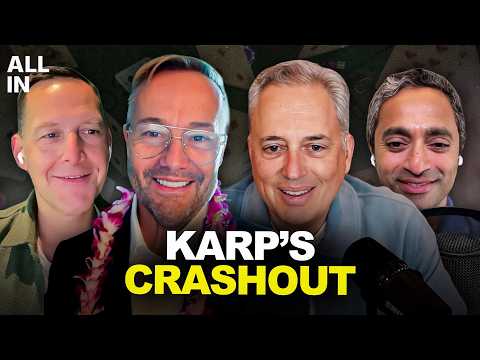
“They want to dominate the model layer, you could call that the operating system, and then use that position, that monopolistic position, to capture the most lucrative verticals.” — David Sacks, 6:00
Clip command
yt-dlp --download-sections "*6:00-6:50" "https://www.youtube.com/watch?v=wgdxSCsmS-Q" --force-keyframes-at-cuts --merge-output-format mp4 -o "dominate-model-layer.mp4"”Nobody Woke Up Without Their Throat Slit”
“Nobody who went to bed with Microsoft in the 80s, Facebook in the 2000s, or Sam Altman now in the 2020s did not wake up with their throat slit. This is a message to founders, if you partner with any of these people, they will slit your throat and take your business wholesale.” — Chamath Palihapitiya, 19:05
Clip command
yt-dlp --download-sections "*19:05-20:31" "https://www.youtube.com/watch?v=wgdxSCsmS-Q" --force-keyframes-at-cuts --merge-output-format mp4 -o "throat-slit.mp4"”There Is No Job Loss With AI. It Is an Absolute Scam”
“I’m telling everyone that’s listening, look at the f***ing data. There is no job loss with AI. It is an absolute scam to tell the world that AI is taking away jobs and destroying jobs… it is going to create far more jobs than it has destroyed.” — David Friedberg, 36:00
Clip command
yt-dlp --download-sections "*36:00-36:46" "https://www.youtube.com/watch?v=wgdxSCsmS-Q" --force-keyframes-at-cuts --merge-output-format mp4 -o "no-job-loss.mp4"”Are You Going to Get Social Services or Are You Going to Work?”
“I’m all about discerning immigration not on the lines of some cultural definition, but really around that simple framing of: are you going to get social support services or are you going to work?” — David Friedberg, 1:13:02
Clip command
yt-dlp --download-sections "*1:13:02-1:14:31" "https://www.youtube.com/watch?v=wgdxSCsmS-Q" --force-keyframes-at-cuts --merge-output-format mp4 -o "makers-vs-takers.mp4"California “Threatens to Bring Down the Union”
“This state, which as I’ve said in the past, threatens to bring down the union, is on the brink of defaults… all of the red states and all of the other taxpayers will say, why the hell should I pay federal taxes to bail out California?” — David Friedberg, 1:28:00
Clip command
yt-dlp --download-sections "*1:28:00-1:28:39" "https://www.youtube.com/watch?v=wgdxSCsmS-Q" --force-keyframes-at-cuts --merge-output-format mp4 -o "california-union.mp4"”Let Me Tell You What Leftism Is”
“Let me tell you what leftism is, okay? It’s basically just people trying to string together words to justify taking your money… it’s like monkeys typing on a keyboard with words to try and hack everyone’s brains to basically figure out how to steal all of their money.” — David Sacks, 1:36:41
Clip command
yt-dlp --download-sections "*1:36:41-1:37:23" "https://www.youtube.com/watch?v=wgdxSCsmS-Q" --force-keyframes-at-cuts --merge-output-format mp4 -o "what-leftism-is.mp4"Key Points
- Palantir-Nvidia Sovereign AI OS (0:00) - Palantir builds a custom frontier-quality model on Nvidia’s open Nemotron models; US agencies own the hardware, data, and model weights.
- Intelligence sovereignty vs. privacy (3:09) - Chamath distinguishes privacy (“you can’t see my photos”) from intelligence sovereignty (“you can’t tell me what to think”).
- The Figma cautionary tale (5:51) - Anthropic “blindsided” Figma with Claude Design; its CPO sat on Figma’s board and resigned three days before launch; the stock fell ~50%.
- Anthropic’s vertical land-grab (6:00) - Claude Design, Science, Security, Legal, Financial, and Code each moved into categories previously served by Anthropic’s own customers.
- BCG’s return-on-capital problem (9:48) - With cost of capital back at 8-11%, half of large US companies can’t deliver returns above it, raising the stakes on AI bets.
- 8090’s 16.4x benchmark (14:08) - An open-source model wrapped in 8090’s “software factory” ran 16.4x cheaper than Anthropic Opus (3x slower) on a code-migration task.
- Hub-and-spoke shifts on-prem (18:00) - Friedberg predicts a move to “large hubs, medium hubs, distributed spokes” with enterprises running their own inference locally.
- “There is no free pizza” (19:05) - Chamath warns that free-token offers from Sam Altman or Zuckerberg-style platforms exist to absorb founders’ innovations.
- Duopoly and regulatory capture (27:00) - Chamath maps the three-layer stack (chips/models/apps) and argues Anthropic’s safety agenda would enshrine a model-layer duopoly.
- A server per employee (33:00) - Chamath’s vision: $10-20K of local compute per person (Mac Studio/Dell) so everyone crafts their own local model with no data leaks.
- The AI jobs fight (36:46) - Friedberg demands present-tense evidence of job loss; Jason cites customer support, data entry, and driving as displaced.
- Ramp/Revelio study (40:34) - 21,000+ firms: high AI adopters grew headcount ~10%, entry-level ~12%; low/non-adopters saw flat headcount.
- Waymo halts recruiting (39:17) - Chamath’s counter-datapoint: in markets where Waymo hits critical mass, human driver counts flatten or decline.
- Human-in-the-loop premium (45:19) - Klarna’s reversal on replacing customer service becomes evidence that human interaction commands a premium.
- Fable 5 restrictions lifted (50:22) - Commerce lifted export controls on Anthropic’s Fable 5 after Tom Brown replaced Dario as lead negotiator with the administration.
- The three conditions (52:00) - Sacks: Dario priming officials on a “cyber weapon,” Amazon reporting a jailbreak, and Dario refusing to roll back all had to align.
- Open source stops being Chinese (54:58) - Sacks argues once a model is forked and run on US hardware with no packets home, it’s effectively American.
- Birthright citizenship ruling (59:03) - SCOTUS struck Trump’s EO 6-3; the Besties debate 14th Amendment original intent (freed slaves, Dred Scott) vs. text.
- Makers vs. takers immigration (1:13:02) - Friedberg’s “drain or gain” test; Jason and Chamath push a points-based system that rewards assimilation and job creation.
- California’s five chapters (1:21:58) - Ballooning costs (65% since 2019), accounting tricks, revenue dependency, exodus, and ~$1.5-2T in unfunded liabilities.
- New software and health taxes (1:25:54) - California adds an 8% sales tax on software subscriptions (
$1B/yr) and a new health-insurance tax ($2B/yr). - AOC as 2028 frontrunner (1:28:46) - Friedberg predicts AOC could win the presidency and federalize California’s liabilities, straining the union.
Mentions
Companies
- Palantir (0:00) - Announced the Sovereign AI Operating System partnership with Nvidia for US government agencies.
- Nvidia (0:00) - Providing open Nemotron models; discussed as the full-stack open-source-at-scale provider.
- Anthropic (5:51) - Central target of the sovereignty critique; accused of vertically integrating into customers’ categories.
- Figma (5:51) - Said to have been “blindsided” by Claude Design; stock down ~50% on the year.
- OpenAI (19:05) - Sam Altman’s YC free-token offer cited; Sacks argues its consumer business makes it more reasonably valued than Anthropic.
- 8090 (9:20) - Chamath’s company; ran the open-source vs. Claude “software factory” benchmark.
- Abacus (goabacus.co) (22:14) - Accelerator company building HIPAA-compliant “roll your own” on-prem models.
- Ohalo (15:11) - Friedberg’s company; referenced re: protecting proprietary life-sciences data.
- Uber / Waymo / Lyft (39:17) - Cited in the driving-jobs debate; Waymo said to have paused recruiting in saturated markets.
- Klarna (44:58) - Reversed its plan to replace customer service with AI, restoring human agents.
- Ramp / Revelio Labs (40:34) - Published the 21,000-firm study on AI adoption and headcount growth.
- Amazon (32:30) - Spending ~$1B on forward-deployed engineers; its jailbreak report was pivotal to the Fable restrictions.
- Microsoft (32:30) - $2.5B FDE investment cited; the Lotus/WordPerfect/Excel history is the recurring monopoly analogy.
Products & Technologies
- Nemotron (0:00) - Nvidia’s open models powering the Palantir Sovereign AI OS; available via Perplexity’s dropdown.
- Claude Code / Claude Design (6:00) - Anthropic vertical apps cited as examples of moving into customers’ categories.
- Fable 5 / Mythos (50:22) - Anthropic’s model whose export restrictions were lifted June 30; Mythos is the un-guardrailed variant.
- Open Router (14:33) - The inference layer 8090 used for its open-source benchmark on traditional hardware.
- GLM (“GLN”) (21:30) - Chinese open model Friedberg cites as controllable soup-to-nuts on US hardware.
- Optimus / Figure (47:02) - Humanoid robots discussed as the next wave of package sorting and last-mile delivery.
- Polymarket (1:38:22) - Cited for Gavin Newsom’s 2028 nomination odds (down to ~20 from a peak of ~40).
People
- Alex Karp (0:00) - Palantir CEO whose CNBC “crashout” and enterprise-safety argument frames the episode.
- Dario Amodei (8:47) - Anthropic CEO criticized for the safety/open-source-restriction agenda and the Fable rollback standoff.
- Sam Altman (1:46) - Cited for the YC free-token offer as an example of absorbing founders’ innovations.
- Tom Brown (51:00) - Anthropic co-founder who replaced Dario as lead negotiator and thanked Secretary Lutnick.
- Howard Lutnick (50:22) - Commerce Secretary who lifted the export controls on Fable 5.
- Gavin Newsom (1:21:17) - California governor; his “balanced budget” claim is dissected as accounting tricks.
- Jensen Huang (25:09) - Nvidia CEO credited with an open-source LLM competitive for ~95% of searches.
- Stephen Miller (1:00:00) - Referenced in the birthright-citizenship debate; Sacks says he agrees with him on this.
- Ro Khanna / Rahm Emanuel / AOC / Zohran Mamdani (1:20:13) - Named in the debate over the DSA’s rise within the Democratic Party.
- MacKenzie Bezos (1:37:11) - Her ~$26B in giving is cited by Sacks to question whether philanthropy solves the problems it claims to.
Surprising Quotes
“Intelligence sovereignty is you can’t tell me what to think. You can’t use your AI to analyze my photos, to analyze my emails, to analyze my messages, and tell me how to interpret the world.” — Chamath Palihapitiya, 3:17
“If you wrap the open source model with our software factory, it was 16.4x cheaper. Now, it was three times slower, but you know, you’re talking about a couple of extra hours to save 16.4x.” — Chamath Palihapitiya, 14:08
“Where do you see it? Show me the customer support enterprise shutdown that’s happening. Just show it to me. Is it in the room with us right now?” — David Friedberg, 37:08
“By Commandant Howard Lutnick’s decree, subject Dario Amodei will be permitted to bring his powerful new model Fable 5 to market for the glory of the realm and at the pleasure of His Majesty, Lord Trump.” — Chamath Palihapitiya, 50:22
“It’s basically just people trying to string together words to justify taking your money… it’s like monkeys typing on a keyboard with words to try and hack everyone’s brains to basically figure out how to steal all of their money.” — David Sacks, 1:36:41
Transcript
Jason Calacanis: 0:00 All right everybody, welcome back to the number one podcast in the world. It’s your favorite podcast, it’s your podcast’s favorite podcast, it’s the All-In podcast episode 279 with me, Friedberg, Sacks, Chamath, you know the squad. You know the squad. We’re here. It’s the summer and we’re ready to rock and roll. We got a power docket, we got a rocket docket. Palantir and Nvidia have announced a sovereign AI partnership. Where have we heard that term before? Palantir is going to use Nvidia’s NeMoTron—NeMoTron, like the Pixar film—open models to build a custom frontier-quality model to serve the US government. Palantir is calling this new platform Sovereign AI Operating System. The US government agencies will own the hardware, the data, and the model weights. Palantir also shared a viral tweet manifesto laying out the concept. Data retention is your treasure, transfer at your own peril. Transferring that data hands over access to your pre-existing winning plays and yields the means of production for new ones. CEO Alex Karp went on CNBC to announce the partnership in a classic Karp, Robin Williams style monologue. Here’s a clip from his 20-minute interview where he basically went after the frontier models like Anthropic. Play the clip.
1:05 Our clients are—just to say they’re unhappy with the frontier labs is to say I’m welcome at the Berkeley faculty. It’s like there’s just a level of discomfort and loss of trust. Sam and Dario—there’s nothing more fun than debating Dario in private. So it is—I’m not throwing shade at them. Okay. But something has gone completely wrong, and the basic view among enterprises in this country is I’m going to chillax and waste my time with tokens, I’m going to get no value, and they’re going to get my IP. When the Department of War goes to you and says ‘I need this application,’ do they get to control the weights to do it, or do you get to control the weights? Are we really going to outsource the battlefield of this country to the consensus view in Silicon Valley? That is effing insane.
1:31 All right, and so some folks refer to this as a televised nervous breakdown. We here at All-In call that Alex Karp on a Tuesday. And we talked about this a whole bunch, Chamath, Sacks, Friedberg. We talked about this a whole bunch back in February. I coined the term intelligent sovereignty here. Here’s your victory fap.
Chamath Palihapitiya: 1:46 Do I want to give all of the secrets in our organization, every piece of intellectual property to Sam Altman who’s got to make a billion dollars a year to keep up with his spend? Right? He’s going to build every application. I have been talking about AI sovereignty here for a bit, just in terms of how much more cost-effective it is and how you’re not training other people’s AIs with your knowledge and your insights. This is why it’s super important.
3:00 …that open-source open-source agents and local hardware be able to run these models and that consumers and companies learn how to roll their own language models.
3:09 The intelligence sovereignty is different than privacy. Privacy is, oh, you can’t see my photos, you can’t peek into my notes app and what I wrote there in my journal.
3:17 Intelligence sovereignty is you can’t tell me what to think. You can’t use your AI to analyze my photos, to analyze my emails, to analyze my messages, and tell me how to interpret the world. That’s actually going to be the next key piece here.
Jason Calacanis: 3:30 All right, and uh, Sacks, you are in your long-post era. Another long post this week from you on this very topic, and obviously as AI Czar there for the first half of the Trump administration, you’ve been very involved and very close to this.
3:51 I would love to hear insight, I’d love to hear your take on this and your long post over 300 words. You can follow x.com/davidsacks.
3:57 But also like the palace intrigue here and what this means in terms of the relationship with the government which we’re going to get into in our second story.
David Sacks: 4:06 Well, look JCal, I gotta give you some credit there. The first part of your take was spot on. After that, it was kind of diminishing returns, I’m not sure why we had to listen to the next 30 seconds of that, but anyway.
4:21 It started off—it started off really strong. But let’s go back to this supposed crash-out by Karp on CNBC. It was nothing of the sort.
4:31 It was all these legacy media types making that claim, and that’s the first clue that he’s actually saying something insightful and maybe kind of brilliant.
4:42 And I think the thing that he said that I hadn’t really thought about in quite those terms is he started talking about AI safety in the enterprise and what that really looks like.
4:54 And what he said is that what technical customers want is control over their compute, their models, their data stack, and their alpha—meaning their proprietary knowledge.
5:05 They want to know they own the means of production, he said, and it’s not being transferred to someone else.
5:11 And what he’s referring to there is that these enterprises are at risk of transferring their knowledge, their know-how, their trade secrets, their customer data to these model providers who might eventually decide to compete with them, like you said JCal.
5:23 And you can see that enterprises are waking up to this threat and they’re not happy about it. And I think Karp is exactly right about that.
5:32 Now, I think this is a really interesting take on AI safety, because what safety means for an enterprise is again that they get to control their own data, their model weights, their compute…
5:44 …so a frontier lab can’t hoover up their proprietary knowledge, their alpha, and turn it into their next product.
5:51 And if you don’t think that can happen, just look at what happened to Figma. So according to the information, Anthropic quote-unquote blindsided its then-business partner with the launch of Claude Design, so this was a new vertical app…
6:00 that Anthropic launched to compete in the design category. And Figma’s founder said that Anthropic had not been completely honest with them. Anthropic’s Chief Product Officer had actually even served on Figma’s board and didn’t resign until three days before the launch of Claude Design. So obviously Figma again felt blindsided by this and you can see the resulting impact on their stock price. Figma’s stock has fallen by something like 50% this year, while Anthropic’s valuation has surged. This is not an isolated example. Anthropic has also launched Claude Science, Claude Security, Claude Legal, Claude Financial, and of course, Claude Code. And every single one of these vertical apps expanded into categories that was previously served by companies building on top of Anthropic’s own models. And really, if you want to go back to when Anthropic’s revenue explosion began, it was with the launch of Claude Code, and how did they know to launch that product? Because they saw that Cursor was doing extremely well. Cursor was one of their biggest customers. They created the coding assistant first. They created that category, and Anthropic said, ‘Oh, like, why don’t we vertically integrate?’ So in other words, they’re watching where the value is being created on top of their models, then they’re moving in directly. And this is a formula that I think is very Microsoft-like, you could say it’s very Google-like. They want to dominate the model layer, you could call that the operating system, and then use that position, that monopolistic position, to capture the most lucrative verticals. So if you want to think about like the Microsoft example, they had the Windows monopoly and then systematically they went and dominated every lucrative category of business software. It started with spreadsheets and word processing and then eventually it went to the browser, so forth and so on. If you want to look at Google, they basically had a monopoly or dominant position in search, and if you go back to the early days of Google, the search results kicked you off-site. And in fact, they really prided themselves on how quickly they could send you off-site, but gradually over time, they used that traffic to tell themselves where to build properties, and today fewer than half of searches kick you off-site. You stay on Google properties. And I think something similar is happening with Anthropic here. The pattern is clear. They are going to use their dominant position in the model to then grab more and more territory in any interesting and lucrative vertical. So again, back to Alex Karp’s point, if you’re an enterprise customer or a developer, why in the world would you ever want to share any proprietary data with them? You are mortgaging your future, you’re sealing your fate, you are going to lead to disaster for your company. This is one last point and then I’ll turn it over to JCal, is that Dario, at the same time that they pursue this business strategy, has been arguing that open source models are dangerous and need to be restricted. Well, dangerous to whom? Not to enterprises that want to retain control over their data, it’s dangerous to his business model, because his
9:00 also requires that customers don’t have a lot of choice at the model layer. And what Karp is pointing out here is that if you want to have true AI safety as an enterprise, you have to retain the ability to choose at the model layer who gets to see and use your alpha.
Jason Calacanis: 9:20 Yeah, this is well said and I think you picked that carcass to the bone a bit, but Chamath, you’re actually doing specific examples of this at 8090. You’ve been testing some of the open source models. I saw you share that on Twitter X, so maybe you could give us a little feedback on what you’ve learned as the CEO of 8090 and your first-hand experience now with using open source for the first time in the last couple weeks for this specific use case in enterprises.
Chamath Palihapitiya: 9:48 When you start a company, I mean, you guys all know this, you’re not starting it for the moment that exists today. You’re almost sort of trying to forecast, if such and such a set of things happen, then here is the scene that gets created, because it takes time to build something and it takes time to get enough reps to know what you’re doing and your go-to-market. This for me was the moment that I thought would arrive, which is the point where everybody wakes up and realizes wait, hold on a second. Two things are true. The first is that my business is complicated. I want AI to be able to accelerate it, but I want to be able to protect myself in doing so. And then the second is I want the flexibility where there’s an independent third-party control plane that I use to get all these benefits so that I don’t leak and seed my advantages away. And I think Alex is an incredible, smart, brilliant guy and he completely nailed it. And I think he called out on its face the huge risk of this. So let me just give you this narrative in three tweets. The first one is I read this really interesting study from BCG. And what they looked at was the return on capital employed, or ROCE, of various businesses. And this is what’s incredible. The cost of capital has now, with long-term rates, moved back to what its long-run average is, which is around 8 to 11%. What that means is like that is the actual cost that you would borrow money at effectively. The problem is that half of large US companies now cannot deliver returns that exceed that. That is a really big problem. And then second, there’s a further problem, which is that persistently low returns, so in the, you know, 1, 2, 3, 4, 5%, is about one in seven companies all around the world. Okay, so why is this important to note? It means that being in business is complicated. It’s hard. Not everything works all the time. There’s a bunch of underperforming businesses. There’s a bunch of underperforming segments. So in that lens, when you, you know, think about what Sacks said, which is you have this company that comes to you and says I have a m…
12:00 magic box. And all you have to do is tell me everything you’re doing and this magic box will make everything better.
12:08 But then all of a sudden, from the shadows, the magic box says, you know what? I’ve decided to compete with you.
12:13 That is a huge risk. And now that you’ve seen enough examples of it, I think you have to figure out a different way to do it. So then you go to the next tweet that I saw, which I thought was interesting.
12:22 And this is a woman who’s an ex-Meta PM. And what she essentially says is like, hey, hold on a second.
12:31 There is this assumption that you can’t use an open source model because it’s all Chinese.
12:37 And what she says was, well, even if it’s 100x cheaper? And their response is, no, because we care about safety and security.
12:43 And her perspective is, don’t you understand that you can actually host open source models with your own GPUs in US data centers that doesn’t share any data back to anybody?
12:54 And instead what you’re accidentally or purposefully doing is giving away all your data to a couple of frontier labs rather than owning it privately yourself.
13:05 And 100x turns out is a really big number to pay to do all of that by accident.
13:10 And that’s what Alex Karp is saying. He’s like, why would anybody do this when there are alternatives?
13:16 And so the third post that I’ll talk about is something that we did. So we took our software factory, which is an agnostic third-party control plane,
13:26 and we just wanted to see. And we ran it on a very typical enterprise task, which is you have an old piece of code, you want to migrate it, and you want to maintain it in a new framework so that it’s easier and more flexible. Pretty straightforward task.
13:44 And so we ran it. And we ran an experiment where we did Claude by itself, then we did us plus Claude, and then we ran it on the best frontier open source model, and then us plus that model. And the data’s crazy.
13:58 So when you use our harness with Claude, it was simultaneously 1.4x cheaper and 1.5x faster than just using Anthropic opus 48 alone.
14:08 But if you wrap the open source model with our software factory, it was 16.4x cheaper. Now, it was three times slower, but you know, you’re talking about a couple of extra hours to save 16.4x.
Jason Calacanis: 14:24 On that one, the slowness, Chamath, is that slowness because of the hardware being served up by Claude or is it the software latency?
Chamath Palihapitiya: 14:33 This is all using Open Router. No, this is all using Open Router on a very traditional hardware stack.
14:40 So look, I think the reality is could that be optimized even further? Absolutely. But my point is, if you take Sacks’s point and then if you take Alex Karp’s point and just this actual data,
14:49 there is a very legitimate question, which is if you are a reasonable company, why are you not finding an independent way to access this intelligence in a way that doesn’t leak your edge away?
14:58 To do so at this point now is kind of becoming…
David Sacks: 15:00 …being derelict and irresponsible. Back then, you could be experimenting because you didn’t know any better. But now when you know all of these data points to continue to make the same decision I think is really insanely dumb.
Jason Calacanis: 15:11 All right, Dave Friedberg, you are also a CEO of the surging Ohalo and you have a lot of proprietary data. Let me ask you point blank, do you trust your data to the frontier model companies? Or are you doing what there seems to be consensus here, protecting your data, protecting the crown jewels, so to speak, and using open source, are you experimenting with it? And just yes or no, do you trust the frontier models with Ohalo’s data?
David Friedberg: 15:41 So I’ll tell you there’s been an effort by Anthropic to go around and sign up life sciences companies to contributing to a new life sciences focused model. That effort has been, they’re approaching these large companies with large proprietary data sets and saying hey, if you share your data, we will give you early access, some sort of proprietary value, sign this NDA and you can participate with us. And I think nearly everyone I’ve spoken with has woken up to the fact that they are basically trying to commoditize everyone’s business because fundamentally if all of the tens of billions of dollars you as a life sciences company have invested in experiments and product development and you’ve generated all of this proprietary data along the way, that data is a true asset of your organization, it’s an asset that you’ve spent billions of dollars developing. And by handing it over to a model company to then combine with other people’s data, you are effectively commoditizing the asset that you have, the one kind of core differentiation that you have. And so everyone is largely saying no. The way I see this evolving is very much in line with what Alex Karp suggested on CNBC. If you go back a couple of years, I think we all assumed there was going to be this large hub, large spoke model for AI model development and deployment. Meaning there would be these very large clusters. These large clusters would be ultimately capital advantage, so those who have the most capital, which is why everyone’s raised tens and hundreds of billions of dollars, would be able to train models. And then there would be these large spokes, these large clusters for deploying those models with inference. So everyone’s using the Neoclouds and the hyperscalers and whatnot to run models. And then maybe they’ve got their own proprietary data layer that sits in front of that. But I think what everyone’s realizing is they’re better off developing their own weights and their own models using either an open source basis or there might be some intermediary business model that evolves, meaning there will end up being several large hubs that do all of the core foundational model development. Then smaller hubs, meaning like clusters for training, that enterprises will use to train and develop their own proprietary advantaged models using…
18:00 Using their own data. And then there will be these much more distributed spokes because I think everyone’s also realizing the value of on-prem. By putting a set of servers and building a cluster in your own data center or even in your own enterprise, you know, IT closet, you can run a lot of the workflows that you’re using AI for for your enterprise locally. And so I think the model is shifting where we’re going from large hubs, large spokes to large hubs, medium hubs, and then a distributed spoke model where there will still be, you know, neo-clouds and hyperscalers that are being used for inference, but people will also have their own inference instances that they’re going to run for their own enterprise setting. And everyone I think is walking this path and they’re going to walk this path over the next couple of months because they’re realizing quite quickly that in order to compete in a world of commoditizing knowledge and commoditizing capabilities, you have to leverage the core differentiating assets that you have which means you have to build your own models and you will likely end up having to run your own inference with your own proprietary models.
Chamath Palihapitiya: 19:05 Yeah, and to just give a little bit of texture to how that’s going to look, if you follow the Microsoft example which we’ve talked about here before, Lotus 1-2-3, WordPerfect where they’re partners, they were replaced with Excel, they were replaced obviously with Microsoft Word. You don’t even know those other two, WordPerfect, WordStar, Lotus 1-2-3, VisiCalc. That’s exactly what they’re going to do and they have no choice but to do that now because they have a trillion dollar market cap, they must win the application layer. And Sam Altman went to Y Combinator and he said ‘we’ll give you two million dollars worth of free tokens’. And I came out and I said listen, it’s nothing personal against Sam, you know, Sam’s a very aggressive deal maker and he wants to get access to those startups because he knows having run Y Combinator that if he can get their innovations, those founders’ latest thoughts about what’s around the corner, he can incorporate them into the platform. There is no free pizza, there’s no free beer. When somebody like Sam Altman comes to you and says ‘here’s some free tokens’, your alarm should go up. Zuckerberg did the same thing. He said ‘hey I’m going to give people a bunch of access, I’m going to give them money, come to the Facebook platform’. Nobody who went to bed with Microsoft in the 80s, Facebook in the 2000s, or Sam Altman now in the 2020s did not wake up with their throat slit. This is a message to founders, if you partner with any of these people, they will slit your throat and take your business wholesale, there is nothing to discuss here. Don’t trust them. Use your own models. Period.
David Sacks: 20:31 I don’t think - I think it’s less Sam and OpenAI to be honest. I think that the diversity of OpenAI in terms of its revenue streams and specifically its consumer business may actually be its savior in a relative value basis right now. OpenAI equity I think is more reasonably priced than Anthropic equity and the reason is not because of the quality of the models or the teams because they’re both excellent teams. But the reason is that OpenAI…
Jason Calacanis: 21:00 …can fall back on a really healthy consumer business.
Chamath Palihapitiya: 21:02 Sure, the difficulty that Anthropic is going to face is that I think what Sacks said is true, that they have lost this fundamental trust about being able to stay within their sandbox. And if you consistently demonstrate this tendency to learn and then to try to disrupt your host organism, eventually you get sort of pigeonholed and you get cornered and people find ways to work around it.
David Friedberg: 21:30 And so look, I sent that text that I had about the, or that post that I had about our testing of our harness on these Chinese models to somebody well known in the industry and he says, look, if you also add some post training with all of the telemetry that you’re going to get from the harness itself, he’s like, I suspect you’ll find that it gets as good as Mithos. And I thought, well, if that’s true, then why don’t I just take GLN, control it entirely soup-to-nuts on my own hardware inside of the United States with only US citizens that can touch it? It just seems like the brain-dead obvious thing to do, and it’s much, much cheaper.
Jason Calacanis: 22:13 Yeah, and 100% correct.
Chamath Palihapitiya: 22:14 I will say, if you’re going to do this, you’ll eventually wind up rolling your own LLM. I mentioned a company, Abacus, goabacus.co, that we seeded in our accelerator. What they’re doing now for HIPAA compliant people is they’re actually giving you this go-on box. They’re literally saying, we’re going to make your own model for you. So once you start this, you start with, you know, Claude and use their wrapper and everything, or OpenAI’s. Then you move to the next step. The next step is I’m going to use an open-source model, use my own, try to find a harness, etc. Where you will eventually wind up is you’re going to fork these models, you’re going to build your own. That is the end state, on-prem, on your own hardware, don’t trust anybody, because there’s too much at stake. You cannot risk your entire business. You might as well be part of the vanguard and start investing here. You’re going to slow down to speed up is what’s going to happen. Whether you’re using 8090, Abacus, or any of these other solutions or rolling your own, you must have AI sovereignty, you must have intelligence sovereignty, or you’re just giving your business over to your competitors. The only company, the only company at scale that’s ever respected the developer community in this way is Apple. Apple took a very strategic approach to wanting to build an App Store business, to wanting to support developers, and they explicitly told people, if you make something super obvious that you can build in a week or two, it eventually might wind up in our basic collection of apps, the notepad app in your iPhone, the notepad app in your iPhone. Those apps are incredibly basic, but if you looked at, you know, Robinhood’s or Google Finance and then you looked at something like say Evernote back in the day, which was an advanced note-taker, it took ten years for Notepad to add the features that Evernote had seven, eight, nine, ten years ago. They specifically slowed their apps down to make them simple for people.
Jason Calacanis: 24:00 users and not f with their ecosystem because they want to take the 30% tax. That’s your choice here. There is no 30% tax here when it comes to Anthropic, there is no 30% tax equivalent with OpenAI.
Chamath Palihapitiya: 24:13 The thing with Apple is that Apple was renting distribution. This is not renting distribution. This is where you’re renting intelligence and judgment. And so the problem that a company has is, you can’t rent the same—this is why your point is actually right, I think it’s for a different reason. You can’t rent intelligence from the same place that rents it to your competitor.
Jason Calacanis: 24:30 Correct. You just can’t. You can’t. It’s just stupid. It will overflow, it will go over the wall into your competitor’s lap.
Chamath Palihapitiya: 24:41 No, no, it’s—it becomes the lowest common denominator problem where you and your competitors now look exactly the same. Why would you do that? And again, if you go back to that—that thing that BCG identified, so many companies are already teetering on a very difficult position where they cannot generate returns on their invested equity. And so why would you then go and pay all this money so that you end up with the same answer as your competitor? You can’t do it. It’s just not—it’s not a choice.
David Friedberg: 25:09 And Sacks, part of what’s going on here is the deflationary nature of technology. Every single one of these tools is getting cheaper, tokens are getting cheaper, Sacks, and if you look at Nvidia’s role in all this, they have something called Nemotron. You can try it if you use Perplexity, you can just pick the dropdown menu, it has deep thinking. You will not be able to tell the difference between Jensen Huang’s open source LLM, Sacks, and Claude for 95% of your searches, I guarantee you. Now why? Why has Nvidia and Jensen downplayed their open source model until this moment? Why would he do that? Why would he never bring it up in the All-In interview, never bring it up because his top customers were very concerned, from what I understand, about the fact that they had made so much progress on their open source model. But suddenly, after OpenAI announced their jalapeno chips, after Anthropic started making chips, after AMD did successful projects with both of these companies, after Elon said that he’s going to do his own fab, Nvidia’s taking the gloves off, David. They are going to own the whole stack. They are going to be talking about open source a whole bunch. So maybe you could talk a little bit about Nvidia and their role in this as the open source at scale full-stack provider. You get the hardware from them and you’re going to get a model that’s competitive with OpenAI’s for free and all you have to do is use one of their hosting companies, CoreWeave, whoever’s buying Nvidia’s Colossus, etc. What are your thoughts on Nvidia suddenly being willing to talk about their open source projects today?
David Sacks: 26:49 Well, look, I think part of it is they needed time to make the offering compelling and you know they’re up against some pretty great AI labs and I think some of it is just hey it takes time to train up these models.
Chamath Palihapitiya: 27:00 Now, one question is why is it that NVIDIA and Palantir are partnering. Like what makes them natural partners? And I want to just explain that. If you want to think about the AI stack for a minute, at the most basic level, there’s three layers to the stack. It’s basically the chips, it’s the models, and then it’s the applications. Well, right now, we have in the middle layer, at the model layer of the stack, you’ve got two dominant companies. You’ve got Anthropic and OpenAI. We know that Anthropic is around 60-something billion of ARR, OpenAI is at 40-something billion of ARR. As far as we know, no one else is really generating meaningful revenue at the model layer. So we already have, let’s say, an emerging duopoly situation. We have Anthropic pushing for a regulatory capture agenda that would probably enshrine that duopoly situation at a regulatory level because they’re pushing for a safety agenda where Dario explicitly says that these other models are not safe, you shouldn’t have access to them. So you’ve kind of got that situation. You’ve got the market producing duopoly, you’ve got the government now potentially leaning not to bust up the duopoly but maybe to enforce it. So that’s kind of the emerging situation at the model layer. And so if you’re an application at the top of the stack like Palantir or you’re a chip company at the bottom of the stack, that’s the last thing you want. You want a competitive model layer. Why? Because if you’re an application, you don’t want to be beholden to one model provider, right? You want to have a choice.
Jason Calacanis: 28:46 Yeah.
Chamath Palihapitiya: 28:47 And if you’re an enterprise, you want to have a choice because you don’t want to have to give up all of your proprietary knowledge.
Jason Calacanis: 28:52 Right.
Chamath Palihapitiya: 28:53 And if you’re a chip company, you don’t want a monopsony buyer situation where there’s only one or two companies who can buy your chips and by the way they’re producing their own. You want to have as diverse and healthy an ecosystem as possible where there’s lots of potential buyers for your chips. And if enterprises are rolling their own using open models, that’s kind of an ideal situation because now there’s like a long tail of buyers.
David Sacks: 28:58 100%. So I think really the whole ecosystem in a way, the chip companies, developers, applications, enterprises, everybody has an incentive for a competitive layer of the stack at the model layer. And really the only companies who don’t are Anthropic and OpenAI because obviously they want to dominate, they want to be a duopoly. And my view is look, if you earn a monopoly or duopoly in our system, we don’t ban monopolies in the United States, we ban anti-competitive tactics. But if you lawfully achieve a monopoly through amazing performance, we don’t, you know, nationalize you or make you illegal and I think that’s fine. However, the government in my view should do nothing to make monopoly or duopoly more likely, they should make it harder for these companies to engage in monopoly tactics and they should do everything they can to keep the model layer competitive because competition is what brings out the best and it’s good for the ecosystem and it ensures our civil liberties.
30:00 liberties and consumer choice. So—
Jason Calacanis: 30:01 And it’s going to be amazing for pricing, Sacks. If you think about what this competition’s about to do and you’ve been very vocal about this in your time in Washington D.C., we want to have a level playing field, we want to see massive competition. I’ll give you your flowers and your lei, you did a great job of now setting the table for this in 2026 and 2027 going forward by letting people compete. The cost of tokens, Friedberg, is going to go down 90% a year for the next three years. You’re going to be able to buy a thousand times as many tokens that are more intelligent because you’re going to have free options. The price will be free or close to free for many of these, and that could be incredibly disruptive. Yes, Dave?
David Sacks: 30:43 Yeah, and I think people are going to again deploy their own hardware against it. I think there’s going to be a buying frenzy in the enterprise, not just with the neo-clouds and the hyperscalers. I think the enterprise is going to be a buyer. And when that happens, you do the simple math and you don’t want to have a dependency on server availability and cloud downtime and you don’t want to put these models on some third-party cloud and you want to do stuff that’s very cheap, like a lot of people are running, I mean you guys do this, you’re running day-to-day workflows for your enterprise and you realize, hey, I could run these workflows on an open-source model on a machine in my office and we don’t need to be sending this stuff back to some fancy scalable cloud service provider.
Chamath Palihapitiya: 31:21 100%. You’re right. The industry spent so many years convincing everybody to flip to the cloud and the realization may be that all of this idea of shared infrastructure may not be the best idea in a world of intelligence. And it may not work.
David Sacks: 31:34 And this is what I mean by like a distributed spoke model, because I do think it’s not going to be all or none. I think you’re going to end up being like 70-20-10 in how you’re going to allocate your resources for model inference and running models. You’re going to probably be 70% in some big cloud, maybe you’ll do 20% local, 10% you’ll try other clouds, you know, you’ll kind of mix stuff up, but I don’t think you’re going to end up doing things the way you’ve been doing them historically. You’ll very quickly realize that it’s okay to waste tokens. It’s okay to let your employees make stupid apps that last for a couple weeks but burn through billions of tokens if it’s running on your own hardware, then all you’re paying for is the electricity in your office or your, you know, your server room.
Jason Calacanis: 32:16 Right. This is what I’ve been talking about here for like a year and now everyone’s realizing this is clicking in. Yeah, and I by the way your analogy is perfect, Sacks, sugar’s locking out, yeah. Like I’m totally fine, you know, for my kids to eat sugar if I don’t have to deal with them, you know, like go ahead.
David Friedberg: 32:30 Have you guys noticed that like in the last three days we’ve now seen other people trying to get their own lock-in? Microsoft just announced a two-and-a-half-billion-dollar investment to stand up an FDE, or Amazon is spending a billion dollars to stand up—
Jason Calacanis: 32:44 Or deployed engineers, for the people in the audience, deployed engineers.
David Friedberg: 32:46 Yeah, FDE, Databricks has one, OpenAI has one.
Jason Calacanis: 32:49 Yeah, and when they come knocking, Chamath, they’re knocking like, hey, can I send my engineers to study your business and put it into my model? I mean, people are going to be slamming the door on these. It’s like getting a Jehovah’s Witness at your door. Like, no, I don’t want to be part of your cult.
Chamath Palihapitiya: 33:00 I want to own this and that’s what I’ve been saying, just let me make one quick point and I’ll hand it to you for a break. This is what I’ve been saying with when I when I was going on my open claw which now is like Hermes and some other products. Everybody in your organization’s gonna have a Mac Studio or a Dell with a massive amount of RAM and you’re gonna spend 10, 20,000 dollars per employee on local compute so that they can token max to a retard maxing level, who cares what they do on their local computer, who cares? Let them rip. And then you’re gonna give them a laptop that connects to it and it syncs so you can control it. It’s literally going to be a server per individual in your company. That’s the way to model this in your brain. Everybody has their own language model that they’re crafting 100% of the time as they work and it’s all local so you don’t have data leaks. Go ahead Friedberg, I’ll give you the final word.
David Friedberg: 33:49 I mean, I think one of the things that this reveals quite clearly is that there is no buttered slippery slide to job loss. I think everyone is realizing that you know…
Jason Calacanis: 33:59 I was wondering where you were going with that buttered up. So was Chamath.
David Friedberg: 34:03 But I think, you know, the idea that everyone had in their head two years ago, the narrative that was formed and everyone clutched onto it, and by the way, you will not see the media reverse on this narrative. I’ve realized the importance here, when when if you’re a reporter or you’re a journalist and you come up with some story that says some thing that’s happening or is going to happen or has happened or is about the future, you destroy your own credibility if the narrative shifts, you cannot ever let go of the narrative. And I think this is one of the things that that we can kind of acknowledge is going on with this job loss narrative problem is that even as all the data comes out, as all of the reconfiguring of how enterprises are using AI, as it’s revealing to all of them that they’re actually not just going to cut costs but they’re going to grow revenue and it’s going to be a kind of clunky way of getting in there and it’s not going to happen overnight, it’s not this slippery slope to job loss to nihilism, everyone’s going to kind of wake up and be like wait this reality that we all thought we were living in is not really the reality that we are living in. We’re living in a reality where AI is clunky, it takes some putting together, it’s a little more complicated than we thought, it’s definitely going to deliver value but it’s not about just turning off all the jobs and letting the genius AI solve all my enterprise problems and scale me into infinity without humans. And I think that’s a big kind of narrative shift and you will not see the media accept that their narrative is wrong because as soon as they have to acknowledge that they were wrong in what they were saying about job loss and all the other senators and people that are proclaiming job loss, job loss, job loss, by the way the reason they’re making that proclamation is so that they can step in and control AI and they can drive their systems of socialism which is what they’re all looking to deploy.
David Sacks: 35:49 Yeah. 100%. Totally.
Chamath Palihapitiya: 35:51 100%.
David Friedberg: 35:52 But if they had to come in and say look the data doesn’t map to the narrative, their credibility is destroyed so they’ll double down on it and they’ll double down on it and they’ll double down on it.
36:00 And I’m telling everyone that’s listening, look at the f***ing data. There is no job loss with AI. It is an absolute scam to tell the world that AI is taking away jobs and destroying jobs and the world is shifting. It is clunky, it is valuable, it is going to take some time and it is going to create far more jobs than it has destroyed.
Chamath Palihapitiya: 36:19 Totally.
Jason Calacanis: 36:20 We’re a bunch of monkeys. We’ve been given this new tool. We’re going to solve more problems with the new tool. There will be job displacement, and the problem is people do not understand the nuance between these two terms. Certain jobs will be retired and they’re going to be retired at a faster rate than you can imagine. But other jobs will happen, and you pointed this out Chamath, hey, it’s the most—I don’t know if you did it here or on your personal channel on YouTube, but you know, it’s the most empowering tool ever. If you get—
David Friedberg: 36:46 Which jobs are getting replaced? I’m just gonna challenge you. It’s very simple.
Jason Calacanis: 36:49 Displaced, displaced.
David Friedberg: 36:50 But you’re saying some of them are gonna go away faster than you can see. What—what are those jobs that are going to go away faster than you can see? Because I’m just—I’m not—I’m still not seeing the categories.
Jason Calacanis: 36:59 Totally.
37:01 Customer support jobs, those are going to go away very quickly.
David Friedberg: 37:03 Where? Where? You’re just making sh*t up because it’s not actually happening.
Jason Calacanis: 37:07 I see it in enterprises all the time.
David Friedberg: 37:08 Where? Where do you see it? Show me the customer support enterprise shutdown that’s happening. Just show it to me. Is it in the room with us right now? Like, where is it?
Jason Calacanis: 37:17 I will literally—you know, I’ll do that research and I’ll give it to you.
David Sacks: 37:22 I’ll give you some research. Hold on. Can I—can I provide some research? We had this debate before—
Jason Calacanis: 37:25 He asked me a question, just let me finish my answer and then you can take it. You asked me the question. Customer service jobs are going to go away because consumers prefer to talk to the AI and it’s perfect at that. Entry-level jobs around data entry, around business process outsourcing, those are going to go away, so will driving cabs and those kind of jobs. Those ones are obvious low-hanging fruit, just like we had the typing pool and messengers and other products go away when we had word processors on our everyday desk. Those jobs will be displaced 100 percent. And those jobs will be in the—
David Friedberg: 37:56 We’re on year 20 of cab drivers going away, dude. Like when Uber came out everyone said all the driving jobs are going to go away, it’s all over. It’s just not happening.
Jason Calacanis: 38:05 Well, no, no. Waymo—Waymo is stuck at 3,000, Tesla’s stuck at like 30 cars, but that’s all going to change in the very near future. So will companies like Zipline.
David Friedberg: 38:11 Everything you’re saying is prospective. This is my point. You are still being prospective in the future with everything you’re saying. And every point that we turn, every time we turn a page, it’s like, wait, this isn’t happening as everyone said.
Jason Calacanis: 38:22 Do you not believe that self-driving is real? Is that your premise? That self-driving’s not going to get rid of cab drivers? Is that your premise?
David Friedberg: 38:29 Everything is real, but I—I think it’s real for sure.
Jason Calacanis: 38:32 Do you think it will get rid of cab drivers? You’re arguing as if, like, I’m wrong here, but I think you agree with me that they’re going away.
David Friedberg: 38:40 I get in the car every day, and my car drives me. And I get on my phone and I do work.
Jason Calacanis: 38:43 Okay, but do you think cabs in cities are not going to be self-driving? Do you think Zipline’s not going to deliver your food?
David Sacks: 38:47 You’re doing the Motte-and-bailey thing again, JCal.
Jason Calacanis: 38:50 It’s not Motte-and-bailey. I see this from my investments. I have a company, Autolane, that is doing this right now.
David Friedberg: 38:56 But just go to customer support again, because you’ve been saying—
David Sacks: 38:58 I literally—we’ve had this debate verbatim—
Jason Calacanis: 39:00 Displacement, not replacement.
David Sacks: 39:00 Job loss is my only point.
Jason Calacanis: 39:02 Yeah, yeah, what Friedberg is pointing out is that whenever anyone pushes back on the fact that you don’t have any data to support this in the present, you say you’re talking about the future. Okay, fine, it’s a prediction. You know, there’s no data to support it in the present. That’s fine. You’re saying it’s going to happen in the future.
Chamath Palihapitiya: 39:17 No, no, I’ll give you the data point. You can dismiss it all you want. I will, yes. If you talk to Uber and Waymo, in the cities where Waymo is present and has gotten past a couple of hundred cars, they’ve stopped recruiting drivers. Drivers are either static or going down in those markets. So that is absolute evidence that this is happening and the rollout is going to be fast and furious. So it is not a future prediction. You can talk to the CEO of Waymo, you can talk to the CEO of Lyft and Uber and they will tell you this explicitly.
Jason Calacanis: 39:43 No, but I interviewed Dara and he said jobs were increasing at Uber.
David Friedberg: 39:46 Yeah, because they’re delivering more.
David Sacks: 39:48 Like those—productivity’s going up with delivery. Productivity goes up.
Jason Calacanis: 39:52 So it means people drive more. You’re 100% lying.
Chamath Palihapitiya: 39:53 I’m not 100% lying. You’re being disingenuous.
Jason Calacanis: 39:55 No, the last time we—
Chamath Palihapitiya: 39:56 You’re being disingenuous. He’s admitted it in markets where Waymo is—
Jason Calacanis: 39:58 On stage he said jobs were going up.
Chamath Palihapitiya: 40:00 In markets where Waymo is… In markets where Waymo is… there might be other markets where things are growing because they don’t allow self-driving or they haven’t gotten there yet. In markets where Waymo has hit critical mass, the number of human drivers is going down. This is just a fact. And they’ve literally stopped recruiting.
Jason Calacanis: 40:16 In some narrow, arbitrarily defined subset of their jobs, you’re pointing to flatness. Meanwhile, Dara told us that hiring across the company has gone up in the face of these trends.
Chamath Palihapitiya: 40:21 That’s at the company, not drivers.
Jason Calacanis: 40:22 No, you’re wrong.
David Sacks: 40:23 Well, okay, anyway. We’ll agree to disagree here.
David Friedberg: 40:24 Why don’t we give you some actual data? Can I provide this study? So Ramp and Ravelio Labs just released a new study in the past week.
Jason Calacanis: 40:33 Yeah, I saw that. That was great.
David Friedberg: 40:34 And it was an actual study of over 21,000 firms in the US and they looked at their payroll data combined with their spending on AI. And what they saw is that firms that spent the most on AI actually grew the fastest. And they tended to grow their head count roughly 10% in the two years following the adoption of AI. And entry-level head count rose even faster; it grew at 12%. So all this stuff about how entry-level head count’s going to get wiped out, not true. The more firms adopted AI, the more hiring they did. At least that was the correlation. Obviously they can’t prove causation, but that was the correlation. And then companies that were not high-intensity adopters of AI, they either didn’t adopt or they were low-intensity adopters, they just saw flatness in their head count. So no one is really showing a trend here of job loss. What they’re showing is that the more you adopt AI, those companies also tend to grow head count.
Jason Calacanis: 41:44 So I, you know, there’s just no data to support this idea that in the present AI is causing job loss.
Chamath Palihapitiya: 41:49 Job displacement will happen. Jobs will increase because of AI. Sovereignty will increase and people will make more money, corporations will have more earnings. But there will be jobs being—
42:00 Retired. And I think if you look at translators, if you look at telephone operators, if you look at bill collectors, if you look at Waymo drivers, these very simple tasks are being automated. How do I know that? Because I invest in startups that are raising hundreds of millions of dollars to replace these jobs with AI. We had the pilot… we had people building the perfect pilot, the perfect driver, the perfect customer support rep. That is the point of AI. Every single sales pitch of these AI companies is to retire these jobs that are not great jobs. There is no way in God’s green earth that humans will be at Amazon sorting packages. There’s not, it’s not going to happen. All those factory jobs are being replaced. Elon is explicitly building Optimus for this purpose. And when I say it’s future, I have always contended it’s future Sacks, you cannot use your silly debate techniques to say that I’m using some crazy thing. It is happening as we speak. We’re soaking in it. This is the transition period.
David Sacks: 43:02 What I’ll tell you is that in every environment in which 80/90 operates, every customer, I don’t think we’ve seen layoffs. Not a single one.
Jason Calacanis: 43:14 Yeah, and this in this ramp card study, they said quote, ‘Gains emerge gradually and are broad across roles including engineering, sales, administration, and customer service.’ So they’re not seeing like one category of jobs getting wiped out. By the way, it could happen in the future. I mean none of us can say for sure what’s going to happen in the future, but if you’re looking for data in the present, we’re not seeing it yet.
David Friedberg: 43:35 I think there’s going to be a strong human alpha. You know, like when vending machines came along, it’s not like bartenders went away. Like, I like going to a bar, talking to the bartender and they make a great drink. And those bartenders make better money today than they did 20 years ago. I don’t… and maybe the vending machine replacement model isn’t the right one in that case, but I, I think that there’s a lot of value in human interaction that’s going to get a premium in the future. Because as more stuff gets automated, I want to have an actual driver when I go to Las Vegas. I don’t want to go in a Waymo. I want to have a great driver in a nice car that takes me to the dinners, drives me around New York City, same thing. I don’t want to go in a Waymo per se. I want to have, you know, people that can do things that could otherwise be automated and I’ll pay a huge premium. I could sit in a friggin’ massage chair, why do I go pay someone $200 for an hour massage? You know, I think there’s an aspect of the alpha of human—
Jason Calacanis: 44:26 Chamath’s going like, ‘We could cut that one.’
David Friedberg: 44:29 But I do think there’s a premium to humans and I don’t think that, and I actually think—
Jason Calacanis: 44:35 There’s a premium to humans.
David Friedberg: 44:36 No, the counter narrative, this is fight JCal, this is really important. I think that the counter narrative to automation generally is that we’re going to realize the importance of human interaction and humans in the loop and we’re going to pay a premium for it.
Jason Calacanis: 44:51 Well, do you remember—
David Friedberg: 44:53 That’s why I don’t believe… I don’t believe in AGI and the singularity happening next year. I’m just not there.
Jason Calacanis: 44:58 Do you remember like a year ago when Klarna said—
David Sacks: 45:00 They’re gonna replace their whole customer service department with AI and they basically lied.
Jason Calacanis: 45:04 They did a lot of hype. It was peak PR farming.
David Sacks: 45:07 And well, lo and behold, they flipped the decision back after a year. They said that from a brand perspective, a company perspective, it’s just so critical that you are clear to your customer that there will always be a human if you want it.
Chamath Palihapitiya: 45:19 Human in the loop will be the premium. And we will all realize in the next year and a half the importance of human in the loop, even in the context of AI and automation working. Human in the loop is gonna be more valuable and then you’re gonna pay a premium for human in the loop.
David Sacks: 45:34 There’s so many CEOs who want to tap into the media’s hype cycle. This is the thing is that whenever the media gets a hold of one of these narratives, there’s so many CEOs who are not like Karp, right? Who just are not original and they don’t really have anything important to say, so the only way for them to get publicity is to glom onto that press cycle and try to use it. And then they’ll chime in with you know how they’re gonna do crazy things like eliminate their whole customer support department and then lo and behold it turns out to just be total, totally fake.
David Friedberg: 46:03 I think the ramp data is directionally accurate. In our experience, I would say the same thing. I think people that use AI tend to grow faster, they tend to hire more, they tend to make more money.
Chamath Palihapitiya: 46:12 100%.
Jason Calacanis: 46:13 Yeah, 100%. By the way, I actually agree with Jack on that.
David Sacks: 46:17 From a career standpoint, I would not want to be a level one customer support rep because I do think that like if all you’re doing is like answering forgotten password requests, that’s not a great place to be. However, those jobs were basically outsourced to the Philippines and places like that a long time ago. I mean, most enterprises are not doing kind of that level zero, level one customer support in the US. They do have customer support centers but they’re doing like level two, level three, they’re doing the escalations, the higher value stuff. That’s gonna be a lot harder to replace with AI.
David Friedberg: 46:48 Totally.
David Sacks: 46:49 I do kind of worry about what happens in some of these other countries that are doing the super entry level stuff because I think that is ripe to be replaced.
Jason Calacanis: 46:56 That’s right. So they’ll have massive job loss.
David Sacks: 46:58 Well, I don’t know if it’ll be massive, but that’s where the risk is, I mean, frankly, it’s not in the US.
Jason Calacanis: 47:02 This is, and maybe we’re getting to some consensus here, job displacement versus job loss. Here is Brett Adcock sharing what they’re doing at Figure. They had an eight-hour challenge to have this robot they’re building sort packages and they did it for 200 hours. That’s today. This is the least good it will ever be. This is the worst it’s ever gonna be. These things are getting really good. I spent time with Elon, I’ve looked at Optimus, I can tell you Optimus is better than what Figure’s doing. What Optimus is gonna do when Bezos and Andy Jassy unleash Optimus inside of the Amazon factories is it’s gonna get rid of every, let me state this very clearly, every single package sorting, every single package delivery will not be done by humans in 10 years. And it’s starting today, just like the idea that you would put together some of this consumer electronics stuff in factories with humans.
48:00 It has gone away over time and other countries, I think you’re making a very good point here Sacks, are going to experience it first. In America, knowledge workers, the entrepreneurial spirit, I think we’re going to see a Cambrian explosion in startups, which means we’re going to be the ones who benefit first. But if you’re looking at those other countries, they’ll see it acutely first, we’re just going to see it here with drivers, and that’s five, ten million people. Like we saw it with cashiers.
48:24 The idea of going to a cashier at a fast food restaurant, which I know you guys don’t go to all that often, or a Starbucks, the idea that you would interact with a cashier is being gone away slowly because it’s just consumers don’t even want it. We’ll agree to disagree here to a certain extent, maybe we’ll agree.
David Sacks: 48:39 No, look, I went to McDonald’s— I went to McDonald’s recently and I ordered from one of those monitors. Zero robots involved.
Jason Calacanis: 48:42 What did you order? You a Filet-O-Fish guy? I’m a Filet-O-Fish guy. What did you get? What’s your order?
David Sacks: 48:45 No, I like a Big Mac. I like a Big Mac.
Jason Calacanis: 48:47 You like a Big Mac. What about you Sacks, what’s your— what’s your order? Do you get a McFlurry? Do you get an apple pie?
David Sacks: 48:51 They have this thing called a homegrown burger, which was some new— I think it was kind of more like an In-N-Out type burger they were testing.
David Friedberg: 48:58 A Shake Shack smashed patty.
David Sacks: 49:00 Yeah, it was good. It was good. Anyway, my point is just the automation, obviously they didn’t have a cashier there already, but there’s zero robots involved. Similarly, there’s already a lot of automation going on in those Amazon warehouses. I don’t know if you’ve ever been to like a FedEx packaging or routing depot, it’s all conveyor belts and, you know…
Jason Calacanis: 49:19 Yeah, robots pushing it and directing it.
David Sacks: 49:21 Yeah, but it’s not humanoid robots. There’s already tons and tons of automation in these places.
Jason Calacanis: 49:25 Sure. But this last mile part is the one I think that is going to shock people. When you have an Optimus walking the Tesla self-driving car and then they walk it to your porch, ring your doorbell and knock on your door and put it on your front step porch, that’s where this is going to get super interesting.
David Friedberg: 49:40 I think it’s— I think it’s going to lead to a boom because think about like just something like building a house, okay?
Jason Calacanis: 49:45 Oh yeah.
David Friedberg: 49:46 You know how long it takes to build a house?
Jason Calacanis: 49:47 It takes years.
David Friedberg: 49:48 In California, three years.
David Sacks: 49:50 Texas, nine months.
Jason Calacanis: 49:51 In China, one day.
David Friedberg: 49:53 There you go. But imagine if you have like a— like a construction crew and, I don’t know, it’s like 20 humans and 50 robots or something. The humans have to tell the robot what to do. I don’t think— it’s going to take a long, long time for the robots to be able to do that super high-skilled work, but they can be given tasks. Carry the lumber, hammer the nails.
50:12 And then gradually they can do more. So maybe it only takes a year to build a house instead of two or three, and that’s the solution to our housing crisis.
Jason Calacanis: 50:19 100 percent. All right, listen.
Chamath Palihapitiya: 50:22 In a related story, by Commandant Howard Lutnick’s decree, subject Dario Amodei will be permitted to bring his powerful new model Fable 5 to market for the glory of the realm and at the pleasure of His Majesty, Lord Trump.
50:37 Remember two weeks ago, the US government put export restrictions on Fable and Mythos and The Iliad and The Odyssey and whatever else they’re doing over there at Anthropic? And Anthropic expanded Mythos to 50 unauthorized entities according to sources, that included SK Telecom, which allegedly, perhaps, maybe has ties to China.
Jason Calacanis: 51:00 June 30th, Howie in the Commerce Department. That’s my guy Howard Lutnick, my favorite in the administration, no disrespect to you, Sacks. He lifted controls on Fable 5. Mythos 5 was restored to US customers this past week, June 26th. Many suspected this would happen because Anthropic replaced Dario as their lead negotiator. Here’s the palace intrigue I was referencing earlier. Co-founder Tom Brown, whoever that is, took the spot and appears to be getting along better with the Trump administration. For example, he proactively genuflected, showed a tweet to Lutnick’s tweet announcing the export restricting restrictions had been lifted. Tom Brown: ‘Thanks for your partnership on this, Secretary, exclamation point.’ Look at that smile. Tom Brown coming in to save the day. In a postmortem blog post, Anthropic said the jailbreak that triggered the shutdown was not unique to Claude. Remember Andy Jassy reported to the Commerce Department what was going on with this. Okay, Sacks, former AI Tsar, what’s going on, give us the palace intrigue please.
David Sacks: 52:00 Well look, the export control letter was taken down after two weeks. I think that this was a highly unusual circumstance and it was brought about by three things, three conditions, and you really needed all three in order for this to happen. Number one, you had Dario running around for months saying that he had created a cyber weapon. He almost boasted about it. It was Mythos, okay. So that was number one. Number two is you have a trusted partner of Anthropic, which is Amazon, which did its testing of Fable, which was Mythos with guardrails, and they reported that the guardrails failed. So therefore Fable was, according to Dario, a cyber weapon. So that was important fact number two. And then fact number three is that when confronted with this information, Dario basically refused to roll back Fable until the jailbreak could be fixed, or at least that’s what he communicated to the administration and that’s what the administration heard. So I think if you change any one of those three facts, this would have ended up not causing the government to basically send that letter to Anthropic. I think if Dario hadn’t primed officials to see Mythos as a cyber weapon, wouldn’t have happened. If their trusted partner Amazon hadn’t reported the jailbreak, wouldn’t have happened. And if Dario hadn’t refused to take action when he did, then this wouldn’t have happened. I think this was a sort of unique circumstance. I guess what I’m trying to say is that a lot of people are reading a lot into this letter. I know that foreign companies or foreign actors or allies and partners of the US are wondering, does this mean that our ability to access US technology is going to be limited? I don’t think it does. I think that the administration reacted with the tools at its disposal. And I think that what the president cares about is what he’s always said, which is he wants to be pro-innovation, he wants to be pro-export, he wants to be pro-infrastructure.
David Friedberg: 54:00 He wants to support American companies in the AI race and I don’t think people should over-extrapolate based on what just happened over the past few weeks, because I think it was highly particular to this fact pattern.
Jason Calacanis: 54:11 Let me ask you, we’ve had a lot of discussion of exports. Let’s talk about imports for a reason. It seems to me that importing Chinese models when we in fact have open source models here from Nvidia and other places, why have you not or in your during your time did you not advise or talk about here blocking access to import? We will not allow the importation of Huawei products into the United States or self-driving technology from China. Why are we allowing open source models? Why don’t we put out an edict and why didn’t you suggest that when you were the czar of AI, why didn’t we stop Kimi and DeepSeek from coming into this country in order to drive our open source technology and to keep the leakage from those models, Sacks?
David Sacks: 54:58 Well, a few things. Number one is that once a model is open sourced, it stops being Chinese in a way, right? Because you can now take that model, you can fork it, you can create your own version, you run it in an American data center on your own hardware. There’s no packets going back to China, there’s no data leakage going back to China. In some sense, they’ve made a contribution to the open source community and then people can take it from there. Now, should you still exercise caution? Absolutely, because you have to make sure that the model is safe, it doesn’t contain backdoors. I mean, this is a relatively new surface area for cybersecurity. So look, you should obviously be cautious, but the bottom line is that when an American company takes an open source model and converts it and runs it itself, it is now theirs.
Jason Calacanis: 55:45 But it builds consensus around that model and makes that model stronger by more people participating in it, which was your argument for allowing people to get on the hardware stack.
David Sacks: 55:54 Well, but then I think that leads me to argument number two, which is if you were to do something like ban open source in the United States, you’ll put the United States on an island. The rest of the world is not going to follow suit. The rest of the world wants to use open models because of the advantages they offer: they’re cheaper, they’re more customizable, they offer more control. And again, they stop being Chinese models once you can take them and adapt them and run them on your own hardware. So the rest of the world’s not going to stop using these models just because we do. And what we will do then is subject American enterprises to a token tax. You’re going to end up paying for closed models in the US that charge more.
Jason Calacanis: 56:31 No, no, no, but there’s Nvidia. We have open source models now. Nvidia has theirs, for example, there’re others. So if there are open source models here that are equally competitive, would you then support an import control so that more people in America put their effort into American open source?
David Friedberg: 56:50 Well, I’ve been—one of the things I’ve been saying…
Jason Calacanis: 56:53 And Google’s open-source models obviously.
David Friedberg: 56:54 One of the things I’ve been saying for over a year is that we need more strong offerings in open source from the United States. So…
57:00 I hope we win the open category of models just like I do the closed. I mean, I hope America wins the AI race in both open and closed models. I don’t really want anyone being forced to use models they don’t want, but look, if American open models are better than Chinese open models, they will win and people will want to adopt them. So if what you’re saying is true that our open models are better or getting better or going to surpass the Chinese ones, leave that to the market to decide.
57:29 And just one last point on this is, you know, I’m not against limiting the import of certain Chinese products in the US. For example, I don’t think we allow Chinese connected cars.
Jason Calacanis: 57:39 We don’t.
David Friedberg: 57:40 I think we should think twice about whether we allow, you know, Chinese robots into the US.
Jason Calacanis: 57:43 We block drones.
David Friedberg: 57:44 Yeah. We wouldn’t want to have like a- like a fifth column of, you know, a backdoor Chinese robots or something in the US potentially. I’m just brainstorming here, okay? So I’m not against limiting certain things, but we should understand that when we do that we are inviting retaliation by them as well and we are in a trade relationship with them. We still need things from them. We still need rare earths, things like that. One day we won’t, hopefully, I do think we should try to be as independent and autonomous as possible, but while we do, we have to think very carefully about the larger trade relationship.
Jason Calacanis: 58:22 Yeah, Trump banned the import of Chinese drones as a signature part of the legislation.
58:26 Alright, so a little housekeeping here. All-In Summit is coming back September 13th, 14th, and 15th. Fifth year of the summit. We keep raising the bar. Man, if you knew the speakers that I knew that Friedberg’s lined up, your brain would explode. This year the nights are as good as the days because let’s face it, Friedberg likes to party. He’s been known to have a cocktail or two. We’re doing the biggest poker tournament we’ve ever done at the summit this year. Gaming will happen at the welcome party and we’re gonna have a full casino night at an exclusive mansion in LA, ooh la la. Applications open now, allin.com. Don’t miss our biggest event of the year. I think we have 12 trillion in market cap books so far, probably gonna double.
59:03 Okay, next topic. Topic number three, it’s a hot SCOTUS summer. The Justices released 11 decisions in the final few days of the term. Let’s discuss the top three right now. Birthright citizenship. Case was Trump versus Barbara. On the first day of his second term, Trump as you know signed an EO ending automatic citizenship for children born to illegal immigrants or those on temporary visas. Uh this is codified I guess in the 14th amendment. Court struck it down 6-3, maybe 5-4, there’s some nuance here. 255,000 children are born every year to non-citizen parents. Chief Justice Roberts wrote the majority joined by all three liberal members. The court is still a bit polarized. Citizenship then and now was the right to have rights, we keep that promise today according to Chief Justice’s majority. Kavanaugh carved out a lane for Congress to tighten up on birthright citizenship that’s still consistent with the 14th amendment. As you know, the administration has been pointing…
1:00:00 Hanging out and you watch Fox News, you’ve heard this a million times. If you watch CNN, it’s not all in, you’re going to maybe have heard of this once or twice. Birth tourism. A Chinese national, Dongwan Li, pled guilty in 2019 to a scheme to help pregnant Chinese women enter the US under false pretenses so their babies would be granted US citizenship. She pled guilty to one count of conspiracy to commit immigration fraud and one count of visa fraud. So we handled that through the legal system. She served 10 months in prison. Trump’s response to the loss, quote, “Congress should start today to work on ending birthright citizenship. They will have my complete and total support.” For Trump, feels like a loss for Trump objectively, but he’s going to keep fighting this one. Close decision, if you ask Stephen Miller. He doesn’t like immigrants like you three dudes, but I would let all three of you in again.
David Sacks: 1:00:54 That’s not his position.
Jason Calacanis: 1:00:55 Okay, well you can explain it. I know he doesn’t like immigrants.
David Sacks: 1:00:57 Illegal immigrants.
Chamath Palihapitiya: 1:00:58 We’re legal immigrants.
1:01:00 Yes. Well, but you understand the difference, right?
Jason Calacanis: 1:01:03 Well, birthright would also be legal according to the Constitution.
David Sacks: 1:01:05 Yeah, but that’s the whole point is it doesn’t really make sense that let’s say an illegal immigrant runs across the border, is like nine months pregnant, plops out a baby, and all of a sudden they’re an American citizen. How does that make sense?
Jason Calacanis: 1:01:17 But what about somebody who’s been here for 20 years, Sacks, worked really hard, they’re illegal and they have a baby. Should the baby be kicked out and that baby not be a citizen? You’re, let’s say it’s somebody’s nanny, somebody’s gardener. We have 20 million, 30 million illegal immigrants we’ve let into this country. We waved them in across many different Republican and Democratic terms over the last 30 years. What do you say to that person who has a baby? Should they be deported? Should they be given citizenship?
David Sacks: 1:01:44 Well look, the question here is what the Constitution says. And my view is that the original purpose and understanding of the 14th Amendment was to make sure that the children of freed slaves would have citizenship rights. That was the purpose of it. That was obvious. And I don’t think it speaks to the situations you’re talking about. And Congress should just make the law about those situations. But now Congress cannot make the law because the Supreme Court has ruled that citizenship is determined by birthright. So in that case, anyone born here-
Jason Calacanis: 1:02:14 Well, but my question was, somebody who’s been here 20 years as an illegal immigrant who was waved in under Reagan-
David Sacks: 1:02:22 I’m saying Congress should decide that.
Jason Calacanis: 1:02:23 Well what do you think? I’m asking your personal opinion. Should they get citizenship?
David Sacks: 1:02:26 I don’t know. I mean, look, you’re talking about an edge case that’s complicated, but the point is that we all know why the 14th Amendment was ratified. It was to protect freed slaves, obviously. And now we’re in territory that’s like very different, but the Supreme Court has decided that if you’re born here for any reason whatsoever, even if you’re an illegal, even if you weren’t supposed to be in the country, now your children are American citizens. By the way, I don’t think any country in the world has this policy. It’s kind of a crazy policy. So I agree with Stephen Miller about this.
Jason Calacanis: 1:03:00 I’m not sure it’s an edge case. I think the majority case is people who’ve been here illegally for decades. And I think the edge case is the one Trump brought up.
1:03:00 One you proposed is the edge case, like a pregnant woman running across the border.
David Sacks: 1:03:01 And Congress should decide that.
1:03:02 Let Congress decide that. I don’t think the Constitution ever spoke to it.
Jason Calacanis: 1:03:03 But what do you think? I’m asking for your opinion.
1:03:06 But what’s your personal opinion on this, Chamath? Should the person who’s been here for 10, 20 years, paid their taxes, but they’re illegal and they have a child, should that child be a citizen or not? What’s Chamath’s personal opinion here?
Chamath Palihapitiya: 1:03:17 I haven’t thought about this.
Jason Calacanis: 1:03:19 Great. Okay, it’s— I mean, that’s the key to I think what we’re talking about here. Friedberg, you have—
David Sacks: 1:03:24 No, no, no, no, no, because J-Cal, there’s a big difference between making something constitutional and then doing it via a law of Congress. And what the court has said here is that Congress does not get to make the decision, the majority of the American people don’t get to make the decision. The Constitution requires a certain point of view, and there’s no way to change that without a constitutional amendment, which will never happen. So we’re kind of now stuck with this position.
David Friedberg: 1:03:55 Hmm. Well, if you read the language and— someone posted this, this was the debate that when the 14th Amendment was being debated, Senator Jacob Howard— I’ll give credit to Geiger Capital for pointing this out— there’s a transcript of the debate that took place and it says, ‘every person born within the limits of the United States and subject to their jurisdiction is by virtue of natural law, national law, a citizen of the United States. This will not, of course, include persons born in the United States who are foreigners, aliens, who belong to the families of ambassadors or foreign ministers accredited to the government of the United States, but will include every other class of persons.’ Because if you go to the history in 1868, there was this Dred Scott decision, which denied citizenship to the children of slaves. And the intention at the time was to ensure citizenship for newly freed slaves and their descendants. That was the original intention of the 14th Amendment at the time. So this goes back to the great debate that happens at the Supreme Court all the time, which is the textual or the intentional reading of the Constitution or its amendments. The textual reading is you look strictly at the words, the plain literal meaning of those words, and then the intentional reading is what was intended at the time by the framers of the Constitution or the amendment that may be the subject of the debate. And so I think that’s ultimately what this comes down to. If you think about the intention at the time, it was really built around freed slaves. There wasn’t a consideration at that time of having this massive movement of immigration that was taking place or that has taken place since. That wasn’t even in the kind of realm of consciousness or consideration when this amendment was being passed. So the intentionalism kind of argument would be, ‘Hey, wait a second, you know, this wasn’t really what they intended.’ But the textual representation is what it is, and that’s what the ruling kind of led to in this particular case. My personal opinion, if you’re asking it—
Jason Calacanis: 1:05:47 Yeah, I’m trying to get personal opinions here, yeah.
David Friedberg: 1:05:49 I do think birthright citizenship should be endowed to the children of legal residents of the United States, whether they’re a citizen or not. So yeah, I think—
1:06:00 That’s critical. So if you’re a visitor, if you get on an airplane and fly here for a weekend on a vacation and you have a visa or you have, you know, temporary visitor status to come and visit—
Jason Calacanis: 1:06:10 Or you’re an ambassador.
David Friedberg: 1:06:12 Yeah, or you have a temporary visitor status to come to the United States to visit, you are not a resident of the United States. So your children should not become citizens of the United States unless you’re a resident. And remember, we don’t just have, like, citizens and non-citizens, we also have resident status in this country. And a resident status is a green card. I mean, for years I was on a green card. Three of us were immigrants, we all went through this process. Once you get resident status, you’re now a permanent resident of the United States. You haven’t been given citizenship rights yet, but if you have a child, I think it’s reasonable for your child to have citizenship rights if you’re a legal resident rather than a legal visitor or illegal visitor to the United States. So that would be my personal assessment. I, you know, I’d be grateful for that to be the law, but obviously this is now kind of—
Jason Calacanis: 1:06:56 Friedberg you explained that really well. I didn’t even know all this.
Chamath Palihapitiya: 1:07:00 I’m on your side. I agree.
Jason Calacanis: 1:07:03 Yeah, I mean, I agree with what you’re saying. In addition, people shouldn’t be able to do the tourism thing. We should handle that.
Chamath Palihapitiya: 1:07:07 I do think we should have an exception here for people who have been non-criminals who are here illegally, because we as America, Republicans especially during a time when they were pro-free trade, NAFTA, and really waved in a large percentage of the immigrants who are here, obviously Biden did that as well. I think we have a moral obligation to those people since we waved them in and we waved them in to work at our businesses because we wanted to pay under minimum wage to them. Those people suffered here in our country to take those jobs to make us richer, to make our country richer. We have a moral and ethical obligation to them and to their children. We should give them a path to citizenship unless they’re criminals. And their children should be Americans since they came here to live the American dream, whether it was illegal or not. We waved them in. That was our mistake. And now that we’ve closed the border, we should make amends to those 20 million people. That’s my personal opinion.
David Friedberg: 1:08:08 Right. I don’t think we have too much… you need more time to think about it?
Jason Calacanis: 1:08:11 And Sacks, what are your…?
David Sacks: 1:08:13 Well, my point is we’re all just making arguments about what the law should be and these are the kinds of arguments that Congress should be making and deliberating over. And these are the edge cases, these are the nuances that should be handled in a citizenship law. And what the Supreme Court has done here is remove that space for Congress to legislate. And I think Congress needs that space because there are these edge cases. And instead, it’s interpreted the 14th Amendment in a way that I don’t think is consistent with why it was ratified in the first place. And Friedberg is totally right about Dred Scott, which was one of the most awful, probably the most awful Supreme Court ruling of all time. It came out in 1857 and it ruled that black people, whether enslaved or free, were not US citizens and therefore they had no right to sue in federal court.
1:09:00 reports and the Chief Justice Roger Taney wrote the decision. I mean, it was extremely racist. He wrote that Black people had quote, ‘no rights which the white man was bound to respect,’ and that decision furthermore ruled that Congress cannot ban slavery in the new Western territories, which meant that it struck down the Missouri Compromise, which was the law that had kept the peace between the free and slave states for decades.
Jason Calacanis: 1:09:25 Right.
David Sacks: 1:09:26 And that is one of the direct things that then triggered the Civil War three years later. So, it was this historically bad decision that I guess then the 14th Amendment tried to correct by saying that no, you know, freed slaves and their children would be American citizens.
Jason Calacanis: 1:09:41 Totally different context than someone visiting from China for the weekend and having a baby.
David Sacks: 1:09:45 Yeah, which we obviously that one is an easy one to adjudicate.
Jason Calacanis: 1:09:48 Chamath, I’m curious. Feels like as a society we have now, because of the closure of the border—give Trump a lot of credit for that. It was easily done, which means it could have been done at any time by Biden, and that created a big rift in our society that we’re still working through. The other rift that was created over the past year, we’ve had many debates here about ICE and what some people, including myself, believe was a brutal way to deport people and a cruel way to deport people. Some people might disagree with my opinion, but it seems like Trump stood down on that and calmed it down, I think because it was so unpopular according to the metrics that we saw from Pew and other studies. What do you think the role—the path forward is now? The ICE aggressiveness has stopped, the border has been shut. We seem to be in a sort of holding pattern here, which I think was very wise by Trump to do that. Put us—like calm the situation down. I would have liked to see him calm it down a little earlier. What do you think the go-forward should be? If we go look at ‘27, ‘28, ‘29, do you think—obviously we all want legal immigration, but what do you think we should be aspiring to do as a country now that the issue has seemingly—is not boiling over? What are your thoughts, Chamath? Have you given it any thought?
Chamath Palihapitiya: 1:10:58 I think that Western countries are losing their cultural representation that makes them unique. And I think that that’s very bad. When my parents went to Canada and then stayed, I think part of what they were doing, whether they knew it or not, was making an explicit decision to be Canadian first, who happened to be of Sri Lankan origin. When I came to the United States, I was making an explicit decision to become an American and then my Canadian and then my Sri Lankan ancestry was second and third respectively. I think if you seed your immigration, you’re seeding your culture. And I think that people have a responsibility to keep the values of what make that country unique in the first place. And you don’t need to look too far because you can look across the pond and you can look at the UK and you can look at Germany and you can look at France.
David Sacks: 1:12:00 And you have to ask yourself, is the cultural deviation from where they were, has it been better or worse for those countries? And I think in general it has been worse. So I think people should want to come here to be a part of the American ideal, the American culture. And so I think you have to have a rational immigration policy that has compassion but ultimately favors this idea that you can’t come here to build your own version of your previous country here.
Jason Calacanis: 1:12:33 So assimilation is part and parcel of a functioning immigration system. I strongly agree. Friedberg, how should we go forward as Americans? We know Europe has had an issue with—or the populists there I think are in agreement—that they may have gone too far in terms of unmitigated massive amounts of immigration, specifically amongst groups that maybe are explicitly not wanting to assimilate. What’s your thoughts on what America should do going forward? Do you believe we should be—
David Friedberg: 1:13:02 It’s a great—yeah, it’s a great question and I think there’s an easy answer. Going back to my makers versus takers point: if the primary motivation for an individual to come to this country is to be given benefits, to be given payments, to be given social services, to be given support, I think that that person should be denied immigration. If the primary motivation for the individual to come to the United States is to work, to progress themselves, to become a maker, to create things, to work in such a way that they can generate income, save capital, buy things, advance their family’s position because they are denied those rights due to the tyranny of the place that they’re coming from, then they should be granted immigration status to come to this country and contribute. Because at the end of the day, what people may not like to hear, which is the truth, is that every single one of those people is actually net positive in growing our economy. And everyone thinks it’s a zero-sum game with respect to jobs in the United States and we shouldn’t let people into this country that create jobs. But the fundamental truth is that anyone that is productive, meaning they create more value than they take in, grows the economy and more jobs get created and overall we all benefit from having those individuals here in this country. So I’m all about—I’m all about discerning immigration not on the lines of some cultural, like, definition, but really around that simple framing of: are you going to get social support services or are you going to work?
Jason Calacanis: 1:14:31 It’s a great framing. Are you a drain or a gain? Very elegantly put, Friedberg.
David Friedberg: 1:14:35 And by the way, if you are going to work, you are going to culturally assimilate because that is what the United States is based on, which is productivity, work hard, create things, and have individual agency, have the ability to progress yourself in this world, in this society. And if you take advantage of that opportunity, you’re going to love the American ideals that this country was founded upon.
Jason Calacanis: 1:14:53 And there are ways to do that, Friedberg. You can look at people’s desire to learn the language and understand the political system and culture here.
1:15:00 If you stood at the border, speaking fluent English, understanding our systems here, you know, and doing some learning before you come here, that would give you more points in a point-based system. Canada, Australia, New Zealand, most of the great functioning democracies in the world have point-based systems. And part of that point-based system could be you’re provisional here and you get a visa for a certain amount of time provided you don’t commit crimes, you don’t tap the welfare system and entitlement system, and you do create jobs. We’ll take an unlimited number of Elon Musks, David Friedbergs, David Sackses, and Chamath Palihapitiyas in my America as a seventh-eighth generation American and speaking for the people who’ve been here the longest. We’ll take an unlimited number of the besties I just mentioned and we should recruit them actively. We should be trying to increase the population of the United States with those people. Every single person, Sacks, we take that’s a high performer like yourself from another country like South Africa, Sri Lanka, or pick the country. Every time we recruit one of those people, that gives us a gain. It also, in a super hyper-competitive world, is a loss for China, for Iran, for wherever we can recruit the best and brightest who want to assimilate. Sacks, I’ll let you have the final input here. What, when you are JD Vance’s Chief of Staff in a three years, what will your advice to JD be? And how will you frame this during the election cycle? How will you win my vote as a moderate? Be awesome, Chief of Staff David Sacks.
David Sacks: 1:16:30 No, that’s not going to happen.
Jason Calacanis: 1:16:32 It’s 100% going to happen. I talked to JD.
David Sacks: 1:16:35 Well, I can give you, I mean, I can give you the actual polling data. So, first of all, I think it’s broadly popular in America to seal the border and not allow illegal immigration. JCal, you’re even on board with that, obviously. Now, the only people who really aren’t are these DSA types who want open borders, they want to abolish ICE, they want mass amnesty. They are lunatics.
Jason Calacanis: 1:16:55 Communist lunatics.
David Sacks: 1:16:56 Now, if you look at deportations, about a third of US adults say all immigrants in the US who are here illegally should be deported, and then half say some should be. So 32% are in favor of deporting all illegals and 51% are in favor of deporting some. And almost everybody in that group says that anyone who’s committed a violent crime should be deported. And then 16%, which is the DSA group, says none should be deported. So deportations are popular provided that the illegals have committed violent crimes and have done other things that people think should be unacceptable. But you’re right, only 32% believe that every single one should be deported. That’s from Pew. Now, I guess I agree with Friedberg’s point about the incentives. I mean, if you’re coming here to get on welfare programs, forget about it. I mean, we should only allow people in if they’re here to work and be successful and are not a net, what’d you say, a gain?
Chamath Palihapitiya: 1:18:00 It’s not a drain.
Jason Calacanis: 1:18:01 I agree with that. Yeah.
David Sacks: 1:18:02 And even in the days of Ellis Island
Chamath Palihapitiya: 1:18:04 You can have it.
David Sacks: 1:18:05 where the US was very accepting of immigrants, 1/3 of immigrants who arrived at Ellis Island actually returned home. 2% were not allowed entry due to health or criminal problems, but a third actually went back. And that was because there was no social welfare and if you didn’t make it in the United States, you would leave. And now, anyone can walk across the border, they download an app and they get $5,000 a month in welfare and during the Biden administration, they were getting luxury hotel rooms and buses and flights all over the country. It was insane.
Jason Calacanis: 1:18:41 Hm.
David Sacks: 1:18:41 So, I mean, we got to stop that. If you do get in, there should be some sort of moratorium on any kind of social program for maybe while you have a—
Chamath Palihapitiya: 1:18:47 Did I just come up with that? I mean, it seems like the simplest thing you could ever do is just say you cannot tax the welfare system, you cannot tax social security benefits, which I don’t think you can right now. You just can’t tax anything. You can’t take anything from the system for the five years you’re here. Period. Full stop. The end. And if that’s okay with you, then come. And if you produce jobs and you create X amount of economic activity, let’s say you create $10 million worth of economic activity. When you hit $10 million in economic activity, you are pushed to the front of the line and we review your case on a one-off basis. If you hit 5 million, you go next. And that would be actually like, let’s put some goalposts there. Let’s set some targets. Hey, you come to the country, you’re an Iranian, Persian, amazing entrepreneur, you’re a developer, you’re an AI developer from Ukraine, you want to come here with your team? Great. What amount of money can you raise on your way in the door? You’ve got $6 million in venture funding? Great. You go to the front of the fucking line. Let’s go. Let’s take these great entrepreneurs and creators and builders. Let’s sweep the table with them. Now that we’ve calmed down this rhetoric around immigration and shut the border, which was a key piece of doing that. All right, let’s keep moving here.
David Friedberg: 1:19:59 I don’t think the DSA has calmed it down. They still want to go back.
Chamath Palihapitiya: 1:20:02 They’re lunatics. These fucking commies. Fuck ‘em, honestly.
David Sacks: 1:20:06 They’ve taken over the Democrat Party.
Chamath Palihapitiya: 1:20:07 I mean, let’s talk about California, shall we, J-Cal?
Jason Calacanis: 1:20:09 I mean, yes, yes. Hold on a second. I mean, if they take over the Democrat Party, then I guess I’m a Republican.
David Friedberg: 1:20:13 Colorado. A 15-term congresswoman, 30 years, Liz lost to a DSA. So it’s not just New York, it’s not just because of Zohran Mamdani. The DSA is very popular now.
Chamath Palihapitiya: 1:20:24 Socialism is going to win in America.
David Sacks: 1:20:26 In any blue city.
Chamath Palihapitiya: 1:20:28 This is a quick way to Ro Khanna and Rahm Emanuel and to—well, I mean, Ro Khanna’s a lost cause. But to Rahm Emanuel, to Shapiro, to anybody with half a brain in the Democratic Party.
David Sacks: 1:20:41 I don’t think Ro Khanna—why do you say Ro Khanna’s a lost cause? I’ve been telling you for a long time that you may disagree with what Ro Khanna is doing and saying, but it’s popular in the Democratic Party. I think he’s got his finger on the pulse.
Chamath Palihapitiya: 1:20:51 Well he wants to win, I get it. But I think you have to—the quick win, the quick hit, the quick bump of—
David Sacks: 1:21:00 The fentanyl or methamphetamine of communism and socialism to get you a couple of ratings points is not worth it long-term. You will not win. You’re going to lose every moderate, every swing voter, every adult in the room is not voting for a socialist communist lunacy.
Chamath Palihapitiya: 1:21:16 We’ll see.
Jason Calacanis: 1:21:17 They’re going to implode the Democratic party. All right, we’ll leave off the other SCOTUS, Hot SCOTUS summer for another time. Let’s talk about Gavin with the good hair Newsom. He says he just balanced the California budget. Newsom announced $351 billion in balance zero deficit budget through 2028. Over to you, Friedberg, from your bunker, the last California stand in the Friedberg…
David Friedberg: 1:21:47 I’m going to call this the state of California.
Jason Calacanis: 1:21:48 The state.
David Friedberg: 1:21:49 The state of California. The lower case state.
Jason Calacanis: 1:21:52 The state of California.
David Friedberg: 1:21:54 The state of the state.
Jason Calacanis: 1:21:56 The state of the state. Got it.
David Friedberg: 1:21:58 The state of the state. And there are five chapters to this. The ballooning costs, the accounting tricks, the revenue dependency problem, and now the big exodus and spiraling that’s happening and the looming unaccounted liabilities. These are the problems that California is facing as Gavin puts his bow on his final budget, calls it balanced, and walks away while the house burns. California’s state budget ballooned from $215 billion a year in 2019, six years ago, to $355 billion today. So a 65% jump in the state budget.
1:22:31 And there were a number of these kind of accounting tricks that took place to try and make it look like it’s a balanced budget this year. But there’s revenue and there’s spending. When they call it a balanced budget, that’s not the way we all talk about it in the business world where you have like a P&L, you have revenue and expenses. They have revenue and expenses and the expenses exceed the revenue.
1:22:54 And that little difference they do a bunch of borrowing against and then they call it a balanced budget.
Chamath Palihapitiya: 1:23:02 So they were able to raise enough debt to cover their holes. That’s what…
David Friedberg: 1:23:05 Exactly. Oh my god. So there’s somewhere between 20 and 40 billion of debt that they have a legal ability to just pencil away. And that is now a liability that the state has, that the taxpayers are all going to have to pay at some point, that allows them to quote, balance the budget this year. And I’m not going to get into all the details of what went into this budget, all the money that’s being spent, it’s crazy. But I think that’s what’s worth taking note of is the revenue dependency the state has. As you all know, the top tax rate in California is 14.4% today.
1:23:44 Personal income tax is $142 billion of the state’s revenue. Okay. That is 211 billion of revenue the state generates, 142 of it comes from personal income tax. The top 1%, 150,000 people, pay 70 billion, pay half of that tax, of that income. So 70 billion of the state’s 210 billion income comes from a just the top 1% of payers, 150,000 people.
1:24:00 30,000 people who were already paying the highest tax rate in the country. The top thousand people in the state of California pay roughly 22 billion a year, so more than, you know, 11% of the state’s income.
1:24:11 The corporate tax is one of the highest in the country at 8.9%, $43 billion. So it’s cheaper to move out of state if you look at some of the other states, Florida 5.5%, Tennessee 6.5, and Texas is zero.
1:24:24 So now if you kind of look at what’s happening, there’s a massive exodus underway. The corporate exodus because of the high tax rates, since 2019, at least 15 Fortune 500 companies have moved out of California, moved their headquarters out, not to mention all the local franchises and everything that moved out.
1:24:43 2,100 companies that are mid or large-sized have moved out of California since 2019. At least 5% of California jobs have been lost as these companies have moved out of the state.
1:24:54 And this is the more important and crazy statistic, no one pays attention to this, but we are seeing an average annual exodus of 1 to 1.5% of personal income, meaning the AGI, the adjusted gross income.
1:25:09 So people that earn money, about 1 to 1.5% of that income is leaving the state every year right now. That might not sound like a lot, but after 10 years, you’ve seen 15% of the state’s income leave.
1:25:21 And obviously with the new billionaire tax that’s being proposed, we’re going to see an acceleration as the numbers come out for 2025. There’s, as we all know, personal friends that have left the state in ‘25, and many more that’ll leave in ‘26, including our friend David Sacks.
1:25:30 So there is a spiraling of loss of revenue while there is a ballooning in costs. And this is fundamental to the spiraling problem that’s occurring. So now in order to try and make more money, the state has to go further down.
1:25:42 They can’t just go to the corporates and the high net worth earners, they’re now going to the average Californian. So they’re increasing sales tax rates this year by creating a new sales tax on software.
1:25:54 So if you buy Microsoft Word or you pay for your Gmail subscription or even your Chat GPT account, you have to pay an 8% sales tax on that this year. They’re estimating that that sales tax is a brand new one, it’ll generate about a billion dollars a year in incremental revenue for the state.
1:26:07 They’re also creating a new tax on health care insurance that corporates are going to have to pay, that’s ultimately going to pass down to the individual, that’s going to create another $2 billion a year in taxes on health insurance.
1:26:18 The final thing that they did, which we all know about, is they made the temporary top income tax bracket permanent. So, you know, it was only meant to be a temporary to bridge a major budget deficit problem back in 2012, 13.3%, and that became permanent and now it’s increased to 14.4%.
1:26:32 So this is the spiraling that takes place. The costs are ballooning, the revenue is leaving, and now there’s a scrambling underway in the state of California to try and make up this difference and they’re still falling short. In the out-years 2028, ‘29, the projection is $40 billion a year in budget deficits every year.
1:26:46 Now, looming over the state of California is the fact that there is this insane unaccounted debt problem. California…
1:27:00 California already has 1.4 trillion dollars in public debt. The state has 500 billion and the local governments have another, call it 800 billion. The state has a reported 664 billion dollars in unfunded pension liabilities. That number, by many estimates, is closer to one and a half trillion dollars. And then there’s a retiree healthcare obligation deficit of 175 billion. You add this all up, there’s somewhere around one and a half to two trillion dollars of incremental liabilities that the state has to come up with. And remember, all of those pension liabilities, that trillion dollar plus of pension liabilities sits senior to the bonds of the state of California because of something that’s known as the California rule. So the state has this looming kind of cliff ahead of it, and there’s already this spiraling problem where they’re increasing costs because of the demands of the unions and the cost of living and so on, and there’s an exodus of corporations and high net worth individuals that pay the taxes.
1:28:00 So, I would argue that Governor Newsom did not exactly put a bowtie on the budget and create a balanced budget and leave California in a great state as he is wrapping up his final term and his final budget here in the state. But in fact, I think that this state, which as I’ve said in the past, threatens to bring down the union, is on the brink of defaults that are going to be so significant that if the federal government was called in to bail them out, because a state cannot declare bankruptcy legally, that all of the red states and all of the other taxpayers in the United States will say, why the hell should I pay federal taxes to bail out California? And I think that’s what the story will be over the next decade with this state given the fiscal condition.
Jason Calacanis: 1:28:39 So you predict AOC and Mandami President, Vice President AOC, Mandami can’t be VP, he wasn’t born here.
David Friedberg: 1:28:46 I do predict, yeah, so I predict AOC will be president. I mean, obviously there’s a lot of dispersion in what could happen here, but I would say AOC would be my frontrunner based on the movement for the extraordinary cost of living in the United States right now, largely because of government spending, the fact that people are seeing this wealth disparity. Those two things are going to continue to drive the socialist movement over the next 24 months. And if AOC comes in and they bail out California and they federalize California’s liabilities, you’re going to see parts of this union, the red states as they’re called, Texas, the Texas of the world, Florida, Nevada, that are going to say, why should we be part of this union anymore? We don’t want to pay for all of these liabilities that these blue states have accrued and that we are now being asked to bail out. And that is where I think you face a crisis of the union in the years ahead.
Jason Calacanis: 1:29:33 Okay. Sacks, Texas is going to secede.
David Friedberg: 1:29:36 And I think California’s the first, yeah, yeah.
Jason Calacanis: 1:29:38 In this scenario, I mean, it’s pretty far-fetched, but it’s not far-fetched that you would need a federal bailout to get California out of this in the next couple of years and the government needs a bailout itself with the massive, we’re going to add two-three trillion dollars a year for the next couple years. Go ahead, Chamath.
Chamath Palihapitiya: 1:30:00 happen. I think that Friedberg is right up until the point of the federal absorption. I think what will happen is that you’ll wipe out the California pensions and you’ll wipe out the pension obligations and you’ll do some sort of negotiated settlement.
1:30:15 And I think that’s where you’re going to have a wholesale replacement of the California constitution. You’ll have a complete redistricting. I mean, you will have a complete red wave in the state and you will disassemble and dismantle everything that caused California to be so poorly run that got them to this point.
1:30:41 So I agree with David. All of the issues that he painted are, it’s unbelievable. By the way, there’s an incredible tweet. I think her name is Joanna Ives, maybe Nick you can find it, but she compared the last eight years of DeSantis versus JB Pritzker. And I asked my team, hey, can you create a table that actually adds Newsom to the list so that you can do the three person comparison? Because it’s quite staggering how broken these blue states have become
1:31:25 and how they continue to try to spend their way out of what is being shown is just general incompetence. They’re not good at managing. They’re not good at running things. They’re not good at delivering results. And unfortunately, until they feel the brunt of what mismanagement actually means, which is that all the people that have paid into this system, sadly and unfortunately and avoidably, will be the ones that get punished. We will unfortunately not learn in California. Find this tweet and read it and you would just be shocked at how unbelievably good DeSantis has been in running Florida and how unbelievably tragically bad JB Pritzker is and then just ask your favorite AI, compare California on the spectrum of Florida versus Illinois and what you’ll find is California is even worse than Illinois in most of those comparisons.
Jason Calacanis: 1:32:01 Sacks you want to give us the last word here?
David Sacks: 1:32:04 Yeah, I mean, I guess my decision to go to Texas is looking better and better. I mean, I said when this when this BTA thing, the so-called billionaire tax act was proposed and everyone was saying, oh that’s a very low probability this happens. I was like, I don’t really see why it would be low probability. I think it’s gonna get on the ballot. All you have to do is collect a certain number of signatures, it’s not that hard. And then once it’s on the ballot, I don’t see why it wouldn’t pass.
1:32:30 And everyone’s like, no, no, no, Gavin Newsom has assured us that he’ll kill it, he’ll make some backroom deal, get rid of it. And on the day, the final day where BTA was gonna be dropped from the ballot or not, Newsom came out with a video on X where he basically endorsed more taxes on billionaires. And this was right after the the DSA candidates won in New York. So he sees the writing on the wall. He’s not going to come out publicly
Chamath Palihapitiya: 1:32:56 By the way, the problem with the billionaire tax is that
David Friedberg: 1:33:00 If it does get passed and it isn’t obviated by the three other ballot initiatives that actually negate it, you’re going to have 200 or 300 individual lawsuits that will take a decade to meander through the courts and ultimately, I think a lot of people have standing here. And I just wonder, what will they have proven at that point? Because it’ll be a decade later, it’ll be 2036, and the California government will have had to spend billions of dollars on legal fees to fight all these billionaires, all with- all to end up losing at the Supreme Court anyways.
David Sacks: 1:33:36 By then they’ll probably have like a federal wealth tax or something like that.
David Friedberg: 1:33:41 The tragedy of it all is that California at various points in recent history has had a surplus because of the massive tax base from Silicon Valley. They could have managed this. Their incompetence, their selfishness, and their corruption is what has caused this. They could have- if any state could have balanced its budget, it is California because of our massive tax receipts.
1:34:04 There needs to be a hard landing. I really hope it doesn’t result in the wipe out of these pensions. I think the pensioners should be extremely upset with California Democratic politics.
David Sacks: 1:34:16 Look, this idea that somehow things get bad enough where you get a red wave in super blue California and everything gets magically fixed, not going to happen. What’s going to happen is a blue state’s going to get bluer.
Jason Calacanis: 1:34:31 That’s right. Socialism.
David Sacks: 1:34:32 The remedy for more and more socialism is going to be to intensify the socialism and there’s going to be a giant final confiscation.
David Friedberg: 1:34:39 Then we’re going to deal with a California bankruptcy in the next 10 years, and it is unfortunately- no, and it will unfortunately result in a complete restructuring of those debts and obligations. And this is where I think you’re going to wipe out a lot of these things that people are guaranteeing. I don’t think you’re going to see these pensions honored.
1:34:55 If you just look at the budget per person, places like Texas and Florida spend about $5,000 per citizen on services, you know, if you divide the budget by the population. And then you look at New York City, it’s close to $13,000, and you look at California, close to $9,000. And you simply do not get two or two and a half times or 2.X times the value living in those states in terms of services.
David Sacks: 1:35:29 The problems are all worse.
David Friedberg: 1:35:31 Yeah, it’s worse. The problems are worse. And it really, the more you look to that state government to solve your problems, the more problems you will have.
David Sacks: 1:35:40 Well, look, let me explain-
David Friedberg: 1:35:42 It also just seems these blue states attract these derelict incompetent people. I mean, grifters, lunatics, unbelievable incompetence. They’re so incompetent, my God, they’re so bad.
David Sacks: 1:35:52 Yes, this has to do with competence and it also is the populace being self-reliant. If you live in Texas, when you get your ranch, they say, hey, you know, here’s your ranch, and then it’s up to you to figure out, hey, who’s going to pick up my garbage and oh, do I want a well, do I want to use city water?
1:36:00 What’s my energy situation gonna be? And people make these kind of thoughtful decisions for ourselves, they don’t look to the state for every single handout or handhold. There’s a ruggedness and a rugged individualism and self-reliance that makes the state not have to tax everybody to 54, 60, 65%. I guarantee you, Friedberg and Chamath, you will be paying 60 to 65% tax if you stay in California, and I tell you, New York, it’s at 54 right now, I guarantee you it breaks 60 by the—or it will be proposed to break 60, we’ll see if they stop it, by the end of de Blasio’s reign in my hometown.
1:36:41 Look, let me tell you what leftism is, okay? It’s basically just people trying to string together words to justify taking your money, okay? And they’ll—they’re just experimenting, it’s like monkeys typing on a keyboard with words to try and hack everyone’s brains to basically figure out how to steal all of their money.
1:37:00 And some of those words are virtue signaling, some of them are guilt tripping and moral accusations, whatever it is, there’s always some new word.
Jason Calacanis: 1:37:10 Equity’s the big one.
David Sacks: 1:37:11 Equity’s the big one, yeah. But it’s never to solve a problem. In fact, all the problems just get worse. It’s just to figure out how to separate you from your money. And I had this thought when I saw that Mackenzie Bezos, you know, just giving away like—
Jason Calacanis: 1:37:23 26 billion.
Chamath Palihapitiya: 1:37:25 Hey, she earned it too.
David Sacks: 1:37:26 And—well, but putting that aside, she gave away all this money, I’m like, oh okay, so now like world hunger is fixed, right? Because remember how they told us that it was because of Elon Musk’s greed that he refused to hand over, he didn’t fork over a big chunk of his money and with that money we could have fed the whole world and solved world hunger? So why isn’t the problem solved now that she just donated 26 billion? That’s what they said Elon needed to do to solve world hunger. They always treat your money as if it belongs to them or belongs to the government and it’s your greed and selfishness that’s creating all these problems. None of these problems have been fixed. What’s the proof that any of that money did anything? All it did was go to line the pockets of all these leftist NGOs and, you know, buy them more houses or pay them high salaries.
Chamath Palihapitiya: 1:38:18 She would have been better off investing in Ohalo and other companies. Literally, I hate to break this news, no problems got solved.
David Friedberg: 1:38:22 What does the PolyMarket say on Gavin’s chances of becoming—?
Jason Calacanis: 1:38:25 Oh, he’s down to—I think he’s plummeting. He’s plummeting.
David Friedberg: 1:38:29 Yeah, Gavin’s down to 20, he peaked at 40.
Chamath Palihapitiya: 1:38:32 That’s quite high though.
David Sacks: 1:38:34 I—I mean, I think people are realizing it’s a great haircut and, you know, a really smooth talker, but just like he stole other things in his life, he’s gonna steal your money. Period, full stop. I’m not gonna get into details.
1:38:46 I think he’s lower in these polls because the Democratic Party is moving left, it’s moving to the DSA and people think he’s too moderate.
Jason Calacanis: 1:38:56 Absolutely. Look at—look at AOC.
Chamath Palihapitiya: 1:38:58 Look at AOC going up, and this John Ossoff guy came out of nowhere, they’re all to the left of Newsom.
Jason Calacanis: 1:39:00 The left of Gavin Newsom. Newsom’s problem, and this is why he put out that video on the day that he was supposed to kill the BTA, he puts out a video endorsing billionaire taxes, is because he needs to position himself to being more DSA adjacent.
David Sacks: 1:39:16 Well, to be fair to Newsom, he also on the same day said he’s against the Billionaire Tax Act and he’s voting against it. This was his hedging video, which was to kind of zoom out his policy on hey, this BTA doesn’t make sense, but I do agree we need more taxation, I think was kind of the intent.
Chamath Palihapitiya: 1:39:30 Yeah, it was his hedge.
David Sacks: 1:39:31 But also he failed to kill BTA. Everyone thought all these California billionaires and these tech groups thought Newsom would be their savior. And that was a big mistake.
Chamath Palihapitiya: 1:39:42 What’s it like, Sacks, what’s it like in that group chat? Tell us about that group chat. What’s it like in there? What’s the meme, what’s the meme like in there? Woo! In the billionaire group chat.
David Friedberg: 1:39:52 I can say something? It’s 8:06 p.m. here. I have a meeting I have to go to. I want to say I love you and I miss all of you. And I want to say a huge happy birthday to the most incredible country in the world. I could not have imagined my life being any better in any place. I feel so blessed and so lucky to be an American. I feel so thankful, I feel so grateful, it really is the best country in the world.
Jason Calacanis: 1:40:22 We have to fight for it.
David Friedberg: 1:40:24 Yeah, we have to fight for it.
Jason Calacanis: 1:40:25 Happy birthday America.
Chamath Palihapitiya: 1:40:29 Happy birthday America. Love you guys.
Jason Calacanis: 1:40:31 And on behalf of those of us who have been here for seven generations, we think you’re doing a good job. We’re going to let you stay here. We’re going to let you stay.
Chamath Palihapitiya: 1:40:40 J-Cal, how can we take away your citizenship? That’s what I want. Is a law where we can revoke J-Cal’s citizenship?
Jason Calacanis: 1:40:46 Seven generations, bitches! I’ve been here.
Chamath Palihapitiya: 1:40:48 Which of the four of us should be deported? I think you would lose.
Jason Calacanis: 1:40:52 Oh no. We’ll find some constitutional loophole. Enemy Aliens Act by Jason. All right. Feel free. On that note, happy birthday America and 250 more great ones, best country in the world. I don’t give a fuck what you think, democratic socialist commie scumbags. All right, we’ll see you next time. Love you guys. Bye-bye.
David Sacks: 1:41:11 Love you guys, bye-bye.
Jason Calacanis: 1:41:12 Let your winners run.
Chamath Palihapitiya: 1:41:16 Rainman David Sacks.
Jason Calacanis: 1:41:19 And I said we open-sourced it to the fans and they’ve just gone crazy with it.
1:41:22 Love you, my queen of quinoa.
Chamath Palihapitiya: 1:41:30 That’s my dog taking a poop in your driveway.
David Friedberg: 1:41:35 Wait, my DoorDasher will meet me at Splendido.
Chamath Palihapitiya: 1:41:37 We should all just get a room and just have one big huge orgy because there’s all this like sexual tension that we just need to release somehow.
David Friedberg: 1:41:51 Wet your beak. Wet your beak. Wet your beak.
Jason Calacanis: 1:41:57 We need to get merch. Besties are back. I’m going all in. I’m going all in.