Elon Musk: OpenAI Betrayal, His Future at Tesla, and the Next Big Thing -- Grokipedia
Elon Musk: OpenAI Betrayal, His Future at Tesla, and the Next Big Thing — Grokipedia
Summary
In this All-In Podcast episode marking the three-year anniversary of Elon Musk’s Twitter acquisition, Musk joins the “besties” to discuss a wide range of topics including the dramatic transformation of the platform into X, the launch of Grokipedia as a Wikipedia alternative, and his ongoing lawsuit against OpenAI. Musk provides vivid first-hand accounts of the shocking waste he discovered at Twitter headquarters, including $400 lunches, empty buildings with fresh tampons being delivered weekly to men’s bathrooms, and millions spent on unused SaaS software.
The conversation delves deeply into free speech issues, with Musk explaining how Twitter’s “Trust and Safety” team had created elaborate shadow banning tools while denying their existence under oath. He discusses the Twitter Files revelations showing FBI collaboration with Twitter for content takedowns, and how opening up Twitter forced other social media platforms to reduce their censorship. On corporate governance, Musk expresses concerns about proxy advisory firms like ISS and Glass Lewis controlling half the stock market’s votes through political activism, which factors into his need for 25% voting control at Tesla to protect against being removed while building humanoid robots.
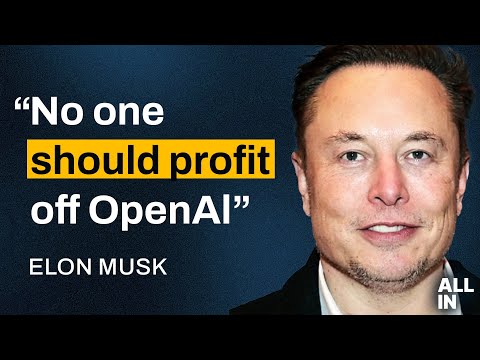
Musk also addresses AI developments, calling it a “supersonic tsunami” that’s coming whether he wants it or not. He recounts how Larry Page called him a “speciesist” for prioritizing human safety over AI, which motivated him to create OpenAI as a counterweight to Google’s AI monopoly. He expresses frustration that OpenAI has become “closed for maximum profit AI” rather than the open source nonprofit it was founded as. The episode concludes with discussions on Tesla’s robotaxi rollout, AI power efficiency compared to the human brain’s 10-watt operation, China’s dominance in solar panel manufacturing, and Bill Gates’ surprising lack of scientific knowledge on electric trucks.
Highlights
”$400 lunches at empty Twitter HQ”
Clip command
yt-dlp --download-sections "*26:45-27:45" "https://www.youtube.com/watch?v=j6_VfR-CyuM" --force-keyframes-at-cuts --merge-output-format mp4 -o "j6_VfR-CyuM-26m45s.mp4"“We discovered that the actual price of the lunch was $400. The original price was $20, but it was at 5% occupancy. So it was 20 times higher and they still kept making the same amount.” — Elon Musk, 26:55
”Fresh tampons in empty building for years”
Clip command
yt-dlp --download-sections "*29:10-30:10" "https://www.youtube.com/watch?v=j6_VfR-CyuM" --force-keyframes-at-cuts --merge-output-format mp4 -o "j6_VfR-CyuM-29m10s.mp4"“Every week they would put a fresh box of tampons in an empty building for years. You’d have to be a burglar who is a transman burglar unwilling to use the woman’s bathroom. You’re more likely to be struck by a meteor than need that tampon.” — Elon Musk, 29:35
”Larry called me a speciesist”
Clip command
yt-dlp --download-sections "*52:20-53:20" "https://www.youtube.com/watch?v=j6_VfR-CyuM" --force-keyframes-at-cuts --merge-output-format mp4 -o "j6_VfR-CyuM-52m20s.mp4"“Larry, what side are you on? He called me a speciesist for being pro-human. I’m like, we need to make sure the AI doesn’t destroy all the humans. And then he called me a speciesist.” — Elon Musk, 52:40
”Closed for Maximum Profit AI”
Clip command
yt-dlp --download-sections "*54:30-55:30" "https://www.youtube.com/watch?v=j6_VfR-CyuM" --force-keyframes-at-cuts --merge-output-format mp4 -o "j6_VfR-CyuM-54m30s.mp4"“OpenAI needs to change its name to Closed for Maximum Profit AI. It went from being the United Nations to being Spectre in James Bond land.” — Elon Musk, 55:00
”Bill Gates didn’t know the numbers”
Clip command
yt-dlp --download-sections "*71:00-72:00" "https://www.youtube.com/watch?v=j6_VfR-CyuM" --force-keyframes-at-cuts --merge-output-format mp4 -o "j6_VfR-CyuM-71m00s.mp4"“He came to visit me at the Tesla Gigafactory and was telling me it’s impossible to have a long range semi truck. I was like, well but we literally have them. And Pepsi is literally using them right now. And he’s like, ‘No, no, it doesn’t work.’ And he didn’t know any of the numbers.” — Elon Musk, 1:11:00
Key Points
-
Disgraziad Corner Introduction (0:00) - Jason introduces a new segment for calling out disgraceful behavior, with Chamath targeting Jason and Pete Buttigieg for virtue signaling about Amnesty International.
-
X Algorithm Issues (3:10) - Discussion of algorithmic bugs causing excessive content recommendations, with Elon explaining they’re deleting legacy Twitter heuristics that were masking other bugs.
-
Grokipedia Launch (11:35) - Musk announces Grokipedia as a Wikipedia alternative, trained on critical thinking to provide more accurate, comprehensive, and neutral information.
-
Grok Reading 100 Million Posts Daily (18:00) - Explanation of how Grok will read the top 10 million, then all 100 million daily posts to provide personalized content recommendations, requiring around 50,000 H100s.
-
Twitter Acquisition Anniversary (24:52) - Three-year retrospective on buying Twitter, including the famous “let that sink in” moment and staying at David Sacks’ house.
-
$400 Lunches and Empty Buildings (26:45) - Discovery that Twitter headquarters was 95% empty, with more cafeteria workers than employees eating, resulting in effective $400 lunches.
-
Tampons in Empty Men’s Bathroom (29:10) - Shocking discovery of fresh tampons being delivered weekly to men’s bathrooms in completely empty buildings for years.
-
Stay Woke Merch Room (30:50) - Finding an entire room filled with “Stay Woke” t-shirts, hoodies, scarves, and “I am an engineer” buttons.
-
Massive SaaS Waste (31:50) - Millions spent on unused software including pedestrian traffic analysis in empty buildings and desk booking software for offices nobody attended.
-
Shadow Banning Revealed (33:10) - Musk confirms Twitter had created elaborate checkbox tools for deboosting accounts while executives denied it under oath, calling Trust and Safety an “Orwellian name.”
-
FBI Collaboration Exposed (35:50) - The Twitter Files revealed 80 FBI agents submitting takedown requests, with extensive government collusion in censorship operations.
-
Brazil Standoff (38:00) - Description of conflict with Brazilian judge who ordered X to break Brazilian law while gagging them from discussing it.
-
UK Prison for Social Media Posts (42:30) - Musk claims 2,000-3,000 people are in UK prisons for social media posts, with violent criminals released to make room.
-
Tesla Compensation Vote (42:49) - Discussion of need for 25% voting control to ensure he can’t be fired by activist investors while building Optimus robots.
-
ISS and Glass Lewis Critique (44:00) - Musk calls proxy advisory firms “corporate ISIS” and “terrorists” for controlling half the stock market’s votes while owning no stock.
-
OpenAI Lawsuit Going to Trial (47:40) - Confirms jury trial in February/March with “mountain of evidence” showing OpenAI violated its nonprofit open source charter.
-
OpenAI Origin Story (52:00) - Musk explains he created OpenAI after Larry Page called him a “speciesist” for prioritizing human safety over AI, when Google had monopoly on AI.
-
“Closed for Maximum Profit AI” (54:30) - Musk says OpenAI should change its name, calling it “tighter than Fort Knox” and comparing its transformation to going from “United Nations to Spectre.”
-
AI as Supersonic Tsunami (55:10) - Describes AI as “a giant wall of water moving faster than the speed of sound” that’s coming whether we want it or not.
-
100 Gigawatts of Tesla Inference (56:24) - Vision of 100 million Tesla vehicles providing distributed inference computing with built-in power, cooling, and WiFi.
-
Human Brain Power Efficiency (57:30) - Notes human brains use only 10 watts for higher brain function to build civilization, showing massive opportunity for AI efficiency improvement.
-
All Teslas Are Robotaxis (60:45) - Clarifies every Tesla made is capable of unsupervised full autonomy, with Cybercab production starting Q2 next year.
-
Safety Driver Approach (64:00) - Explains extreme caution on self-driving because one Tesla accident would be worldwide headline news, expects no safety monitor by December.
-
Fleet Management Challenges (65:30) - Details corner cases like cars all going to same supercharger, parking in disabled spots with faded markings, or squeezing into impossibly tight spaces.
-
Bill Gates Climate Reversal (1:09:34) - Discusses Gates’ flip on climate change priorities and his lack of scientific knowledge when visiting Tesla, not knowing battery energy density numbers.
-
50-Year Climate Timeline (1:13:30) - Musk’s view that climate concern timeframe is about 50 years - not 5 years (alarmist) and not 500 years (dismissive).
-
Oil and Gas Subsidies (1:14:30) - Points out oil/gas industry has massive 80-year-old tax writeoffs they don’t consider subsidies, calls for removing all industry subsidies.
-
China Solar Dominance (1:16:00) - China produces 1.5 terawatts of solar panels annually, could power entire US electricity needs in 18 months.
-
Sun is 99.8% of Solar System (1:20:00) - Explains solar is the obvious energy solution since the sun is 99.8% of the solar system’s mass; burning Jupiter wouldn’t change this math.
-
Kardashev Scale Discussion (1:21:30) - Discusses civilization classification where Type 1 uses planet’s energy, Type 2 uses star’s energy, noting we’re only 1% toward Type 1.
-
Fusion vs Solar (1:25:00) - Argues fusion reactors are “a fun science project” but not serious compared to the free giant fusion reactor in the sky.
Mentions
Companies
- Twitter/X (24:52) - Three-year anniversary of acquisition, transformed from censorship platform to free speech platform
- OpenAI (47:40) - Founded by Musk as open source nonprofit, now “closed for maximum profit AI”
- Google (34:40) - Mentioned for continuing shadow banning practices and original AI monopoly with DeepMind
- Tesla (42:49) - Discussion of board vote, robotaxis, Optimus robots, Cybercab Q2 production
- xAI (60:30) - Mentioned for continuing improvements in inference compute efficiency
- Microsoft (1:10:30) - Referenced as Bill Gates’ company while discussing his scientific knowledge
- DeepMind (52:45) - Musk was on board, told Larry Page about it leading to Google acquisition
- ISS (43:30) - Called “corporate ISIS” for controlling stock market votes through political activism
- Glass Lewis (43:30) - Proxy advisory firm criticized along with ISS
- Waymo (64:30) - Mentioned as getting more of a pass on accidents than Tesla would
- Cruise (63:40) - Referenced for dragging accident incident
- Uber (63:20) - Mentioned for fatal safety driver accident and comparison to robotaxi experience
- FBI (35:50) - Had 80 agents submitting takedown requests to Twitter
- Amazon (55:30) - Mentioned for job displacement and hiring changes
- Pepsi (1:11:20) - Currently using Tesla Semi trucks
Products & Technologies
- Grokipedia (11:35) - New AI-powered Wikipedia alternative launched by X
- Grok (11:35) - X’s AI reading 100 million posts daily, trained on critical thinking
- Grok 2.5 (54:00) - Open source model described as very good
- Optimus (45:30) - Tesla humanoid robot requiring Musk to maintain control for safety
- Cybercab (61:30) - Dedicated robotaxi with no steering wheel, production Q2
- Model Y Juniper (62:30) - Jason’s new Tesla with FSD 14.1 MadMax mode
- Model 3 (61:00) - Mentioned as capable of full autonomy
- Tesla Semi (1:11:00) - Long-range electric truck that Bill Gates claimed was impossible
- H100 (19:30) - Estimated 50,000 needed for Grok to read 100M daily posts
- Community Notes (22:30) - Open source fact-checking system on X
- Twitter Files (35:30) - Released internal emails exposing censorship practices
- Colossus (19:00) - xAI’s supercomputer mentioned in context of Grok compute needs
- Wikipedia (11:35) - Criticized as sparse, wrong, out of date, and biased
People
- Elon Musk - Guest discussing Twitter acquisition anniversary, OpenAI lawsuit, Tesla robotaxis
- David Sacks (24:52) - Hosted Musk at his house during Twitter acquisition, source of the sink
- Jason Calacanis (0:00) - Host, first Disgraziad recipient
- Chamath Palihapitiya (0:00) - Host, initiated Disgraziad segment
- David Friedberg - Host
- Larry Page (52:00) - Called Musk a “speciesist” for prioritizing human safety, not taking AI safety seriously
- Sam Altman (55:50) - Mentioned for wanting to raise $1.4 trillion for data centers
- Bill Gates (1:09:34) - Criticized for claiming electric semis impossible without knowing the numbers, flipping on climate
- President Trump (33:00) - Among those banned from Twitter who were reinstated
- Jordan Peterson (33:00) - Among those banned from Twitter who were reinstated
- Jay Bhattacharya (33:00) - Among those banned from Twitter who were reinstated
- Andrew Tate (33:00) - Among those banned from Twitter who were reinstated
- Pete Buttigieg (1:28) - First Disgraziad recipient along with Jason for virtue signaling
- Sydney Sweeney (2:03) - Celebrity whose trending dress sparked algorithm discussion
- Sundar Pichai (15:00) - Musk texted him about Google suppressing Grokipedia in search
- Scott Adams (32:35) - Dilbert creator referenced when describing Twitter’s absurdity as “11 out of 10 on the Dilbert scale”
- Mike Judge (28:50) - Referenced as Twitter HQ being more absurd than Silicon Valley show
Surprising Quotes
“We discovered that the actual price of the lunch was $400. The original price was $20, but it was at 5% occupancy. So it was 20 times higher and they still kept making the same amount.” — 26:55
“Every week they would put a fresh box of tampons in an empty building for years. You’d have to be a burglar who is a transman burglar unwilling to use the woman’s bathroom. You’re more likely to be struck by a meteor than need that tampon.” — 29:35
“Larry, what side are you on? He called me a speciesist for being pro-human. I’m like, we need to make sure the AI doesn’t destroy all the humans. And then he called me a speciesist.” — 52:40
“OpenAI needs to change its name to Closed for Maximum Profit AI. It went from being the United Nations to being Spectre in James Bond land.” — 55:00
“I call AI the supersonic tsunami. A giant wall of water moving faster than the speed of sound. That’s AI.” — 52:20
“He came to visit me at the Tesla Gigafactory and was telling me it’s impossible to have a long range semi truck. I was like, well but we literally have them. And Pepsi is literally using them right now. And he’s like, ‘No, no, it doesn’t work.’ And he didn’t know any of the numbers.” — 1:11:00
Transcript
0:00 Let’s get started. You know, we wanted to try something new this week. Every week, I get a little upset. Things perturb me, Sacks, and when it does, I just yell and scream, “Disgraziad.” And so, I bought the domain name for no reason other than my own amusement. But, you know what? I’m not alone in my absolute disgust at what’s going on in the world. So this week we’re going to bring out a new feature here on the All-In podcast: Disgraziad.
1:06 This is our new feature. Chamath, you look like you’re ready to go. Why don’t you tell everybody who gets your disgraziad this week? My disgraziad corner goes to Jason Calacanis and Pete Buttigieg where they in the first 30 seconds of the interview compared virtue signaling points about how each one worked at various moments at Amnesty International. Literally affecting zero change, making no progress in the world, but collecting a badge that they used to hold over other people.
3:10 What’s going on with the algorithm? I’m getting Sydney Sweeney’s dress all day. And last week Sacks got invited to SlutCon for two weeks straight on the algorithm. The algorithm has become if you demonstrate interest in anything on X now, if you click on it, god forbid you like something, man, the algorithm is on it, it will give you more of that. It will give you a lot more.
4:30 Yes. So, we did have an issue. We still have somewhat of an issue where there was an important bug that was figured out that was solved over the weekend which caused in-network posts to not be shown. So if you followed someone you wouldn’t see their posts. It’s obviously a big bug, major bug. Then the algorithm was not probably taking into account if you just dwelt on something. But if you interacted with it, it would go hog wild.
7:00 What’s happening is that we’re gradually deleting the legacy Twitter heuristics. Now, the problem is that as you delete these heuristics, it turns out the one heuristic, the one bug was covering for the other bug. And so, when you delete one side of the bug, it’s like that meme with the internet that where there’s like this very complicated machine and there’s like a tiny little wooden stick that’s keeping it going.
11:35 We used AI to create Grokipedia. We finished training on a maximally truth-seeking version of Grok that is good at cogent analysis. So breaking down any given argument into its axiomatic elements, assessing whether those axioms are likely to be true, they’re not contradictory, that the conclusion most likely follows from those axioms. So we just trained Grok on a lot of critical thinking. It just got really good at critical thinking.
13:00 Then we took that version of Grok and said okay cycle through the million most popular articles in Wikipedia and add, modify and delete. So that means research the rest of the internet, whatever is publicly available, and correct the Wikipedia articles and fix mistakes, but also add a lot more context. Sometimes the nature of the propaganda is that facts are stated that are technically true but do not properly represent a picture of the individual.
17:30 The really big change which is where Grok literally reads everything that’s posted to the platform. There’s about 100 million posts per day. I think that’s actually just maybe just in English. Grok is gonna start off reading the top 10 million of the 100 million and we’ll actually read them, and understand them and categorize them and match them to users. It’s not a job humans could ever do.
19:30 How much of Colossus will that take? Is it tens of thousands of servers to do that every day? My guess is it’s probably on the order of 50K H100, something like that.
22:30 We’ve got community notes. You can also ask Grok about anything you see on the platform. You just press the Grok icon on any X post and it’ll analyze it for you and research it as much as you want. By tapping the Grok icon you can assess whether that post is the truth, the whole truth, or nothing but the truth or whether there’s something supplemental or needs to be explained. The recent update to Grok is actually very good at piercing through propaganda.
24:52 How’s it been 3 years in? This is a three-year anniversary. Remember it was Halloween. Yeah. Halloween’s back. I remember Elon was staying at my house. We had talked the week before and he told me the deal was going to close. And I was like, “Hey, do you need a place to stay?” And he took me up on it. And the day before he went to the Twitter office, there was a request made to my staff: Do you happen to have an extra sink?
26:45 I drive up there and I’m looking where to park the car and I realize there’s just parking spaces around the entire building. But we get in there and the place is empty. It was seriously empty except for the cafeteria. There were two Twitter buildings. One of the buildings was completely and utterly empty. The other building had like 5% occupancy. We all go get something to eat and we realize there’s more people working in the cafeteria than at Twitter. There were more people making the food than eating the food.
27:40 This is where we discovered that the actual price of the lunch was $400. The original price was $20, but it was at 5% occupancy. So it was 20 times higher and they still kept making the same amount. So, effectively lunch was $400.
28:50 We had the initial meetings in the building with literally no one in it. We tried drawing on the whiteboard and the markers had gone dry. So nobody had used the whiteboard markers in like two years. None of the markers worked. But it was totally clean because the cleaning crew had come in and done their job and cleaned an already clean place for two or three years straight. This is more crazy than any sort of Mike Judge movie or Silicon Valley.
29:10 I remember going into the men’s bathroom and there’s a table with menstrual hygiene products. A fresh box of tampons. But there’s literally no one in this building. No, they hadn’t turned off the “send fresh tampons to the man’s bathroom in the empty building.” So every week they would put a fresh box of tampons in an empty building for years. It must have been very confusing to the people being asked to do this.
30:05 Seriously, consider the string of possibilities necessary for anyone to possibly use that tampon in the men’s bathroom at the unoccupied second building of Twitter headquarters. You’d have to be a burglar who is a transman burglar unwilling to use the woman’s bathroom that also has tampons. Statistically there’s no one in the building. So you’ve broken into the building and at that moment you have a period. You’re more likely to be struck by a meteor than need that tampon.
30:50 I think it was shortly after that you discovered an entire room at the office that was filled with Stay Woke t-shirts. An entire pile of merch. Staywoke. And also big magnetic buttons that said “I am an engineer.” I’m like, “Look, if you’re an engineer, you don’t need a button.” Who’s the button for? You can just ship code. We would know. We can check your GitHub.
31:50 The amount of waste that we saw there during those first 30 days, this was a publicly traded company. There was a list of SaaS software we went through and none of it was being used. Some of it had never been installed and they had been paying for it for 2 years. The one that blew my mind the most was they were paying a certain amount of money per desk to have desking software in an office where nobody came to work.
32:25 There was millions of dollars being paid for analysis of pedestrian traffic software that uses cameras to analyze the pedestrian traffic to figure out where you can alleviate pedestrian traffic jams - in an empty building. That’s like 11 out of 10 on a Dilbert scale. Shout out Scott Adams. You’ve gone off scale on your Dilbert level at that point.
33:00 Let’s talk about the free speech aspect for a second because I think that is the most important legacy of the Twitter acquisition. People have short memories and they forget how bad things were three years ago. First of all, you had figures as diverse as President Trump, Jordan Peterson, Jay Bhattacharya, Andrew Tate. They were all banned from Twitter. And I remember when you opened up the Twitter jails and reinstated their accounts, freed all the bad boys of free speech.
33:50 Beyond just the bannings, there was the shadow bannings. Twitter had claimed for years that they were not shadowbanning. This was a paranoid conservative conspiracy theory. There was very aggressive shadow banning by what was called the trust and safety group which of course naturally would be the one that is doing the nefarious shadow banning. I just think we shouldn’t have a group called trust and safety. This is an Orwellian name if there ever was one.
34:40 By the way it wasn’t just the fact they were doing it. They created an elaborate set of tools to do this. They had checkbox set of tools to deboost accounts. This is still being done at the other social media companies including Google. For search results, if you simply push a result pretty far down the page or the second page of results, the joke used to be where’s the best place to hide a dead body? The second page of Google search results because nobody ever goes to the second page.
35:50 So first was banning, second was shadow banning. I think third to me was government collusion, government interference. So you released the Twitter files. Nothing like that ever been done before where you actually let investigative reporters go through Twitter’s emails. Unfettered. I was not looking over their shoulder at all. They just had direct access to everything. And they found that there was extensive collusion between the FBI and the Twitter trust and safety group where it turns out the FBI had 80 agents submitting takedown requests.
37:00 The US House of Representatives had hearings on the matter. A lot of this was unearthed. It’s public record. Some people on the left still think this is like made up. I’m like, this is literally the files at Twitter. We’re literally just talking about the emails that were sent internally that confirm this. This is what’s on the Slack channels. This is what is shown in the Twitter database.
38:00 Our policy at this point is to follow the law. The laws are obviously different in different countries. I get criticized for like why don’t I push free speech in XYZ country that doesn’t have free speech laws. I’m like because that’s not the law there. If we don’t obey the law we’ll simply be blocked in that country. But as soon as you start going beyond the law now you’re putting your thumb on the scale.
39:20 Sometimes we get in a bit of a bind like we had with Brazil where this judge in Brazil was telling us to break the law in Brazil and ban accounts contrary to the law of Brazil. And also giving us a gag order. So we’re not allowed to say it’s happening and we have to break the law and the judge is telling us to break the law. The law is breaking the law. That’s where things get very difficult. We were actually banned in Brazil for a while because of that.
40:30 People forget that the censorship wasn’t just about COVID. There was a growing number of categories of thought and opinion that were being outlawed. Content moderation, which is another Orwellian euphemism for censorship, was being applied to categories like gender and even climate change. The definition of hate speech was constantly growing. This trend of censorship was growing. It was galloping and it would have continued if it wasn’t for the fact that you decided to buy Twitter and opened it up.
41:30 Once Twitter broke ranks the others had to. It became very obvious what the others were doing and so they had to mitigate their censorship substantially because of what Twitter did. Perhaps to give them some credit they also felt that they had the air cover to be more inclined towards free speech. They still do a lot of shadow banning and whatnot at the other social media companies, but it’s much less than it used to be.
42:30 There’s been an overall global movement to suppress free speech under the guise of suppressing hate speech. My understanding is that in the UK there’s something like two or three thousand people in prison for social media posts. And many of these things are like you can’t believe that someone would actually be put in prison for this. They’ve in a lot of cases released people who have committed violent crimes in order to imprison people who have simply made posts on social media which is deeply wrong.
42:49 Can I ask you about the Tesla board vote? We talked about it last week and we talked about how crazy ISS and Glass Lewis is. We used this one insane example where Ira Ehrenpreis didn’t get the recommendation from ISS and Glass Lewis because he didn’t meet the gender requirements but then Kathleen, an African-American woman, they recommended against her on the grounds she was insufficiently diverse. These things don’t make any sense.
44:00 I do think we’ve got a fundamental issue with corporate governance in publicly traded companies where about half of the stock market is controlled by passive index funds and most of them outsource their decision to advisory firms, particularly Glass and ISS. I call them corporate ISIS. They’re just terrorists. And they own no stock in any of these companies. There’s a fundamental breakdown of fiduciary responsibility here.
45:30 The Tesla thing is called sort of compensation, but really it’s not about compensation. It’s not like I’m going to go out and buy a yacht with it. If I’m going to build up Optimus and have all these robots out there, I need to make sure we do not have a Terminator scenario and that I can maximize the safety of the robots. I feel like I need to have something like a 25% vote. Which is enough of a vote to have a strong influence but not so much that I can’t be fired if I go insane.
46:30 My concern would be creating this army of robots and then being fired for political reasons because ISS and Glass Lewis. The activists at those firms fire me even though I’ve done everything right. And then I cannot ensure the safety of the robots. If you don’t get that vote, would you leave? Let’s just say I’m not going to build a robot army if I can be easily kicked out by activist investors. No way.
47:40 What was interesting about the OpenAI restructuring was your lawsuit was excluded from the allowances of the California attorney general. Your lawsuit is still out there and I think it’s going to go to a jury trial. Yes. I believe that will go to a jury trial in February or March. There’s a mountain of evidence that shows that OpenAI was created as an open source nonprofit. It’s literally the exact description in the incorporation documents.
48:50 The incorporation documents explicitly say that no officer or founding member will benefit financially from OpenAI. And they’ve completely violated that. You can use the Wayback Machine and look at the website of OpenAI - open source nonprofit, open source nonprofit - the whole way until it looked like wow there’s a lot of money to be gained here and then suddenly it starts changing. They try to change the definition of “open AI” to mean “open to everyone” instead of “open source,” even though it always meant open source.
49:40 I came up with the name. That’s how I know. Essentially since I came up with the idea for the company, named it, provided the A, B, and C rounds of funding, recruited the critical personnel, and told them everything I know. If that had been a commercial corporation, I’d probably own half the company. But I could have chosen to do that. It was totally at my discretion. But I created it as a nonprofit for the world, an open source nonprofit for the world.
51:00 The best open source models right now actually ironically - because fate seems to be an irony maximizer - the best open source models are generally from China. Like that’s bizarre. And then I think the second best, maybe better than second best, the Grok 2.5 open source model is actually very good. We’ll continue to open source our models. But try using any of the recent so-called OpenAI open source models. They don’t work. They basically open sourced a broken non-working version of their models as a fig leaf.
52:20 What do you think the timeline is for AI job displacement? And what do you think as a society we’re going to need to do to mitigate it if it goes too fast? Well, I call AI the supersonic tsunami. So not the most comforting description in the world. A tsunami, a giant wall of water moving faster than the speed of sound. As AI.
53:00 Now this is happening whether I wanted to or not. I actually tried to slow down AI. The reason I wanted to create OpenAI was to serve as a counterweight to Google because at the time Google essentially had unilateral power in AI. They had all the AI essentially. And Larry Page was not taking safety seriously. Jason, were you there when he called me a speciesist? Yes I was there. I was like, Larry, we need to make sure that the AI doesn’t destroy all the humans. And then he called me a speciesist.
54:00 At the time Google had essentially a monopoly on AI. They bought DeepMind which I was on the board of, had an investment in. Larry and Sergey had invested in it as well. He found out about it because I told him about it. I showed him some stuff from DeepMind and I think that’s how he found out about it and acquired them actually. This is a unipolar world where the guy in charge is not taking things seriously and called me a speciesist for being pro-human. What do you do in those circumstances? Build a competitor.
54:30 OpenAI was created essentially as the opposite, which is an open source nonprofit, the opposite of Google. Now unfortunately it needs to change its name to Closed for Maximum Profit AI. Or maximum profit to be clear. The most amount of profit you possibly get. It’s comical when you hear it. Fate is an irony maximizer. What is the most ironic outcome for a company created to do open source nonprofit AI? It’s super closed source. It’s tighter than Fort Knox. The OpenAI source code is locked up tight in Fort Knox.
55:50 It’s like Bond villain level flip. It went from being the United Nations to being Spectre in James Bond land. When you hear Sam say he’s going to raise 1.4 trillion to build up data centers. Yeah. I think he means it. It’s audacious. In the earnings call, you said something insane - we could connect all the Teslas and allow them in downtime to actually offer up inference and you can string them all together. I think the math is like it could actually be like 100 gigawatts.
56:24 If ultimately there’s a Tesla fleet that is 100 million vehicles, which I think we probably will get to at some point, and they have mostly state-of-the-art inference computers in them that each are a kilowatt of inference compute, and they have built-in power and cooling, and connect to the WiFi. That’s the key. You’d have 100 gigawatts of inference compute.
57:30 We have a clear example of efficient power efficient compute which is the human brain. Our brains use about 20 watts of power but of that only about 10 watts is higher brain function. Most of it’s just housekeeping functions, keeping your heart going and breathing. So you got maybe 10 watts of higher brain function in a human. And we’ve managed to build civilization with 10 watts of a biological computer. And that biological computer has like a 20 year boot sequence. But it’s very power efficient.
58:30 Given that humans are capable of inventing general relativity and quantum mechanics, discovering physics, inventing aircraft, lasers, the internet with a 10 watt meat computer essentially, then there’s clearly a massive opportunity for improving the efficiency of AI compute. It’s currently many orders of magnitude away from that. A 100 megawatt or even a gigawatt AI supercomputer at this point can’t do everything that a human can do. It will be able to but it can’t yet.
60:45 All of the cars we make right now are capable of being a robotaxi. There’s a little confusion of the terminology because our cars look normal, like the Model 3 or Model Y. But it has an advanced AI computer, an advanced AI software and cameras. We didn’t want the cameras to stick out or be ugly. So we put them in unobtrusive locations. The forward looking cameras are in front of the rearview mirror. The side view cameras are on the side repeaters. If you look closely you can see all the cameras but you have to look closely.
61:30 All of the cars we make are capable of unsupervised full autonomy. Now we have a dedicated product which is the Cybercab which has no steering wheel or pedals, which are obviously vestigial in an autonomous world. We start production of the Cybercab in Q2 next year and we’ll scale that up to quite high volume. I think ultimately we’ll make millions of Cybercabs per year.
62:30 I have the Model Y Juniper and I got the FSD 14.1 and I put it on MadMax mode the last couple of days. That is a unique experience. I was like, “Wait a second. This thing is driving in a very unique fashion.” It assumes you want to get to your destination in a hurry. I used to give drivers an extra 20 bucks to do that.
63:40 It feels like it’s getting very close, but you have to be very careful. Uber had a horrible accident with the safety driver. Cruise had a terrible accident. Wasn’t their fault exactly, except that somebody got hit and then they hit the person a second time and they got dragged. This is pretty high stakes. The car is actually extremely capable right now, but we are being extremely cautious and we’re being paranoid about it because even one accident would be worldwide headline news. Especially if it’s a Tesla - Waymo gets a bit of a pass.
65:30 We do expect that the cars will be driving around without any safety monitor before the end of the year. So sometime in December in Austin. You guys have done a great job figuring out where the trouble spots are. A lot of things that we’re learning are just how to manage a fleet. You’ve got to write all the fleet management software. You’ve got to write the ride hailing software, basically the software that Uber has. We’ll have a thousand cars or more in the Bay Area by the end of this year, probably 500 or more in the greater Austin area.
67:30 You have to make sure the cars don’t all go to the same supercharger at the same time. Or don’t all go to the same intersection. There’s high demand and low demand. What do you do during those times? Do you have the car circle the block? Do you have it try to find a parking space? Sometimes it’s a disabled parking space but the writing’s faded. The car’s like “oh look a parking space” and will jump right in there. Yeah, get a ticket. You got to look carefully to make sure it’s not an illegal parking space.
68:45 In order to take people to San Jose airport, you actually have to connect to San Jose airport servers. Because you have to pay a fee every time you drop off. So the robot car has to do a remote procedure call to San Jose airport servers to say I’m dropping someone off at the airport and charge me whatever five bucks. Airports are somewhat of a racket. It’s kind of funny - the robot car is calling the airport server to charge its credit card.
1:09:34 Did you see the Bill Gates memo that he put out? A lot of people are talking about this memo. Did climate change become woke? You’d think that someone like Bill Gates who clearly started a technology company that’s one of the biggest companies in the world, Microsoft, would be really quite strong in the sciences. But actually my direct conversations with him have - he is not strong in the sciences.
1:11:00 He came to visit me at the Tesla Gigafactory in Austin and was telling me that it’s impossible to have a long range semi truck. And I was like well but we literally have them. And Pepsi is literally using them right now. You can drive them yourself or send someone to drive the truck and verify that it can do the things that we say it’s doing. And he’s like, “No, no, it doesn’t work.” And I’m like, “Um, okay.”
1:11:50 I was like, well, so it must be that you disagree with the watt hours per kilogram of the battery pack. You must think that perhaps we can’t achieve the energy density of the battery pack or that the watt hours per mile of the truck is too high. When you combine those two numbers, the range is low. So which one of those numbers do you think we have wrong? And what numbers do you think are correct? And he didn’t know any of the numbers. Well then doesn’t it seem perhaps premature to conclude that a long-range semi cannot work if you do not know the energy density of the battery pack or the energy efficiency of the truck?
1:13:30 The reality of the whole climate change thing is you’ve had people who say it doesn’t exist at all and then people who say it’s super alarmist, saying Rio is going to be underwater in 5 years. Obviously neither of those two positions are true. The reality is you can measure the carbon concentration in the atmosphere. You could literally buy a CO2 monitor from Amazon for 50 bucks. The parts per million of CO2 in the atmosphere has been increasing steadily at 2 to 3 per year.
1:14:00 At some point if you continue to take billions, eventually trillions of tons of carbon from deep underground and transfer to the atmosphere and oceans, you will change the chemical constituency of the atmosphere and oceans. Then you can only argue to what degree and over what time scale. In my opinion we’ve got at least 50 years before it’s a serious issue. I don’t think we’ve got 500 years. But we’ve probably got 50. It’s not 5 years. If you’re trying to get to the right order of magnitude of accuracy, the concern level for climate change is on the order of 50 years.
1:14:30 The right course of action is actually just the reasonable course of action which is to lean in the direction of sustainable energy and lean in the direction of solar and a solar battery future. I don’t think we need massive subsidies, but then we also shouldn’t have massive subsidies for the oil and gas industry. The oil and gas industry has massive tax writeoffs that they don’t even think of as subsidies because these things have been in place for in some cases 80 years. But they’re not there for other industries. So when you’ve got special tax conditions in one industry and not another, I call that a subsidy.
1:15:40 The political reality is that the oil and gas industry is very strong in the Republican party but not in the Democratic party. So you will not see obviously even the tiniest subsidy being removed from the oil, gas and coal industry. In fact, there were some that were added. And there were a massive number of sustainable energy incentives that were removed, some of which I agreed with by the way. Some of the incentives have gone too far.
1:16:00 There are actually massive disincentives for solar because China is a massive producer of solar panels. They’re doing an incredible job of solar manufacturing. Really incredible. They have roughly 1.5 terawatts of solar production right now. And they’re only using a terawatt per year. That’s a gigantic number. The average US power consumption is only half a terawatt. Just think about that for a second.
1:17:00 China’s solar panel production max capacity is 1.5 terawatts per year. US steady-state power usage is half a terawatt. Now you do have to reduce that - if you produce 1.5 terawatts a year of solar, you need to add that with batteries, take into account the differences between night and day, the fact that the solar panel is not always pointed directly at the sun. So you can divide by five-ish. But that still means China has the ability to produce solar panels with a steady-state output that is roughly 2/3 that of the entire US economy from all sources. Which means that just with solar alone China can in 18 months produce enough solar panels to power the entire United States.
1:19:30 What do you think about near field solar aka nuclear? I’m in favor of making energy from any way you want that isn’t obviously harmful to the environment. Generally people don’t welcome a nuclear reactor in their backyard. They’re not like championing “put it here, put it under my bed, put it on my roof.” What if your next door neighbor said, “I’m selling my house and they’re putting in a nuclear reactor”? The typical homeowner response will be negative. But nonetheless, I do think nuclear is actually very safe.
1:20:00 There’s a lot of scaremongering and propaganda around fission. But fission is actually very safe. The US Navy has this on submarines and aircraft carriers with people really working right there. A submarine is a pretty crowded place and they have a nuclear-powered submarine. I think fission is fine as an option. The regulatory environment makes it very difficult to actually get that done.
1:20:30 It is important to appreciate just the sheer magnitude of the power of the sun. Here are some important basic facts. Even Wikipedia has these facts right. The sun is about 99.8% of the mass of the solar system. Then Jupiter is about 0.1%. And then everything else is in the remaining 0.1% and we are much less than 0.1%. So if you burnt all of the mass of the solar system, the total energy produced by the sun would still round up to 100%.
1:21:30 If you just burnt Earth, the whole planet, and burnt Jupiter, which is very big and quite challenging to burn - turn Jupiter into a thermonuclear reactor - it wouldn’t matter compared to the sun. The sun is 99.8% of the mass of the solar system and everything else is in the miscellaneous category. Basically no matter what you do, total energy produced in our solar system rounds up to 100% from the sun. You could teleport two more Jupiters into our solar system, burn them, and the sun would still round up to 100%.
1:22:30 As soon as you start thinking about things at a grander scale like Kardashev scale to civilizations, it becomes very obvious. Anyone who studies physics has known this for a very long time. I think it was a Russian physicist who came up with this idea in the ’60s just as a way to classify civilizations. Kardashev scale one would be you’ve harnessed most of the energy of the planet. Kardashev scale two, you’ve harnessed most of the energy of your sun. Kardashev three, you’ve harnessed most of the energy of the galaxy.
1:23:30 We’re only about 1% or a few percent of Kardashev scale one right now optimistically. But as soon as you go to Kardashev scale 2, where you’re talking about the power of the sun, then you’re really just saying everything is solar power and the rest is in the noise. The sun produces about a billion times, well over a billion times more energy than everything on earth combined. Solar is the obvious solution to all this.
1:25:00 We only get a fraction of 1% of that energy on the planet Earth. We’ve got to figure out how to wrap the sun if we’re going to harness that energy. If people want to have fun with reactors, that’s fine. Have fun with reactors. But it’s not a serious endeavor compared to the sun. It’s a fun science project to make a thermonuclear reactor, but it’s just peanuts compared to the sun. The future is a whole bunch of solar powered AI satellites.
1:26:30 My opinion on creating a fusion reactor on earth is I think this is actually not a hard problem. It’s a little hard. But if you just scale up a tokamak, the bigger you make it the easier the problem gets. You’ve got a surface to volume ratio thing where you’re trying to maintain a really hot core while having a wall that doesn’t melt. If you just scale up the donut reactor tokamak and improve your surface to volume ratio, that becomes much easier. You can absolutely make a reactor that generates more energy than it consumes and the bigger you make it the easier it is.
1:28:00 In the limit you just have a giant gravitationally contained thermonuclear reactor like the sun. Which requires no maintenance and it’s free. This is also why would we bother making a little itty bitty sun that’s so microscopic you’d barely notice it on Earth when we’ve got the giant free one in the sky.
1:29:00 Also you really need to keep the power local. Sometimes people say would you beam the power back to Earth? Do you want to vaporize Earth? We’d be vaporized in an instant. You really need to keep the power local. Distributed power and I guess most of it we use for intelligence. The future is a whole bunch of solar powered AI satellites.
1:30:00 Even the solar energy that does reach earth is about a gigawatt per square kilometer or roughly 2.5 gigawatts per square mile. That’s a lot. The commercially available panels are around 25-26% efficiency. If you pack it densely at 80% packing density, you effectively have about 200 megawatts per square kilometer. You need to pair that with batteries for continuous power, although our power usage drops considerably at night so you need less batteries than you think.
1:31:00 An easy number to remember is a gigawatt hour per square kilometer per day is roughly correct. On the battery side, lithium iron phosphate battery cells - Earth is 32% iron, 30% oxygen, and then everything else in the remaining percentage. We’re basically a rusty ball bearing with a lot of silicon at the surface in the form of sand. Iron phosphate lithium ion cells - iron is extremely common, the most common element on earth even in the crust. Phosphorus is also very common. The anode is carbon, also very common. And lithium is also very common.
1:32:00 You can do the math. In fact, we did the math and published it on the Tesla website that shows you can completely power Earth with solar panels and batteries. There’s no shortage. So on that note - yeah, go get to work, Elon, and just power the Earth while you’re getting implants into people’s brains and satellites and other good fun stuff. Good to see you, buddy. Thank you for coming today and thank you for liberating free speech three years ago. That was a very important milestone.