Dan Loeb: The Lost Art of Short Selling, and Why Stock Picking is Back
Dan Loeb: The Lost Art of Short Selling, and Why Stock Picking is Back
Summary
Third Point CEO and CIO Dan Loeb sits with the Besties at the Liquidity Summit for a 31-minute conversation that opens with his pre-Wall-Street-Bets internet trolling days on Silicon Investor and Yahoo Finance chat boards — “I was the OT” (original troll) — and ends with how he personally got Ross Ulbricht pardoned. In between is one of the most candid mini-histories of a multi-strat hedge fund: starting at Warburg Pincus learning to value private enterprises, the formative distressed-debt desk at Jefferies under the “10,000 hours” frame, learning event-driven by reverse-engineering Eric Mindich’s quadrumvirate at Goldman (“I was like a Chinese corporation copying and reverse engineering”), and customer-side mentorship from David Tepper. Third Point is now a $30B multi-strat platform: main hedge fund, CLO business, private credit (sponsor financing, direct lending, workouts), and a wholly-then-half-owned insurance vehicle that captures the investment-grade leg.
The middle of the conversation tracks his evolution from “cheap securities with catalysts” to a moat-and-management framework — adaptable management as the only durable thing in a world where the AOL/IBM-style moats turned out to be illusions. He walks through his most recent thesis trade: shorting homebuilders on the structural NVR-imitation problem (all pretending to be asset-light while sitting on massive committed land pools) combined with the post-COVID inventory hangover. Sacks then jumps in with the candid distribution-mistake confessional — Palantir sold in the 20s, Enphase sold under a dollar after a tax-hit IPO sale, Upstart Series B — anchoring Friedberg’s point that “10 years ago we thought a $100B market cap was as big as anything could get.” Chamath uses the moment to call Nvidia structurally undervalued on the next two-to-three years of earnings because long-short pods need a “safe short” the way Google and Amazon used to be safe shorts.
The final third is Loeb on philanthropy and criminal justice. His framework starts with Success Academies (he’s chairman) and his contrarian view that income inequality isn’t about Bezos becoming a trillionaire but about union-protected schools refusing accountability for the most vulnerable kids. He then narrates the full Ross Ulbricht pardon story: how he was approached by a woman named Rivetaz (friends with Olaf Carlson-Wee), how he brought Charlie Kirk in, how the DOJ threatened Trump on the last day of the 45th term and the commutation was withdrawn, and how it finally got delivered as a libertarian/crypto-community campaign promise. The praise for the administration’s private-public partnership model comes via his portfolio company Atom Computing — quantum infrastructure where the government drove a hard bargain and “the taxpayers are going to make a ton of money on this.”
Highlights
”Activism Without Proxy Contests Is Like Catholicism Without Hell”
“The shift has really been much more towards a dare-to-be-great message. Activism without proxy contests is like Catholicism without hell.” — Dan Loeb, 0:25
Clip command
yt-dlp --download-sections "*0:25-0:50" "https://www.youtube.com/watch?v=i8OI8CNdZgU" --force-keyframes-at-cuts --merge-output-format mp4 -o "activism-without-proxy-contests.mp4"”I Was the OT — Original Troll”
“Some people use the term OG, sometimes I say I was the OT… investing is fun, and particularly on the short side. It was really unsupervised. There were some incredibly fraudulent companies out there, and it was just fun to uncover them and kind of taunt the management teams and ultimately prevail.” — Dan Loeb, 1:38
Clip command
yt-dlp --download-sections "*1:34-2:25" "https://www.youtube.com/watch?v=i8OI8CNdZgU" --force-keyframes-at-cuts --merge-output-format mp4 -o "ot-original-troll.mp4"Learning Event-Driven Like “A Chinese Corporation Reverse Engineering”
“I was like a Chinese corporation that was like copying and reverse engineering and taking everything in and creating my database of knowledge and my own operating system, kind of taking the best out of what all these different people did.” — Dan Loeb, 6:00
Clip command
yt-dlp --download-sections "*6:00-6:45" "https://www.youtube.com/watch?v=i8OI8CNdZgU" --force-keyframes-at-cuts --merge-output-format mp4 -o "chinese-corporation-reverse-engineering.mp4"The Homebuilder NVR Short Thesis
“The homebuilding industry was first structurally impaired because of the way that they were all pretending to be NVR, which is to say all pretending to be asset light, but they had massive commitments to these land pools, which in things that they said were options, but they were really very committed in the capital.” — Dan Loeb, 16:29
Clip command
yt-dlp --download-sections "*16:29-18:25" "https://www.youtube.com/watch?v=i8OI8CNdZgU" --force-keyframes-at-cuts --merge-output-format mp4 -o "nvr-homebuilder-short.mp4"Nvidia Is Structurally Undervalued
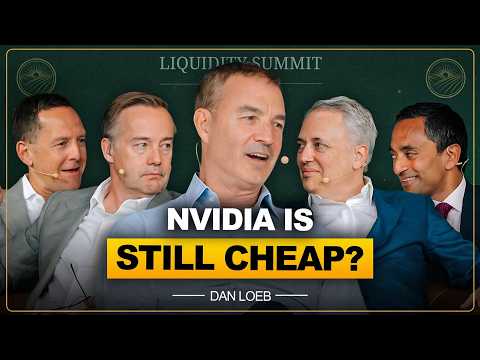
“Long-short pods are structured such that they have to be short something. So Nvidia feels like a safe short. By the way, Google was a safe short, Amazon was a safe short. So, I mean, this just happens and sometimes they’ll languish at a valuation and then they break out. I think that’ll eventually happen with Nvidia.” — Chamath Palihapitiya, 21:46
Clip command
yt-dlp --download-sections "*21:18-22:20" "https://www.youtube.com/watch?v=i8OI8CNdZgU" --force-keyframes-at-cuts --merge-output-format mp4 -o "nvidia-undervalued-safe-short.mp4"How Ross Ulbricht Actually Got Pardoned
“I approached Charlie Kirk about this. And Charlie really embraced this and embraced this individual as someone who had been unfairly sentenced. He took it to the president… On the last day of Trump’s 45th term, we were certain that he was going to get out and the Justice Department, for whatever reason, said if you commute his sentence, we’re going to go after you, to the president. So as I understand, he withdrew the commutation.” — Dan Loeb (labeled “David Sacks” in JSON segment crossover), 27:00
Clip command
yt-dlp --download-sections "*26:12-30:18" "https://www.youtube.com/watch?v=i8OI8CNdZgU" --force-keyframes-at-cuts --merge-output-format mp4 -o "ross-ulbricht-pardon-story.mp4"Key Points
- OT — Original Troll (1:38) — Chatboards: Silicon Investor, Yahoo Finance; pre-Reddit “Wild West”
- Actrade fraud takedown (2:30) — Repackaging factor securities as “TADS” technology; refrigerator financing dressed up
- Started investing at 10 (3:41) — Dad was a “notoriously bad investor”; Loeb worked PaineWebber branch in 11th grade
- The Eric Mindich quadrumvirate (6:00) — Amos, Marone, Dinakar at Goldman; event-driven framework’s origin
- David Tepper as customer mentor (6:30) — Loeb covered him at Jefferies; “watched their thought process”
- Event-driven golden era (6:47) — Takeovers, spin-offs, bankruptcies, privatizations; management incentive to sandbag pre-IPO numbers
- “Nothing new under the sun” - Livermore (7:20) — Loeb’s frame on management incentives
- The Rob Schwartz / Kempo Karate origin (9:44) — Reconnected at 20-year high school reunion in 1999; built Third Point’s venture muscle
- Radia Communications → Texas Instruments (10:10) — First venture; ABG-compatible WiFi base station chips
- Third Point platform today (11:00) — Main hedge fund + CLO + private credit + insurance company; ~$30B AUM
- AI won’t replace human investors (13:06) — “AI will never really be able to look in your eye and assess all the things…”
- Moats are an illusion of hindsight (14:40) — IBM, AOL: “we deluded ourselves earlier”
- Bet on adaptable management (15:00) — Pattern recognition over rubric; 30-year discipline
- Don’t short on valuation alone (16:29) — Reddit can run over a “dumb valuation” short
- The homebuilder NVR thesis (16:29) — All pretending to be asset-light; massive land pool commitments masquerading as options
- The structural impairment + post-COVID hangover combo (18:00) — Building costs squeezed by inflation; buyers can’t afford
- Palantir sold in the 20s (18:53) — Sacks’s confessional; “huge mistake”
- Enphase sold under a dollar after IPO (19:28) — Would’ve been $4B if held
- Upstart B-round (19:13) — Sacks: “learned not to go on boards anymore because it restricts your ability to be liquid”
- Friedberg: 10 years ago $100B was the ceiling (21:00) — Now multi-trillion is normal
- Nvidia is structurally undervalued (21:35) — On 2-3 year earnings; “safe short” structural pressure
- Sacks: boundary-condition discount on Nvidia (22:15) — Never seen a valuation like this
- Income inequality framing (22:54) — Not about Bezos becoming a trillionaire; it’s that vulnerable kids aren’t getting tools
- Education as broken structure, not money (24:00) — Accountability and merit set aside for adult union benefit
- Atom Computing as quantum example (25:22) — Praises administration’s private-public partnership; government drove hard bargain
- Three categories of unfair sentences (26:12) — Falsely convicted, rehabilitated, disproportionate sentences
- Jonathan Grobman 18-year sentence (26:30) — Dalton background; orchid diapers and formula
- Ross Ulbricht: double life + 40 years (27:00) — “How he would spend it after he’d been there for two lifetimes”
- Rivetaz and Olaf Carlson-Wee (27:30) — The crypto insider who alerted Loeb
- David Warrington as decade-long lawyer (29:05) — Current White House Counsel; was Ross’s lawyer for 10 years
- DOJ blocked Trump’s commutation in term one (29:30) — Threatened to “go after” the president
- Trump’s libertarian/crypto campaign promise (29:50) — Delivered as pardon, not just commutation
- Ross is married with a child today (30:00) — A decade served
- Aleph as continuing vehicle (30:23) — Organization working on cases one at a time
Mentions
Companies
- Third Point (0:00) — Loeb’s firm; ~$30B AUM multi-strat platform
- Nestle (0:21) — Recent activist target
- Actrade (2:30) — 1990s short; “TADS” factoring fraud
- Yahoo / Silicon Investor (1:00) — Pre-Reddit chat board ecosystem
- PaineWebber (Bear Stearns parallel) (3:50) — Loeb’s 11th-grade broker job
- Warburg Pincus (3:50) — First job; private equity / venture training
- Jefferies (4:30) — Distressed debt desk; the formative experience
- Goldman Sachs (5:30) — Eric Mindich’s quadrumvirate; arbitrage desk
- Bear Stearns (3:50) — Self-correction to PaineWebber
- Radia Communications (10:10) — Loeb’s first venture; sold to Texas Instruments
- Texas Instruments (10:30) — Acquired Radia
- Blue Owl (9:33) — Reference for tech-sophistication argument
- NVR (16:29) — The asset-light homebuilder model others were imitating
- Palantir (18:53) — Sacks sold in the 20s; “huge mistake”
- Upstart (19:12) — Sacks led the B-round
- Enphase (19:16) — Sacks sold under a dollar after IPO; would’ve made $4B
- Meta / Facebook (20:26) — Sacks held some; $22B (Chamath) → $50B → $18B → $480B
- Nvidia (21:18) — Chamath: structurally undervalued
- Atom Computing (25:22) — Third Point portfolio company; quantum + cryptography
- Aleph (30:23) — Criminal-justice continuing-cases organization
- Success Academies (23:00) — Loeb is chairman; NYC charter school network
- Silk Road (27:00) — Ross Ulbricht’s crypto-based exchange
- IBM (14:40) — Example of an “illusion” moat in hindsight
- AOL (14:57) — Same point
Products & Technologies
- CLO (Collateralized Loan Obligations) (11:30) — Acquired business line
- TADS (3:00) — Actrade’s repackaged factor securities
People
- Dan Loeb (Third Point CEO/CIO) (0:00) — Subject
- Rob Schwartz (9:44) — Loeb’s partner; Kempo Karate childhood friend
- Dave Fisher (10:10) — Founder of Radia Communications
- Eric Mindich (5:30) — Youngest partner at Goldman; arb desk
- David Tepper (3:18) — Loeb’s customer at Jefferies
- Alan Crown (4:00) — Loeb’s PaineWebber broker boss in 11th grade
- Jesse Livermore (7:20) — “Nothing new under the sun” quote
- Brad Gerstner (22:54) — Cited as philanthropic peer
- Jeff Bezos (23:20) — Trillionaire framing for income inequality argument
- John Fetterman (24:33) — Cross-party criminal justice reform example
- David McCormick (24:33) — Cross-party criminal justice reform example
- Jonathan Grobman (26:30) — 18-year sentence case Loeb is currently working
- Ross Ulbricht (27:00) — Silk Road founder; pardoned
- Charlie Kirk (27:45) — Took the Ulbricht case to Trump
- David Warrington (28:50) — White House Counsel; was Ross’s lawyer for a decade
- Rivetaz (27:30) — Woman who alerted Loeb to the case; Intel; friends with Olaf Carlson-Wee
- Olaf Carlson-Wee (27:30) — Crypto insider in the network
- Donald Trump (29:30) — Withdrew commutation under DOJ threat in term 1, delivered pardon in term 2
Surprising Quotes
“The lost art of short selling has come back and it’s absolutely critical.” — Dan Loeb, 0:06
“When we were small, our main tool was shame and humor.” — Dan Loeb, 0:17
“Activism without proxy contests is like Catholicism without hell.” — Dan Loeb, 0:25
“I was the OT… investing is fun, and particularly on the short side.” — Dan Loeb, 1:38
“I was like a Chinese corporation that was like copying and reverse engineering and taking everything in and creating my database of knowledge and my own operating system.” — Dan Loeb, 6:00
“I think we deluded ourselves earlier because if you ask people about the moat around IBM or some of the other companies… AOL… who, you know, you say the same thing.” — Dan Loeb, 14:40
“Long-short pods are structured such that they have to be short something. So Nvidia feels like a safe short. By the way, Google was a safe short, Amazon was a safe short.” — Chamath Palihapitiya, 21:46
“I care deeply about income inequality… the problems with income inequality isn’t that Jeff Bezos is going to be a trillionaire. It’s that we’re not equipping children and particularly the most vulnerable children with the intellectual tools.” — Dan Loeb, 22:54
“Whenever you put the government in charge of something, they’ll fuck it up one way or another.” — Dan Loeb, 24:33
Transcript
Jason Calacanis: 0:00 Legendary activist investor, Dan Loeb, he of course is the CEO and CIO of Third Point.
Dan Loeb: 0:06 The lost art of short selling has come back and it’s absolutely critical.
Chamath Palihapitiya: 0:11 Doesn’t matter what you do, you have to be really selective. People talk about stock pickers’ market, this is a bond and credit pickers’ market.
Dan Loeb: 0:17 When we were small, our main tool was shame and humor.
Jason Calacanis: 0:21 Dan Loeb turning up the heat on Nestle over the weekend.
Dan Loeb: 0:25 The shift has really been much more towards a dare-to-be-great message. Activism without proxy contests is like Catholicism without hell.
Jason Calacanis: 0:34 You’re very active on the Twitter as well. You’ve found your voice.
Dan Loeb: 0:39 Oh, well. A lot of emotion brewing there.
Jason Calacanis: 0:41 Can we actually start with that? Before Twitter, you were actually quite active, but they were in very different places. I mean, you were in Wall Street Bets before Wall Street Bets existed. Can you just walk us through your evolution as a public persona?
Dan Loeb: 0:57 Sure. I mean, there was this brand new technology that came out called the internet. And really shortly thereafter, long before Reddit or any of these other things, there was a series of chat boards. There was Yahoo, there was something called Silicon Investor, a few other ones. And people would congregate and kibitz. It was done mostly anonymously, and it was an interesting place to exchange ideas. It was really the Wild West. People could pretty much say or do anything, but there was a lot of substance there too. It’s not actually that much different from today.
Jason Calacanis: 1:34 You… did you engage at all in any trolling per se?
Dan Loeb: 1:38 Well, some people use the term OG, sometimes I say I was the OT.
Jason Calacanis: 1:44 The original troll.
Dan Loeb: 1:45 Yeah, no, I did. I mean, it was fun. And, you know, I didn’t know I was one day going to run institutional money and have a big fund, and I was just having fun and blowing off steam. Investing is fun, and particularly on the short side. There’s so much humor in it when you detect these companies, especially in the ’90s. It was really unsupervised. There were some incredibly fraudulent companies out there, and it was just fun to uncover them and kind of taunt the management teams and ultimately prevail.
Jason Calacanis: 2:26 You have one story above others that kind of stands out in that era?
Dan Loeb: 2:30 There were a bunch. There was a company called Actrade that I remember run by a guy who was like a repeat fraudster, and we uncovered it and I know we really got under this person’s skin and ultimately… it was really just a factoring company trading at five, six… I don’t remember what it was… some large multiple of book value and they had created a new technology called TADS. I don’t remember what TADS stood for, but they were basically repackaging factor securities and saying that they had some special technology, they were financing refrigerators and things like that.
Jason Calacanis: 3:18 Tell us your evolution as an investor. When you started Third Point, you started with very, very little capital, now it’s almost 30 billion of AUM. You’re multi-strat. But you learned at Jefferies, like you learned helping people like David Tepper allocate capital. Just walk us through how you learned to invest.
Dan Loeb: 3:41 Well, I started really fascinated by investing and wanting to do it. I remember when I was 10 years old, my dad took me — my dad was a notoriously bad investor himself. So he didn’t give me any good examples. He was a great lawyer, not a great investor. But he took me to meet a broker and I started investing and then in high school, in the 11th grade, I got a job at the branch office of Bear Sterns — sorry, of PaineWebber, working for a guy named Alan Crown, who let me post his books and make cold calls. And I think we broke certain securities laws, but I think the statute of limitations has passed. I would trade options on Occidental Petroleum and Teledyne. There was a lot of volatility and I think I had flurries of making money and lost all of it a couple of different times, but it was a good lesson. I continued doing it in college and then my learning started really formally at Warburg Pincus, where I really learned to value enterprises. That was my first job. In private, kind of a cross the spectrum of private equity and venture capital. I worked at a risk arb firm, which was really invaluable. And then, skipping forward, I had way too many jobs in my 20s. But I got really serious at Jefferies. I had an amazing opportunity to work on the distressed debt desk there. I started out as a research analyst and it was just like drinking out of a firehose. There was so much activity, the securities were so cheap coming out of distressed. The 10,000 hours, 10,000 reps. We would write up different things every day. There were big blocks of debt to move. And I really got… that was my real learning point. And I stress this to people that, you know, everyone’s kind of sees mentorship as this sort of hierarchical thing where you learn from some wise older person, but I learned a ton from my colleagues, from my own cohort, and I learned a ton from my customers. Eric Mindich was a boy wonder at Goldman, he was the youngest partner…
Jason Calacanis: 5:56 Youngest partner at Goldman.
Dan Loeb: 5:57 Yeah. Ran the arb desk there and he had this triumvirate or quadrumvirate, whatever the four people, I don’t want to leave them out, but Amos, Marone, Dinakar, and I can’t think… some other guys. Anyway, they were great and they really kind of brought me into their thought process, thinking about event-driven investing. And then I covered some of the smartest people in the business, including David Tepper. I got to watch their thought process. And I was like a Chinese corporation that was like copying and reverse engineering and taking everything in and creating my database of knowledge and my own operating system, kind of taking the best out of what all these different people did.
Jason Calacanis: 6:43 And what was that style when you first started Third Point? What did you… what was that expression?
Dan Loeb: 6:47 That was, well, we call it event-driven investing. It was really less focused on the quality of business, more focused on very complex transactions: takeovers, spin-offs, risk-arbitrage, bankruptcies, privatizations, demutualizations. And these transactions created unbelievable opportunities for alpha because of the confluence of dislocation, opacity, time, but also — and this goes and nothing changes, I always quote this Jesse Livermore line, ‘there’s nothing new under the sun’ — a real focus on management incentives. So in all these different kinds of transactions, management was incentivized to sandbag their numbers during a time when there was an excess supply of securities, where their options were being set, and we as co-investors got to come in with these depressed projections and ride along greater transparency and understanding of the business, coverage, companies that delivered a top line and margins and ROE and everything else better than expectations. So it was really a golden era for that type of investing.
Jason Calacanis: 8:07 And from where that started to what Third Point is today, just describe that and where you want to go from here?
Dan Loeb: 8:14 Yeah, so stylistically that event approach, it’s still something we think about, it’s in our framework. But I think what happened, really when technology became a bigger force, but really everything changed, is a greater focus on business quality and innovation and disruption and more thematic on the one hand, understanding of consumer trends, what’s going on in financial services, what’s the economic macro backdrop that’s supporting all this, and of course the big topic of this event, AI is sort of the culmination of that.
Dan Loeb: 9:00 But all of these major technological innovations that have really happened since you… You could make money before by not being technology savvy in the markets. You could be technologically illiterate or just say I don’t do it, and you could also be more or less, up until the GFC I think you could be more or less economically illiterate and make a lot of money.
Jason Calacanis: 9:21 And now?
Dan Loeb: 9:22 Yeah, you wouldn’t want to be either one of those things. Given how much more important…
Jason Calacanis: 9:29 Like the tech throughline needs to be understood everywhere.
Dan Loeb: 9:32 Yeah.
Jason Calacanis: 9:33 But even if you’re like Blue Owl and you’re trade — Blue Owl obviously is very sophisticated in tech now, but any pool of capital that used to not be correlated is effectively correlated?
Dan Loeb: 9:44 I mean yes, yeah you could say that. And I just want to answer your question just to kind of fast forward and give people a snapshot of what we do today. Rob Schwartz is my partner and we took Kempo Karate together when we were 10 years old. He was a purple belt, I think I never made it past yellow belt, but we reconnected at our 20-year reunion in — I’m aging both of us, sorry to give up your secret Rob — in 1999 was our 20-year reunion, and he was working as a sales rep for wireless RF components. I said, ‘Wow, this guy would be great to do channel checks for us.’ And then I asked him a couple years later, ‘Hey, you meet some smart people, have you ever come across a really savvy engineer? We should invest.’ We didn’t know what we were doing, we weren’t venture capitalists, but we were getting behind a person. There was a guy named Dave Fisher, started a company called Radia Communications, they made chips, he made chips that were, I still remember, ABG compatible for WiFi base stations, and ultimately the company was sold to Texas Instruments. And we’ve — I won’t go deep into our venture business, but that we started to do within the fund. We’ve done a couple of dedicated funds, so we have that strand of activity. We can talk about a little bit more about what we’re thinking and how we’re seeing this, but I think what ultimately I want you to get to is that all these things are interconnected and come together under the platform that we have today because we have the main hedge fund which does credit, equity long-short, the credit is both structured credit and high yield. We have a CLO business that we acquired. We started a private credit business that does traditional private credit, direct sponsor financing, direct lending, and workouts, which is very important. So credit solutions as they call it, a lot to do there. And then we started an insurance company a few years ago. It’s not the first insurance company we did, we did a P&C company but this one is was wholly owned, now we own half of it. And the insurance company captures basically the investment grid part of what we do. So private credit through structured vehicles, structured credit, whole loans, investment grade both private and public, but we also can use our surplus capital in very interesting ways.
Jason Calacanis: 12:20 So what’s the role of the human? What’s the role of Dan Loeb in running Third Point 10 years from now? Like 10 years before Dan Loeb was 100% of Third Point. And then there’s now there’s agents, there’s AI, there’s all this learning, there’s all of this data. Where do you see the role of the human and where do you see the role of systems making decisions, allocating capital, managing risk?
Dan Loeb: 12:47 First of all, my time is spent primarily on managing the hedge fund which for now is the biggest capital pool, the most important business that we’re in. The human element, I think this is true for everyone you have here, like the element of the social component, the human network of knowing people, being able to capture opportunities, work with people, interact, like that’s never going away. Like you’re never gonna, maybe you can theorize that there will be agents that will sit at Andreessen Horowitz and whoever else, your funds, but I think the human will always have to be there because people like to…
Jason Calacanis: 13:36 They want to know who’s making or losing the money.
Dan Loeb: 13:38 Yeah, and there’s a thing that I think the agents, the AI will never really be able to look in your eye and assess all the things that you’ve…
Jason Calacanis: 13:45 You’ve expanded your philosophy of investing in companies from cheap cattle, cheap securities with catalysts, as I think how you described it on a podcast recently, and now you’re very concerned about moats, defensibility, and just the quality or the brittleness as Chamath likes to remind us of the revenue. So maybe could you tell us how you evolved that core thinking about the quality of companies and then maybe give us some examples of the companies that now fit through that filter where you feel they have a moat, you feel they have durability.
Dan Loeb: 14:19 Yeah, obviously that’s everything right now. Chamath talks about the time-bounded value of companies and I think that’s essential.
Jason Calacanis: 14:30 What are the companies that are going to be around 7 to 10 to 20… what are the real moats that exist out there?
Dan Loeb: 14:40 It is harder now. I don’t know that we can really go out 10 or 20 years now. By the way I think we deluded ourselves earlier because I think if you ask people about the moat around IBM or some of the other companies that were…
Jason Calacanis: 14:57 AOL.
Dan Loeb: 14:58 AOL. Yeah, who, you know, you say the same thing. I mean, look, we’re investing outside of tech into companies that have some great… well, first of all, it also comes back to the management because we can’t really just look at a product or technology and say, oh, this is going to be it forever. So we’re really looking for a management team that we think will be adaptable. And just like you guys were saying last night, you don’t want to be on boards of companies. These are things that they should be doing. So I think that’s a huge part of it, like finding management teams that you really believe in that have a proven ability to stay ahead of…
David Sacks: 15:46 Is that quantifiable or is it still very much a subjective…
Dan Loeb: 15:51 Sorry, is what?
David Sacks: 15:52 Is it quantifiable, assessing the management team? Have you built a rubric for doing that? No, it’s still a very subjective, qualitative…
Dan Loeb: 15:57 I think it’s one of those things after 30 years there’s like a pattern recognition.
Jason Calacanis: 16:01 Let me ask a question on screening. I think you’ve said recently publicly that there’s a lot of opportunities on the short side in the market right now for the first time in a long time. How do you start top-down, is that a top-down or is it an opportunistic, something comes across the wire and you guys jump on it in kind of an event-driven way? Or do you guys have kind of a systematic top-down approach to looking at the market and finding those opportunities?
Dan Loeb: 16:29 Yeah, there’s no one approach to it. I think one thing that we’ve avoided is kind of a valuation — a solely valuation-based approach. There’s a lot… I’ve just seen too many people get run over by shorts that have dumb valuations, but they get captured on Reddit or one of these other things and they just get their, you know… or like some of these space companies right now that there’s no rhyme or reason. We had a really strong view on homebuilders from last year that there were two things going on. It wasn’t just rates, mortgage spreads that were depressing housing prices. That home prices… that the homebuilding industry was first structurally impaired because of the way that they were all pretending to be NVR, which is to say all pretending to be asset light, but they had massive commitments to these land pools, which in things that they said were options, but they were really very committed in the capital. And that that value was going on… but that the homebuilding industry was really the last industry that had this post-COVID hangover of inventory disruptions and pricing that really made no sense. You had all those prices gone up at unsustainable levels, but so did building costs went up and buyers are no longer able to pay those prices at the current financing environment, but that they’ve also gotten squeezed by inflation and costs. So that’s been something so we’ve been short things related to that.
Jason Calacanis: 18:25 Let me bring Sacks into the discussion here. Sacks, we’ve learned a little about distribution of public securities, your famous in the All-In theme song of this great quote, let your winners ride. I’m curious when you hear Dan talking about this, how you think about as a private market investor how to navigate distributing equities and how you’ve sharpened your blade about, you know, which ones have brittle or, you know, more robust revenue.
David Sacks: 18:53 I’m sure you guys share this. It’s one of the most vexing questions. We were private investors in Palantir, and I think we sold all our stock in the 20s. Huge mistake.
Chamath Palihapitiya: 19:03 Gosh, I’ve missed a 10x after going public. Or an 8x or something.
David Friedberg: 19:10 Yeah.
David Sacks: 19:12 We led the B-round in Upstart. That was one. I think we learned not to go on boards anymore because it restricts your ability to be liquid. But we’re also early investors in Enphase. And we sold some stock on the IPO and then took a tax hit. And then I think sold it under a dollar. And the stock, I think, had we stayed on would have made 4 billion dollars. So I’m not claiming to have any great expertise in knowing how to best distribute our…
Chamath Palihapitiya: 19:46 Markets are brutal.
Jason Calacanis: 19:47 It’s so hard. I mean, Sacks, this is why I bring it up. We’ve all struggled with this. Sacks, where do you… where have you wound up?
David Sacks: 19:54 I think it’s case by case. There’s some companies where like I was on a board and you can’t sell and you end up regretting that. And then there’s others where the best thing to do is just hold on to that stock forever.
Jason Calacanis: 20:11 Examples. In your portfolio where you’ve made great decisions.
David Sacks: 20:14 We’re not going to talk about the ones that didn’t do so well, but no, I mean, look, I’ve owned Meta and Palantir as a private, you know, as a venture investor, as an angel investor.
Jason Calacanis: 20:24 And you sell…?
David Sacks: 20:26 Well, I sold some and held on to some. Obviously, in hindsight, you take Meta. I think Meta IPO’d as Facebook back then. IPO’d at a 50 billion dollar valuation.
Chamath Palihapitiya: 20:34 22.
David Sacks: 20:34 Yeah, 50 billion. And then it went down to 18. Now it’s…
Jason Calacanis: 20:38 800, right?
David Sacks: 20:40 480.
Jason Calacanis: 20:41 Can you imagine how alternate universe if Chamath never sold his Facebook, how insufferable he’d be? Or if Friedberg never sold his Google? Friedberg would be worth 10 billion.
David Friedberg: 20:49 No, no, I’d be… I wouldn’t be nearly as good.
Chamath Palihapitiya: 20:52 What’s that?
David Friedberg: 20:53 I wouldn’t be nearly as good like an analyst because it created tension… created…
Chamath Palihapitiya: 20:57 Not real. It’s not. It’s not earned. So back in those days…
David Friedberg: 21:00 10 years ago we thought 100 billion dollar market cap company was pretty much as big as anything could get. And so Facebook at 50 or whatever, it’s like the upside was to 100. And things are just totally different now. We have multi-trillion dollar companies, the market’s so much bigger and that changes everything.
Chamath Palihapitiya: 21:18 I mean that’s a rub against Nvidia, which is a five trillion dollar company and people feel like it’s a sort of a ceiling on it. I think we’ll look back at some point in time and say that was a foolish way to think about Nvidia given its dominant position and its valuation relative to everyone else today.
Jason Calacanis: 21:33 Is it undervalued right now?
Chamath Palihapitiya: 21:35 Yes, absolutely on earnings over the next two or three years. It is.
Jason Calacanis: 21:40 And is it because people are having a hard time processing the largest entity that’s ever existed in human history?
Chamath Palihapitiya: 21:46 I think that and the narrative that — well, first of all, technically there’s all this other stuff that’s growing faster and going up more. People are — the long-short pods are structured such that they have to be short something. So Nvidia feels like a safe short. By the way, Google was a safe short, Amazon was a safe short. So, I mean, this just happens and sometimes they’ll languish at a valuation and then they break out. I think that’ll eventually happen with Nvidia.
David Sacks: 22:15 But there’s probably some boundary condition discount to that, right? Like we’ve never seen a valuation like this, you can’t over-bet that.
Jason Calacanis: 22:22 I want to shift topics for a second. I just want to talk society and culture before we run out of time with you. There was this incredible thing that you told me which I want to relate to these guys, which is you’re very passionate about criminal justice reform, and specifically you were a key person to get the pardon of Ross Ulbricht. Tell us your views on criminal justice, why it hit such a nerve, and then why Ross Ulbricht? What was — what happened there that said I must fight for this guy?
Dan Loeb: 22:54 Well let me take a step back and just talk about my framework for philanthropy, which is I think not unlike Brad Gerstner and many people in the room here, is that I care — I would say everybody up here — I care deeply about income inequality, I care deeply about making sure that as many people have opportunities to the incredible things that we’ve all had here. So my interest in criminal justice reform really started earlier with an interest in education and education reform. And I was very lucky to get on the board — to start supporting and get on the board and ultimately be chairman of Success Academies, which is a charter school network in New York. And I do think nobody talks about it, but the thing that’s hiding out in plain sight for everybody is that the problems with income inequality isn’t that Jeff Bezos is going to be a trillionaire or all these other people are gaining wealth. It’s that we’re not equipping children and particularly the most vulnerable children with the intellectual tools that they need to succeed and compete. And it’s not because poverty is this intractable thing that can’t be overcome. We’ve proven that it can be. The problem is that the unions and the basic principles that we all use in business, which is accountability and merit and cultivating talent, is set aside for the benefit of adults who are part of these unions. And it’s a systemic thing. It’s not a lack of money. It’s really a broken structure.
Jason Calacanis: 24:31 Accountability is I think what I’m hearing, yeah.
Dan Loeb: 24:33 So I spent a lot of time on that, just leave it at that. I then became aware, and it’s interesting, I was looking for issues that conservatives — you know, it’s great to see Fetterman and McCormick up here — like, what are issues that conservatives and liberals, progressives can agree on? Hopefully they can agree that we want young people to be better educated. I think we can also agree that whenever you put the government in charge of something, they’ll fuck it up one way or another. I want to give you guys a shout-out, though, for not fucking up this private-public partnership with the investments in the private sector, because I think this administration’s done an enormously good job at backing companies. It’s one of the rare instances where I’ve seen that.
Jason Calacanis: 25:18 And can you give an example of that that’s standing out in your mind?
Dan Loeb: 25:22 We have a company in our portfolio called Atom Computing that, with many other quantum companies, has gotten money from the government. And we were just super impressed that they — how they contracted with us to engage with them in cryptography and to meet the government’s needs. But also in the financial component, they drove a really tough bargain. The government, the taxpayers are going to make a ton of money on this. And their involvement also has — will contribute meaningfully to the value of this business. It’s just like a win all the way around.
Jason Calacanis: 25:58 So they’re an investor and a customer.
Dan Loeb: 26:00 Right. And they are capturing part of that value as a customer for the American people, which I think everybody deserves.
Jason Calacanis: 26:10 Okay, so back to the —
Dan Loeb: 26:12 So criminal justice reform. First of all, there’s a lot of bad people in jail. I’m not one of — you know, I think the criminal justice movement has been undermined by folks who see it as an opportunity to not prosecute, not deal with bad people that are out there. But there’s also a lot of people that are rehabilitated. Well, there’s really three different categories. There’s people who are falsely convicted, there are people who have shown contrition and rehabilitation, and then there are those who just had a really disproportionate sentence relative to what they did. There’s a case right now of a guy named Jonathan Grobman, who was a Dalton…
Dan Loeb: 27:00 Grobman… orchid diapers and formula, got an 18-year sentence for dealing these goods. In the case of Ross Ulbricht, I was approached by someone and this just seemed… Ross, as people may know, probably this room knows, he was sort of a folk hero because he had this sort of cat and mouse game with the government. He ran Silk Road. Silk Road was one of the first like crypto-based exchanges. He acknowledges that he did things that were illegal that he shouldn’t have done, he regrets it. Drugs were dealt on the exchange, but that’s what he was accused of. The government later said that there were murder-for-hire incidents. That was never… he was never prosecuted for that and he denies that that ever happened. But in any case, he was sentenced to double life plus 40 years. Who knows how he got the extra 40 years on there and how he would spend it after he’d been there for two lifetimes. And there was a woman I met through Intel named Rivetaz who alerted me to this, friends with Olaf Carlson-Wee and sort of the crypto insiders. And I thought about it, I’m like, this guy’s got no way out. There’s no recourse through the system to get someone with a life sentence out of jail. This will only work with a presidential pardon. And we worked on it, we had some familiarity with the pardon process. Worked on it, then I approached Charlie Kirk about this. And Charlie really embraced this and embraced this individual as someone who had been falsely, or not falsely, but unfairly sentenced. He took it to the president. Charlie had a also had an attorney named David Warrington who’s currently the…
Jason Calacanis: 29:05 White House Counsel.
Dan Loeb: 29:07 I just found out a couple days ago because I was talking to him that he was his lawyer for a decade. So I’m not taking credit for this, I’m not saying Charlie does. It takes a village, but David had been working on it and on the last day of Trump’s 45th term, we were certain that he was going to get out and the Justice Department, for whatever reason, said if you commute his sentence, we’re going to go after you, to the president. So as I understand, he withdrew the commutation. So four years went by and really Charlie took the lead on this. This was his only ask of the president and the president at a [campaign event] to libertarians and to the crypto community promised to deal with this and not only was his sentence commuted, he was pardoned. And today Ross is married, is having a child, and living a free life after spending a decade, which is probably, arguably whether that was the right amount or not.
Jason Calacanis: 30:18 And you feel like you should — is there a role for you to play in doing more of this? Was this a one-off?
Dan Loeb: 30:23 Yeah, no, I continue to work on cases. There’s an organization called Aleph, and we work constantly on different people. And I think it’s, you know, look, I feel like as philanthropists, it’s great to do — to work with organizations, and there’s a lot of great organizations I work with. I do a lot fighting antisemitism and supporting Jewish identity also, but I also think that we can help people one at a time. I think it just really nurtures the soul and I think it just…
Jason Calacanis: 31:00 It’s a good thing to do. Alright, let’s give it up for Dan. Dan Loeb!