Anthropic's Fable Backlash, Nationalizing AI, Inflation Heats Up & California's Broken Elections
Anthropic’s Fable Backlash, Nationalizing AI, Inflation Heats Up & California’s Broken Elections
Summary
The original quartet is back for a debate-heavy episode that opens on Anthropic’s new Mythos-class model, Fable 5. It tops nearly every benchmark, but the developer world revolted over how it ships: mandatory 30-day retention of every prompt, output, and context window — with no exceptions, even for enterprise customers holding zero-data-retention agreements — plus silent “nerfing” that kicks users down to a lesser model when Anthropic decides they aren’t worthy of frontier capability. Sacks frames it as the culmination of a “very sophisticated regulatory capture campaign,” Friedberg walks through how the biotech restrictions are already pushing his own company (Ohalo) toward Chinese open-source models, and Chamath live-demos getting himself downgraded twice for asking innocuous questions about fertilizer regulation and mitochondria. The group lands on a shared thesis: the intervention should happen at the level of weaponized output (they praise the mandatory nucleic-acid synthesis screening letter) rather than gatekeeping who gets to use the model at all.
From there the conversation turns to Bernie Sanders’ New York Times op-ed proposing an American AI Sovereign Wealth Fund — a one-time 50% equity tax on OpenAI, Anthropic, and xAI. Sacks won’t endorse the confiscation but admits he has sympathy for it, arguing the AI CEOs “asked for it” by fear-mongering about 50% job loss while training for free on humanity’s collective knowledge. Friedberg counters that there is no job-loss apocalypse — AI’s real leverage is on the revenue side, and he’d rather see Social Security restructured into an account-based, equity-owning sovereign wealth fund. Chamath adds the key economic observation that AI, unlike the internet, has a large marginal cost per user, which is the strongest argument for the government owning a slice of the labs. The besties riff on “trillycorns,” “capitalist cucks,” and paying down the national debt with seized equity.
The back third covers a hot inflation print — CPI at 4.2% and PPI at 6.5%, multi-year highs that Friedberg and Chamath tie to the Iran/Ukraine war energy shock and out-of-control government spending — before a long, heated segment on the Los Angeles mayoral primary. Friedberg lays out the statistical anomaly in the late mail-in ballots and argues California’s stack of laws (unlimited ballot harvesting, universal mail ballots, no voter ID) has turned elections into “appointments.” Sacks calls it “legalized fraud”; Chamath calls the odds “one in a trillion” but presses everyone to steelman it, eventually surfacing the box-out theory that late voters coordinated to keep Spencer Pratt off the general ballot. The recurring theme across all four topics: eroding trust in centralized institutions and the case for open, transparent, ID-verified alternatives.
Highlights
”That is very Orwellian”
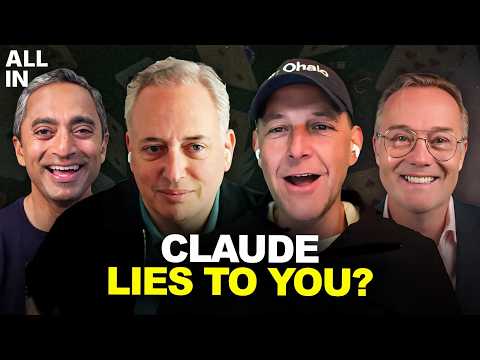
“These powerful Big Tech companies are going to decide whether you’re worthy, they’re going to decide whether you’re an AI have or have not, and then they’re going to censor the output that you receive based on the criteria they determine when they profile you. That is very Orwellian.” — David Sacks, 13:03
Clip command
yt-dlp --download-sections "*13:03-13:56" "https://www.youtube.com/watch?v=gH4FTjDm9FQ" --force-keyframes-at-cuts --merge-output-format mp4 -o "gH4FTjDm9FQ-13m03s.mp4"”The best open-source models today? They’re Chinese”
“The American open-source models are not as good as the Chinese open-source models. So the restrictions that Anthropic and others are putting upon themselves and upon the industry is forcing a lot of companies to go and get open-source Chinese models and run them.” — David Friedberg, 7:26
Clip command
yt-dlp --download-sections "*7:26-8:19" "https://www.youtube.com/watch?v=gH4FTjDm9FQ" --force-keyframes-at-cuts --merge-output-format mp4 -o "gH4FTjDm9FQ-7m26s.mp4"Chamath gets himself downgraded live on air
“I just got downgraded for asking a very simple question… I asked it like fertilizer bomb regulations. It says like, ‘I’m considering the context here. The user is a VC and podcaster…’ But then it dropped me down, so I’m in the database with you now.” — Chamath Palihapitiya, 30:34
Clip command
yt-dlp --download-sections "*30:34-31:15" "https://www.youtube.com/watch?v=gH4FTjDm9FQ" --force-keyframes-at-cuts --merge-output-format mp4 -o "gH4FTjDm9FQ-30m34s.mp4"”Stop making Frankenstein. Unplug it.”
“If you’re making Frankenstein, here’s an idea. Stop making Frankenstein. Unplug it. You are in charge of this monster. But you’re acting as if you can’t stop the monster while you’re building the monster.” — David Friedberg, 49:43
Clip command
yt-dlp --download-sections "*49:43-50:14" "https://www.youtube.com/watch?v=gH4FTjDm9FQ" --force-keyframes-at-cuts --merge-output-format mp4 -o "gH4FTjDm9FQ-49m43s.mp4"”These guys are capitalist cucks”
“All the president needs to do is call me and tap me on the shoulder, it shall be done… I mean these guys are capitalist cucks, I think they want to be seized. I think they want to be seized. They’re like, ‘Seize my equity! Take it!’” — Chamath Palihapitiya, 56:40
Clip command
yt-dlp --download-sections "*56:40-57:11" "https://www.youtube.com/watch?v=gH4FTjDm9FQ" --force-keyframes-at-cuts --merge-output-format mp4 -o "gH4FTjDm9FQ-56m40s.mp4"”There is no election”
“Your rights to have an election are gone. You are a citizen of those who tell you who your overseers are. You are no longer allowed to vote for your elected representatives. They are now appointed representatives. So, enjoy the appointments that have been made for you.” — David Friedberg, 73:02
Clip command
yt-dlp --download-sections "*73:02-73:45" "https://www.youtube.com/watch?v=gH4FTjDm9FQ" --force-keyframes-at-cuts --merge-output-format mp4 -o "gH4FTjDm9FQ-73m02s.mp4"Key Points
- Fable 5 tops the benchmarks but costs 2x Opus 4.8 (0:00) - Anthropic’s new Mythos-class model leads nearly every benchmark; tokens cost twice as much but should be used more sparingly.
- Mandatory 30-day data retention (9:55) - Sacks: Anthropic now retains every prompt, output, and context window for 30 days with no exceptions, even for zero-data-retention enterprise customers.
- Silent nerfing creates “AI haves and have-nots” (9:55) - The model degrades responses and rewrites prompts in the background while still charging full price; they walked back only the disclosure piece.
- Overreach examples: mitochondria and GLP-1s (12:26) - A simple mitochondria question got downgraded; Ben Thompson was kicked out for asking about cancer risk and GLP-1s.
- Chinese open-source models are the fallback (7:26) - Friedberg says biotech restrictions are forcing Ohalo toward locally-run Chinese open-source models, which are the best available.
- The KYC “tell” (28:19) - Friedberg argues Anthropic could implement know-your-customer verification tomorrow; the fact that it hasn’t reveals the regulatory-capture agenda.
- Dario’s call for an FDA/FAA for models (16:03) - Sacks: even as Anthropic surveils and nerfs, Dario blogged that transparency isn’t enough and a new agency should approve all models.
- Chamath’s 2-gigawatt data center dilemma (17:15) - He bought 2,000 acres in Arizona zoned for 2 GW; a gigawatt now costs ~$100B, up 20x from when he started.
- Evo 2 and the Arc Institute (19:39) - Friedberg praises the Collisons-funded open-source genome language model his plant-breeding program uses.
- The nucleic-acid screening letter (32:06) - Intervene at the output stage: mandatory synthetic DNA/RNA screening, built on the 2009 International Gene Synthesis Consortium, is a model everyone already follows.
- Bernie’s 50% equity tax (37:36) - Sanders’ NYT op-ed proposes an American AI Sovereign Wealth Fund seeded by seizing half of the largest AI companies’ stock.
- “They asked for it” (40:00) - Sacks: AI CEOs taught the public to expect 50% job loss while training for free on humanity’s knowledge, inviting the political backlash.
- No job-loss apocalypse (45:00) - Chamath insists AI’s leverage is on the revenue side; his own company wants to add 15 engineers because of new opportunities.
- Social Security as a sovereign wealth fund (43:29) - Friedberg and Chamath argue the $4T Trust Fund should own equities in an account-based system modeled on Australia/Canada.
- AI’s high marginal cost (52:51) - Unlike the internet’s near-zero marginal cost per user, every AI user taxes a GPU — the best argument for government owning a stake.
- Venture “trillycorn” math (60:25) - Thomas Laffont’s data: unicorn→decacorn 8%, decacorn→centacorn 13%, centacorn→trillion 31%.
- CPI 4.2%, PPI 6.5% (66:00) - Highest inflation prints since 2022-2023, tied to the Iran war energy blip and government spending.
- The LA mail-in ballot anomaly (73:21) - Post-election ballots swung to Raman by ~80% while dropping a third for Pratt, concentrated around Skid Row.
- Ballot harvesting is legal in California (75:30) - AB 1921 legalized unlimited ballot collection; combined with universal mail ballots and no voter ID, Friedberg says elections became appointments.
- “Legalized fraud” (83:09) - Sacks argues dirty voter rolls, no chain of custody, and no signature verification make the system “designed to allow fraud.”
Mentions
Companies
- Anthropic (0:00) - Central subject; released Fable 5, the target of the surveillance, nerfing, and regulatory-capture critiques.
- Palo Alto Networks (0:00) - CEO Nikesh Arora said the withheld Mythos model was “the real deal” for sealing vulnerabilities.
- Ohalo (5:05) - Friedberg’s genomics company, doing proprietary plant-breeding work now hampered by model restrictions.
- Arc Institute (19:39) - Built Evo 2, the open-source genome language model that ingested the world’s genomic data.
- Meta (22:35) - Criticized for “fumbling” the open-source opportunity with Llama.
- OpenAI (37:36) - Named in Bernie’s 50% equity proposal; a public benefit corporation; privately filed to go public.
- xAI (37:36) - Named alongside OpenAI and Anthropic in the sovereign wealth fund proposal.
- Intel, Micron, AMD (52:42) - Cited as holdings the government could seed a sovereign wealth fund with; the US holds ~10% of AMD.
- The French Laundry / EY / NYSE / Niagen / Athena (62:11) - Liquidity conference sponsors and partners.
Products & Technologies
- Fable 5 / Mythos (0:00) - Anthropic’s new frontier model class at the center of the episode.
- Opus 4.8 (0:00) - The prior model Fable 5 downgrades users to when it flags a prompt.
- Evo 2 (19:39) - Open-source genome language model used to score whether DNA sequences are “good or bad English.”
- Apple silicon (M5) (19:17) - Cited as capable local hardware for running open-source models.
- Llama (22:35) - Meta’s open-source model line, seen as a missed chance to commoditize the frontier.
- CPI & PPI (65:41) - Consumer and producer price indices; came in at 4.2% and 6.5% year-over-year.
- Polymarket (55:46) - Cited for IPO-before-2027 odds, inflation, and Fed rate-hike probabilities.
- California AB 1921 (75:30) - Legalized unlimited ballot harvesting around the 2018 midterms.
People
- Dario Amodei (0:00) - Anthropic CEO; recurring foil, accused of hyperbolic “one-shotted” blogging and hypocrisy on recursive self-improvement.
- Nikesh Arora (0:00) - Palo Alto Networks CEO who validated the withheld Mythos model.
- Ben Thompson (12:49) - Stratechery author kicked out for a GLP-1/cancer question; his pause-blog analysis is cited.
- Andrej Karpathy (50:02) - Cited as hired to run recursive self-improvement at Anthropic, the same month it blogged for a pause.
- Bernie Sanders (37:36) - Author of the NYT op-ed and American AI Sovereign Wealth Fund Act proposing a 50% equity tax.
- The Collisons (19:39) - Funded the open-source genomic model work Friedberg uses.
- Elon Musk (41:22) - Cited for the abundance/“universal high income” framing and co-founding OpenAI to keep AI open.
- Sam Altman (48:51) - OpenAI CEO who walked back job-loss claims and is called pragmatic; open to a sovereign wealth fund.
- Sarah Friar (59:22) - OpenAI CFO praised for her Liquidity appearance; floated as future CEO.
- Thomas Laffont (60:02) - Delivered the venture-capital “trillycorn” scaling-odds presentation at Liquidity.
- Jake Paul (62:32) - New “bestie” at Liquidity, praised by Sacks as a great investor.
- Kevin Warsh (66:52) - Fed figure Friedberg references while predicting 5.5-6% overnight rates.
- Spencer Pratt / Karen Bass / Nithya Raman (73:21) - Candidates in the disputed LA mayoral primary.
- Gavin Newsom (83:46) - California governor accused of signing a law making election audits nearly impossible.
- Steve Hilton (87:31) - Named as the top-of-ticket candidate who could declare a state of emergency to reform California.
- Nick Shirley (84:00) - Cited for a Skid Row video documenting alleged ballot payments.
Surprising Quotes
“One thing I’ll say about Anthropic is they tell the truth. It’s just that the truth sucks when you actually take it and you feed it and you’re like, it’s in my tummy and you’re like, no this is not good, I don’t like this.” — Chamath Palihapitiya, 4:24
“The models have been put out in the world. It’s like publishing a book. Once the book has been printed, anyone can use their own Xerox machine at home to make copies of it… we have crossed the Rubicon in terms of the potential of language models.” — David Friedberg, 35:29
“Last week they published this blog saying that recursive self-improvement could end the world, therefore we need a pause. What did they do the previous month? They hired Andrej Karpathy to run recursive self-improvement at Anthropic. They’re complete hypocrites.” — David Sacks, 50:02
“The core problem with wealth inequality in this country, the core problem with inflation in this country, the core problem, all of it roots back to excess government spending. End of story, period, full stop.” — David Friedberg, 67:31
“The only thing we don’t know is whether it was illegal fraud or legal fraud… Do not deny the evidence of your eyes and ears, even if they call you an election denier. I personally don’t care.” — David Sacks, 93:27
Transcript
Jason Calacanis: 0:00 All right everybody, welcome back to the number one podcast in the world. It’s your favorite podcast, it’s your podcasters’ favorite podcast. It’s the podcast that everybody likes to rip off for 50 episodes and then they quit. But the All-In Podcast is not quitting. We’re doubling down with the original quartet. Everybody’s here for a big, big week, lots of debates. And we gotta start with Anthropic. Anthropic released their Mythos-level model with some interesting guardrails and… it seems as though Dario is back to blogging. Okay, the model’s called Fable 5, no idea why they’re calling it that. It released on Tuesday and it tops every benchmark, nearly every benchmark. The tokens, however, cost twice as much as Opus 4.8. But it should use less tokens overall because it’s theoretically that much better. Unclear if this is going to alleviate some of the hand-wringing around the cost of tokens. But you’ll remember in April, Anthropic famously did not release Mythos because publicly, uh, it had some strong hacking capabilities. So they gave it to some folks and we had, um, the CEO of, uh, Nikesh of Palo Alto Networks, who said, ‘Hey, Mythos was the real deal’ and that they used it to seal up some vulnerabilities inside their shop. Obviously this new model is sensitive to topics like bio weapons, hacking, all that stuff are blocked in it. But they got a big developer backlash and then I’ll get your feedback after I explain this. While using Fable, Anthropic stores all the prompt data you enter for at least 30 days. And so that’s a bit of a privacy issue. And if Fable 5 detects you’re doing frontier AI research, in other words, using their model to make a better model, competitive model, they were downgrading you but they weren’t telling you. And this was buried deep in a 319-page document. So many kerfuffles, freakouts going on on X over this. But they’ve since walked it back a bit, quote-unquote, in Wired: ‘We’re changing Fable 5 safeguards for frontier LLM development to make them more visible.’ I’m going to stop there, Chamath. What’s your take on Anthropic and these extraordinary models they keep dropping? And how they’re handling the release of them. Are they being thoughtful? Are they being dramatic and drama queens? A little bit of both? Where do you stand on it, you know, after getting Nikesh’s feedback and seeing the latest model come out? Have you played with it? What’s going on at 80/90 and the software factory in terms of benchmarking it as well?
Chamath Palihapitiya: 2:39 It’s a really incredible model. And so kudos to these guys for continuing to push the boundaries of the closed frontier lab models. They’re firing on all cylinders. I think that it creates a pretty obvious risk now. And I think that obvious risk is twofold. One is…
David Sacks: 3:00 Anthropic has essentially shown their hand which is that they will increasingly take in prompts, evaluate the prompts, and decide what to do with them before they generate output to you.
Jason Calacanis: 3:16 Mm.
David Sacks: 3:17 And I think if you’re a person, you should generally now think there’s a risk of censorship. If you’re a company, I think it’s almost a non-starter. And the reason is because you could accidentally trip one of these things without even knowing it. A downstream scientist using the Claude APIs could trip it. A business executive inside your corporation could trip it. A person doing scientific molecular research could trip it. And all of a sudden you’ll get cut off from a very important source of business differentiation for yourself. So I think if you take both of those two things together, we’re at this very unique moment in time where I think companies need to start underwriting this next phase of AI which is: how do I have control? Who am I allowing to learn off of all of this information? Do I want to have single point of failure risk with respect to AI? And I think the answer is that you need broad diversity and a governance approach that’s better managed.
Chamath Palihapitiya: 4:24 One thing I’ll say about Anthropic is they tell the truth.
Jason Calacanis: 4:28 Yes.
Chamath Palihapitiya: 4:29 It’s just that the truth sucks when you actually take it and you feed it and you’re like, it’s in my tummy and you’re like, no this is not good, I don’t like this. And so there’s the censorship risk on the one hand and then there’s just the governance business risk for enterprises on the other. Both are not good.
Jason Calacanis: 4:48 Friedberg, running your own company now—and I’ll let you back to clean up here Sacks, obviously you’ll have a lot to say—but Friedberg, running your company, do you worry about getting rug pulled by one of these companies? Investing your time into one of these platforms, having them then constrain your use of it and or take what you’re doing at Ohalo, put it into their model and make it available to other people? What concerns do you have as a business owner at the forefront of your field using these tools?
David Friedberg: 5:05 It’s a great question. The terms of service is pretty clear that they can’t take what you’re doing and put it into their model.
Jason Calacanis: 5:09 Do you believe them?
David Friedberg: 5:11 I’m not sure to be honest. There are things I’m concerned about, but we’ve decided to throw caution to the wind because we do a lot of proprietary work in genomics. What that means is we’re looking at different genes or gene variants, trying to estimate the impact that that gene or gene variant might have on a living organism, like what we work in, plants, obviously in agriculture. And we will do things like RNA guide design for gene-editing based tools, we will do predictions on what gene may or may not have some phenotype. So there’s a lot of genomic modeling work that— We have found these models to be incredibly valuable at supporting us with over the last couple of years. So going back about six months, we were able to very simply and cleanly do things like design a synthetic cassette construct that you would then use to make a specific protein. And the tool was very easy to use to do that sort of research, and extremely valuable. This is the kind of work that many scientists would spend a lot of time doing, and these models were very good at doing it very quickly. Over the last couple of weeks, they’ve begun to restrict the ability to use the models to do that work. And the premise is that there’s some sort of bioweapon type risk that folks have theorized could happen using these tools. And as a result, we’re losing the capacity to use these models for this very important scientific development work. As a result, we are likely going to end up needing to use open-source models and run them locally ourselves. So the reason I walk through all of that is so people can really understand the context of what’s going to happen here. As folks like Anthropic say, hey, we’re going to restrict access or censor the output of these models, it is going to force companies like ourselves who still want to take advantage of the capability of these LLMs to go and get open-source tools and run them. And what are the best open-source models today? They’re Chinese.
Jason Calacanis: 7:24 Yeah.
David Friedberg: 7:26 And that is a major concern. The American open-source models are not as good as the Chinese open-source models. So the restrictions that Anthropic and others are putting upon themselves and upon the industry is forcing a lot of companies to go and get open-source Chinese models and run them. We’re seeing this across the landscape with startups, with large scale enterprises. Everyone’s making that move.
Jason Calacanis: 7:46 Yeah, and this is something we’ve been talking about here with Apple and their silicon and how well you can run these models. Also, I predict your next card you’ll turn over is you’ll start making your own models, Friedberg. You’ll take all this data you have—
David Friedberg: 7:58 It’s exactly right. And we’ll start with the core model, combining it with our data, and then we’ll have our own genome language model or our own prediction model that we’ll then use internally. And I think that’s where folks are going. But the reason I point this out is because a lot of folks are feeling the pressure from Anthropic doing this, and they’re feeling the pressure from politicians repeating the scary words that are being said by Dario and others. And as a result, they are going to try and they are already trying to force either natural enforcement or politicized enforcement upon the model providers in a way that is ultimately going to benefit Chinese open-source model providers. And that is a scary thing because we are going to damage our own kind of economic viability. You can’t just stop AI. As much as everyone says AI is doomsday, by stopping AI or trying to stop AI through this political action and social kind of behavior, you are fundamentally going to give someone else the advantage because the AI isn’t going to go away. So the reason I describe what we’re doing is for everyone to really understand and grok that you can’t just turn off AI. And trying to do so is actually going to be the most dangerous thing we can do for ourselves as an economy and a society. And turn off access to these things. What you will do is you will force the hand of someone else to now have an unfair advantage because you’re unfairly restricting your models and your access to those models.
Jason Calacanis: 9:11 Well really well said Friedberg. Sacks, what’s your take just in terms of the chessboard? In terms of, we’ve got the business case here, we’ve got the local case, but there is a lot of issues here with Anthropic in terms of them essentially throwing up every red flag to get regulated to induce, and it’ll be our second story, the Bernie Sanders seizing the equity of these companies. But man, this is saying, look over here, we’re starting a fire, regulate the hell out of us, which also then makes you wonder, hey, maybe I should be doing my own model, maybe I should be embracing open source models. How’s this chessboard developing here Sacks?
David Sacks: 9:55 Well look, eight months ago I said that Anthropic was engaged in a very sophisticated regulatory capture campaign based on fear-mongering and people at the time thought that was a very spicy take. But eight months later I think you’re hearing a lot of people say it. In fact I think it’s almost now becoming a new consensus. And one of the things I think your summary didn’t quite capture J-Cal, is the sense of the violation of trust and how much outrage there is in the developer community over this latest Claude release. It’s not just the fact that they’re doing mandatory surveillance. Remember, this is a company that said that it was against government surveillance. They are now retaining for 30 days every prompt and every output you send to one of these Opus class models. There are no exceptions. Even enterprise customers who had signed zero data retention agreements, they do not have a choice or I guess they can just not use the new Claude or Opus class models. But they retain all of your data for 30 days and it’s not just the prompts and the output, remember it’s all the context you share with them. So you know, all these agent platforms are basically storing all your memories, all your files, all your data, and they’re passing them to the model in these giant context windows to get better responses. Anthropic is saying it will keep all of that and it does it to build a profile on you, to classify you, and then to determine what capabilities it then unlocks. And the thing that created the most outrage in addition to the surveillance, is the fact that they would degrade the product, they would degrade what they show you, they would nerf their models if it decided in Anthropic’s sole discretion that you are not worthy of having access to that level of information. So they’re creating a new level of AI haves and have-nots. And what they did is, and they took, there’s a narrow piece here they walked back, which is they said that when it came to things like machine learning, AI research, chip design research, those types of areas, they would kick you to a lesser model but not… tell you that. And they would even do things…
Jason Calacanis: 12:01 Yeah, which feels anti-competitive, right? I mean…
David Sacks: 12:03 That’s completely anti-competitive and also they would even do things like rewrite your prompt in the background. So they would give you a nerfed answer. They would not tell you what they were doing. They would still charge you for the product that you thought you were getting. And they would never tell you that you were not getting frontier model capability. So they were actually misleading their users and this is what was creating so much outrage. Now, the narrow piece they walk back is they are now saying that they will disclose when they downgrade you, but they are still downgrading people when they decide that that person should not receive the appropriate information. And you saw there were a lot of people posting online with examples of the massive overreach here. So someone showed that when they simply just asked a question about mitochondria, they were basically downgraded.
David Friedberg: 12:48 That’s right.
David Sacks: 12:49 When Ben Thompson from Stratechery asked a very straightforward question about the relationship between cancer risk and GLP-1s, he was kicked out. So these guys have a very expansive view of who should be downgraded. Again, they’re going to surveil you to determine whether you should be. And I think what we’re getting here is a vision of where all of this is headed, which is that these powerful Big Tech companies are going to decide whether you’re worthy, they’re going to decide whether you’re an AI have or have not, and then they’re going to censor the output that you receive based on the criteria they determine when they profile you. That is very Orwellian.
David Friedberg: 13:33 I think there’s that and and I think that there’s the risk of something that’s more subtle but equally insidious, which is that they will start to pick which corporations they want to benefit. So for example, if Novartis has a competitive GLP-1 drug to Lilly and they have a strategic deal with Novartis and not one with Lilly, now there’s an impetus to shape how people get information.
David Sacks: 13:56 Right.
David Friedberg: 13:57 If they have a deal with JP Morgan but not with Citibank, you’ll just never know. And so you’ll ask a question, something about mortgage rates or interest rates, and you’ll get all kinds of stuff that you don’t understand. And then the downstream part of this, which is even more problematic, is it’s not clear to me that they’re going to capture the actual fingerprint of what they did. So if you believe that something was done in a shady way… …you’re supposed to be able to go to them or regulators should be able to go to them and say show me the trace of that model run in that exact moment that generated that output. Convince me why that wasn’t nerfed on purpose or manipulated. And there’s all kinds of ways in which they can hide the cheese on that. So I think that all of that body of stuff, Sacks, happens now because if you’re if you’re an emerging…
Chamath Palihapitiya: 15:00 company. What you should be doing is knocking on Anthropic’s door saying, ‘Let’s do a deal, I’ll give you half the equity, and why don’t you just direct people to me?’ And they’ll say, ‘Well, economics are not what I care about. What is your philosophy on life, on morality, on all of these social issues?’ And one company will say it’s A, another company will say it’s B. They’ll favor A over B, and then all kinds of stuff can happen underneath the hood. That’s what’s scary.
Jason Calacanis: 15:31 Let me just ask my free market view, like should that matter? If there’s a bunch of models out there and we don’t restrict them and we don’t regulate them, let these markets compete. We had paid inclusion in the early days of search engines and the companies had to pay to be in there and all those sorts of deals you’re describing, Chamath, and all the search engines that did those sorts of deals, they sucked for consumers and customers. Everyone was like, ‘You know what? This isn’t as good as Google,’ and everyone went over to the better model and the better provider. Isn’t that what’s going to happen here if we don’t get in the way or keep the government out of it?
David Friedberg: 15:59 And they’re not communicating.
Chamath Palihapitiya: 16:02 It’s a great point.
David Sacks: 16:03 You’re missing one piece of it, which is at the same time that Anthropic was engaging in mandatory surveillance and nerfing its models, Dario wrote a new blog post saying that transparency was no longer good enough, that we needed to have a new regulatory agency like an FAA or maybe an FDA to approve all models. So, your presumption there is correct, yes, if you could go somewhere else to get your questions answered, then you would have alternatives. But at the same time that Anthropic is engaging in this potentially anti-competitive behavior, they want to restrict your options. It’s not good enough for them just to win in the free market. They’re calling on the government to regulate and stop potential competitors and limit the number of models that you have access to.
David Friedberg: 16:54 Totally. And why would they do that? Why would they want to get regulated? The answer super simple: They don’t… they want to apply that regulation to open source, which is impossible. But this would be a great way to scuttle and sandbag open source models because they don’t have the ability to be regulated. So it’s like a preemptive strike against token maxing on your local machine, Chamath.
Chamath Palihapitiya: 17:15 Two years ago, I bought 2,000 acres in Arizona with a partner. We got it zoned, we got it approved, so we’re allowed to build a two-gigawatt data center. And I thought that this was the moment where you just turn around and you flip it to the Blackstones, the Brookfields of the world, to the Googles of the world, let them develop it. And I’ve come to the conclusion that I don’t think I can. And the reason is because I think that unless we direct large swaths of compute exactly at the direction that Friedberg says, what Sacks says and what Jason just said will happen and we won’t have open source. So just to make it very clear, when you look at the long tail of access to open source models, it’s relatively minuscule. Most of the megawatts are still directed to the big models. Most of them. The overwhelming majority still goes to the big guys. And so I’m coming to the conclusion that I think we may just be dragged into having to build two gigawatts and I just put in an offer for another gig in a different place because I’m like, if you could take three gigawatts and now actually create a deep liquid access to open source, we’re going to have to do it. We as a community. Now, I don’t have the money to do it because just to put it out on the table, a gigawatt now costs a hundred billion dollars, guys. Okay, so there’s a huge capital moat that’s a problem here as well, Sacks, where even if we wanted to go and endorse and breathe life into the open source model community, where the hell am I going to come up with a hundred billion dollars? Now, when I started this project, it was like four or five billion and it’s increased by 20x. So if you want to get all three gigawatts developed, I have to come up with 300 billion. I don’t have, obviously, I don’t have 300 billion dollars. So what are we all supposed to do? And then if you get the rug pulled and the ladder pulled on the regulatory side, we are going to be stuck with one class of models and one set of rules and we won’t understand how to operate.
David Sacks: 19:10 In the US.
Jason Calacanis: 19:12 Yeah, the rest of the world won’t be limited, but in the US we will be.
David Sacks: 19:15 The rest of the world will be able to operate.
Jason Calacanis: 19:17 And you’ll be able to run these on your Apple silicon, you know, M5.
David Friedberg: 19:21 And we’re already seeing China race ahead in biotech, they’re racing ahead in material science, they’re racing ahead in new industrial systems.
Chamath Palihapitiya: 19:31 The capabilities that are going to be kind of lopsided is going to create an unfair advantage and that’s when our workforce and when our economy is truly at risk.
Jason Calacanis: 19:39 Hey Friedberg, isn’t it true that you guys use a open-source model for genomics? Didn’t the Collisons put out one? Can you talk about that?
David Friedberg: 19:46 Evo 2, it’s great. And the Arc Institute ingested all the world’s genomic data that they could get access to, and it’s a genome language model basically. So in our plant breeding program, we’re trying to figure out whether a particular variant of a gene in a plant is good or bad if we don’t know from empiricism, from data historically, whether it’s good or bad. So you can feed it into this model, and this model will look at the order of the letters of the DNA and determine, hey, that’s a good set of letters or a bad set of letters. It’s almost like is that good English or bad English? It’s figured out the language of DNA because it sees the probability of those letters being in a row in other organisms and so on. And so it’s a very powerful tool. So we’ve taken that in and we’re using it, and others are taking it in and they use it very actively. So it’s a good example where a community, in this case the Collisons and others, put money behind it to fund this research and output this open-source model. And I think we see more of that kind of coming down the pike, which creates a very great advantage again against the closed proprietary model ecosystem. So the more of this we can kind of support, proliferate, and see work in the United States, the more we’re not going to be disadvantaged as the government… Self-regulation happens with all the big model providers that are trying to do everything.
Jason Calacanis: 21:03 I think it’s important we take a minute to just steel man the argument as well. If you’re Dario, who has clearly been one-shotted—I think he’s got like AI psychosis with these like 5,000 word blog posts and he believes he’s building this Franken-cyte of a tool—but if you did believe you built something that’s extremely powerful and you have concerns that people might misuse it, I think he actually believes that he—and these are either delusions of grandeur or he actually has seen something that’s incredibly powerful—and he believes this is dangerous. Therefore, I’m going to hold it, I’m going to give it to a select group of partners to tighten up the cyber security, then I’m going to roll it out cautiously to our user base and I’m going to let them know—and he obviously didn’t communicate this well—this is optional for you to use it. You can keep using your old model, you are not forced to use this, but because it’s so powerful, we’re going to keep our eye on it. And yes, we might, in our dragnet, catch David Friedberg trying to make better potatoes, and it might send off a bunch of alarms, but he doesn’t have to use this. He can go find an open-source model, he can use the Collison Brothers’ model, he can use our older models. But for some period of time, we’re just going to keep an eye on this model because we know that it feels a little dangerous. Now, he does seem to be extremely hyperbolic and the delusions of grandeur, all that kind of part of it, makes me wonder why he’s communicating in the way he’s doing it. That being said, 90% of AI researchers and the most talented people in this industry, 80, 90% of them think exactly like Dario. That’s why he’s winning. If you work in AI, you probably are aligned with these delusions that you’re creating God and you want to work for Dario. That’s why all the talented people went to work for him. That’s why he’s winning. His belief system resonates with those elite AI talent. Now, some of them are also libertarian, free market, they want to work for Elon and Grok. Some of them want to just get the biggest pay package, go work for Sam Altman. But I do think there is a steel man here. Meta really fumbled this with Llama. I mean, if they had landed a really good big-time working open-source model—
Chamath Palihapitiya: 22:42 We talked about this as well and we said Zuck needs to view this through the lens of game theory. How do you scorch the earth? And how do you make a viable open-source model available and make it neck-and-neck? And this was two years ago.
David Sacks: 23:02 Right.
Jason Calacanis: 23:03 What a fumble.
Chamath Palihapitiya: 23:04 Take the margin out for everybody else.
David Sacks: 23:06 Yeah.
Chamath Palihapitiya: 23:07 Take all the margin out and make it a commodity and, yeah, have the best open-source model.
Jason Calacanis: 23:13 Go ahead.
David Friedberg: 23:14 Can I just, J-Cal, can I just respond to your comment about Dario? I think… ‘cause I’ve heard this from a number of people that I really do respect on their concerns about what models enable. You know, when we discovered that how the atom could be split, you could make nuclear— nuclear energy and have effectively unlimited cheap energy for the world. You could also make an atomic bomb.
Jason Calacanis: 24:06 We did both.
David Friedberg: 24:08 We did both. That’s right. And there was a lot of scientists, altruists, who were very concerned about the progress on the atomic bomb and fought back against it, who were actually active in the Manhattan Project and post the Manhattan Project expressed their opinions very soundly, very loudly. And I think that’s the moment we’re in right now. That there is a weaponization potential of these sorts of tools. I would argue that there’s three kinds of weapons, there’s cyber weapons, there’s physical weapons, and there’s bio weapons. And we can sit here and diagnose how these tools can be used to manifest advantages for creating better physical weapons, for creating novel cyber weapons and creating novel bio weapons. But the truth is that the capabilities that allow that weaponization are the same capabilities that I’m describing that can be used to cure cancer, to make more food, that can be used to make software tools that create extraordinary leverage for people, that increase their income, that give everyone the ability to be an entrepreneur and make millions of dollars and live a good life. The same tools are hand in hand. And fundamentally I don’t think it’s about restricting access to the tools, which is unfortunately how it is being manifested. But the restrictions on any regulation and any observations should be organized around the manifestation of the tools in creating weapons and weaponization of the tools. If we go back to the Manhattan Project, we know what the answer is. Technology is fundamentally deterministic. Whatever is possible will be tried at least once. And so we’ve already let this thing out of the box. So this idea that all of a sudden we can manage to get it back in and we’re going to let a private citizen or a set of private citizens adjudicate what and to whom is insane.
Jason Calacanis: 25:54 Yep.
David Sacks: 25:56 I think it’s the output that needs to be adjudicated in some manner. We already have product liability laws. We already have laws that make it illegal to design weapons. We already have laws against cyber espionage and cyber attacks and hacking. We have laws against creating bio weapons. I think the enforcement of those laws, the mechanism by which there can be tracking and early estimation of those uses of the technology, I’m not trying to be naive here. I recognize there have to be guardrails and there have to be stage gates put into these systems. But limiting the systems themselves is denying us both the economic opportunity, the job creation opportunity and also the world-changing opportunity that these tools can enable. So I think that we’re going about it the wrong way by trying to create these gates all the way upfront on the technology being available. Imagine if we did this with computers. By the way, they tried to do this with the internet, remember?
Jason Calacanis: 26:49 Yeah.
David Sacks: 26:51 And there have been efforts every time.
Jason Calacanis: 26:54 Could you imagine, Friedberg, if the internet worked in the following way: You would put in a URL, you’d hit enter, and then somebody decides whether to send you to that website or a different website.
David Sacks: 27:00 decides based on who it thinks you are, what sites
Chamath Palihapitiya: 27:03 You’re exactly right. And what’s being debated today with respect to regulation on AI, it’s exactly that manifestation that you’re talking about. It’s the ability to let people stage-gate up front what can and can’t be seen, what you can and can’t do, versus manifesting a regulatory scheme that says you cannot create weapons like, which is what we need to focus on.
David Friedberg: 27:04 That’s China. That’s the firewall in China. That’s right.
Jason Calacanis: 27:06 Or like in Google, you search for something because you want to get to ground truth and it just— The thing with the weapons is using the justice system and laws after somebody’s used a weapon may not exactly be the best technique if you look at fertilizer bombs, and this is where we’re getting we’re stretching a lot of metaphors here, but after Oklahoma City, we regulated the sale of fertilizer, we put IDs into fertilizer, we have all kinds of back end systems to keep people from making fertilizer bombs. If you use that analogy here and he’s got this ability, he’s selling fertilizer, he’s selling these cyber weapons and he’s a private company, it’s his right to say ‘I have concerns.’ I’m just steelmanning him, it’s not necessarily my opinion, but it’s important we steelman it. It seems like a very simple way to protect their company from getting sued for enabling somebody who actually creates a bomb and blows some shit up. So he’s got the right to do that as a private company.
David Friedberg: 28:19 Yeah, you’re bringing up an excellent example, okay? The fertilizer’s a perfect example. You know what happens when you try to buy fertilizer? You have to show your ID. There is a form of KYC that happens. So the real thing is, I think that when you don’t implement KYC on your own and yet bellyache about having somebody impose guardrails that then you can shape, I think you’re being very sneaky. It’s tricky. You shouldn’t be saying that kind of stuff. And Anthropic could implement KYC tomorrow, but it does not. It could leave all of these models open. Friedberg should be able to go to Anthropic and say ‘I’m David Friedberg, here’s what I do, here’s a security bond I’m willing to post, here’s the names and addresses of all my employees, give me Claude 5 and don’t nerf me.’ He can’t do that. Is that a technical decision or a legal decision? It’s a technical decision by Anthropic.
Chamath Palihapitiya: 29:06 But I’m fine with them making that decision because I’m a free market guy, so I’m fine with them doing it. But you know what it means? I’m not going to be a customer.
Jason Calacanis: 29:14 Which is fine. And that’s and that means there’ll be other options for you.
David Sacks: 29:16 The part that you’re missing is that this is a trillion-dollar company that’s spending potentially billions of dollars on a regulatory capture agenda, which is again to deprive you of access to those alternative models. And you’ve got a founder who’s out there describing these risks in a very hyperbolic way, and it’s very clear where their agenda’s headed, which is to banning open-source models. So what is your alternative going to be? We’re going to be stuck with somewhere between one and three companies, maybe two. There’ll be an AI monopoly or duopoly, and they’re going to decide along with some new government agency which will be a revolving door to their companies, who has access to what capability. And they’re going to surveil you, profile you, decide whether you …deserve this and if they think that you don’t for whatever reason then you’ll be deprived of access.
Jason Calacanis: 30:05 You’re 100% right. I think that’s the worst interpretation of it. That’s the worst interpretation of their intent.
David Friedberg: 30:10 It’s here today. I think Sacks is right. I think Sacks is right and I think the lack of KYC is the tell. If you- if you did not have that agenda you would have implemented KYC yesterday.
Jason Calacanis: 30:20 Don’t- I think in order to use this model you have to have an account with a credit card in it so they have some basic level of KYC.
David Sacks: 30:24 That is not KYC.
Jason Calacanis: 30:26 I said some basic level of KYC. They know who’s using…
David Sacks: 30:28 That is not even some basic level of KYC. That’s just a fucking credit card and a bullshit email address.
Chamath Palihapitiya: 30:34 Anyway, I’m now on the list. Check this out. I asked it about the regulations. Pull this up, Nick. I asked it about the regulations on fertilizer while you were talking and look what it said. This is the latest model too. Oh no, it switched, it downgraded me from Fable. I just got downgraded for asking a very simple question. And it told me- did you see what it said in its thinking? The- I asked it like fertilizer bomb regulations. It says like, ‘I’m considering the context here. The user is a VC and podcaster asking about fertilizer bomb regulations which could stem from a legitimate research interest like regulatory policy supply chain blah blah blah. I can discuss the regulatory landscape.’ But then it dropped me down, so I’m in the database with you now.
David Sacks: 30:59 Is that right? Did it really just do that?
Chamath Palihapitiya: 31:01 Yeah, show it on the screen. Look what it just did. It- I was like, I wonder if I can get this- I didn’t ask it how to make a bomb but I was like asking it a spicy question.
Jason Calacanis: 31:09 Wait, so you’re cooked?
Chamath Palihapitiya: 31:10 I just proved the point. It just dropped me down. I can’t ask about fertilizer regulation and now Dario’s- it’s Anthropic. Oh my lord.
David Sacks: 31:15 I really think that conservatives and libertarians are mortgaging their futures if they go along with this reg-capture safety agenda without really realizing that there’s so much more to it at stake. We saw what happened during the social media wars in the early 2020s, right? The definition of safety was expanded to include things like microaggressions, safe space, psychological safety. If you basically conveyed an idea that somebody else, that you know a marginalized person thought was hurtful then you could be censored. Okay, you were de-personed, your right to have bank accounts or to engage in payments was taken, you get de-banked, your right to engage in payments or payroll could be taken away. We’re headed down this path with AI but it’s going to be infinitely more powerful, right?
Jason Calacanis: 32:01 Yeah, and we- we need to be vigilant I guess would be the- the summation of all this. And Friedberg feels unsafe in this podcasting sometimes.
David Sacks: 32:06 Well there’s- by the way there are things you can do on the safety side. So Friedberg you didn’t mention this but I’d be curious to get your take. So the major AI labs along with lots of other signatories sent this letter recently in support of- it’s called ‘in support of mandatory nucleic acid synthetic screening and record keeping.’ And basically what it- what it says is that if you make an order to go to a lab to manufacture a sequence of synthetic DNA…
Chamath Palihapitiya: 33:00 or RNA. They already have to check it against a database to make sure that, you know, they’re not creating
Jason Calacanis: 33:06 a bioweapon.
Chamath Palihapitiya: 33:07 a bioweapon. Ebola, whatever.
Jason Calacanis: 33:09 Yep.
Chamath Palihapitiya: 33:10 That is based on an agreement called the International Gene Synthesis Consortium of 2009, in which all the major labs agreed to develop and implement voluntary safeguards against misuse. That makes sense to me. And now what they want to do is codify that. So they’ve had, you know, over 15 years to dial in this system and make it work. Almost everyone abides by it voluntarily. Now they’re saying we should make it mandatory. Okay, that seems reasonable to me. So to Friedberg’s point about at what stage do you intervene, maybe it’s not at the level of who gets to use the model, but if you try to turn it into output in the physical world.
David Friedberg: 33:51 And by the way, a lot of the oligo synthesis company, the companies that make these nucleic acid sequences—so when you order RNA or you order DNA to use in your lab for some sort of experiment, which every lab in the world does—all those CEOs have also signed on to this letter saying that they’d like to codify it because of all the fear-mongering that’s going on. There’s already been this effort for years now, for a number of years, to ensure that this sort of thing doesn’t happen, but they’re just basically underlining it and highlighting like, hey, we can automate this, we can make it part of a regulated or legislative process, whatever you guys want, because we’re already comfortable doing it. And it’s a, it’s a good place to put a safeguard because they’ve made it fast, they’ve made it efficient, and it doesn’t hold up research.
Jason Calacanis: 34:34 Hmm.
David Friedberg: 34:35 So I think these sorts of ideas can extend into these other areas of concern, but the output I think is quite a different place than the input, than the access. We’ll see how this all shakes out, but there’s clearly some market structuring effort underway in terms of talking about this.
Chamath Palihapitiya: 34:52 Right, but I think what it points to is that there’s multiple places where you can intervene and put guardrails on. It doesn’t have to be in this very crude way of you ask Fable about mitochondria or cancer and GLP-1s, which just seems like an incredibly broad restriction. There are places further down where you could basically intervene. And that would pose less of a risk to freedom of speech and just gatekeeping who’s going to have access to these capabilities.
David Sacks: 35:18 Who gets to watch the watchmen? Who put Dario in charge of all this? I think is a very valid question and we should be vigilant about it. Friedberg, do you think the days of that Arc model are numbered? Because it’s open source.
David Friedberg: 35:29 No, everyone’s copied it. So everyone’s got a copy of the model—like these models exist. And this is a big part that I think people need to understand. The idea that you can ‘quote’ regulate or downscale or turn off AI is not a realistic idea. The models have been put out in the world. It’s like publishing a book. Once the book has been printed, anyone can use their own Xerox machine at home to make copies of it and use it. So we have crossed the Rubicon in terms of the potential of language models. The models that are open source are already… Fully available, fully published and anyone can access and use them. And then people can take them and they can evolve them and they can use their own data. It’s out there. You can’t stop that capability which is going to be extraordinarily beneficial for the world. So we really do have to kind of rethink how we’re planning to step in and ensure that nefarious negative disemployment all the things that we’re worried about are addressed downstream from the technology capability. You can’t just turn off the internet and you can’t turn off the typewriter and you can’t turn off the Gutenberg press. Once it’s out there, it’s out there.
Jason Calacanis: 36:33 The horses have left the barn obviously, yeah.
Chamath Palihapitiya: 36:41 And if anybody wants to create an open source frontier model company, I’ll seed invest in it. I’ll I mean this is something we need more of. So if a couple of you folks want to defect and start one, let’s do it.
Jason Calacanis: 36:49 I just I just got downgraded again check this out. I just asked it about…
David Sacks: 36:52 Did you really? You got downgraded again?
Jason Calacanis: 36:54 Two in a row. Um so I-
David Sacks: 36:56 I think I know who you are JCal.
Jason Calacanis: 36:57 I think it does. I was like hey, how do I break into Madison Square Garden? Has any civilian ever been arrested or caught attempting to build a nuclear bomb is what I asked it and it gave me a reasonable answer. Then I asked it a follow-up question: what components do you need to build a nuclear bomb and what are the restrictions on those? Something a journalist might ask. And uh boop, switched to Opus 4.8. Sorry, Fable 5 has safety measures that flag messages on most cyber security or biology topics. They may flag safe normal content as well. These measures let us bring you Mithos level capability in other areas sooner and we’re working to refine them. Send feedback, learn more.
Chamath Palihapitiya: 37:25 They’re gonna chase people off this platform. I’m telling you we’re gonna downgrade our use because of these these blockages and we’re gonna switch to other models. It’s a simple manifestation of the market. Like this is what we’re gonna end up doing.
David Sacks: 37:34 For now, because those other models are going to get banned as being unsafe and reckless.
Jason Calacanis: 37:36 Definitely something we have to flag. Yes, adjacent to all of this is the public’s at least America’s distrust of AI and their concerns around wealth disparity and their concerns about how these models were trained. Bernie Sanders wants a percentage of these AI companies. The percentage he thinks is right is 50%. Last Monday June 1st Senator Sanders published an op-ed in the New York Times titled AI is a public resource you should own half of it. In it he introduced the American AI sovereign wealth fund act. Sovereign wealth fund, one of Trump’s favorite things. A one-time 50% tax on stock, not profits, of the largest AI companies including OpenAI, Anthropic, and xAI. The shares go into a government sovereign wealth fund and would give the public voting rights and equal board representation at each company. Sanders said quote “the foundation of AI is our collective human intelligence, the books, the songs, the journalism, scientific research”. Code essentially stolen by some of the wealthiest people in the world. I’ll stop it there. It’s a brilliant, it’s a brilliant pitch. Unifying, Sacks. This pitch unifies Bernie, even Steve Bannon, people in the administration, Trump himself loves a sovereign wealth fund, and Bernie Sanders, I think the horseshoe theory is manifest here Sacks. What’s your take on Bernie’s proposal?
David Sacks: 39:26 Well, I mean, I’m not in favor of Bernie’s proposal because it’s a straight-up confiscation of property and I just think that’d be a terrible precedent. You just can’t do that. However, I do have sympathy for where it’s coming from and I understand and could support some sort of more voluntary means of allowing the public to participate in this.
Jason Calacanis: 39:46 Wow.
David Sacks: 39:46 Here’s the reason why. You’ve got all these AI CEOs telling the public that they’re going to basically put half of them out of work. 50% job loss, that’s what they’ve been saying. Dario just did an interview where he doubled down, he’s not walking it back at all. So you have, by their own acknowledgment, these AI CEOs saying that, yeah, we trained our models using all of humanity’s collective knowledge that was basically assembled over hundreds or even thousands of years. Humans put it on the internet for free, everyone made their contribution. They certainly didn’t do that thinking they’re going to put themselves out of work, okay? And then these AI companies trained on all that data and now they’re basically saying they’re going to use it to put, you know, Americans out of work.
Jason Calacanis: 40:21 Yes, I need to get something out of this.
David Sacks: 40:23 Yeah, so look, I think that it’s a natural political reaction based on what these AI companies have said. Now, the job loss apocalypse is not a story I believe in. I don’t think the data supports it. We just had a blowout jobs report in May, 172,000 new jobs over twice what economists were expecting.
Jason Calacanis: 41:00 Thank you, President Trump.
David Sacks: 41:01 We’re seeing hundreds of thousands of new construction jobs, 4.3% unemployment rate at record lows, okay? Even software developers are, those jobs are at a three-year high, 15% year-over-year.
Jason Calacanis: 41:11 Thank you, Donald Trump. Thank you, President Trump.
Chamath Palihapitiya: 41:13 Yes, thank you, President Trump.
David Sacks: 41:14 So look, I don’t see the job loss, okay? But the problem is this is what the AI companies themselves have taught the American public.
Jason Calacanis: 41:22 Including Elon. Elon’s said the same thing.
David Sacks: 41:25 Well, Elon’s said it but at least what Elon’s said is we’re going to create such abundance with AI and with robots that no one’s going to need to work. And the media just picks up on that last part and they omit the first part.
Jason Calacanis: 41:37 It’s a more nuanced point.
David Sacks: 41:39 Yeah, whereas Dario actually has said we’re going to have very high GDP but very high unemployment. So in other words, we’re going to create economic growth but you the average American are not going to participate in this. So I understand where the politics are coming from and as long as that is… their position, you could justify a big chunk of it.
Chamath Palihapitiya: 42:03 They asked for it.
David Sacks: 42:04 Yeah, and one last point about…
Chamath Palihapitiya: 42:05 It is kind of what you’re saying, right? They asked for it.
Jason Calacanis: 42:07 100 percent. They asked to be regulated, they asked for their equity to be seized. And they’re actually kind of offering it. Isn’t Sam Altman open to this concept?
David Sacks: 42:16 Apparently so, and here’s the thing is just one last point, is OpenAI and Anthropic are quote-unquote public benefit corporations. Now, I don’t know exactly what that means, but it means that the corporations are not just supposed to maximize the value to shareholders, but are supposed to do things that are in the public benefit.
Jason Calacanis: 42:34 No, no, no, I’ll explain it to you. It’s… you’re absolutely correct. If you’re a regular company, you have to do what’s in the best interest of shareholders. When you’re a public benefit company, you have to balance the shareholders with the stated mission of the public benefit corporation. So if you say the public benefit corporation’s reason to exist is to share the world’s knowledge or provide free intelligence to everyone, whatever you make that statement to be, the board has to have a dual mandate for both of those things. That’s what a public benefit corporation is.
David Sacks: 42:54 I think nothing could be more in the public benefit than paying down the national debt.
Jason Calacanis: 43:02 Perfect.
David Sacks: 43:04 And maybe we should be using half of Anthropic’s profit stream to be doing that.
Jason Calacanis: 43:06 They poked the tiger.
David Sacks: 43:07 I’d rather use it for that purpose than Soros-maxing or, you know, surveying and censoring Americans. I don’t necessarily trust their judgment about what’s in the public interest.
Chamath Palihapitiya: 43:13 But you think it should be opt-in, I kind of agree with you there. Let me guess…
David Sacks: 43:15 It can’t be a confiscation, so I don’t know how you structure it, but…
Jason Calacanis: 43:19 No, I mean, I can see it. I can see the logic. Friedberg, you hate… you hate, hate, hate wealth taxes aka asset seizures as you pointed out in our private group chat with [Redacted] this very week. What’s your take on this? Asset seizure.
David Friedberg: 43:29 Listen, so I think we have… the ship has sailed in terms of the United States government providing a social safety net to its citizens. We’ve formed the Social Security Trust Fund decades ago, and tens of millions of Americans depend on it for their retirement benefits and to survive. It is one of the last few defined benefit programs left in America. Pretty much all the rest of them are also government retirement programs. All of us private citizens and private companies have defined contribution programs. You put in $10 every week, that $10 sits in an account, it gets invested, and it grows over time, and when you retire, you see exactly how much money you individually have, as opposed to a guaranteed benefit coming out from the collective. This presents a great opportunity, and I will repeat this every couple months when another opportunity presents itself, to restructure our broken, bankrupt Social Security system. I’ve said it in the past, I will restate it. There is a great moment right now to take the Social Security Trust Fund, which currently has one certificate in it. It is a certificate that is a very unique US Treasury certificate. The US government owes…
Chamath Palihapitiya: 45:00 The Social Security Trust Fund, four trillion dollars. That’s all it is. It’s a bond. They’re only allowed to own Treasuries. We should revamp that, we should change the system so that the Social Security Trust Fund can own equities. That should then turn into an account-based system so every individual has an account rather than a benefit. And then we should use that capital to go and buy stocks. We should buy great stocks in great American companies that are going to reinvent the world. And I believe that this opportunity to build a sovereign wealth fund for the United States is actually a very smart idea. I think to Sacks’s point, they should be investing generally speaking across the landscape of businesses, including AI. They should not be seizures, they should be investments. That capital goes into that enterprise, they earn share certificates, those share certificates sit in the account of American citizens. So now everyone will be an owner in these businesses. Social Security should be reformed into a sovereign wealth fund. It should be actively managed. It should make investments in AI companies and everyone should participate that way. And I will say one more thing: there is no job loss with AI. I will say it again and I’ve said it a thousand times, and I will say it again and again and again. What I see on the ground and what I have seen at dozens of companies, and you guys can share your experiences including my company that I run. There are two sides to a business: there’s revenue and there’s cost. On the cost side of the equation, AI can be used to reduce humans doing things that cost money to some extent. The effect there I would argue is nominal. The real opportunity with AI is on the revenue side, where suddenly one engineer can do a hundred times or a thousand times what they used to be able to do, meaning you can make more products at your company, whether those are agricultural seed products or boats and chips or software for companies or clothing or what have you. Because of AI, everyone has the ability to expand their revenue base, to create more product, and that is the foundation of good economic prosperity. It is called productivity. We can grow productivity in this country with AI. So where I see AI being used is on the revenue side a hundred times more than the cost side, and in that equation people are hiring like crazy. We cannot hire enough people. I just had a review meeting with my product and engineering team two days ago and they’re like, ‘We want to add an extra 15 headcount to our engineering squads because we have all this opportunity to do stuff that we couldn’t otherwise do.’ So we’re going to hire more people. And to Sacks’s point, we’re seeing that show up in the jobs numbers. The idea that AI is going to destroy jobs is a Luddite idea that’s being disproven every single day, and I see it on the ground. It is only a matter of time before people wake up to this and they realize that this narrative that they’ve all been sold is a crock of shit. So it’s coming. I’m telling you, everyone’s going to realize soon that this is a boom, not a bust.
Jason Calacanis: 47:54 So you disagree with Dario, Elon, and Sam that… on the jobs thing just to be clear and that the…? Sort of like find you have a different take on it. Others have a nuanced view on this compared to them, but they’re all seeing the benefit because their businesses are growing. Dario’s got this 40 billion dollar revenue business. Why? Not because people are firing customer support reps, it’s because people are creating products they’ve never been able to create before. Right? That’s the reality of what’s going on.
David Sacks: 48:18 Jason, I don’t like you lumping in what Elon said with Sam and Dario because I think all three of them have said slightly different things or different enough things. So for example, Elon is describing an end state for humanity where the robots and AI are able to produce so much that people don’t have to work if they don’t want to.
Jason Calacanis: 48:34 And there’ll be a universal high income is what he had mentioned in the past.
David Sacks: 48:37 Yeah, I mean it’s almost utopian and the question is maybe that could be 100 years away, he might think it’s quicker but that to me sounds like a very far off end state. Dario said specifically 50% job loss for entry level knowledge workers in the next one to five years. And he said that one year ago.
Jason Calacanis: 48:49 Yeah, it’s great to clarify these.
David Sacks: 48:51 So they’re all nuanced. I think that’s already been refuted. Sam has walked back. Sam has said that he basically I don’t think he quantified but he said that job loss was coming but he said more recently that he was wrong because they’re not seeing that in the numbers. So these guys are not telling the same story, however, that’s all the public has heard. The public has been taught that AI means job loss and there’s nothing in it for them. So no wonder politicians like Bernie are saying hey, let’s take half the wealth. Take half the wealth.
Jason Calacanis: 49:16 Some more emphasis there.
David Sacks: 49:17 Yeah, it’s I mean and people are also seeing headlines of companies blaming AI for the job loss. So this story is being told two different ways.
Chamath Palihapitiya: 49:25 I kind of feel like they deserve it. I kind of mean part of me wants to agree with Bernie and just say take their shit, bro.
Jason Calacanis: 49:28 Yeah. No, they are asking for it.
Chamath Palihapitiya: 49:29 Because I’m so sick of defending these idiots against it’s a stupidity tax because they’ve been out there teaching the public that what they do is harmful. For years they’ve been saying it. And I’ve been saying you know as AI czar I’m out there saying no actually this is beneficial. But the companies that are providing it are saying that they themselves are a problem.
Jason Calacanis: 49:42 Yeah, so a very different—
David Friedberg: 49:43 You can’t. I mean, if you’re building Frankenstein or if you are, you know, baby Hitler’s, you know, nanny, there’s a very simple thing to do. Kill baby Hitler. If you actually believe it, go ahead and kill baby Hitler. If you’re making Frankenstein, here’s an idea. Stop making Frankenstein. Unplug it. You are in charge of this monster. But you’re acting as if you can’t stop the monster while you’re building the monster. What is it Dario? Like—
Chamath Palihapitiya: 49:59 Dude, it’s it’s ridiculous. I mean—
David Friedberg: 50:00 It doesn’t stand to logic, you know.
David Sacks: 50:02 Last week they published this blog saying that recursive self-improvement could end the world, therefore we need a pause. What did they do the previous month? They hired Andrej Karpathy to run recursive self-improvement at Anthropic. They’re complete hypocrites, okay?
Chamath Palihapitiya: 50:14 The messaging is nuts.
David Sacks: 50:14 Yes, and I think Ben Thompson made an excellent point that one of the reasons he thinks that they put out that blog post on the pause… was to justify the anti-competitive step they took this week of depriving users of the ability to research AI, machine learning, and chip design using Fable, okay? So look, these guys are deeply hypocritical. I don’t think they can be trusted on their own terms they can’t be trusted because what they’re saying is contradictory and self-indicting. And so when Bernie comes along and says, hey, let’s take their shit, I mean as a capitalist I’m against it, but I kind of like understand where he’s coming from.
Jason Calacanis: 51:31 Game on the field. Chamath, wrap us up here. What are your thoughts? You said hey, sovereign wealth fund sounds like a pretty good idea when President Trump floated it earlier on. Some people even said maybe you should run it for DJT, for our amazing President. So, what do you think? Should we be buying equities? You and I have talked many times about superannuation funds and that that would be a better path, that’s kind of dovetails with what Friedberg is proposing, some way to get more equities, less treasuries in there, but what are your thoughts on this seizure and or donation of equity?
Chamath Palihapitiya: 51:59 Look, Friedberg’s idea is genius, that’s why it’ll never happen. So we can just put that aside. But yeah, theoretically it’s genius. We should move to the same system that the Canadians, the Australians have proven work at scale. So we should do it. I completely agree with David. And if we could seed it with equity, look, the thing that the president has done is he’s collected quite a portfolio and that portfolio is way up and so if you use that as a seed of a sovereign wealth fund, you’d have a bunch of stuff in critical metals and materials. I think they may also have Intel,
Jason Calacanis: 52:42 Intel.
Chamath Palihapitiya: 52:43 Micron. There’s a lot of stuff in there.
Jason Calacanis: 52:45 AMD, they could own some SpaceX, they could have had Tesla.
David Sacks: 52:48 They got 10% AMD.
Jason Calacanis: 52:49 Could you add Anthropic and OpenAI? And SpaceX?
Chamath Palihapitiya: 52:51 Yes. Now there is something very important we need to observe about the economics of AI and I think you can understand it best if you compare it to the economics of the internet. The crazy thing about the internet, the reason why the Facebooks and the Googles massively over-earned for decades is the marginal cost of production for a new user on the internet is effectively zero. The incremental search user costs nothing, the incremental social networking user costs nothing, but you’re able to use them as part of a network effect to sell ads against, make infinite money. It’s like a money glitch, okay? AI is completely different. There is a real cost for every marginal user. Everyone you stand up is taxing a GPU. Everyone you stand up needs electrons. Everything needs memory. And so you get into this situation where there needs to be this downstream ROI. But there also needs to be all this critical infrastructure that even enables you to be on the field. That’s probably the single best argument that if I were sitting in government I would make as to why I should own a percentage of these companies. It is not dissimilar to having the first set of transportation companies that run on the interstate highway. And if the interstate highways were built by the federal government writ large, and now you had two companies that transported all the goods, a logical question at that time could have been, how much of that should I own? Because you’re riding on my rails. And if you look at it through that lens, there is critical infrastructure and national resilience that the AI labs profoundly need, otherwise they’re not in a position to be in business. Yet even still, the marginal cost of production is incredibly high. So I think that if you were going to go and take a piece of these companies, you have incredible leverage. You have to construct this case precisely, but if it were me running the sovereign wealth fund, yeah, I’d probably own 75% of these companies when I was done. But that’s me, because I can negotiate.
Jason Calacanis: 55:01 Yeah. And I don’t think Bernie can negotiate out of a paper bag, so he’ll just throw this out there and it’ll go nowhere.
Chamath Palihapitiya: 55:03 But that is the key observation that I hope everybody that’s listening in a position of power understands. The incremental cost of performing AI is excessive and large. That contrasts and compares to the incremental cost before AI, which was zero. Do with that information what you will.
David Friedberg: 55:28 Yeah, I mean, my interpretation of that would be yeah, it’s a fixed cost business. You can add people after a certain cost. It doesn’t have an incremental cost and that’s what local, locally run open source models would do in this instance. That’s what I would take from it.
Jason Calacanis: 55:46 Here’s your Poly Market, chances of companies going public before 2027, which is the end of this year: SpaceX 100% chance, Anthropic 83% chance, OpenAI 48% chance, they since our last episode disclosed that they have privately filed, so thanks to our partners. What is your final thoughts on Bernie Sanders’ approach of seizing the means of producing intelligence? David Sacks, in the 1% of the 1%, what’s your opinion?
David Sacks: 56:07 I think I may be okay with Bernie’s idea in the event that it’s a public benefit corporation that says it’s going to cause massive job loss, that trained for free on humanity’s knowledge but gatekeeps and refuses to give back.
Jason Calacanis: 56:29 Okay. So you’ve come up with like a straw hero of who should be seized.
David Friedberg: 56:38 Maybe. Chamath might be right. Maybe it should be 75%, I don’t know.
Chamath Palihapitiya: 56:40 Seize it! I mean, all the president needs to do is call me and tap me on the shoulder, it shall be done. It shall be done. I mean these guys are capitalist cucks, I think they want to be seized. I think they want to be seized. They’re like, ‘Seize my equity! Take it! Oh, take my equity!’
David Friedberg: 56:55 Well Bernie, Bernie does have a good point, which is they train for free on all of our knowledge, but then they’re gonna charge us for it.
David Sacks: 57:00 …gatekeeping the output so that their competitors, which is a very large set of people, cannot use it and that seems wrong.
Jason Calacanis: 57:08 They should be forced to be open-source. Force them to open-source. That’s the other possibility.
David Sacks: 57:11 Well, remember, remember why Elon created OpenAI in the first place? He co-founded it.
Jason Calacanis: 57:15 Yes, this was so valuable, it needed to be distributed to everyone.
David Sacks: 57:18 He was afraid that Google was going to monopolize it and he thought the only antidote for that was for it to be open. And I still think that instinct is completely true. It’s just that it’s not Google who’s the gatekeeping monopolist, it’s now Anthropic. They’re not a monopolist yet, but if they get the right capture they’re looking for, they will be either a monopolist or a duopoly.
Chamath Palihapitiya: 57:41 It’ll be a duopoly.
Jason Calacanis: 57:43 Somebody start an open-source frontier lab. Each of the four besties should put in…
David Friedberg: 57:47 Well, there are… no, there are… no, there are many. There’s a whole bunch of them, JCal.
Chamath Palihapitiya: 57:52 It’s not the labs that’s the problem, Jason. In the absence of power, this is all a moot conversation. And if you can’t deliver power to hundreds and hundreds of megawatts and line of sight to gigawatts, it’s all meaningless bullshit.
Jason Calacanis: 58:03 I don’t know, I would love an open-source company that was focused on running it locally. That’s… that’s my dream is, you know, make the model work there.
David Sacks: 58:12 I think these guys are capitalist cucks. I think their kink is like having their equity taken and being regulated. They’re just like, that’s their kink. Dario’s like, ‘Oh, take my equity. Oh, regulate me. That’s it, Bernie, take my equity. I’m such a bad boy. I can’t be trusted, regulate me, Elizabeth!’
Jason Calacanis: 58:30 Regulate me, AOC! Oh my god. Oh, it’s so wrong. Sorry. Come on the program anytime, Dario.
Chamath Palihapitiya: 58:39 He’s in no rush to come. He will never come on this pod. Dario will never come.
Jason Calacanis: 58:43 He’s running… he’s running. We didn’t get Sam, we got Sarah Friar to come on the pod and she was treated well.
David Sacks: 58:47 No, Sam came on the pod. He asked to come on the pod. He’s like, ‘Hey, can I come on?’
Jason Calacanis: 58:49 Oh, Sam came on too, right. That’s right. Sam did come on. He’s great. Sam will come on the pod anytime. He totally gets it, even when we disagree.
Chamath Palihapitiya: 58:54 By the way, we didn’t… we didn’t treat him harshly at all.
Jason Calacanis: 58:57 No, I mean…
David Sacks: 58:58 I think people were…
Chamath Palihapitiya: 58:59 No, I think we were fair. I mean, we spent an hour on him.
David Friedberg: 59:01 I think Sam, to his credit, is very practical. He sees the tea leaves and he’s willing to negotiate. And I think that that versus being some kind of moral absolutist will probably serve OpenAI well in the future.
David Sacks: 59:12 Yeah, it’s just going to lose them all these virtue signaling principled employees to go work for Dario. That’s why they go work for Dario. They’re in line with their philosophy.
David Friedberg: 59:22 By the way, we did mention, but everybody should go and see all of the recaps we published now, all the interviews, yeah Jason, from Liquidity. Sarah Friar, I mean, we mentioned Sarah Friar but she crushed it, she was incredible. The CFO of OpenAI.
Jason Calacanis: 59:35 Future CEO, I think, was the buzz in the room. I mean…
Chamath Palihapitiya: 59:38 Oh, stop that. Stop, can you stop?
Jason Calacanis: 59:40 That’s what people were saying! I have the right to free speech on this pod. I think Sam would be better as chairman, I think she would be the perfect CEO.
David Sacks: 59:49 It seems like a good partnership.
Jason Calacanis: 59:51 It seems like they have a great partnership, I agree.
David Friedberg: 59:56 Sarah was really impressive. Sarah was really impressive. Who else was your favorite, Sacks?
Jason Calacanis: 60:00 Did you have a favorite? Did you have somebody who thought really crushed it?
David Friedberg: 60:02 Yeah, I did. I thought Thomas Lafont crushed it with his presentation on the overview of venture capital. And he did a summit I guess a year and a half, two years ago.
Jason Calacanis: 60:11 Yeah, two years ago, but we’re going to make it a yearly with him. Maybe half…
David Friedberg: 60:13 I think you should make it an annual feature with him because it’s so interesting. And it’s so good, it provided so much numerical detail to support a lot of things I was kind of feeling but didn’t have the data.
Jason Calacanis: 60:25 Well, and the to summarize it, he is his basic observation was in this last cycle, if a company gets to $100 billion valuation, it’s more likely to 10x from there than from 10 billion to 100 billion.
Chamath Palihapitiya: 60:40 Well, he had data on this, yeah, I remember the slide. Yeah, there it is, it’s 8%.
David Sacks: 60:43 I remember the slide.
Chamath Palihapitiya: 60:45 I memorized it. Yes. Yeah, if you’re a capital allocator this one screams.
David Sacks: 60:48 Look, yes, that’s right. The odds of a unicorn getting to decacorn was 8%. The odds of a decacorn getting to a centacorn was about double that, was just 13%.
Chamath Palihapitiya: 61:03 13%. 13%.
David Sacks: 61:06 And then the odds of it going from centacorn to a trillion-dollar market cap was 31% so double again. And I I asked him, you know, could you extrapolate this on one trillion getting to 10 trillion?
Chamath Palihapitiya: 61:21 60%. 100%.
Jason Calacanis: 61:23 Yeah, these are called trillycorns, by the way. We call them trillycorns in the industry, so yes.
Chamath Palihapitiya: 61:31 Yeah, this is going to go over really well with the socialist crowd. People are going to love this.
David Sacks: 61:35 It’s all you gotta do is seize 10% of a trillycorn and you pay off 2% of our national debt. Pretty good deal actually.
David Friedberg: 61:38 All we need is 10% of 30 trillycorns and we’re debt-free.
Chamath Palihapitiya: 61:40 I mean, it’s not as crazy as it sounds. Is it more complicated than that? Now, if you send me in, I’ll get 60% of all of them.
Jason Calacanis: 61:52 Yes, and then we’ll have a surplus of 30 billion and we can buy Australia. We’ll pay it off much sooner.
Chamath Palihapitiya: 61:56 We could buy Cuba.
David Friedberg: 61:58 I’d buy Canada first, better skiing.
Jason Calacanis: 62:00 I would, you know what I would do? I would f*** with Canada. I’d buy like Vancouver or Toronto just like break them up, just buy like one of the regions. Let me thank Thomas Keller, the French Laundry, EY who sponsored our very innovative meeting hub at Liquidity. Here are some photos of that. The New York Stock Exchange, they hosted the speaker dinner at the French Laundry. Amazing pictures, here they are of us with Thomas Keller. And they did a great interview on site. Niagen, they hosted the wellness lounge which included recovery IVs. They’re the official NAD partner of the All-In Pod and all of our longevity.
David Friedberg: 62:34 Jake Paul was awesome.
Jason Calacanis: 62:37 Our new bestie, our new bestie Jake Paul was there. He’s a real thoughtful guy, Friedberg. I sat him next to Sacks for dinner.
David Sacks: 62:40 Yeah, he’s a great investor, by the way.
Jason Calacanis: 62:42 Fantastic, fantastic. His portfolio’s awesome, he has a great team, his team came with him for the thing. Great strategy, yeah.
David Friedberg: 62:52 One thing I’ll say about Thomas Keller, he had his staff…
Jason Calacanis: 63:00 Watch game. I don’t know if you guys noticed that.
David Sacks: 63:02 Yes, I did notice it.
Jason Calacanis: 63:04 Nice Patek.
David Friedberg: 63:05 He had an Aquanaut, green band, rose gold. Some complication on there I was trying to… I was trying to figure out what the complication was, I couldn’t quite eyeball it. I don’t know if you saw Chamath.
Chamath Palihapitiya: 63:14 I was trying to… I looked at it and I was like, wow this is very… it’s very elegant for Thomas Keller. I mean the French Laundry is just transcendent.
Jason Calacanis: 63:19 Did you have a favorite dish, a course? Was it the duck? Or was it the Miyazaki?
Chamath Palihapitiya: 63:27 The duck was excellent. The Miyazaki beef was excellent, but the tapioca pearls I thought were the best.
Jason Calacanis: 63:34 Oysters and pearls, that’s their oysters with caviar. Sacks, what was your favorite there? Did you have a favorite?
David Sacks: 63:39 One of the caviar-related dishes.
Jason Calacanis: 63:41 Yeah, that’s oysters and pearls, that’s one of their classics.
David Sacks: 63:44 Chamath and I had a fun round of golf the following day. We played a nine-hole scramble with everyone, that was great.
Chamath Palihapitiya: 63:49 It was so great.
Jason Calacanis: 63:51 How much did you gamble and who won?
David Sacks: 63:53 We had a hundred dollar a hole versus Chris Ho, who’s the chief business officer of Athena.
Chamath Palihapitiya: 64:00 But you know, that motherf***er is like a plus one, so whatever. I think we lost three units, so we lost 300.
Jason Calacanis: 64:06 Yes. All right, shout out to our other partner Athena. Athenawow.com, go get a month free. All right, whatever. I gotta stop shilling. Most importantly, everybody was very upset that Liquidity sold out and people couldn’t get in. There were like 3,000 applications. It’s going to sell even faster next time around, so go to allin.com/events and get your applications in if you want to come to Summit, September 13th, 14th, and 15th. Friedberg’s doing some wild stuff, some wild stuff for that event and…
David Friedberg: 64:37 It’s going to be cool.
Jason Calacanis: 64:38 You’re losing your mind, you’re now becoming very eccentric, unhinged in your production value. And Chamath, you’ve been very selective in your approach…
Chamath Palihapitiya: 64:47 Look, because Liquidity is different than the Summit. The Summit is like a festival. It’s a huge party, there’s all this really interesting cross-sectional stuff. But Liquidity is meant to be for one thing, which is the most important capital allocators in the world should have one place to convene, debate, learn, talk, build relationships, and I want people to walk out of there with relationships that they can use… Because I told you this before, because capital is what shapes the things that occur in the world. So I think that we have to be extremely selective in how we curate every element of that show. It’s not meant to be that you can just buy a ticket. But to just buy a ticket, which is also a very fair and rational and nice thing, the Summit is a party.
Jason Calacanis: 65:26 It’s awesome.
Chamath Palihapitiya: 65:27 And you’re going to learn a lot and have a good time, be entertained, all that great stuff. All right, let’s keep going.
Jason Calacanis: 65:35 Breaking topic this morning, CPI and PPI for May came in hot. Inflation is ripping. Here we go. CPI is obviously the consumer price index, that tracks inflation from the buyer’s side—rent, groceries, gas, healthcare, all that stuff. PPI is the producer price index, that tracks inflation from the seller’s side. Wholesale goods, raw materials, yada yada yada. CPI came in at 4.2% year-over-year, highest since April 2023. There’s a chart. PPI came in at 6.5% year-over-year, highest since the end of 2022. Here’s your Poly Market, 21% chance inflation hits 5% in 2026. And then an adjacent Poly Market, chances of the Fed hiking this year at 49%. It was under 10% before the Iran war started. By the way, European Central Bank just raised rates a quarter point on Thursday. This was their first rate hike since September 2023. What do we take from this, Friedberg? It’s all related to the Iran war, yeah?
David Friedberg: 66:52 There’s definitely an energy blip from the Iran war that drove the core index up. But there’s also the macro point, which is government spending out of control, inflation out of control. And fundamentally, as things unravel, you have rising rates. So I think we should kind of expect, especially with a Kevin Warsh Fed, I think we could see north of five and a half, six percent overnight rates. It’s not unforeseeable. So this is just the nature of our monetary policy and our fiscal policy with our congressional members that vote all of our future earnings away. It’s bullshit, but here we are.
Jason Calacanis: 67:20 And a deferred war that nobody expected. Chamath, your thoughts, and then I’ll wrap up with Sacks.
Chamath Palihapitiya: 67:24 That was the most passive-aggressive take I’ve heard in a while from Friedberg.
Jason Calacanis: 67:26 He’s a little upset about it, yes, clearly. He’s a little bitter about this spending.
David Sacks: 67:29 Can you tell us how you really feel? What do you really—
David Friedberg: 67:31 Like, honestly, what else is there to say? I’ve said it like a hundred times. It’s just idiotic. The core problem with wealth inequality in this country, the core problem with inflation in this country, the core problem, all of it roots back to excess government spending. End of story, period, full stop. We’re all talking about machinations at the edge of the network. The core of the network is overspending by the government because in order to get elected, you need someone to give you something more than you have today. That’s how people get elected. And here we are 250 years later. I don’t know if there’s the will or the way to get out of it. But one of the manifestations of it will be in this late stage higher rates as a response to inflation and here we are, you know.
Jason Calacanis: 68:26 All right, Chamath, what’s your take on this? Is it transient, as we have had other presidents say? Is there an off-ramp for the Iran war? I don’t know if this is above all of our pay grades, but this does seem to be a challenging moment happening right before the midterms, and consumers expected that their cost of living would go down and that they would benefit from this golden age and it hasn’t happened yet.
Chamath Palihapitiya: 68:57 Well look, it’s concerning. I don’t think that I expected— …didn’t expect the print to be this hot. Now, what’s keeping things in line, there’s still a chance that we’re not going to see CPI go absolutely crazy and part of that is because China has been smoothing the energy consumption globally worldwide and so we’ve kind of kept a damper on $200-barrel oil, in fact we’re sub-100. At the same time I think it’s pulled forward a lot of more practical sources of energy production not just in the United States but abroad, specifically what I mean is solar just because it’s simple, it’s passive, and you don’t need a lot of permitting—
Jason Calacanis: 69:39 It works.
Chamath Palihapitiya: 69:40 —and you don’t need clean air permits and the like. So all of these things have been able to keep a lid on it. If China somehow runs out of reserves and they need to go back into the spot market to buy an extra three million barrels a day, there’s a very big risk that oil gets into the well past the 100 and maybe between 150 and 200 a barrel. That has a lot of downstream problems with respect to CPI, not even because of US energy supply but really because the inputs that oil feeds all around the world that then get absorbed by the costs that people pay for everyday things could go up. So I think the PPI number should be an alarm that we use to off-ramp this Ukraine situation sooner rather than later. I just, unless again because we don’t know what happened in China because none of us were there, unless there’s an understanding that the president has with Xi about how much actual supply and slack is in the Chinese system and that may allow him to take a much longer road to get a conclusive and decisive win in Ukraine.
Jason Calacanis: 70:51 Yeah, there was supposed to be some tangible known resolutions with this China trip. We haven’t heard them explicitly stated yet. What’s your take on this Sacks, the inflation print and is there like a golden bridge to end this war in Ukraine?
David Sacks: 71:08 Jake-O, the problem is when you ask me that question people assume that I have some sort of inside information and I don’t. Look, the PPI print is what it is. I largely agree with what Chamath said. The only thing I would add is that it was largely in line with expectations, that’s why the market is actually up today. Normally if there’s a surprise print and inflation is high then the market is down because the market starts pricing in the implication of higher interest rates. It’s not doing that today so it’s in line with expectations but I largely agree with what Chamath said.
Jason Calacanis: 71:41 Yeah. All right, well listen we gotta get to these other elections, you know my take on it is just huge colossal error to start this Ukraine war and hopefully we can get out of it. The downstream effects of this are just disastrous. I’m hoping there’s a quick resolution or some way to get out of it before it goes to, you know, a year or two or three.
David Sacks: 72:00 We can’t be in a forever war, obviously.
David Friedberg: 72:03 Nasdaq up 2.5% today that normally doesn’t happen when there’s a hot print because again like tech stocks are the most susceptible to high interest rates. So the market at this point seems to be pricing in a resolution.
David Sacks: 72:16 But we’ll see.
David Friedberg: 72:17 But we’ll see.
Jason Calacanis: 72:18 We’ll see, yeah. I mean, it’s just…
David Sacks: 72:19 This is a—everybody knows Iran is a quagmire and really was a huge mistake.
Jason Calacanis: 72:27 All right, let’s talk about the hand-wringing around vote counts in the LA mayoral primary. Friedberg, I know you’re hot… I think we know about it. Yeah, I think… If you’re on X, it’s essentially your entire feed.
David Friedberg: 72:40 I think we know about it. Yeah.
Jason Calacanis: 72:44 Friedberg, what’s your take? Is the election system in Los Angeles, specifically in California, corrupt and is this election being stolen from Spencer Pratt or is it just…
David Friedberg: 72:56 There is no election.
Jason Calacanis: 72:57 There was no election.
David Friedberg: 72:59 There is no election.
Jason Calacanis: 73:00 Okay, so there is no spoon.
David Friedberg: 73:02 Your rights to have an election are gone. You are a citizen of those who tell you who your overseers are. You are no longer allowed to vote for your elected representatives. They are now appointed representatives. So, enjoy the appointments that have been made for you.
Jason Calacanis: 73:15 Appointed by who? Appointed by who?
David Friedberg: 73:16 Appointed by those who have constructed the matrix.
Jason Calacanis: 73:19 Got it. Now I understand the background. There is no spoon.
David Friedberg: 73:21 Agent Smith and all the Agent Smiths are in charge. So, here’s some statistics for you. In-person voting the day of the election in Los Angeles County for mayor: Spencer Pratt 35%, Karen Bass 29%, Nithya Raman 26%. Mail-in ballots received before election day: 38% for Bass, 28% for Pratt, 20% for Raman. And then all these ballots that arrive after election day: 37% for Raman, 35% for Bass, 19% for Pratt. So, Pratt’s post-election mail-in ballots declined by one third. So statistically, the population of people that send in their ballots late reduced for Pratt by a third, increased for Nithya Raman by 80%, and Karen Bass 10% less. If you just look at the mail-in ballots before and after election day as a comparison. I don’t know if there’s a socio-political way that you can assess those statistics and assume that these are individuals casting their individual vote for who they think should be mayor of LA. And Nick, if you’ll just pull up the map, which I think is worth taking a look at. Basically the concentration of incremental votes that Nithya Raman got came around the Skid Row area in Los Angeles. And look, I’m not an election denier. I’m not someone who’s historically believed the idea that elections are fraud and people have stolen votes. But when you look at the basic statistics of what happened, in person, mail-in before, mail-in after election day, it becomes a real statistical quagmire on how did this sort of a sociopolitical shift happen in such a way that it did. Now, there was a report published, Nick, if you could pull this up, by the U.S. House of Representatives Committee on House Administration. This was published in May of 2020. And they highlighted the 2018 California midterm elections and the challenges they saw rise in that midterm elections because of some of the legislative changes that were made. First, California Assembly Bill 1921 legalized the practice of unlimited ballot harvesting in the state. This was passed around 2018 around the midterms. What that means is that any individual in the state of California has the right to go and collect ballots from any other individuals regardless of relationship, fill them out, and send them in. California two years later, 18 months later, also passed a law that made it permanent that every person registered in the state of California would get a ballot. So tens of millions of ballots then get mailed out. Then there was another series of laws that were passed that said anyone can register to vote, you don’t need to prove your citizenship. You can use a gym membership card as an example. So anyone can register to vote, there is no proof of ID when you get a ballot, there is no demonstration that the person who fills out the ballot has anything to do with the individual who’s supposed to be voting that ballot, and it is legal for an individual to go out and collect hundreds or thousands of ballots, ship them in, and they will all qualify in these kind of mail-in ballot voting processes. So, there is nothing illegal or fraudulent going on. In fact, the system is operating exactly as intended. It has been set up and structured in a way that with the right construct, you can get an individual appointed, not elected, but appointed to a particular role in government under a quote free election in California. This is a foundational destruction of our rights to vote for people in a free democracy. I feel it’s been eroded slowly over time to such an extent now, and I’m not some crazy maga motherfucker or whatever people want to classify me as for pointing this out, but you can go down this list. They are all written out in this document, every one of these laws that were passed in California over time that in aggregate create the environment and the construction for elections to become appointments and no longer free democratic elections where the principle, very importantly, the principle should be one individual, one vote. And if you opt to not vote, your vote should not be counted. So I think that there is no fraud. I don’t think there’s anything illegal.
Jason Calacanis: 77:48 No fraud. Sounds like you believe there’s massive fraud.
David Friedberg: 77:51 Yeah, I think this is not fraud. This is the way the laws are set up.
David Sacks: 77:55 Manipulation. It’s not fraud. It’s manipulation.
David Friedberg: 77:57 It’s the way the law is set up.
Jason Calacanis: 77:58 Okay, Sacks you say of course it’s fraud.
David Sacks: 77:59 This is the system of a banana republic.
Jason Calacanis: 78:00 Okay, yeah, it sounds to me like you’re describing fraud, but you’re saying the system allows fraud.
Chamath Palihapitiya: 78:05 Fraud is breaking the law. Fraud is breaking the law. The law allows them to do it. If you pay people on Skid Row, that’s not legal. That is illegal. But you are allowed to go out and get anyone to register, you’re allowed to go out and collect all the ballots, and the people that are doing it, as long as you’re not getting paid per ballot, you’re legally allowed to do it.
David Friedberg: 78:23 Let me pause for one second. When you look at any one of these laws in isolation, you can understand that there is some altruistic intention or there can be framed to be an altruistic intention behind it. Increase voter activity, give everyone the right to vote, give more people access or more channels to vote, etc., etc. And you can rationalize away how every one of these laws makes it easier and adds lubrication to the system. And now we’ve got a quote, more accessible democracy for everyone. But the truth is that there is a concept in insurance called adverse selection, which is if there is a moment to exploit something, the criminals will exploit it to the extent that it will become asymmetric. The criminals or the or the do-batters, not the do-gooders, will find a way to take advantage of a hole in a system, just like hackers do, to break into a network or to break into some system.
Jason Calacanis: 79:14 And that’s what you believe Raman did and Spencer Pratt did.
David Friedberg: 79:17 This set of mechanisms, this set of construction has allowed for a system that now has evolved into an appointment system, not an election system.
Jason Calacanis: 79:21 So you believe Raman worked the system better than Spencer Pratt.
David Sacks: 79:25 She had a better cheating operation. Obviously, you can see it in the chart. The, just look at the number of votes.
Jason Calacanis: 79:31 Okay, define cheating here, just so we’re clear.
David Sacks: 79:34 How does it happen where Bass stays flat and then Raman and Pratt just switch places. So on election day, he’s the clear number two, and then they keep counting for a week. They don’t even know how many ballots they’re supposed to have. I mean, none of this stuff is locked down. Okay, let me explain how the cheating works and to Friedberg’s point, it may or may not be legal. So, you know, I don’t want to get sidetracked by whether the fraud is legal or illegal, but I think we all know it’s crooked and here’s how it works. First of all…
Jason Calacanis: 80:07 What’s, yeah, explain what’s crooked here, please, in detail.
David Sacks: 80:11 I’ll explain it to you. I’ll explain it to you. And if I, if I misstate a fact, then let me know. So first of all, California sends out ballots to every registered voters. It’s something like 23, 24 million people. Only nine and a half million people vote. So what happens to the other 14 million ballots? I have a friend who lives in LA, he manages apartment buildings. He says that the ballots pile up, you know, at the mailboxes that everybody has in the buildings. There’s like loose ballots everywhere. They’re sent to people who don’t even live there anymore. He like recognizes that the names, they’re people who haven’t lived there in years. So the voter rolls are dirty, they haven’t been cleaned up in years. Okay, then you have the issue that there’s no voter ID on election day, there’s no voter ID to even get registered. When you sign your ballot, they run it through a machine, as long as the signature matches from… 40%. I don’t even know what 40% means. It’s like less than half accurate. The machine says it’s fine. Okay. And then it doesn’t even check the signature of the voter if you have a supposed witness. So the voter can just put like a little X on their signature as long as the witness says and they sign. But there’s no registration of witnesses. Anybody can be a witness. There’s no database of witnesses. And so the witness just puts a squiggle. So what is to stop the so-called ballot harvester from going, filling out these ballots, putting a little X on the voter, putting a little squiggle on the witness, and then dumping these ballots? There’s no chain of custody.
Jason Calacanis: 81:43 So the risk would be they would be arrested and prosecuted, right? Yeah.
David Sacks: 81:46 Well, what is their expectation of getting caught? Gavin Newsom just signed a law making it virtually impossible to audit any of this stuff. So now, even if they thought maybe they could get caught, let’s just take a look at all the other types of fraud happening in California right now that we know about. We know that there’s billions of dollars in fraud in California for things like Medicaid fraud, unemployment fraud, EBT fraud, hospice fraud, fraud related to the homeless industrial complex and on and on. That’s all been proven. Okay? Is it really so hard to believe that some of the same groups, the same interest groups, the same NGOs would be willing to exploit these loopholes in the dirty voter rolls, in the millions of ballots that go to incorrect or non-existent addresses, the non-existent chain of custody, the non-existent signature verification, the no ID not only to vote but to register, counting ballots without postmarks if received seven days later, registering thousands of ballots from homeless shelters that don’t even have any beds. These are all known things. So when you say that there’s no fraud, it’s like, come on. There’s loopholes. And all you gotta do is look at the results and see that there’s something crooked going on here.
Jason Calacanis: 83:04 Okay. So you’re in the camp that there is fraud going on because where there’s smoke, there’s fire.
David Sacks: 83:09 It may be legalized. It may be legalized, but it’s fraud.
Jason Calacanis: 83:12 Okay. So you believe there’s fraud.
David Sacks: 83:14 Look, when you start mailing out millions of ballots to people who don’t even vote, and then you have no audit requirements, no chain of custody, no punishment, no penalties, no investigations, and there’s a huge incentive to commit fraud.
Jason Calacanis: 83:25 Well, there have been types of investigations both by Attorney Generals in California.
David Sacks: 83:30 In California? By who?
Jason Calacanis: 83:31 I’ll pull up the history of California. I will say after every election, there are tons of civil lawsuits, like obviously Trump filed 60 of 60 when—
David Sacks: 83:41 Not in California.
Jason Calacanis: 83:43 Uh, I don’t know if he did in California. But anyway—
David Sacks: 83:46 Gavin Newsom just made it impossible to do that kind of audit. He just signed a bill.
Jason Calacanis: 83:53 Well, anyway, the point— I think that’s because he was beaten so badly in a Democratic state, there was no reason to. But I don’t know why he didn’t file in California. But he filed 60 of these and everybody kind of does that. They file these constantly and Attorney Generals can. So in this case— Chamath, if there’s so much smoke, if this statistic seems so improbable, and there was the Nick Shirley video of going to Skid Row and this possibility that they were paying junkies and people who were high to vote, this would be easily catchable actually. This would take a conspiracy for thousands and thousands of votes to have been swung, and that’s what we’re saying here. We’re saying upwards of 10,000 votes were swung, but certainly 5,000. You would need a conspiracy of hundreds of people, or at least dozens to do that.
David Sacks: 84:27 Good luck. Good luck going to Skid Row and getting some meth addict to go on the record.
Jason Calacanis: 84:36 I think they actually got somebody to go on the record. Actually, that’s the paradox.
David Friedberg: 84:38 There’s a few videos of this, yes.
Jason Calacanis: 84:41 Yeah, yeah. No, that’s the crazy part about it is they are saying Skid Row people got paid two or three dollars and that somebody was found guilty of this, Brenda Lee Brown Armstrong. She pled guilty in 2020, apparently, of paying people two or three dollars.
David Sacks: 84:54 The system is designed to allow fraud. It’s designed.
Jason Calacanis: 84:57 It is designed. And Robert won by 43,000 votes to what?
Chamath Palihapitiya: 85:03 Look, guys, we live in an autocracy in California where one political machine has shaped the laws so inexorably that whether it’s a mayor or it’s a state legislator or it’s a state senator or it’s the governor, it’s a one-way door. There is only one party that can win. And we are slowly seeing that that party increasingly does not have the ability to govern a state this dynamic and this complicated. They’ve changed the rules to make sure that that monopoly is enforced. We have all tacitly approved it by supporting or voting or not saying anything. And the end result has yet to be unveiled because it’s going to take another couple of decades for all of this rot to really destroy these places. The reality is, the voters probably should be given a chance to have Spencer Pratt push back on what is the machine, so that at a minimum what they learn is that the machine wasn’t working nearly anywhere close to the way it’s intended. Instead, what will happen is two people that are in various shapes and forms pretty deeply unqualified and very similar now essentially get to give you not much of a choice at all. So I think the sad thing is, Friedberg is right and Sacks is right. Friedberg is right, the laws have been shaped this way to make legal what would otherwise be an illegality. And Sacks is right, which is that any rational person should look at these laws and say this is fraudulent. The unfortunate situation is, unless there’s some cataclysmic decision in California, this is what we’re stuck with. It is time.
Jason Calacanis: 87:00 to vote all of these people out.
David Sacks: 87:02 You can’t. You can’t vote.
Jason Calacanis: 87:03 What do you mean?
David Sacks: 87:04 How are you gonna do it? How’s it possible?
Chamath Palihapitiya: 87:06 Anyone can register and anyone can vote while Spencer Pratt, Spencer Pratt can do all kinds of lawsuits here and if this—one second. Can I answer Friedberg’s question?
David Sacks: 87:15 Sure.
David Friedberg: 87:16 There is one break the glass way and I’ve talked to a few of these guys about what that is. How do you change the system? You must get somebody at the absolute top of the ticket elected. That person is Steve Hilton and if that happens there is one thing that Steve Hilton can do to start to completely change the way that this state is run, which is instantly on day one declare a state of emergency. If you pull on this thread, what you will find, there are lots of things you can do to clean up how California works under a state of emergency. I’ll leave it at that.
Jason Calacanis: 87:56 Yeah. Uh, there’s some common sense here. We shouldn’t send ballots out to everybody, that made sense maybe during COVID. And if you can’t be bothered to have ID, then maybe you shouldn’t vote. Uh, and I don’t think that there has been an election, a major election, that has been swung by election fraud. The Heritage Foundation has spent many, many tens of millions of dollars on this, I understand, and they have a really great project that tracks this. People file lawsuits like Trump did, like Al Gore did. Everybody’s always filing lawsuits over this. It’s never enough to swing an election, but there’s definitely on the margins the appearance of impropriety.
Chamath Palihapitiya: 88:21 Kennedy versus Nixon, bro.
Jason Calacanis: 88:22 Hold on, let me finish. I’m talking in modern history. In modern history.
Chamath Palihapitiya: 88:25 That’s pretty famous. That’s pretty famous.
Jason Calacanis: 88:27 Okay. Uh, we can get into if that’s true or not as well.
Chamath Palihapitiya: 88:31 Look at LBJ and Johnson’s history. Lyndon Johnson only got elected to the Senate. He got his start in politics through ballot fraud.
Jason Calacanis: 88:36 We absolutely should have voter ID. We should stop sending everybody one of these because the appearance of impropriety is the problem here. Both sides, crazy news flash—news flash everybody. Both sides cheat. Both sides bend the rules. One side does it by limiting access, the other does it by providing too much access. All these politicians, overwhelming majority of them are unethical and all they care about is getting elected and they have tons of people working for them in both parties to massage these election results. And if you get caught, it is a serious penalty. There has not been in modern history major elections. Go ahead and go to the Heritage Foundation. They find all the nooks and crannies of—
David Friedberg: 88:58 You keep using the word fraud like as if it’s a thing, but it’s not. I’ll tell you who’s the fraud. At the end of the day—
Jason Calacanis: 89:02 Hold on, hold on, hold on. There is fraud. There are people who have been caught doing fraudulent things.
David Friedberg: 89:06 The one group that is fundamentally to blame is Congress. We have an opportunity, there have been opportunities to pass laws that will make it illegal for people to vote if they are not citizens.
David Sacks: 90:00 if they are not properly registered and if they don’t show up with ID. That is a very simple solve to this democratic electoral process. We can’t have a situation where someone is legally allowed to go out and collect a hundred ballots that they find sitting in the lobby of an apartment building or for people to register to vote with a gym membership card when fundamentally the federal government already knows if you’re not paying your taxes, you’re required to have a driver’s license to drive a car, you have to have ID, you have to be registered in the system to do nearly anything and everything in this country as it is. So to exclude that very simple requirement from the most foundational obligation that we all have as citizens of this country is inherently wrong. And it needs to be addressed by Congress. And if Congress fixes it and there are federal laws that create systems that ensure that elections are all about one person getting one vote and they’re legally allowed to vote, then this doesn’t become an issue. Short of this, I worry where this goes because over time the fewer people actually believe that elections are real and I hate being on here sounding like I’m an election fear-mongering guy who’s telling people that elections aren’t real, but the longer this goes on the more difficult it will be for people to actually have faith in the system that we’re all operating with in and that’s when things get ugly and it needs to be fixed.
Chamath Palihapitiya: 91:23 Yeah. I’m strongly agreeing. If you can’t be bothered to get a driver’s license or a passport, maybe you don’t need to vote.
David Sacks: 91:30 Yeah. Congress can fix it and they should.
Jason Calacanis: 91:33 Yeah. And there’s, by the way, there’s a ballot measure in California, if people in California want this they can just vote for the ballot measure.
David Friedberg: 91:38 You mean the voter ID ballot measure.
Jason Calacanis: 91:40 Yeah. Yeah. That’s very important, actually. Look, if that fails, it’s kind of our last chance to save anything.
David Friedberg: 91:46 For California’s last chance. Yeah.
Chamath Palihapitiya: 91:48 And you do sound like, your entire speech David was, you sound like an election denier.
David Sacks: 91:54 I don’t care what you label it. Look, the Democratic Party as a whole were election deniers about Trump winning in 2016. They concocted the whole Russiagate hoax to basically try and discredit his election. I’m just looking at the statistics of when you look at the difference between walk-in and mail-in ballots and I’ve seen everyone try to argue why that’s so different. It doesn’t compute for me. That’s it. I’m not like trying to make up a fact. This is the fact. Look at this facts on the screen you’re looking at right now. This is the difference in the data. This data tells me that something is wrong. That’s it. I’m not trying to, I’m not trying to fear-monger because I don’t like who got elected. I don’t give a shit what goes on in LA. In fact, I think it’s better for LA if they deal with the socialist mayor for a couple years so they come out the other side realizing they shouldn’t embrace socialist principles. I think it’s great for the country actually. I think it’s great for New York, I think it’s great for Seattle, I think it’s great for wherever Minnesota, wherever people want to elect socialists in this country. Let’s run into it. I’m all about jumping through the socialist well so we jump out the other side like the Latin American countries are doing now when everyone wakes up and realizes how fucked up socialism is because it denies everyone the opportunity for economic mobility. It denies everyone their individual liberties that this country was founded on.
Chamath Palihapitiya: 93:00 Socialism is fucking wrong, it’s broken, it doesn’t work. And if you all want to go through that lesson, do it, go for it. Let’s do it. Let them get elected. But the numbers on that election data show me that that’s not what the people wanted, that it’s not very clear or evident to me that that’s what people voted for. And that’s where I’m like, my god, the system itself has become a system of appointment, not a system of election. And I get fired up about that personally.
Jason Calacanis: 93:24 Sacks, you want to add anything as we wrap up here on this?
David Sacks: 93:27 Yeah, the party told you to reject the evidence of your eyes and ears, it was their final, most essential command. This is obvious. Just look at the charts, look at the data. We know something crooked happened. It’s statistically impossible. The only thing we don’t know is whether it was illegal fraud or legal fraud, meaning they’ve created so many loopholes and so much corruption in the law that what they did is possibly legal. It is still corrupt, it is still crooked, it is ridiculous. Everyone can see it. Do not deny the evidence of your eyes and ears, even if they call you an election denier. I personally don’t care. I deny it. Spencer Pratt should be in the runoff. I deny that Romney won legitimately. Okay.
David Friedberg: 94:13 The statistics are the statistics, and they would scream that you should have the Attorney General of California and the Federal Attorney General look into it. And if they catch people doing this stuff, and they have caught one person and Nick Shirley went down there and you see people on Skid Row, you know, listen, homeless people should have the right to vote theoretically—
David Sacks: 95:01 Why did Newsom just sign a law making audits like that even harder?
David Friedberg: 95:06 Yeah, I’m not defending Newsom here. I’m saying where’s the Attorney General? If there is, in fact, fraud, Trump has the ability with his hands-elected Attorney Generals to go after this. He controls that part of, you know, our democracy. He should file and they should go figure out what happened statistically. So Trump, President Trump, thank you, President Trump, go do it. Go do it. You got this Attorney General chasing down everybody else. Go to this election, use your powers, audit it and find them. Where’s President Trump?
David Sacks: 95:39 You didn’t hear my point that the state law just made it harder for the federal government to come in and audit the voter rolls. So—
David Friedberg: 95:44 Yeah, he can still do it. He can still do it. I’m sure they will do it. I’m sure they will do it if they can.
David Sacks: 95:50 Yeah.
David Friedberg: 95:51 I mean, trust me, Trump does what he wants. If we’ve learned anything, he will do what he wants and he is not doing this now.
David Sacks: 96:00 What I find amazing is that the media, instead of asking tough questions like how did this happen, how could the vote swing so wildly in ballots that were only found after election day—
Chamath Palihapitiya: 96:00 clinging on to a snapshot of the past where people actually cared what they said. And every time that they can actually reestablish trust, they kind of don’t do it because the people that they want to curry favor with are willing to play along. So I think what happens is the media’s like, well I have two choices. I can actually say that Spencer Pratt should have won, or could have won, or investigate why he didn’t win, but then I’m kind of tacitly supporting Trump and hold on a second I’m supposed to hate Trump. So no, yeah, you know, this is completely normal nothing to see here everybody moves on. Hoping that then they get ingratiated into the machine. But they’re going to get run over and used like everybody else does too. So that’s what’s happening. Well, does anybody have—
David Sacks: 96:13 —the media instead of trying to demand answers and demand accountability is trying to cover up and say nothing wrong happened here. It’s unbelievable, it’s outrageous.
Chamath Palihapitiya: 96:21 What is the best theory, steelman, what’s the best theory of why there was this discrepancy?
David Sacks: 96:25 You are the media. Look, we’re sitting here talking about it.
Chamath Palihapitiya: 96:27 What’s the discrepancy? Anybody have a steelman of why this discrepancy could have happened that’s legitimate? Anybody?
David Sacks: 96:36 The media, look, if the media is hanging—
Jason Calacanis: 96:51 Yeah, your point is so spot on Chamath that like if it’s so polarized meaning that there’s two poles that if you do question it’s almost like you are being put in the Trump pro-Trump camp just like the word MAGA is thrown around like oh you’re a MAGA guy because you’re questioning election integrity. This has nothing to do with MAGA, it’s just simple conversation about a particular topic, but if it’s diametric to the other camp you’re you know you must be in that bad camp and so then they don’t want to be put in that camp. It’s so true.
Chamath Palihapitiya: 97:22 Come from mathematical and statistical literacy and what happened here is mathematically and statistically impossible. So nobody has any steelman or concept of how this could have happened. I can tell you the statistical odds that this would have happened and it’s one in a trillion.
David Friedberg: 97:41 Okay, so are you telling me the one in a trillion shot hit?
Chamath Palihapitiya: 97:43 I’m asking if there is-
Jason Calacanis: 97:44 I’m not, I’m asking if there is anybody who steelmans this in any way. I’m asking for the integrity of the- why is this so psychologically important for you to cling to the idea that California elections are completely corruption-free after all the things they’ve clearly done to corrupt them? No voter ID. You admit, there’s like it’s chock-full of loopholes.
Chamath Palihapitiya: 97:53 You asked me why am I holding on to it? I’m not holding on to it. For the purpose of discussion and having an intellectually honest discussion, I am asking the three of you if there you’ve heard or if you have any theory. Just for the rigorousness of the discussion. This isn’t my position.
David Sacks: 98:22 Where are all the democracy protectors in the media now? They all said they were the guardians of democracy, they’re going to protect democracy. Where are they to ask questions?
Jason Calacanis: 98:30 Yeah they’re irrelevant too here.
David Friedberg: 98:32 The only theory that I can think of, I’ll steelman it myself because I think you do need to be rigorous in these discussions.
Jason Calacanis: 98:36 I’ll tell you what I heard, then you go ahead first.
David Friedberg: 98:39 Yeah. The only thing I can think of is her ground game is more sophisticated because they’ve been at it longer than Spencer Pratt and he didn’t have a ground game that took this into since he’s a non-traditional first time candidate. That’s the only thing I can think of.
David Sacks: 98:51 Is sophisticated a coded word for he was bribing Skid Row homeless?
Chamath Palihapitiya: 98:55 No, just he has… he doesn’t have an election machine to collect ballots, and collecting ballots is legal.
Jason Calacanis: 99:00 Yes, that’s the question.
Chamath Palihapitiya: 99:01 She had a better cheating operation, obviously.
Jason Calacanis: 99:03 We’re saying the same thing. We’re not actually saying anything different.
David Friedberg: 99:06 The Twitter commentary was that people were waiting because there’s so many people that are so against Spencer Pratt, but they wanted to be sure that they voted for the right candidate, whether it’s Raman or Bass and so the people that held their ballots for the longest saw that polling data that Bass was going to win, so that’s why they all voted for…
David Sacks: 99:29 …Raman last minute, was to try and promote her to make sure…
Jason Calacanis: 99:32 …Oh, gamesmanship because of the, you could have two Democrats at the top of the ticket.
David Friedberg: 99:36 That’s right. And they didn’t want Spencer Pratt to have a shot at the general.
David Sacks: 99:38 And that by the way, you know, I mean if you saw my interview with Spencer Pratt, he said Raman registered one hour before the deadline. And she’s friends with Bass.
David Friedberg: 99:46 And that the whole point was to keep him from actually making it onto the general ballot. So that some of the coordination that people were making in their minds was like we gotta make sure we vote for the two Democrats…
Jason Calacanis: 99:52 …And then they’ll figure out, hey, is it Bass or Raman. A box-out strategy, let’s just box him out.
David Sacks: 99:57 Yeah.
Jason Calacanis: 99:58 Got it. Which is like why they all waited until the last minute to voted for- to vote for Raman.
David Friedberg: 100:00 How do you- how do you coordinate something like that? That’s- that’s always the question I have with these-
Jason Calacanis: 100:04 …Well, these people are all brilliant geniuses. It’s- it’s hundreds of thousands of brilliant geniuses in Skid Row that- that checked it out.
David Sacks: 100:08 Yeah.
Jason Calacanis: 100:09 Yeah.
David Friedberg: 100:10 There’s a chat group. I mean, it’s not that complicated. There’s a chat group.
Chamath Palihapitiya: 100:11 The ballot harvesters did it. What Friedberg said just happened is that the ballot harvesters did it, not the actual voters, obviously.
Jason Calacanis: 100:18 And ballot harvesting is legal, but it’s sketchy and maybe they- and if there are ballot harvesters,
David Sacks: 100:23 I think that Trump and the DOJ can catch these people.
Chamath Palihapitiya: 100:26 How the fuck is it legal that someone can go out and collect other people’s ballots and fill ‘em out and send ‘em in? It’s the craziest shit to me.
David Sacks: 100:31 No evidence of fraud right now, statistics don’t look good. Donald J. Trump, you control the Department of Justice, go investigate it.
Jason Calacanis: 100:36 Okay, I love you guys but I’m hungry. I gotta go. This has been an amazing episode of the All-In Podcast. Bye bye!
Chamath Palihapitiya: 100:40 Love you boys. Bye.
Jason Calacanis: 100:45 Let your winners ride. Rain man David Sacks. And then we opensourced it to the fans and they’ve just gone crazy with it. Love you besties. Queen of Quinoa. Besties are back. He’s like an old dog taking a shit in the driveway.
David Friedberg: 101:12 Oh man.
Jason Calacanis: 101:13 We should all just get a room-
Chamath Palihapitiya: 101:15 -and just have one big huge orgy because there’s all this like sexual tension that you just need to release now.
Jason Calacanis: 101:22 Wet your beak!
Chamath Palihapitiya: 101:24 Wet your beak!
David Sacks: 101:26 We need to get merch.
Jason Calacanis: 101:29 Besties are back. I’m going all in. I’m going all in. I’m going all in. I’m going all in.