Exiled Iranian Prince Reza Pahlavi: Transition Plan and the Fight for Iran's Freedom
Exiled Iranian Prince Reza Pahlavi: Transition Plan and the Fight for Iran’s Freedom
Summary
In this special part two of All-In Podcast episode 263, Jason Calacanis hosts an historic interview with Prince Reza Pahlavi, the exiled son of the last Shah of Iran, who has been living outside Iran for 47 years. With U.S. and Israeli military operations underway against the Iranian regime (Operation Epic Fury), Pahlavi discusses his vision for Iran’s future as a secular democracy, his plan to lead a transitional government, and the conditions required for him to return to his homeland. He emphasizes that the intervention was a humanitarian rescue mission and that Iran, once the “South Korea of the region,” became its “North Korea” under the current regime.
Shervin Pishevar, an Iranian-American venture capitalist and close friend of Calacanis, joins the conversation to provide additional context on the transition plan. Pishevar details a proposed timeline: a 100-day stabilization period, followed by six months to assemble a constitutional convention, and then 14 months to finalize a constitution and hold free elections. He shares his own deeply personal story of fleeing Iran as a child, with his father escaping on an Air France flight after 10 months in hiding, and the family later arriving in America with just $35. Pishevar frames a free, democratic Iran as potentially “the greatest peace dividend and economic dividend to be gifted to the world.”
The episode also features brief contributions from Chamath Palihapitiya, David Sacks, and David Friedberg, who highlight the remarkable contributions of the Iranian diaspora to Silicon Valley — naming figures like Dara Khosrowshahi (Uber), Pierre Omidyar (eBay), Omid Kordestani (Google), and Ali Ghodsi (Databricks). Pahlavi closes by expressing hope that the podcast could one day broadcast from Tehran, and the hosts enthusiastically agree.
Highlights
”Iran should have been today’s South Korea of the region”
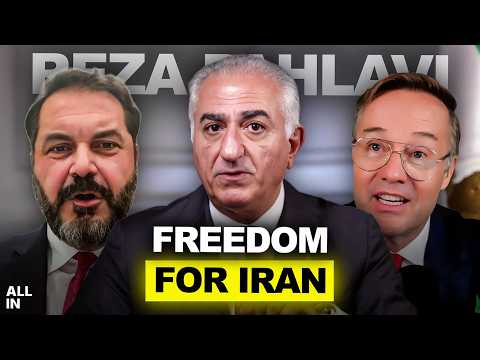
“Iran should have been, had it not been for the revolution, today’s South Korea of the region. Instead, it has become the North Korea of the region. Why? Not because our people are not gifted or talented or capable, not because we lack natural resources. It’s simply because of a corrupt bad management and a regime that basically took our country hostage.” — Reza Pahlavi, 2:30
Clip command
yt-dlp --download-sections "*2:30-3:20" "https://www.youtube.com/watch?v=elhGYEiZ7fw" --force-keyframes-at-cuts --merge-output-format mp4 -o "iran-south-korea-north-korea.mp4"”About $1 trillion in the first 10 years to the US market”
“Iran is one of the most untapped economic opportunities of the 21st century. And it could tremendously change the shape of our world. We figure about $1 trillion in the first 10 years to the US market, but also billions of dollars that will be invested into Iran.” — Reza Pahlavi, 3:00
Clip command
yt-dlp --download-sections "*3:00-3:50" "https://www.youtube.com/watch?v=elhGYEiZ7fw" --force-keyframes-at-cuts --merge-output-format mp4 -o "iran-trillion-dollar-opportunity.mp4"”Came to America with $35. My dad was driving a taxi while getting his PhD.”
“We escaped with my mom and my brother and sister. Came to America with $35. My dad was driving a taxi while getting his PhD. My mom was a maid. Growing up in an orange and black taxi cab in Washington DC helped me win the Uber deal against all the greats in venture.” — Shervin Pishevar, 42:57
Clip command
yt-dlp --download-sections "*42:57-43:40" "https://www.youtube.com/watch?v=elhGYEiZ7fw" --force-keyframes-at-cuts --merge-output-format mp4 -o "shervin-35-dollars-taxi-uber.mp4"”Over 50,000 people in the military and security forces have communicated their desire to defect”
“The Crown Prince had a system for people to communicate securely with him and his team, and over 50,000 people in the military and security forces have communicated their desire to defect and to support the transition.” — Shervin Pishevar, 36:39
Clip command
yt-dlp --download-sections "*36:39-37:30" "https://www.youtube.com/watch?v=elhGYEiZ7fw" --force-keyframes-at-cuts --merge-output-format mp4 -o "50000-defections-iran.mp4"”The only country in the Middle East that came out in solidarity with the United States on 9/11 was Iran”
“The only country in the Middle East that came out in solidarity with the United States on that sinister day was Iran — the Iranian people, not the regime. That tells you everything about the soul of the Iranian people.” — Reza Pahlavi, 19:01
Clip command
yt-dlp --download-sections "*19:01-19:45" "https://www.youtube.com/watch?v=elhGYEiZ7fw" --force-keyframes-at-cuts --merge-output-format mp4 -o "iran-911-solidarity.mp4"”A free democratic Iran will be the greatest peace dividend and economic dividend gifted to the world”
“When you add up the numbers, it gets to trillions of dollars of value have been created by this small population of Iranians in America. A free democratic Iran will be the greatest peace dividend and economic dividend to be gifted to the world and to the region.” — Shervin Pishevar, 31:35
Clip command
yt-dlp --download-sections "*31:35-32:20" "https://www.youtube.com/watch?v=elhGYEiZ7fw" --force-keyframes-at-cuts --merge-output-format mp4 -o "iran-greatest-peace-dividend.mp4"Key Points
- Part two of episode 263 (0:00) - Jason introduces this as a special follow-up episode featuring an historic interview with Prince Reza Pahlavi, set up by Shervin Pishevar
- Intervention as humanitarian rescue (1:12) - Pahlavi frames the U.S./Israeli military action as a rescue mission to protect lives from a regime that massacred tens of thousands of unarmed citizens
- Iran as untapped economic opportunity (3:00) - Pahlavi estimates $1 trillion in economic value to the U.S. market in the first 10 years of a free Iran, plus billions in investment flowing into Iran
- Democracy as the goal (3:48) - Jason clarifies the vision is to evolve into a democracy with free elections; average age in Iran is early 30s
- Broad coalition support (4:39) - Pahlavi describes support from monarchists, republicans, ethnic groups, religious groups, the intelligentsia, universities, working class, and diaspora
- Security concerns for return (7:58) - Pahlavi says “I’m no use to anyone if I’m dead” but will return to Iran at the first safe opportunity after 47 years in exile
- Trump’s unconditional surrender demand (8:53) - Pahlavi responds to Trump’s demand by emphasizing four core principles: territorial integrity, separation of religion and state, equality under law, and democratic process
- Iran Prosperity Project (11:17) - Pahlavi’s organization focused on the first 100 days of transition, including immediate stabilization and humanitarian relief
- Not a monarchy restoration (11:36) - Pahlavi clarifies he is a “neutral arbiter” focused on process, not outcome; the final form of government is for the people to decide
- Communication with the administration (16:07) - Pahlavi has been communicating with the Trump administration via Steve Witkoff
- Regime killed 40,000+ protesters (23:26) - Jason emphasizes the regime turned weapons on its own people during the Woman, Life, Freedom protests
- Nuclear threat (25:14) - Pishevar argues there is no doubt the regime would have used nuclear weapons if they had them
- 50,000 military defection signals (36:39) - Over 50,000 people in Iranian military and security forces have communicated desire to defect via secure channels
- Territorial integrity as red line (39:05) - Pishevar stresses that Iran must remain one country; any Kurdish separatism backed by Mossad/CIA is unacceptable
- Iranian diaspora in tech (30:55) - Hosts name Dara Khosrowshahi (Uber CEO), Pierre Omidyar (eBay), Omid Kordestani (Google), Ali Ghodsi (Databricks) as Iranian-American tech leaders
- Transition timeline (33:00) - 100 days of stabilization, 6 months for constitutional assembly, 14 months to finalize constitution and hold elections
- Pishevar’s personal story (41:21) - Shervin’s family fled Iran; father hid for 10 months, escaped on Air France flight; family arrived in America with $35; father drove taxi while getting PhD
Mentions
Companies
- Uber (30:55) - Referenced multiple times; Dara Khosrowshahi is Iranian-American CEO; Shervin Pishevar’s taxi driver father inspired his Uber investment
- eBay (31:03) - Founded by Pierre Omidyar, an Iranian-American
- Google (30:59) - Omid Kordestani served as executive, Iranian-American
- Databricks (31:01) - Ali Ghodsi is Iranian-American CEO
- Air France (42:00) - The airline Shervin’s father used to escape Iran
Products & Technologies
- VPNs (44:27) - Referenced as how Iranians access global culture despite regime censorship
People
- Prince Reza Pahlavi (0:00) - Exiled son of the last Shah of Iran; leading the transition effort; left Iran at 17
- Shervin Pishevar (0:00) - Iranian-American venture capitalist; arranged the interview; personal story of fleeing Iran as a child
- Jason Calacanis (0:00) - Host; conducts the interview with Pahlavi and Pishevar
- Donald Trump (8:53) - Demanded unconditional surrender from Iran; credited for having the courage to act
- Steve Witkoff (16:07) - Trump administration liaison communicating with Pahlavi
- Dara Khosrowshahi (30:55) - Iranian-American CEO of Uber
- Pierre Omidyar (31:03) - Iranian-American founder of eBay
- Omid Kordestani (30:59) - Iranian-American former Google executive
- Ali Ghodsi (31:01) - Iranian-American CEO of Databricks
- Anthony Bourdain (44:11) - Referenced for his travel episode in Iran showing the spirit of the Iranian people
Surprising Quotes
“I’m no use to anyone if I’m dead. So obviously we have to keep that in mind, but I would like to be able to be there as soon as possible.” — Reza Pahlavi, 7:58
“We have existed as a country for 5,000 years, as a people, and the territorial integrity of Iran must be protected. That’s a red line for the Crown Prince, it’s a red line for the Iranian people.” — Shervin Pishevar, 39:05
“Only in America would that be possible. The son of a taxi driver and a maid, coming to America with nothing, be able to have the blessing of the life that we’ve had.” — Shervin Pishevar, 43:22
“My focus is on the process, not the outcome. I’m not taking sides with one form versus the other. That’s for the people of Iran to decide.” — Reza Pahlavi, 12:04
“You have the Jewish people helping free the Iranian people from their slavery. And at the same time, there is a connection between America’s beginning and what’s happening now.” — Shervin Pishevar, 27:52
Transcript
Jason Calacanis: 0:00 All right everybody, welcome back to part two of the All-In Podcast episode 263. We promised you a part two because we are very lucky that my dear friend Shervin Pishevar was able to set up a very important, historic interview for us today. None other than Prince Reza Pahlavi is here, and we have a limited amount of time with you, Reza. And may I call you Reza, or should I call you Prince Reza?
Reza Pahlavi: 0:29 Reza’s fine. Thank you for having me on your program.
Jason Calacanis: 0:32 It’s great to have you. And this is a moment I think you’ve been waiting 47, close to 50 years for, which is we are at this moment in time looking at potentially the people of Iran being free. You left the country when you were 17 years old to become a pilot, and now you are looking to help your people with a transition post this military activity, this operation, essentially a war that’s going on right now that we all hope gets resolved quickly. I think people would love to know, what is your vision for Iran post this military action?
Reza Pahlavi: 1:12 Well, thank you again for the opportunity. Before I get into that, I wanted to simply stress the importance of this intervention that to us was like a rescue mission. It was literally a humanitarian intervention to protect more lives that would otherwise be lost under this extremely brutal and repressive regime that, as you know, has massacred as of late tens of thousands of innocent and unarmed citizens. In order to equalize the playing field, this was a much needed intervention that a lot of Iranians asked for and fortunately it did happen. But what’s the next step? Where are we headed to?
Jason Calacanis: 1:59 The most obvious question would be once the regime collapses, how do we manage the transition?
Reza Pahlavi: 2:04 I’ve stepped in to lead this transition with the help of many of my compatriots from various sectors. We believe that a stable transition will lead to addressing the immediate needs of the country but then set the country on a path of redevelopment and reconstruction, which is of course something that we were always hoping for that could not have happened under this corrupt, mafia-like regime. Iran should have been, had it not been for the revolution, today’s South Korea of the region. Instead, it has become the North Korea of the region. Why? Not because our people are not gifted or talented or capable, not because we lack natural resources. It’s simply because of a corrupt bad management and a regime that basically took our country hostage, used it as a launching pad to export an ideology. And that’s why we are here today. A different Iran, a democratic secular Iran will first and foremost bring about the opportunities to our nation.
Reza Pahlavi: 3:00 But it will open Iran for business again. Iran is one of the most untapped economic opportunities of the 21st century. And it could tremendously change the shape of our world in terms of what would be beneficial to the Iranian people of course, but also from the vantage point of a country like the United States and billions of dollars that will be generated as a result of doing business in Iran. We figure about $1 trillion in the first 10 years to the US market, but also billions of dollars that will be invested into Iran and everything that we need to have done in order to rebuild our country. These are tremendous opportunities that we can look forward to, and it all starts with moving towards this recovery and transition.
Jason Calacanis: 3:48 And when your father was in charge, it was a monarchy, turned into a dictatorship, and to be clear, the hope now is to evolve into a democracy with free elections for the people. Average age of people in Iran now, early 30s, 31, 32 years old. What would that look like? What is a possible timeline? And you have said on other programs and on your YouTube channel, which I suggest everybody go search for and follow right now because you’re speaking directly to the people on X and on your YouTube channel, what is the condition on the ground from the people you’re talking to? You said you’ve been talking to people in the military, civilians, and other leadership. They’re ready to move on. What’s the timeline and what are they telling you is happening on the ground today?
Reza Pahlavi: 4:39 Well, I think that now the playing field has been equalized, meaning that the people could finally, of course awaiting the end of this campaign, have a better opportunity to re-engage the streets and take over their homeland. Of course part of the equation is how much implosion from within the regime and how much defections from the regime, in the sense of joining with the people this time and not being an instrument that will halt the people’s progress but instead help the people in that transition. Whether people are in the military or security forces, as well as the civilian bureaucracy, unlike what happened after the fall of Saddam Hussein and de-Baathification, the scenario of change in Iran is totally different. Let’s not forget Iran is a multiple-century-old nation state. It’s a country that is extremely unified and united for this common purpose.
Reza Pahlavi: 6:00 Under this tent, we have diverse groups that are joining in this national campaign. People who are on the right, the center, the left, monarchists, republicans, ethnic groups, religious groups — every sector of society is engaged. I have had tremendous amount of support coming from inside Iran. We have the support of the intelligentsia, the universities, the working class, the diaspora that can bring a lot to this equation. I think this is a good recipe that will allow us to manage this transition but set the country to clean up, be ready for business and create the opportunities that will finally impact first and foremost Iranians who have been starving as a result of this regime’s corruption, but have a true opportunity to get back on track and improve their livelihood. And I think it’s also good for those who partner with us in this process because there’s a lot to be done that will be win-win as opposed to lose-lose to the benefit of this corrupt regime. That has been the story of the past almost five decades.
Shervin Pishevar: 7:30 So you’ve spoken about wanting to be on the ground there. What conditions and what timeline do you have for yourself? And this seems like a pretty high-risk thing to do. It would be pretty brave of you to go to the country now. What conditions have to be met for you to go to Iran, to go home for the first time in 47 years? And how close do you think we are to the people taking the streets now and for starting this transition?
Reza Pahlavi: 7:58 Well to be honest with you it’s very difficult to put an exact timeline. Factors that will expedite it is the level of separation from the regime, the level of defections, the strengthening of domestic organizations and structure, how can we partner with elements from within that are joining this campaign. All of these are factors that will contribute to the rapidity of the transition. As far as myself being there, obviously there are security concerns to make sure that it’s safe enough for me to go there. I’m no use to anyone if I’m dead. So obviously we have to keep that in mind, but I would like to be able to be there as soon as possible to help as much as I can in this process. Obviously being in country is an advantage, it’s hard to do things from far away. I had no choice to be living in exile because of the circumstances, but I think the opportunity is presenting itself and the first opportunity that is created for me to safely return to Iran, I will obviously be there.
Shervin Pishevar: 8:53 Just this morning Trump said there will be no deal in Iran until unconditional surrender.
Jason Calacanis: 9:00 …is given by whatever is left of the government there. What do you think of that condition, is that the right move, do you agree with Trump’s ultimatum?
Reza Pahlavi: 9:12 Well, let me look at it from the domestic prism. In order for a successful transition to occur, it has ultimately to be something that is legitimate in the eyes of the Iranian people. We haven’t lost so many tens of thousands of lives just to settle for a continuity of the remnants of this regime. That will not fly. People will want to have a clean break. The alternative will be for all those who align with the secular democratic alternative. And there are some four core principles that whoever adheres to, including people who may today peel away from the regime, would be able to agree to work together on that platform. The first and foremost issue is of course Iran’s territorial integrity. That’s an issue that is very close to the hearts of millions of Iranians representing every aspect of our diversified country in terms of ethnicities, religions, and what have you. But we find ourselves in this united cause under one flag and under one nation. The second element that is a prerequisite to democracy is a clear separation of religion from state. That’s a critical element for a democracy to occur. Equality of all citizens under the law and the rule of law obviously is a critical aspect that guarantees all of the rights we’re talking about. And the democratic process itself, meaning the fact that people can elect their representatives to go to this constitutional assembly to debate the issues of what the next system could look like and what laws should be ratified by the people, which would bring us to the election of the first parliament of this new democracy and of course the election of the first government of such democracy, at which point the transitional government hands over power to the elected representative of the people.
Jason Calacanis: 11:36 Two quick questions. Under no circumstances would that be a monarchy? I think is a question everybody has for you because you’re the prince, this is a natural question.
Reza Pahlavi: 12:00 Out of this horrific nightmare of 47 years.
Reza Pahlavi: 12:04 My focus is on the process, not the outcome, and as a neutral arbiter, I’m not taking sides with one form versus the other. That’s for the people of Iran to decide. Whether it ends up to be a constitutional monarchy or a republic, the important thing is the democratic framework that will secure all of those rights and will ensure that Iran belongs to its people and is run by its people on a democratic basis. As I said, let the democratic process unfold and let the people vote in majority what is their final choice. I’m not here to determine an outcome. Again, my role as a transition leader is to focus on the process, not the outcome.
Jason Calacanis: 13:23 What do you believe the people of Iran want? And in that monarchy subset, there are the Gulf monarchies, the Kingdom, UAE, Qatar. They are obviously doing quite well, and they are monarchies with a bit of democratic processes. Is that something that could serve as a model for what would happen in Iran, or is Iran a different kind of situation?
Reza Pahlavi: 13:45 Well, just what you said. I mean, a democratic system clearly outlines how it should be and how it should not. If you want to look at the closest examples of parliamentary monarchies where the king or queen is the head of state but does not govern, meaning you have the parliament and you have the prime minister and the governments, these are countries that rank the highest in terms of the rule of law, human rights, gender equality. You look at Scandinavia, you look at the Netherlands, you look at Japan. These are the highest-ranking countries in terms of all those categories.
Reza Pahlavi: 15:00 As I said, let the democratic process unfold and let the people vote in majority what is their final choice. I’m not here to determine an outcome. Again, my role as a transition leader is to focus on the process.
Jason Calacanis: 15:26 Final question and I’ll get into a bunch of details with you Shervin as to the plan which I know you’re helping construct and I’m assuming you’ll help with capital and opening up your network. What is the relationship you have today with the Trump administration and with the military? What discussions have happened?
Reza Pahlavi: 16:07 Look, there’s nothing hidden in the agenda. Everything is transparent and I’ve been communicating with the administration via Steve Witkoff who announced it publicly, as well as members of Congress. Both parties have been very supportive, not because of who I am personally, but because of what I’m trying to achieve as a goal and they agree with the concept. This is not an issue that belongs to one party. This has bipartisan support.
Jason Calacanis: 17:14 As I let you go, what should the American people know about the spirit, the culture, and the people of Iran, including the people who fled in 1979 like your family?
Reza Pahlavi: 17:30 Well, I know many Americans who have many Iranian friends. As a matter of fact, if you just look at the Iranian diaspora in the United States alone, you have some of the highest-ranking people in industries, in medicine, in technology, in business.
Reza Pahlavi: 18:00 Silicon Valley employs so many Iranians.
Shervin Pishevar: 18:02 Yes.
Reza Pahlavi: 18:03 Or they’re themselves entrepreneurs. This is the kind of potential, and I’m sure Shervin will talk to you more about that, but this is the kind of connection that these two nations have always had. This is the relationship.
Reza Pahlavi: 19:01 And how many people on the streets of many of the so-called allies of the United States were celebrating that attack on that sinister day. The only country in the Middle East that came out in solidarity with the United States on 9/11 was Iran — the Iranian people, not the regime. That tells you everything about the soul of the Iranian people.
Jason Calacanis: 20:27 Well, we’re all praying for the people of Iran to have a democracy, and what an amazing moment it’ll be when you get to return in whatever capacity. Some of the most incredible, beautiful, joyful, industrious people I’ve met in my life. Prince, when I was living in Los Angeles, all these great Persians I would meet were some of the most joyful and industrious people I’ve ever met.
Jason Calacanis: 21:16 So Prince Reza, thank you so much for your time. I know you’re extremely busy. It’s very important for the All-In audience to hear from you and to understand your perspective. Safe travels and Godspeed. We’re all praying for you.
Reza Pahlavi: 21:30 Thank you again. Looking forward to it.
Jason Calacanis: 21:33 Alright Shervin, thank you so much for setting this up. I ask for very few favors from my friends, but as a good friend, you made this happen for the All-In audience, and I really appreciate it. Tell us about the details of the plan, the bigger picture here, and what happens next.
Shervin Pishevar: 21:58 Of course. First of all, Jason, thank you for opening up this tremendous platform to the Iranian people and to the Prince. As you can see, the Crown Prince is an incredible, composed, thoughtful, brilliant statesman. He has been waiting for this moment for 47 years and has been working on this plan for decades. He has assembled an incredible team around him.
Jason Calacanis: 23:26 And this is super important to meditate on for a second here. This regime is a murderous and evil regime to turn those guns and mow down 40,000 — over 40,000 people who were simply asking for their freedom in the Woman, Life, Freedom movement. These were mostly young women. They mowed them down.
Jason Calacanis: 24:00 Bush wasn’t able to get this done. This has been something that presidents have struggled with, and you gotta give Trump credit here. There’s a lot of criticism about this being an unjust war but this is a just war if there’s any definition.
Reza Pahlavi: 24:28 Absolutely not. One of my key principles is our moral security presages our physical security. So this has as much to do with America’s security as it does with the security of the Iranian people.
Jason Calacanis: 25:13 They would use it.
Shervin Pishevar: 25:14 There’s not even a doubt in my mind that they would have used it by now if they had it. And so this is incredibly important for America’s national security.
Shervin Pishevar: 27:00 15 years ago where we said we have to do more between Israeli and Jewish community and the Persian Iranian community, and someday we’re going to have this moment.
David Sacks: 27:51 Yeah.
Shervin Pishevar: 27:52 You have the Jewish people helping free the Iranian people from their slavery. And at the same time, there is a connection between America’s beginning and what’s happening now.
Jason Calacanis: 28:33 And this could have such a tremendous impact on the region. You have essentially a lone democracy in Israel and now to have 93 million Iranians in a democracy as well, these two democracies could transform the entire Middle East.
Shervin Pishevar: 29:31 I think that everything what the Gulf countries have done is a tremendous case study of what the potential for the Middle East truly is. Being blessed with natural resources, it’s an advantage to be able to have the resources independently to develop themselves.
Shervin Pishevar: 30:00 And when you look at what happened in UAE over the last 25 years, it’s incredible.
Jason Calacanis: 30:14 Yeah, I’ve seen the pictures of Dubai then and now. It’s extraordinary.
Shervin Pishevar: 30:18 Yeah, it’s incredible. And it reminds me of what America was like in the 1950s, when they came back from World War II, Eisenhower built the highway system, and it created that explosion of the American dream.
David Sacks: 30:55 Dara Khosrowshahi at Uber?
Shervin Pishevar: 30:57 Dara, myself at Uber, of course…
Jason Calacanis: 30:59 Omid Kordestani at Google.
David Friedberg: 31:01 Ali at Databricks.
David Sacks: 31:03 Pierre Omidyar at eBay.
Shervin Pishevar: 31:04 When you add up the numbers, it gets to trillions of dollars of value have been created by this small population of Iranians in America, and especially in Silicon Valley.
Jason Calacanis: 31:32 Yeah, and on a numbers basis, it’s a magnitude more.
Shervin Pishevar: 31:35 And so this will be — a free democratic Iran will be the greatest peace dividend and economic dividend to be gifted to the world and to the region. So I want everyone listening to know that a free Iran is the best thing for the entire world.
Shervin Pishevar: 33:00 And then a six-month process to assemble Iranians to write a constitution and then a 14-month process to actually finalize the constitution and hold free elections.
Jason Calacanis: 33:41 And so this plan’s been worked on for some time. He seems like he’s got, you know, a third or so of the constituents there who are in favor of him leading the transition. Is that consensus growing?
Shervin Pishevar: 34:31 Absolutely. The vast majority of Iranians want a separation of church and state, of mosque and state. And we’ve seen what 47 years of theocratic rule has done.
Shervin Pishevar: 36:00 And we have to let that process run its course. As the president said, this is probably about four weeks of work.
Jason Calacanis: 36:32 Have the defections started yet or is that too risky for the individuals on the ground? What are you hearing through your back channels?
Shervin Pishevar: 36:39 Well, the Crown Prince had a system for people to communicate securely with him and his team, and over 50,000 people in the military and security forces have communicated their desire to defect and to support the transition.
Jason Calacanis: 38:49 Multi-generational trauma.
Shervin Pishevar: 38:54 Multi-generational, yes.
Jason Calacanis: 38:55 Tell me about the Kurds being backed — Mossad and the CIA are reportedly backing militias in the West, and that’s going to play a role.
Shervin Pishevar: 39:05 I think we have to be very, very careful because a red line for the Iranian people is we have existed as a country for 5,000 years, as a people, and the territorial integrity of Iran must be protected. That’s a red line for the Crown Prince, it’s a red line for the Iranian people.
Jason Calacanis: 40:29 So it has to be one country.
Shervin Pishevar: 40:32 It has to be one country. The territorial integrity of Iran must be protected. And so that’s incredibly important to project that wherever there’s collaborations that can happen, to be able to work together to fight for the liberation to be completed and for a march on to Tehran and the Crown Prince being able to come back to lead this transition and physically come back to his homeland. Can you imagine that, after 47 years of being away from his nation?
Jason Calacanis: 41:18 You’ve never been able to go back, or have you snuck in and visited?
Shervin Pishevar: 41:21 I haven’t been back for, you know… I left, basically I was born in 1976. My dad, the last Shah was sending a lot of the top brilliant people on scholarships around the world. The Iranian community in graduate school and universities was the largest population in the 1970s. He was educating this whole class of people and we were going back to rebuild and build Iran into this great nation.
Jason Calacanis: 41:51 Yeah, 1976.
Shervin Pishevar: 41:52 1976, yeah, 200th anniversary. And so he returned, we returned to Iran 1978, right before the revolution, really bad timing. And my dad had been promoted to head of radio and television for the Shah. And this all happened, the revolution happened.
Shervin Pishevar: 42:00 And my dad made the courageous decision to help the US embassy get radio communication devices to them, do foreign language broadcasts to tell foreigners in Iran how to get out of the country. This put my father Abraham on the execution list. So he went into hiding for 10 months. I didn’t see my dad for 10 months. And in kind of a kismet moment, someone he helped get a job in radio and television came to our home and said to my mom, “I want to help.” She didn’t trust him, but she checked with my dad and my dad said, “No, you can trust him.” And that guy was the new head of security for the Mehrabad airport in Tehran. And he personally met my father and walked him onto the Air France flight.
Jason Calacanis: 42:56 Wow.
Shervin Pishevar: 42:57 And then we were stuck in Iran for two years. Saddam invaded, bombs were falling on us every night and the sirens were going off. So then we escaped with my mom and my brother and sister. Came to America with $35. My dad was driving a taxi while getting his PhD.
Chamath Palihapitiya: 43:14 A great paradox.
Jason Calacanis: 43:15 Wow.
Shervin Pishevar: 43:16 My mom was a maid.
Jason Calacanis: 43:18 Yeah, he did Uber.
Shervin Pishevar: 43:20 Actually, he helped me with the Uber deal. That was one of the things of my first meeting with Jason, with Travis. I told them that story and I know that growing up in an orange and black taxi cab in Washington DC helped me win the Uber deal against all the greats in venture.
Chamath Palihapitiya: 43:21 Great irony.
Shervin Pishevar: 43:22 Only in America would that be possible. The son of a taxi driver and a maid, coming to America with nothing, be able to have the blessing of the life that we’ve had. And I’ve never forgotten those roots. I’ve tried to serve America, and now I’m helping in any way that I can to help the Crown Prince in this transition process for a free Iran and rebuild Iran into something great.
David Friedberg: 44:11 What’s extraordinary to me about the Iranian people is they have maintained even under this oppression, that spirit. 47 years later, I don’t know if you’ve ever seen the Anthony Bourdain episode when he goes there.
Shervin Pishevar: 44:26 Yeah, beautiful.
David Friedberg: 44:27 And it always touched me. I don’t know, this was like a decade ago when he did it. And he said, “I can’t believe it. These people are Americans. They’re eating Pizza Hut. They’re listening to music. They’re having some beers on their back porch. They’re dancing. They are on VPNs, understanding culture and what’s going on around the world.” Even under the oppression — women, gays, everybody — they’re suffering and they still have that joy of life that every Persian I’ve ever met has.
Jason Calacanis: 45:00 Like the Greeks or the Irish, they will close the restaurant. They will talk and the restaurant closes the door, the owner of the restaurant sits down and you just talk for another hour. Some of the most beautiful people I’ve ever met.
Shervin Pishevar: 45:15 Thank you, Jason.
Reza Pahlavi: 45:17 As you truly understand the soul of the Iranian, and that is exactly it. We love to host our friends on the sofra, and there truly are as American as you can be. We love our freedom. We’ve suffered for so long, and we’re so thankful for President Trump having the courage to take on this evil regime. And we look forward to hosting All-In Pod in Tehran.
Jason Calacanis: 45:43 That would be…
Reza Pahlavi: 45:44 Sooner than later.
Jason Calacanis: 45:44 One of the great bucket lists of my life to be able to go to Tehran and host the podcast there and have tea with you in Tehran. Let’s put it on the schedule, a year from today.
Shervin Pishevar: 45:54 The best food in the world, I can’t wait to dig in.
Jason Calacanis: 45:58 What’s the signature? What’s the signature dish? What’s your favorite?
Reza Pahlavi: 46:03 Well, I mean, everyone loves the Persian kebabs, right? But the kebabs in Iran are something else. There’s like, it’s a tremendous food culture. And the national dish is called ghormeh sabzi, which is a stew of lamb. And my mom was like the greatest version cook in the world and she would cook it for three days. And these foods, I can’t wait to break bread with you in a free Iran.
Jason Calacanis: 46:35 Incredible. Yeah, I mean, that’s one of the things the Greeks and the Iranians share is that love of lamb. Oh, cannot wait. All right, my brother. I’m so glad you’re engaged in this. Gives me hope. And good luck in the next three, four, five weeks. Let’s hope and pray for the best. To the All-In audience, we’ll see you next time. Bye bye.
Chamath Palihapitiya: 46:54 Let your winners ride.
Jason Calacanis: 46:58 Rain Man David Sacks.
David Friedberg: 47:01 And then we open sourced it to the fans and they’ve just gone crazy with it.
Jason Calacanis: 47:04 The Queen of Quinoa.