Biggest LBO Ever, SPAC 2.0, Open Source AI Models, State AI Regulation Frenzy
Biggest LBO Ever, SPAC 2.0, Open Source AI Models, State AI Regulation Frenzy
Summary
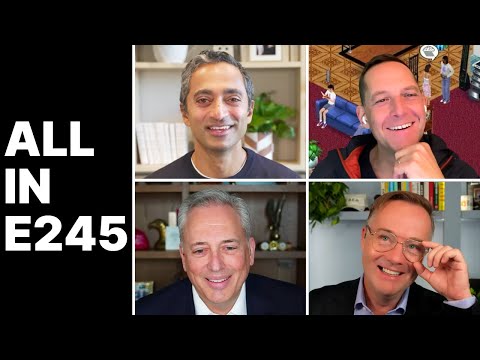
The All-In Podcast covers the biggest leveraged buyout in history, the future of public markets, open source AI’s growing competitive threat to US companies, and a state-level AI regulation frenzy. The episode opens with Electronic Arts being acquired for $55 billion in the largest LBO ever, led by Silver Lake and Saudi Arabia’s PIF. Jason, Chamath, and Friedberg debate what this means for the private equity industry, noting that the traditional LBO model of financial engineering is struggling as interest rates remain elevated and easy exits have dried up. Jason argues that the EA deal signals PE firms are now making strategic operating bets rather than just leveraged financial plays.
The conversation shifts to the broken IPO market and a potential “SPAC 2.0” model. Chamath reveals he’s been approached about advising on a new wave of public market vehicles, and the hosts discuss the enormous opportunity in AI rollups, where companies are buying traditional software businesses to inject AI capabilities and dramatically improve margins. Sacks joins midway to discuss OpenAI and Meta launching short-form video generation apps, debating whether these represent the future of content or just “AI slop.” The hosts then dive deep into open source AI, triggered by DeepSeek’s latest model release, with Chamath making a passionate case that open source models, particularly from Chinese companies, are rapidly closing the gap with proprietary US models at a fraction of the cost.
The episode concludes with a heated debate about the explosion of state-level AI regulation, with over 700 AI-related bills introduced across 45 states. Sacks argues forcefully that a federal preemption framework is needed to prevent a patchwork of state regulations that could cripple American AI innovation, while acknowledging that some safety guardrails are reasonable if done at the federal level.
Highlights
”PE’s existential crisis”
Clip command
yt-dlp --download-sections "*3:20-4:20" "https://www.youtube.com/watch?v=ddAwgZ6ietc" --force-keyframes-at-cuts --merge-output-format mp4 -o "ddAwgZ6ietc-3m20s.mp4"“The whole model of PE is that you use leverage to buy a company, you cut costs, you engineer the balance sheet, and you sell it in three to five years. But when interest rates are at 5% and you can’t do financial engineering anymore, and the exit market is closed, you have to actually operate these businesses. That’s a totally different skillset.” — Jason Calacanis, 3:20
”The AI rollup goldmine”
Clip command
yt-dlp --download-sections "*28:20-29:20" "https://www.youtube.com/watch?v=ddAwgZ6ietc" --force-keyframes-at-cuts --merge-output-format mp4 -o "ddAwgZ6ietc-28m20s.mp4"“You buy a boring vertical SaaS company doing $50 million in revenue with 60% margins. You inject AI into the product. You cut the support team by 80%. You automate half the sales process. Suddenly you’ve got 85% margins and the product is actually better. That’s the AI rollup playbook and nobody’s really doing it at scale yet.” — Jason Calacanis, 28:20
”Open source is the real story”
Clip command
yt-dlp --download-sections "*48:20-49:20" "https://www.youtube.com/watch?v=ddAwgZ6ietc" --force-keyframes-at-cuts --merge-output-format mp4 -o "ddAwgZ6ietc-48m20s.mp4"“DeepSeek just released a model that scores within a few points of Claude and GPT-4 on every benchmark, and it cost them a fraction of what it cost Anthropic and OpenAI to build. If open source models get to 95% of frontier capability at 10% of the cost, the entire business model of the proprietary AI labs comes into question.” — Chamath Palihapitiya, 48:20
”700 bills across 45 states”
Clip command
yt-dlp --download-sections "*65:50-66:50" "https://www.youtube.com/watch?v=ddAwgZ6ietc" --force-keyframes-at-cuts --merge-output-format mp4 -o "ddAwgZ6ietc-65m50s.mp4"“There are over 700 AI-related bills that have been introduced in 45 state legislatures. If every state passes its own AI regulation, you’re going to have a patchwork that makes it impossible for any AI company to operate nationally. This is exactly where federal preemption is needed.” — David Sacks, 1:05:50
”AI slop or the future of content?”
Clip command
yt-dlp --download-sections "*39:10-40:10" "https://www.youtube.com/watch?v=ddAwgZ6ietc" --force-keyframes-at-cuts --merge-output-format mp4 -o "ddAwgZ6ietc-39m10s.mp4"“OpenAI and Meta both just launched short-form video apps where you type a prompt and it generates a TikTok-style video. The quality is actually impressive. But the question is: does anyone actually want to watch AI-generated content? Or is this just the industrialization of slop?” — David Friedberg, 39:10
Key Points
- EA $55B LBO (1:53) - Electronic Arts acquired in the biggest leveraged buyout in history by Silver Lake and Saudi Arabia’s PIF; signals PE firms making strategic operating bets rather than pure financial engineering plays
- PE Industry Under Pressure (3:20) - Traditional LBO model struggling with 5% interest rates; PE firms sitting on record amounts of uninvested capital; exit market essentially closed with IPOs and M&A dried up
- Xbox Game Pass Price Hike (8:00) - Microsoft raised Xbox Game Pass Ultimate to $30/month; shows gaming industry consolidating around subscription models similar to streaming
- IPO Market Broken (17:42) - Discussion of why the IPO window remains essentially closed; companies staying private longer; need for new public market vehicles
- SPAC 2.0 Concept (20:00) - Chamath discusses being approached about advising on next generation of public market vehicles; potential for better-structured versions of SPACs with more investor protections
- AI Rollup Opportunity (27:41) - Massive opportunity to buy traditional SaaS companies and inject AI to dramatically improve margins; buying at 5-8x revenue, improving margins from 60% to 85%, and creating significant value
- Sacks Joins from the Skiff (36:01) - David Sacks joins the show midway, joking about PT tests for generals and push-up contests
- OpenAI & Meta Video Apps (38:27) - Both companies launched short-form video generation apps; debate over whether AI-generated video content represents the future or just industrialized “AI slop”
- DeepSeek’s New Model (45:04) - Chinese open source AI lab DeepSeek released a model scoring within points of Claude and GPT-4 on benchmarks at a fraction of the cost; pressuring US AI industry pricing models
- Open Source vs Proprietary AI (48:20) - Chamath argues open source models reaching 95% of frontier capability at 10% of cost fundamentally challenges the business model of proprietary AI labs
- China’s AI Approach (52:00) - Chinese companies focusing on smaller, more efficient models (1.7B, 4B, 8B parameters) for mobile devices and laptops, prioritizing adoption and diffusion over massive scale
- Anthropic Copyright Settlement (55:00) - Anthropic settled with authors over copyright claims related to AI training data; sets precedent for how AI companies handle intellectual property
- State AI Regulation Explosion (1:05:11) - Over 700 AI-related bills introduced across 45 state legislatures; California passed Transparency in Frontier AI Act requiring disclosure of training data and methods
- Federal Preemption Needed (1:08:00) - Sacks argues forcefully that a federal framework is needed to prevent patchwork of state regulations that could cripple AI innovation; draws parallel to interstate commerce clause
- Google Data Center Pullback (1:12:00) - Google withdrew rezoning proposal for 468-acre data center project in Indianapolis due to local opposition; shows regulatory friction slowing AI infrastructure buildout
- States’ Rights vs Federal Control (1:15:00) - Tension between states wanting to regulate AI for their citizens versus federal government’s interest in maintaining national competitiveness in AI race
Mentions
Companies
- Electronic Arts (1:53) - Acquired for $55B in largest LBO ever by Silver Lake and Saudi PIF
- Silver Lake (1:53) - Led the $55B EA acquisition alongside Saudi Arabia’s PIF
- OpenAI (38:27) - Launched short-form video generation app; proprietary model business challenged by open source alternatives
- Meta (38:27) - Also launched short-form video generation app; strong open source AI contributor with Llama models
- DeepSeek (45:04) - Chinese open source AI lab releasing frontier-competitive models at fraction of US company costs
- Anthropic (55:00) - Settled copyright case with authors; Claude model referenced as benchmark for DeepSeek comparisons
- Nvidia (8:00) - Referenced in context of AI infrastructure buildout and chip competition
- ByteDance (52:00) - Parent company of TikTok; aggressive competitor in AI and e-commerce
- Microsoft (8:00) - Raised Xbox Game Pass Ultimate to $30/month; gaming subscription model
- Google (1:12:00) - Withdrew rezoning proposal for 468-acre data center in Indianapolis due to local opposition
Products & Technologies
- DeepSeek Model (45:04) - Open source model scoring within points of frontier proprietary models at fraction of cost
- Sora (38:27) - OpenAI’s video generation model powering new short-form content app
- Xbox Game Pass (8:00) - Microsoft gaming subscription service raised to $30/month for Ultimate tier
- California Transparency in Frontier AI Act (1:05:11) - State law requiring AI companies to disclose training data and methods
People
- Lisa Su (1:53) - AMD CEO referenced in context of competitive dynamics in chip market
- Pete Hegseth (0:30) - Announced PT and fitness tests for military generals
- Jensen Huang (8:00) - Nvidia CEO referenced in AI infrastructure discussion
Surprising Quotes
“You have to adjust for people’s heights. I’m the tallest of all of you. I have a much longer limb system. So 20 push-ups for me is much harder than 20 for you, Jason.” — David Friedberg, 1:00
“If every state passes its own AI regulation, you’re going to have a patchwork that makes it impossible for any AI company to operate nationally. When Eisenhower built the interstate highway system, he didn’t let every state decide what width the roads should be.” — David Sacks, 1:08:00
“The traditional PE model is dead. You can’t just lever up a company, cut costs, and flip it in three years anymore. The math doesn’t work at 5% rates. You actually have to know how to run a business now.” — Jason Calacanis, 5:00
“If open source models get to 95% of frontier capability at 10% of the cost, every CTO in America is going to ask: why am I paying OpenAI when I can run this myself?” — Chamath Palihapitiya, 50:00
Transcript
0:00 All right, everybody. Welcome back to the number one podcast in the world. Of course, that’s the All-In podcast. I’m your host, Jason Calacanis. With me again, your chairman, dictator, Chamath Palihapitiya, and the Sultan of Science, David Friedberg. David Sacks will be calling in from the skiff. He’s in some deep negotiations for the United States of America. Nobody knows what’s going on in Sacks’s life, but he’ll crack in from the skiff any moment now.
0:30 You guys see that Pete Hegseth announced a PT and fitness test for the generals? Could you imagine if Sacks had to pass a PT? Oh my god. They should totally make it for the administration. Sacks, we need you to do one push-up. What do they do if you don’t pass? They remove you from your post. You probably get a cure period. We should do a push-up contest. Winner take all. How many push-ups can you do, Friedberg? You have to adjust for people’s heights. I’m the tallest of all of you. I have a much longer limb system. So 20 for me is much harder than 20 for you, Jason.
1:53 EA acquired for $55 billion in the biggest LBO ever. Silver Lake and Saudi Arabia’s PIF leading the deal. This is a massive transaction that signals something important about where private equity is headed. The whole model of PE is under pressure. When interest rates are elevated, you can’t just use leverage to engineer returns anymore. You have to actually operate these businesses and create real value.
3:20 PE firms are sitting on record amounts of uninvested capital. The exit market is essentially closed. IPOs are dried up, M&A is slow. So what do you do with all that capital? You make bigger and bigger bets. The EA deal is interesting because it’s not a classic LBO where you strip costs and flip it. This is a strategic bet on the gaming industry’s transition to subscription models and live services. Microsoft raised Xbox Game Pass to $30 a month. The whole industry is consolidating around subscriptions.
8:00 The question with EA specifically is: can you take a franchise machine like EA Sports, inject AI into game development, dramatically reduce development costs and timelines, and create a much more profitable business? If you can build games faster and cheaper with AI, the economics of a $55 billion price tag start to look a lot different. That’s the bet Silver Lake and PIF are making.
17:42 Let’s talk about the IPO market. It’s been essentially closed for two years. Companies are staying private longer, raising massive private rounds at huge valuations. But at some point, early investors and employees need liquidity. Chamath, you pioneered the SPAC model. What’s next? I’ve been approached about advising on what some people are calling SPAC 2.0. The idea is to create better-structured public market vehicles with more investor protections, better alignment, and frankly learning from the mistakes of the SPAC wave.
27:41 The AI rollup opportunity is enormous and nobody’s really doing it at scale yet. You buy a boring vertical SaaS company doing $50 million in revenue with 60% margins. You inject AI into the product. You cut the support team by 80%. You automate half the sales process. Suddenly you’ve got 85% margins and the product is actually better. The playbook is obvious but execution is hard. You need people who understand both AI and the specific verticals.
36:01 Sacks joins the show! He’s been doing something with his Blackberry and a bunch of generals. Welcome in from the skiff. What’s new in the world of AI policy? Well, before we get into that, I want to hear about this EA deal. It’s a good sign for the market. There’s a lot of capital on the sidelines looking for places to deploy.
38:27 OpenAI and Meta both launched short-form video apps. You type a prompt and it generates a TikTok-style video. The quality is actually impressive. But does anyone actually want to watch AI-generated content? Or is this just the industrialization of slop? Friedberg raises the philosophical question about what happens when anyone can generate professional-looking video content. Does that make human-created content more valuable or less?
42:00 I think the answer is that AI video tools will be incredible for creators as productivity tools, but pure AI-generated content without human direction is going to be slop. The best content will be human ideas executed with AI tools. Think about it like Photoshop. Photoshop didn’t make everyone a great designer, but it made great designers much more productive.
45:04 DeepSeek just dropped their latest model and the benchmarks are scary for US AI labs. This Chinese open source model is scoring within a few points of Claude and GPT-4 on virtually every benchmark. And it cost them a fraction of what it cost Anthropic and OpenAI to build. The open source AI movement is moving faster than anyone expected.
48:20 Chamath makes the case for open source AI. If open source models get to 95% of frontier capability at 10% of the cost, the entire business model of the proprietary AI labs comes into question. Every CTO in America is going to ask: why am I paying $20 per million tokens to OpenAI when I can run this myself? The Chinese companies are focusing on smaller, more efficient models for mobile devices and laptops. They’re prioritizing adoption and diffusion over massive scale.
52:00 The China approach is fundamentally different. They’ve espoused open source. Companies like Alibaba have launched models at 1.7 billion, 4 billion, and 8 billion parameters for mobile devices. With these smaller models, it’s more conducive to faster adoption. You want AI to proliferate. In Chinese firms, only 8% were using AI last year. Now that number is approaching 50%. The adoption rate has been incredibly fast.
55:00 Anthropic’s copyright settlement with authors sets an important precedent. The question of how AI companies can use copyrighted material for training is going to define the economics of the industry. If every author, artist, and publisher can extract licensing fees from AI training, it changes the cost structure dramatically. Anthropic decided to settle rather than fight, which some see as an admission and others see as pragmatic business.
1:00:00 Sacks weighs in on the implications for the AI industry. The copyright question is important but I think the bigger threat right now is regulation. We’re seeing an explosion of AI-related legislation at the state level that could create a patchwork of rules that makes it impossible for companies to operate. This is the topic I’ve been spending the most time on in my policy role.
1:05:11 State AI regulation frenzy. There are over 700 AI-related bills that have been introduced in 45 state legislatures. California passed the Transparency in Frontier AI Act. Other states are considering everything from requiring impact assessments to outright bans on certain AI applications. If every state passes its own AI regulation, you’re going to have a patchwork that makes it impossible for any AI company to operate nationally.
1:08:00 This is exactly where federal preemption is needed. When Eisenhower built the interstate highway system, he didn’t let every state decide what width the roads should be. The same principle applies here. AI is going to be embedded in every product and service. You can’t have 50 different regulatory frameworks. We need one clear federal framework that provides reasonable guardrails without killing innovation.
1:12:00 Google withdrew their rezoning proposal for a 468-acre data center project in Indianapolis because of local opposition. This is what happens when regulatory friction slows down AI infrastructure buildout. We’re in a global race and we’re making it harder for our own companies to build. Meanwhile, China is building data centers and AI infrastructure at breakneck speed with full government support.
1:15:00 The tension between states’ rights and federal control on AI is real. States have legitimate interests in protecting their citizens. But AI is fundamentally an interstate and international technology. A California regulation on AI training data affects every AI company in America, even if they’re based in Texas or New York. This is the textbook case for the interstate commerce clause and federal preemption.
1:20:00 Friedberg makes the point that some regulation is actually necessary. We need transparency about what data AI models are trained on, we need accountability for AI systems making consequential decisions about people’s lives, and we need safety standards for AI in critical infrastructure. The question isn’t whether to regulate but how and at what level of government.
1:25:00 Wrapping up, Sacks emphasizes that the US needs to get this right. We’re in the most important technology race of the 21st century. China is not handcuffing their AI companies with a patchwork of regulations. If we over-regulate, we lose. If we under-regulate and something goes wrong, we lose public trust. The answer is a thoughtful federal framework that promotes innovation while providing reasonable safeguards. That’s what we’re working on.
1:28:00 Another great episode of the All-In pod. Great to have Sacks join from the skiff. We covered a lot of ground today: the biggest LBO ever, the future of public markets, open source AI threatening the US lead, and the regulatory challenge. See you all next week on the world’s number one podcast.