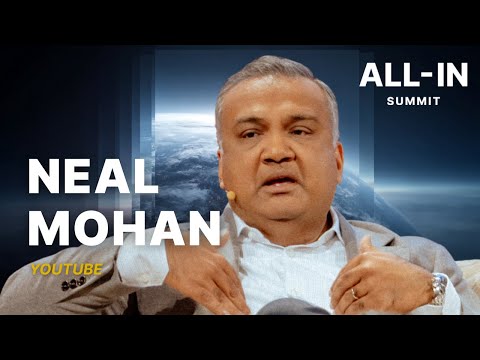
YouTube CEO Neal Mohan on AI, Censorship & the Future of Creators
YouTube CEO Neal Mohan on AI, Censorship & the Future of Creators
Summary
YouTube CEO Neal Mohan joins the All-In Podcast for a live interview covering the platform’s creator economy, content moderation philosophy, and AI strategy. Mohan reveals that YouTube has paid out over $70 billion to creators in the last three years through its partner program, with over 3 million creators currently earning revenue. The conversation opens with a pointed question from Jason about whether YouTube’s 45% take rate is too high, particularly for top-tier creators like Tucker Carlson and Meghan who choose to turn off monetization and sell their own ads. Mohan defends the model, arguing that YouTube provides unmatched audience reach and algorithmic discovery, and that different monetization models should be available depending on a creator’s business objectives.
The interview takes a substantive turn when Sacks asks about censorship during COVID and whether the industry has truly learned from that period. Mohan acknowledges the unique context of 2020 when misinformation was rampant, including people climbing 5G cell towers, and notes that all COVID-era content policies have been removed. He emphasizes that YouTube was actually criticized for leaving up content about the Wuhan lab theory that other platforms removed, positioning YouTube as more open than competitors. Chamath presses on how YouTube manages content moderation across different countries with varying laws and cultural norms, and Mohan describes it as the part of the job that “turns my hair white.”
The discussion covers YouTube’s growing product portfolio including YouTube TV, YouTube Premium (125 million subscribers), and channel subscriptions. Mohan reveals that YouTube is the number one streaming platform in the US for two consecutive years with roughly 13-14% of TV watching audience, a figure that doesn’t even include mobile viewing. The interview closes with a forward-looking discussion about AI-generated content on YouTube, where Mohan describes a “likeness detection” system being developed that would allow creators to control or even monetize AI-generated content using their likeness, building on the content ID system that Mohan credits with saving YouTube and enabling the entire creator economy.
Highlights
”$70 billion paid to creators”
Clip command
yt-dlp --download-sections "*2:08-3:08" "https://www.youtube.com/watch?v=5bSGrQou4Lo" --force-keyframes-at-cuts --merge-output-format mp4 -o "5bSGrQou4Lo-2m08s.mp4"“We’ve paid out in the last 3 years over $70 billion to the creator economy. We are the original and world’s largest creator economy. There are north of 3 million creators in the partner program today earning revenue.” — Neal Mohan, 2:08
”Are you taking too much from creators?”
Clip command
yt-dlp --download-sections "*1:07-2:10" "https://www.youtube.com/watch?v=5bSGrQou4Lo" --force-keyframes-at-cuts --merge-output-format mp4 -o "5bSGrQou4Lo-1m07s.mp4"“You don’t pay for content upfront. You do it all with the 55% revenue split. You sweep 45%. Seems like you’re doing pretty well. Are you taking too much money from creators? Can we get that down to 30%?” — Jason Calacanis, 1:07
”People were climbing 5G cell towers”
Clip command
yt-dlp --download-sections "*12:40-13:40" "https://www.youtube.com/watch?v=5bSGrQou4Lo" --force-keyframes-at-cuts --merge-output-format mp4 -o "5bSGrQou4Lo-12m40s.mp4"“I literally woke up one day and there were people climbing 5G cell towers and falling from cell towers because now it was like you could literally get the thing from cell towers. It sounds crazy today but that was the nature of the types of things that were popping up.” — Neal Mohan, 12:40
”YouTube Shorts: 70 billion views a day”
Clip command
yt-dlp --download-sections "*0:18-1:00" "https://www.youtube.com/watch?v=5bSGrQou4Lo" --force-keyframes-at-cuts --merge-output-format mp4 -o "5bSGrQou4Lo-0m18s.mp4"“YouTube is now by far the biggest streamer in the world. Shorts, I think, has just surpassed 70 billion views a day.” — Intro montage, 0:18
”Likeness detection is the future of content ID for AI”
Clip command
yt-dlp --download-sections "*26:00-27:00" "https://www.youtube.com/watch?v=5bSGrQou4Lo" --force-keyframes-at-cuts --merge-output-format mp4 -o "5bSGrQou4Lo-26m00s.mp4"“We are working on this notion of likeness detection where if it’s a Chamath face, the algorithm should be good enough to detect that and then give you a choice as to whether that should come down. Or there might be creators that choose to monetize it. We actually have a track record of doing that because of Content ID.” — Neal Mohan, 26:00
Key Points
- $70 Billion Creator Payouts (2:08) - YouTube paid out over $70 billion to creators in the last 3 years through the YouTube Partner Program; over 3 million creators currently earning revenue
- 55/45 Revenue Split (1:07) - YouTube takes 45% of ad revenue; top-tier creators like Tucker Carlson and Meghan choose to turn off monetization and sell their own ads because the take rate is too high for their scale
- Two-Tier Creator Problem (3:30) - Jason argues YouTube should offer different terms for established creators with their own sales teams vs. up-and-coming creators who need YouTube’s monetization infrastructure
- YouTube’s Ad Quality Advantage (5:30) - Mohan explains YouTube’s advertising ROI comes from highly engaged, leaned-in viewers who are superfans of specific creators, creating differentiated engagement that translates to better ROI
- Culture Fragmentation (7:30) - Chamath raises concern about loss of shared cultural moments in an algorithmically personalized world; Mohan argues live events like NFL games on YouTube create new water cooler moments
- YouTube #1 Streamer for 2 Years (10:00) - According to Nielsen, YouTube has been the #1 streaming platform in the US for 2 consecutive years with roughly 13-14% of TV watching audience, not including mobile viewing
- COVID Censorship Lessons (11:23) - Sacks asks whether the industry learned from COVID-era censorship; Mohan acknowledges the unique context but notes all COVID policies have been removed; YouTube was criticized for leaving up Wuhan lab theory content
- Freedom of Speech North Star (14:00) - Mohan emphasizes YouTube’s mission “give everyone a voice and show them the world” as rooted in American free speech values; tries to maintain this as a global principle while navigating local laws
- Firearms and Poker Demonetization (16:00) - Jason raises issue of firearms safety and poker creators being demonetized; Mohan acknowledges they are some of YouTube’s most successful creators but content rules vary based on age-appropriateness
- Global Content Moderation Challenge (17:00) - Chamath asks how YouTube manages moderation across countries; Mohan says it’s what “turns his hair white” with an enormous patchwork of legislation and regulation
- YouTube TV Origins (19:58) - Mohan reveals YouTube TV was built by sports fans for sports fans, with features like multi-view and fantasy integrations; Prime Time Channels allows a la carte purchasing of linear channels within the main YouTube app
- 125 Million Premium Subscribers (21:00) - YouTube has about 125 million subscribers, with 25 million paying for YouTube Premium; many subscribers are music fans using YouTube as their primary music service
- AI Content Labeling (24:00) - YouTube labels AI-generated content with a hashtag and metadata; users can type text prompts to generate videos using YouTube’s VO models directly in the app
- Likeness Detection System (26:00) - YouTube developing AI likeness detection that would allow creators to control or monetize AI-generated content using their face and voice, extending the Content ID model to the AI era
Mentions
Companies
- YouTube (0:06) - CEO Neal Mohan interviewed; #1 streaming platform in US; paid $70B to creators in 3 years; 125M subscribers
- Google (5:30) - YouTube’s parent company; Mohan came from Google’s DoubleClick advertising background
- Netflix (21:00) - Referenced as comparison for ad-free streaming tier model
- Spotify (1:39) - Referenced when asking Mohan where he watches the podcast; many YouTube Premium subscribers use it as their music service instead of Spotify
- Amazon (21:00) - Referenced as streaming comparison for ad-free model
Products & Technologies
- YouTube Partner Program (2:08) - Over a decade old; 55/45 revenue split; 3M+ participating creators
- YouTube TV (19:58) - Live TV streaming service built around sports and news; features multi-view and fantasy integrations
- YouTube Premium (21:00) - 125 million subscribers; originated as YouTube Music subscription service
- YouTube Shorts (0:18) - Short-form video feature surpassing 70 billion views a day
- Content ID (26:00) - YouTube’s rights management system credited with saving YouTube and enabling the creator economy; being extended to AI likeness detection
- Prime Time Channels (20:30) - Feature allowing a la carte purchase of traditional linear TV channels within the main YouTube app
- VO Models (24:00) - YouTube’s AI video generation models accessible directly in the YouTube app via text prompts
People
- Neal Mohan (0:06) - YouTube CEO; former DoubleClick/Google advertising executive; self-described sports nut and news junkie
- Tucker Carlson (3:30) - Referenced as example of top creator who turns off YouTube monetization to sell ads independently
- Mr. Beast (5:30) - Referenced as example of mega-creator on platform; not every creator will reach this level
- Dude Perfect (5:30) - Referenced alongside Mr. Beast as top YouTube creator
- Marques Brownlee (26:00) - Referenced as example of creator whose likeness (face) is core to their brand identity
- Taylor Swift (26:00) - Referenced as example of creator whose likeness (voice) is core to their brand identity
Surprising Quotes
“I didn’t realize that when I took over the CEO gig, a big part of my job would be being a straight man for a lot of YouTubers out there.” — Neal Mohan, 0:08
“Shorts has just surpassed 70 billion views a day.” — Intro montage, 0:18
“YouTube was criticized to an extreme amount because of all the content that we left up around the Wuhan virus controversy, around all sorts of other things that other places were acting differently on. We got beat up a lot from one side of the spectrum.” — Neal Mohan, 13:30
“The AI slop issue is getting bad. I’m a Corvette fan and the incentive is so perverse. I’ve had to ban a bunch of channels that show me thumbnails of ‘this is the new Corvette prototype’ and it’s all AI slop.” — Jason Calacanis, 25:00
“We are working on likeness detection where if it’s a Chamath face, the algorithm should be good enough to detect that and give you a choice. You can take ownership of it. People take our clips, make versions of us as dogs.” — Neal Mohan, 26:00
Transcript
0:06 The man himself, CEO of YouTube. I didn’t realize that when I took over the CEO gig, a big part of my job would be being a straight man for a lot of YouTubers out there. YouTube is now by far the biggest streamer in the world. Shorts, I think, has just surpassed 70 billion views a day. Mohan was one of the pioneers of internet advertising and keeping the world’s largest creator economy afloat. We think we’re really still in the early days of our growth story and fulfilling what our mission is, which is to give everyone a voice and show them the world.
0:38 Ladies and gentlemen, please welcome Neal Mohan. How are you? Good to see you, brother. Thanks. Nice to see you, David. All right. Welcome, Neal. We talked to him a little bit about which platform is the most important. He said the one that pays us the most. You don’t pay for content upfront. You’ve done some experiments. You do it all with the 55% revenue split. You sweep 45%. Seems like you’re doing pretty well. Are you taking too much money from creators? Let’s get into it. Can we get that down to 30%?
1:26 Well, first of all, thank you all for having me. It’s a privilege to be with you guys. Like they say, longtime listener, first-time caller. So it’s great to be here with all of you. Do you listen to the podcast? I watch it. Oh, you watch it? Where do you watch it? On YouTube. Oh, on YouTube. Yes, we’re there now. I didn’t know we had a YouTube channel. How’s it doing?
1:53 It’s about half. The channel is growing. You guys are close to a million subs, watch time, views, all up and to the right. Congrats to all of you guys on that. But on your question, Jason, we’ve paid out in the last 3 years over $70 billion to the creator economy. We are the original and world’s largest creator economy. That innovation which is called the YouTube Partner Program is well over a decade now, the 55/45 that you’re referring to. We pay out billions to creators, media company partners, music partners.
2:30 We’re a creator economy in the true entrepreneurial sense of the word. If you’re a creator on YouTube, contrasted to the traditional model, you’re betting on yourself. As your audience grows, as your success grows, your monetization grows, your business grows as well. Not every creator is going to become Mr. Beast or Dude Perfect, but there are north of 3 million creators in the partner program today earning revenue.
3:30 Back to my question, I feel like you’ve created all these stars and you look at the Tuckers, the Megans. We all choose to turn off monetization because the take rate’s too high and we can do it better ourselves. Should you not start to think about two classes of folks? The up-and-comers who don’t have sales teams, who don’t have distribution, and then looking at folks like us slightly differently? He doesn’t speak for us, just for myself. The point is people who are at this level take it on themselves because the 45% is just an absurdly high take rate for that level of person. They’d rather just bake their ads in.
4:30 I think that’s not the way I would characterize it. The way I think about it is all of these monetization models should be available to you depending on what your business objectives are. Tucker and Megan have had enormous success on our platform mostly driven because they’re incredibly talented and the algorithm figured that out. But it might be that the monetization model that works best is something where they’re representing their inventory themselves. That’s less about take rate and more about the best way to package it up.
5:30 The net is what matters, right? Take rate is 55, 20, 90. If you’re making more money doing this than other things. The quality of the algorithm and the ad placement, you come from the ads business, DoubleClick. How good is YouTube’s ad placement relative to other platforms? We invest very heavily in making the advertising relevant, targeted. The reason advertisers are so excited about the ROI is that the engagement is differentiated. If you go to YouTube, you are really leaned in to what you’re watching. You are a Mr. Beast superfan. That’s a different type of engagement that translates into different ROI. That’s our secret sauce.
7:30 Chamath asks about culture fragmentation. 10 years ago, 15 years ago, we consumed content largely live. The byproduct was national culture. There would be things that entered the zeitgeist. The downside of infinite distribution is there’s really no connective thread. How does YouTube view that problem? Mohan responds: your YouTube feed is going to look like you. That does lead to fragmentation. Having said that, a lot of breakout pop culture trends are aggregations of niche interests. Live and water cooler moments are really important. The Brazil game was on YouTube, one of the biggest live events.
10:00 What percent of watched media minutes do you have? We’re the number one streaming platform here in the US. We’ve been the number one streamer for 2 years. The latest Nielsen number was roughly about 13-14% of the TV watching audience. But that number doesn’t include YouTube on mobile, so it’s a television number. Are people spending more time consuming media because it’s more personalized? Our numbers are growing. Other streaming and mobile platforms are growing. It’s still a relatively small portion of total human time.
11:23 Sacks shifts to censorship. During COVID there was a real sense that censorship was out of control on social media, not just YouTube but Twitter, Facebook, all of them. If you questioned the efficacy of vaccines or social distancing, there was a risk you could be censored or demonetized. It feels like the industry’s pulled back from that. Has the industry actually learned from that or is censorship just on pause during the Trump years?
12:40 Mohan responds: These platforms are actually pretty different. 99% of what happens on YouTube is all the creators, the music. That was a very different time. I remember March, April of 2020 where I literally woke up one day and there were people climbing 5G cell towers and falling from cell towers because now it was like you could get the virus from cell towers. It sounds crazy today but that was the nature of things popping up. All of those policies that existed back then are non-existent today.
13:30 YouTube was criticized to an extreme amount because of all the content we left up around the Wuhan virus controversy, around other things that other places were acting differently on. We got beat up a lot from one side of the spectrum. Our approach has to be flexible to the environment. We’re always going to get criticized by being an open platform. There’s a lot of magic that happens because of the open platform. All these amazing creators wouldn’t exist if we didn’t stand for free speech.
16:00 Jason asks about firearms and poker demonetization. Both groups are up in arms because they’re being demonetized. How do you make decisions on who’s allowed to earn? Mohan: A lot of them are incredibly successful creators. We do have clear rules around sales of firearms and legal frameworks. The firearms community and learning about safety, we’re one of the largest places where those audiences exist. The balance is something appropriate for an adult may not be appropriate for a child.
17:00 Chamath asks how YouTube organizes across all different countries. How do you deal with cultural nuances and laws of every country? Mohan: It’s the part that turns my hair white. It wouldn’t be important if we weren’t such an important place especially for young people. We try to be as global as possible in principles. Our north star is give everyone a voice and show them the world. Freedom of expression and speech are core to our ethos. But there is an enormous patchwork of legislation in every country.
19:58 Three products I’m obsessed with. YouTube TV, unbelievable. YouTube Premium, taking the ads off, unbelievable. And subscriptions, you’ve built in Patreon-like functionality. Mohan on YouTube TV: I’m a sports nut. A lot of my team are big sports guys and news junkies. That’s the core use case. The thought was reinventing the whole experience from the standpoint of a fan. One thing to pay attention to is Prime Time Channels, where you can buy traditional media channels a la carte in the main YouTube app.
21:00 How many Premium subscribers? There are about 125 million subscribers, 25 million pay for YouTube Premium. Amazing. How does that money get split with creators? There’s a roughly engagement/watchtime type calculation. The origin of YouTube Premium was actually a music subscription service, YouTube Music and Premium. A lot of those 125 million subs are music fans for whom their music service is YouTube, where they discover and listen to music.
24:00 AI on YouTube. People will be generating all kinds of content with AI models. Do you have a responsibility to figure out whether it’s real? Mohan: With the growth of AI tools, the distinction between completely AI generated and AI assisted is going to be a continuum. You open the YouTube app, hit the plus button, type a text prompt and it generates a video using our VO models. There is a label that says AI generated. We try to be transparent to users.
25:00 Jason raises the AI slop problem. I’m a Corvette fan and the incentive is so perverse. I’ve had to ban channels that show thumbnails of “this is the new Corvette prototype” and it’s all AI slop. They’re trying to insert themselves into the algorithm. Mohan: The thing creators really care about is their likeness. If you’re Taylor Swift, it’s your voice. If you’re Marques Brownlee, it’s your face.
26:00 There are people doing live Chamath deepfakes to give Bitcoin away. I send reports to Neal. Mohan: We are working on likeness detection where if it’s a Chamath face, the algorithm should be good enough to detect that and give you a choice whether it should come down. There might be creators that choose to monetize it and take ownership. Think about Content ID as a metaphor for AI. Content ID basically saved YouTube and created the creator economy. We have a track record of doing this.
27:30 Ladies and gentlemen, Neal Mohan. Thanks for being here. Thanks, brother. Appreciate it.