AI Unicorns Don't Exist
AI Unicorns Don’t Exist
Summary
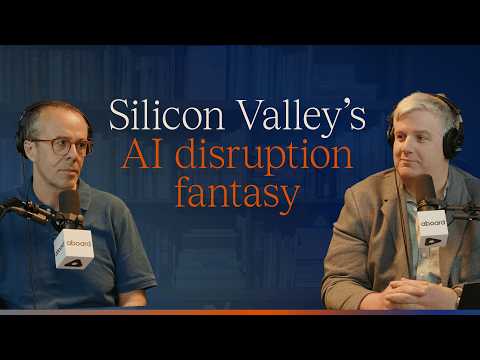
Paul Ford and Rich Ziade dig into Rich’s Aboard newsletter piece, “Maybe the Valley Could Listen a Little,” to puncture one of Silicon Valley’s favorite fantasies: the solo “AI unicorn” who can prompt a billion-dollar product into existence over a weekend. The core distinction the episode keeps returning to is the gap between code and product. Tools like Claude Code have made generating code dramatically faster, but the actual craft of product — design, user empathy, interdisciplinary collaboration, and getting something adopted — remains exactly as hard as it ever was. As Paul puts it, code got a lot easier but product did not, and there is no shortage of human unicorns because almost nobody holds all those disparate skills at once.
The hosts then turn to why the Valley’s disruption narrative keeps crashing into reality. Software, they argue, is a cultural and social artifact that only means something once it’s adopted, which is why patient, humble companies like Apple move so deliberately. Big institutions — hospitals, governments, universities — have “wicked immune systems” of calcified culture and regulation that reject rapid change the way a body rejects a transplant. Rich walks through Palantir’s “forward deployed engineers,” reframing them as diplomats who spend months earning trust inside grizzly legacy organizations before any tool gets parachuted in.
Their prescription is deflationary but hopeful: start with a goal rather than a technology, and “pick a hill” instead of trying to conquer the whole continent. They point to a 30%-better sepsis prediction as the kind of discrete, high-value win that actually saves lives, and to a designer who spent seven years fixing a hospital’s wayfinding signage as the honest picture of what change at scale really looks like. AI is genuinely magical in specific use cases, they conclude — it just hasn’t found its niche yet, and the institutions are bending far less than the Valley would like.
Highlights
”The days of a one-person unicorn are here”
Clip command
yt-dlp --download-sections "*6:48-7:35" "https://www.youtube.com/watch?v=zYR2U9cTKHo" --force-keyframes-at-cuts --merge-output-format mp4 -o "zYR2U9cTKHo-6m48s.mp4"“The days of a one-person unicorn are here. We’re going to have Rich is going to go off and make a piece of software worth a billion dollars and that’s like the most exciting thing in the world to us. But why isn’t there more software coming out where people are like, oh thank God, we solved it?” — Paul Ford, 6:48
”There are very, very few, if any, human unicorns”
Clip command
yt-dlp --download-sections "*7:25-8:10" "https://www.youtube.com/watch?v=zYR2U9cTKHo" --force-keyframes-at-cuts --merge-output-format mp4 -o "zYR2U9cTKHo-7m25s.mp4"“Because there are very, very few, if any, if any human unicorns. There are people that are good at design and dabble in tech. There are people that are great at tech and great engineers that dabble with design.” — Rich Ziade, 7:25
”Product is kind of a grind”
Clip command
yt-dlp --download-sections "*7:51-8:42" "https://www.youtube.com/watch?v=zYR2U9cTKHo" --force-keyframes-at-cuts --merge-output-format mp4 -o "zYR2U9cTKHo-7m51s.mp4"“Product is actually miserable work. It’s not about a joyful expression where you finally get all your ideas together, turn them into software, you put them on the App Store and everybody’s happy with you. Product is kind of a grind.” — Paul Ford, 7:51
”Code got a lot easier but product did not”
Clip command
yt-dlp --download-sections "*16:38-17:20" "https://www.youtube.com/watch?v=zYR2U9cTKHo" --force-keyframes-at-cuts --merge-output-format mp4 -o "zYR2U9cTKHo-16m38s.mp4"“I mean the way I’m expressing this is that code got a lot easier but product did not.” — Paul Ford, 16:38
”Whole systems have wicked immune systems”
Clip command
yt-dlp --download-sections "*28:28-29:11" "https://www.youtube.com/watch?v=zYR2U9cTKHo" --force-keyframes-at-cuts --merge-output-format mp4 -o "zYR2U9cTKHo-28m28s.mp4"“The term I love to use is that whole systems have wicked immune systems. People, their systems, their data, there’s all sorts of white blood cells come at you.” — Rich Ziade, 28:28
”Don’t try to conquer the whole continent, pick a hill”
Clip command
yt-dlp --download-sections "*26:11-26:55" "https://www.youtube.com/watch?v=zYR2U9cTKHo" --force-keyframes-at-cuts --merge-output-format mp4 -o "zYR2U9cTKHo-26m11s.mp4"“So start with a goal, not with a solution, not with technology. The second is don’t try to conquer the whole continent, pick a hill.” — Paul Ford, 26:11
Key Points
- Coding vs. product (6:48) - App Store submissions are up and millions of new apps are dropping, but almost none are transformative things people want to pay for
- The one-person unicorn myth (7:25) - Truly great software needs design, engineering, and product skills together; almost no single human has all of them
- Product is a grind (7:51) - Paul cites Stardew Valley as the rare solo hit, built over years in isolation, as the exception that proves the rule
- Best work comes from interdisciplinary teams (9:00) - In 30-plus years of leading software teams, the best output always came from assembling a real all-star team
- The vibe-coding rabbit hole (10:17) - Paul describes obsessively finishing a visualization nobody needs, then abstracting it into a library, then parallelizing with agents
- Nobody wants more software (10:49) - More code means more software, but no one outside the tech world is asking for more software
- Extinction rhetoric (11:20) - The Valley’s message — do it now or be eaten alive — is a way to manufacture anxiety and paranoia
- A monoculture (11:44) - The Bay Area is small and homogeneous, so its beliefs feel existential and its moral imperatives conveniently align with what makes the most money
- Software as cultural artifact (13:06) - Software is immensely complex and only matters once adopted; adoption requires engagement and humility
- Apple’s deliberate caution (14:31) - Jobs cared about design from the Apple II era, influenced by Braun, because he wanted the machine to land in culture — to live in your den next to the stereo
- Business software dwarfs consumer (15:58) - Productivity and enterprise software is financially far bigger, and enormous numbers of careers live downstream of it
- Code got easier, product didn’t (16:38) - The whole thesis in one line; AI companies must now chase business software because there isn’t enough consumer money
- Palantir’s forward deployed engineer (17:30) - A fancy, expensive name for a consultant who helps transform legacy organizations like a police department
- Diplomacy before tools (18:03) - Before parachuting in tools, these engineers act as diplomats inside grizzly, archaic organizations, promising something useful in about four months
- Consumer-to-business currency (19:23) - The Valley captured billions of consumers but must now translate that into business revenue, which is very hard because they’ve run out of human revenue
- A glut of software (21:32) - Roughly 85% of these projects are failing; vibe coding produces more software than anyone needs and hasn’t found its ecological niche
- Individual productivity ≠ org outcome (22:32) - Like the IDE, AI boosts individual engineers, but translating that into company-level outcomes breaks down as coordination overhead climbs past ~12 people
- Start with a goal, pick a hill (26:11) - Begin with an outcome (help doctors assess contraindications), not a technology, and attack one discrete problem rather than the whole system
- Wicked immune systems (28:28) - Whole institutions reject change like a body rejecting a liver transplant; you have to design for immunosuppression
- Seven years for signage (29:57) - A brilliant designer took seven years just to fix a hospital’s wayfinding — what change actually looks like at scale
Mentions
Companies
- Aboard (0:30) - Paul frames it as a strategic AI consultant firm that consults by delivering real software, not demos
- Palantir (17:01) - Described as very AI-adjacent; source of the “forward deployed engineer” concept the hosts riff on at length
- Apple (13:06) - Held up as the model of patience and caution about shipping features to ensure engagement
- Braun (15:24) - Cited as a major design influence on early Apple; Rich owns a Braun electric shaver
- Frog Design (14:58) - The big design shop Rich thinks Jobs went to for the Mac
- Sears (15:04) - Where Jobs wanted to sell the machine — the point being he wanted to land it in mainstream culture
- Deloitte (18:40) - Invoked as the incumbent consultancy a forward deployed engineer subtly disparages
- Epic (31:02) - The healthcare records giant Paul wishes AI would blow up and replace in two hours
- Mount Sinai (31:28) - Named as one hospital system whose Epic records got tangled with Rich’s
Products & Technologies
- Claude Code (3:29) - The “whoa, what’s happening?” moment about six months ago that felt like an industry inflection point
- Codex (5:09) - Mentioned alongside Claude Code as an AI code-generation tool
- App Store (6:33) - Submissions are up because people can build over a weekend and use AI to navigate the submission process
- Figma Make (8:42) - Cited as empowering designers to build libraries and plugins without asking engineers
- WordPress (8:42) - Designers building WordPress plugins as an example of venturing outside a core craft
- Dolby surround sound (5:07) - The joke that CTOs love their home stereo because it’s the one technology they can control
- Apple II / Mac (14:31) - Early Apple hardware used to illustrate Jobs’s unusual insistence on design in the 1970s
- Apple Music (32:27) - Where the hosts vow to finally listen to Andrew Ridgeley’s solo album
People
- Steve Jobs (14:31) - The design-obsessed founder who wanted computers to live in your den, not just at nerd meetups
- Josh Tyrangiel (26:40) - Author of a book Rich cites for a hospital sepsis-detection case study
- John Oates (2:30) - Rich’s self-deprecating label for himself as the lesser-known half of Aboard’s media arm
- Andrew Ridgeley (31:58) - The other member of Wham!, whose solo album (“Son of Arthur”) never sold at a Bay Ridge record store
- George Michael (32:51) - Named as the famous member of Wham! in the closing bit
Surprising Quotes
“Because that means more software, whereas absolutely no one outside of our world is actually sitting there saying, I need more software. No one has ever said those words.” — Paul Ford, 10:49
“Well, ‘cause they literally, they’ve run out of human revenue.” — Paul Ford, 19:30
“I’m even hearing about agents that we— agents are going to be so useful, they’re going to talk to other agents, so they’ll meet in an alleyway and they’ll do the deal there. And this way there’s no humans at all.” — Rich Ziade, 19:46
“You know my rule: every person added to a group subtracts exactly one IQ point.” — Paul Ford, 23:26
“I used to always talk about a new software product as like a liver transplant and sometimes the body—the body wants to reject it. You’d have to actually figure out ways to do immunosuppression.” — Paul Ford, 28:38
Transcript
Paul Ford: 0:00 Hi, I’m Paul Ford.
Rich Ziade: 0:01 And I’m Rich Ziade.
Paul Ford: 0:02 And this is the Aboard podcast, the podcast about how AI is changing the world of software and it really is. Rich, I want to talk to you about something you wrote.
Rich Ziade: 0:11 Okay. Did you enjoy it?
Paul Ford: 0:13 We’ll get to that in a minute.
Rich Ziade: 0:15 Okay.
Paul Ford: 0:16 But in the meantime we’ll play the theme song and then we’ll tell people what Aboard is.
Rich Ziade: 0:19 Play it.
Paul Ford: 0:27 Let me take a pass.
Rich Ziade: 0:29 Okay.
Paul Ford: 0:30 Aboard is a strategic AI consultant firm. But you know what’s different?
Rich Ziade: 0:36 Hmm.
Paul Ford: 0:37 We consult by delivering. We deliver software. So we do the thinking, we help you make sense of all the change that’s coming into the world. But then we actually make something to prove out how things are supposed to be working.
Rich Ziade: 0:53 Demos?
Paul Ford: 0:54 No. No, no, no, no, no, no. I don’t know.
Rich Ziade: 0:57 The real deal.
Paul Ford: 0:58 No, no. The real deal. Real software. That’s the difference. And we have a whole process that we’re building, we’re building tools that help us do it. And we can help you out too. So I think get in touch if you want to learn more, hello@aboard.com. That concludes our marketing section. But it’s what we work on every day. It is actually, it’s serious to us because we want to build better tools and we want to people, we want to help people succeed with this new stuff.
Rich Ziade: 1:21 Yeah.
Paul Ford: 1:22 And that brings me to why I’ve called you in here today.
Rich Ziade: 1:25 Uh oh.
Paul Ford: 1:26 So every now and then you write the newsletter.
Rich Ziade: 1:29 Yep.
Paul Ford: 1:30 And it’s very funny because I used to be a journalist and so people kind of take me for granted. But then they’re like, ‘That Rich, he’s very thoughtful.’
Rich Ziade: 1:40 Okay, nobody who likes my writing talks like that.
Paul Ford: 1:45 He made an amazing, it was a, he put marshmallows and jam in a, and he made amazing, what is that salad that they have in the Midwest? Do you know what I’m talking about? They put marshmallows in things and it’s got like Jell-O. Ambrosia! You ever had Ambrosia in a Jell-O mold?
Rich Ziade: 2:08 No.
Paul Ford: 2:09 They don’t have that in Lebanon.
Rich Ziade: 2:10 No.
Paul Ford: 2:11 Bay Ridge has never seen Ambrosia. Anyway, go Google Ambrosia.
Rich Ziade: 2:14 Yes, I write for the newsletter sometimes.
Paul Ford: 2:18 You do. And actually what happens is people always like it because you come in and advise CEOs. You can’t help it. It’s what you do. You get up in the morning and you start advising CEOs like in the shower.
Rich Ziade: 2:30 Yeah. Yes, I do. And I gotta tell you, for those that don’t know, Paul Ford is a very well-known, accomplished writer. And I am the John Oates of the media arm of Aboard.
Paul Ford: 2:43 We actually have a very good intake, good give and take on this. We don’t even have to play out that aspect of our relationship. Actually, I want to talk about your piece. I always like when you write, and actually everybody does. Like everybody’s always like, ‘Oh, yeah.’
Rich Ziade: 2:51 I do appreciate that, and it does mean a lot to let a little light into the shadow.
Paul Ford: 2:56 There we are. That’s, that’s what we’re talking about. No, no, but you tend to come in with…
Rich Ziade: 3:00 Actionable business advice.
Paul Ford: 3:02 I’m very direct.
Rich Ziade: 3:03 Now here is what’s going on with… thank you, thank you Paul. So here’s the piece, it’s from June 24th. I mean to be clear, I always edit them. Anyway, ‘Maybe the valley could listen a little’ is the title of the piece and the subtitle is ‘Tech’s disconnect with the real world is a feature, not a bug, but when it comes to AI that’s a big problem.’ Now I want to call us out on something here because I think it’s important. We’ve been talking about AI and software for more than a year now.
Paul Ford: 3:28 More than a year.
Rich Ziade: 3:29 Way more than a year, as we’ve watched our industry evolve. And I would say about really around six months ago, Claude Code came out and I was like ‘Whoa, what’s happening?’ and that is not a surprise to anybody at this point, everybody has now had a ‘Whoa, what’s happening?’
Paul Ford: 3:44 That’s right.
Rich Ziade: 3:45 And at that point, it really looked like we were at an inflection point with the industry. And you always advised caution. I’m going to give you a lot of credit there. Like even when I was like ‘Dude, I’ve never seen anything like this before,’ you’re like ‘Hold on a minute, humans are involved.’
Paul Ford: 3:58 Yeah, that’s right.
Rich Ziade: 4:00 And I think explain a little bit. I came in and I showed you something that you’d never seen before. I showed you that you could create relatively good code out of prompt even as a like even without really kind of programming it and you could create something that used to take months to create. And you didn’t disagree at all that I had done that.
Paul Ford: 4:17 No, no, no.
Rich Ziade: 4:18 Okay, so why did you not—I saw that as hugely disruptive. Why didn’t you see it that way?
Paul Ford: 4:25 Two reasons, really. One reason is the ability to hack on your own without talking to anyone is wonderful.
Rich Ziade: 4:34 It is wonderful. I’m a hacker too. I like to hack, I’ve done that alone and it’s the sense of control for someone like me who is often asking other people for things is… and I love technology, it’s fun, really fun.
Paul Ford: 4:52 We have a joke about this. Whenever we run into like a CTO, they always end up talking about their home stereo system for like two hours.
Rich Ziade: 5:00 Yeah.
Paul Ford: 5:01 Cause it’s the one thing they can control. They love technology.
Rich Ziade: 5:03 Yes.
Paul Ford: 5:04 But they can’t control technologists.
Rich Ziade: 5:05 They can’t control technologists.
Paul Ford: 5:07 So they get into like Dolby surround sound.
Rich Ziade: 5:09 Yeah, and so I think, I think the invention that’s landed—and we don’t have to go all the way back to AI, which has been cooking for years—but let’s focus on making apps or generating code with AI. Pretty much led by Claude Code and there’s Codex and there’s some other tools. It’s very much a personal productivity tool. It is a tool that is landed in engineers’ laps and they can do stuff. And if you’re a creative thinker like yourself, you’re unusual. You’re technical, but you’re also kind of a meandering thinker, and so you apply a lot of like things that are coming in from outside of tech to what you build. And that’s unusual. I’m unusual because I’m a deeply, deeply sympathetic product person. thinker who wants products to be used, but I’m also technical to an extent.
Paul Ford: 6:06 I personally always love when when business leaders are trying to be nice to me and they say I’m non-orthogonal. That’s always a really good one.
Rich Ziade: 6:13 Is that really?
Paul Ford: 6:13 Oh yeah, that happens.
Rich Ziade: 6:14 So…
Paul Ford: 6:14 Anyway, let me finish your thought, but then I want to bring it back. Okay.
Rich Ziade: 6:16 So that’s great and it’s a great tool, right? And and then the shift is okay, I can make software now, right? And and so…
Paul Ford: 6:29 Look, there’s millions of new apps that are dropping in app stores and whatnot. This is real, right? So App Store submissions are up.
Rich Ziade: 6:38 They’re up. Because you can do it on your at your on your own over a weekend and then you don’t know how to apply for the Apple App Store and you could use AI to do that process. So it’s all it’s all been taken care of.
Paul Ford: 6:48 But I mean I think a really good we’ve now asked a lot of people including ourselves like, hey, have you seen an AI-coded app that’s transformative? One that you want to pay for? One that you’re like, okay. Because what happens is the valley gets in there and they’re like, look at this. Anyone can make software. The days of a one-person unicorn are here. We’re going to have Rich is going to go off and make a piece of software worth a billion dollars and that’s like the most exciting thing in the world to us. But why isn’t there more software coming out where people are like, oh thank God, we solved it?
Rich Ziade: 7:25 I’ll tell you why. Because there are very, very few, if any, if any human unicorns. There are people that are good at design and dabble in tech. There are people that are great at tech and great engineers that dabble with design. There are people who make very specific nudgy tools for something they’re a fan of that no one else cares about. There are product managers who don’t care for any of the details. And and…
Paul Ford: 7:51 I’m going to nail it down for you though because there’s lots of people who can do lots of different things. Product is actually miserable work. It’s not about a joyful expression where you finally get all your ideas together, turn them into software, you put them on the App Store and everybody’s happy with you. Product is kind of a grind. And so the person who can take something joyful and exciting that they love about the tech industry and motivate themselves to learn and do all the different crafts at once, who can also turn it into something long-term, large and viable. Literally there’re very few examples. I’ll give you one example, it’s a weird one. Stardew Valley. Okay. A mostly one-person developed game that took years and years. Isolated. And worked on it and worked on it and just an absolutely vast hit. But boy, after that, like it’s a real short list of people who can live inside that world long enough to make something transformative.
Rich Ziade: 8:42 And I think people are getting dopamine hits by venturing out into other skills and other crafts that aren’t their core. So designers are feeling really empowered because there’s Figma Make and they can build libraries and they can build WordPress plugins and that feels good because they used to have to ask for it and that feels… was good, right? And then there are engineers who are like, wow, I could skip the design phase, right? And I can go do that, right? And so I think the really the real tell here though is that the best I’ve been making, I’ve led teams that build software for 30 plus years, the best work we ever put out was when we assembled a real interdisciplinary all-star team. Always. Always. And that’s normal. I’m not saying anything shocking.
Paul Ford: 9:25 Let me describe the pro- because I’m doing way more vibe coding than you are.
Rich Ziade: 9:28 You are doing some.
Paul Ford: 9:29 Let me describe what happens. So I’ve built a couple relatively good small products around things like CRM, some enhanced text search kind of stuff and so on. And I’ve turned to you, you will acknowledge to the audience, I’ve turned to you and I’ve said, we need to get to a place where I can bring you in as product manager to get this out of my hands.
Rich Ziade: 9:48 Yes.
Paul Ford: 9:49 But I keep screwing around in the meantime because I’m trying to learn.
Rich Ziade: 9:52 Yeah, you’re also enjoying yourself.
Paul Ford: 9:54 A little bit. So here’s what happens. I realize something is missing.
Rich Ziade: 9:58 Yeah.
Paul Ford: 9:59 And then I’m like, I tell I prompt it into being.
Rich Ziade: 10:03 Yes.
Paul Ford: 10:04 A new feature, a new add-on, a new way to look a visualization.
Rich Ziade: 10:07 Yeah.
Paul Ford: 10:08 And then that visualization, which is not the main core of what I’m trying to do, it’s a distraction.
Rich Ziade: 10:13 Yeah.
Paul Ford: 10:14 Is just not quite where I need it to be.
Rich Ziade: 10:16 Yeah.
Paul Ford: 10:17 I don’t need it at all. No one needs it. I’m the only person using the software right now. But now you know what has become the only and most important thing in my entire life?
Rich Ziade: 10:25 What?
Paul Ford: 10:26 Finishing that visualization.
Rich Ziade: 10:27 Yeah.
Paul Ford: 10:28 And then while I’m working on that visualization, I realize that I could abstract it into a library so I could reuse it.
Rich Ziade: 10:33 Yeah.
Paul Ford: 10:33 And then you know what becomes the most important thing in my life?
Rich Ziade: 10:35 Abstracting it into a library.
Paul Ford: 10:36 Building a library. And then, and then each component of the library and so, and because this enables it, the minute somebody starts saying, you know, you can parallelize this with lots of agents, you know you’re in a pickle.
Rich Ziade: 10:48 Yeah.
Paul Ford: 10:49 Because that means more software, whereas absolutely no one outside of our world is actually sitting there saying, I need more software.
Rich Ziade: 10:57 No.
Paul Ford: 10:58 No one has ever said those words.
Rich Ziade: 10:59 No. Let’s go back to the valley.
Paul Ford: 11:01 Go back. Okay, yeah, yeah.
Rich Ziade: 11:02 Well, that’s what your piece is about.
Paul Ford: 11:03 The piece is about that. And what the piece is about is a very particular kind of gaslighting, which is, listen, do not hold your core skills as precious. These these are immense powers we are handing you now.
Rich Ziade: 11:18 Disruption time!
Paul Ford: 11:20 Do not do not ask for permission anymore. Mm. Do not wait for that sign off from another group anymore. Just go do it. And if you don’t do it, if you don’t do it, you will be eaten alive. There is always an insinuation of extinction from the valley, always. It’s always been there. It’s a way to create anxiety and paranoia.
Rich Ziade: 11:44 I can actually be more sympathetic than that. It’s not a very big city. It’s it’s actually nowhere near as big as New York, San Francisco and the Bay. There’s it’s like we’re like 30 million, they’re like 8 all in. Okay? It’s a monoculture.
Paul Ford: 11:57 Yeah.
Rich Ziade: 11:58 Yeah. And when you are in a monoculture, when you really believe in something and everyone around you believes it and it’s the only… thing they’re talking about, it starts to feel very existential as to how it’s going to work out or not. It has to work. And so they did this with Blockbuster—
Paul Ford: 12:09 No, but that’s not what I mean by existential. What I mean by existential is you could order a car on your phone, a cab. They immediately saw car service with a, you know, dispatcher and taxis as quaint. Like it was the end. They were telling everyone, you can do this now the easy way or you can do it the hard way, but we’re coming for you. And the truth is sometimes they do come for you and it wins a lot of the time.
Rich Ziade: 12:35 No, that’s what I’m saying though, they don’t understand that there’s a whole another culture way like for them, it’s not just that Uber like should get in there and it’s actually like a moral imperative. It becomes this thing where it’s like unless that happens and it happens to be that the moral imperatives align with what will make them the most money. And so that culture just metabolizes and moves so quickly because there’s nothing that competes with it.
Paul Ford: 12:58 That’s right, that’s right. And here’s the fail here. The fail here is—
Rich Ziade: 13:05 Here meaning AI.
Paul Ford: 13:06 Yes. And the truth is there is immense value in certain particular use cases. But when you’re telling someone that the idea of building successful, usable software is now in everyone’s hands is completely underestimating the fact that two things. One, software is immensely complex. It just is. If you go into businesses, there’s a million edge cases and whatnot. But there’s another thing that they overlook, which is that a software artifact is actually a cultural artifact and a social artifact that has to be adopted. If it’s not adopted, it doesn’t mean anything. And unless you’re making something for yourself. You want to manage your own stamp collection, God bless. But the truth is these things require engagement and they require a certain amount of humility to make successful. Almost always. Almost always. The amount of patience that Apple uses before they decide that a feature could go in speaks to not them being lazy. It speaks to them being incredibly cautious about making sure there’s engagement. And they even fail sometimes.
Rich Ziade: 14:22 No, but this is why I find I think in some ways Apple can be very baffling to the rest of the valley because they seem slow.
Paul Ford: 14:30 Absolutely.
Rich Ziade: 14:31 But that is I think you’re right and I think kind of from the very beginning they’ve been very aware. This was Steve Jobs Apple II. We are going to design this thing. And that— I don’t know if people can understand how bizarre of an idea that was in the 70s.
Paul Ford: 14:47 It was the nerdiest computer meetups, people trading circuit boards. Design is— that’s like saying we’re going to start to learn how to dance.
Rich Ziade: 14:58 I think he went to Frog Design for that or for the Mac— I can’t remember but he went to like a big design shop.
Paul Ford: 15:02 He cared about it.
Rich Ziade: 15:03 He cared about it, and he emphasized it.
Paul Ford: 15:04 And he spent lots of money to make it look sleek and nice to the touch because he wanted to land it in culture. Which, to be clear, this is not him being like I want to create the next great play or poem, it’s him saying I want to sell this at Sears. Like I want to sell this…
Rich Ziade: 15:19 I want this in your den.
Paul Ford: 15:20 And I want it to look like it lives next to a stereo.
Rich Ziade: 15:23 Yes.
Paul Ford: 15:24 Right? And that, you know, his big… one of his big design influences was Braun, B-R-A-U-N, because you know and if you look at early Apple design and Braun design you can really see a lot of…
Rich Ziade: 15:34 Yeah. I own an electric shaver by Braun.
Paul Ford: 15:37 Do you electric shave?
Rich Ziade: 15:38 No, I do a little polish at the end.
Paul Ford: 15:40 Okay, that’s good. I never knew that about you and it’s been over 200 years.
Rich Ziade: 15:44 Yeah.
Paul Ford: 15:45 Okay.
Rich Ziade: 15:45 What? That I do that?
Paul Ford: 15:46 Well I know you shave. Not for this podcast, but yeah. Yeah.
Rich Ziade: 15:51 Okay. So…
Paul Ford: 15:52 Alright, so let me…
Rich Ziade: 15:53 So, but let me keep going.
Paul Ford: 15:55 Oh. Don’t stop.
Rich Ziade: 15:56 It actually gets worse.
Paul Ford: 15:58 Okay.
Rich Ziade: 15:58 The world of productivity software or business software or software you use at work is far, far bigger than consumer software. Like financially it’s bigger, people have to use it because you have to process payroll or you have to…
Paul Ford: 16:13 It’s not just that, but enormous numbers of careers are downstream of it. What is it like two-thirds? If you’re going to spend money on enterprise software, like you spend a dollar you’re going to spend two dollars kind of supporting and maintaining and installing it…
Rich Ziade: 16:28 The people around it and the tools, yeah. So I gave issue one, which is building great software alone is really hard because there’s a lot of different skills and disciplines that are required and very few people have them all.
Paul Ford: 16:38 I mean the way I’m expressing this is that code got a lot easier but product did not.
Rich Ziade: 16:43 Bingo. Right? But there’s another problem. Especially because the AI companies because they’re under enormous pressure to meet the value expectations that they’ve put out in the world, they know they have to go to the next frontier, which is business software. They have to. Because there’s just not enough money.
Paul Ford: 17:01 Yeah. So here’s what’s happened. The company Palantir, which is very AI adjacent…
Rich Ziade: 17:08 Adorable company.
Paul Ford: 17:09 Oh boy. Let’s not talk about… Let’s just leave it real high level.
Rich Ziade: 17:11 Cuties. I’m pro-Palantir. Can I say that?
Paul Ford: 17:13 No.
Rich Ziade: 17:14 Why not?
Paul Ford: 17:15 We’ll talk about this some other time.
Rich Ziade: 17:16 They’re in hospitals, dude.
Paul Ford: 17:17 I don’t want to talk about Palantir anymore right now. We’ve probably talked about it in the past.
Rich Ziade: 17:19 Go Palantir.
Paul Ford: 17:20 Stop it.
Rich Ziade: 17:22 They make an amazing electric razor by the…
Paul Ford: 17:24 I am done with this conversation. No, so they’re very AI adjacent and…
Rich Ziade: 17:29 Yes.
Paul Ford: 17:30 They have this concept of a thing called the forward deployed engineer.
Rich Ziade: 17:34 Yes.
Paul Ford: 17:34 Okay, which is a little military, but the idea is it’s like kind of someone… it’s essentially a consultant.
Rich Ziade: 17:40 Yes. A forward deployed engineer is a very fancy, expensive way to say something already pretty fancy and expensive: consultant. And what does that consultant do? They come in and they help you use these tools, especially Palantir’s tools, with a lot of AI to transform, you know, the Cleveland Police Department.
Paul Ford: 17:57 I’ll do you one better. Do you know what a forward deployed engineer… I don’t. They’re a diplomat.
Rich Ziade: 18:03 Okay. Before they can parachute in Palantir’s tools, they are going into some of the most grizzly organizations that have some of the most mundane, archaic, overly convoluted processes to get anything done.
Paul Ford: 18:19 Often governments, so it’s intensely regulated, etcetera, etcetera.
Rich Ziade: 18:22 Hospitals, government, massive non-profits. And you know what they say? You know what they’re trained to say, these forward deployed engineers as you like to call them? I love you.
Paul Ford: 18:34 That’s really interesting, the way you guys work that way. I think that’s really cool. Oh, so I was wrong. Okay. Okay.
Rich Ziade: 18:40 It’s really, really, really interesting, and we’re going to make sure we capture that. Well, no, you know there’s another thing they say is— ‘Hey, that was, it’s too bad about what happened with Deloitte over the last 18 years.’ But we’re going to get you something useful in about four months.
Paul Ford: 18:54 Yes. Yes.
Rich Ziade: 18:56 And that feels— that is not to you and me a miracle. That’s a miracle to some, to the largest civic org or the hospital system or whatever. They’re like, ‘What?’
Paul Ford: 19:06 That’s right.
Rich Ziade: 19:07 And so I’m going to get to the problem, okay, that the valley is about to slam up against, which is they have captured mass scale on a consumer level, right? And they need to somehow now—
Paul Ford: 19:21 Billions. Billions of people.
Rich Ziade: 19:23 Billions of people, and they need to somehow now translate that currency into business currency. And that’s really hard to do.
Paul Ford: 19:30 Well, ‘cause they literally, they’ve run out of human revenue.
Rich Ziade: 19:34 I want to use two words that we were saying a lot of, and we felt like we had to, that I’m hearing less of. Agentic enterprise.
Paul Ford: 19:44 No, there’s still a lot of agent talk out there.
Rich Ziade: 19:46 There’s a lot of agent talk out there. I’m even hearing about agents that we— agents are going to be so useful, they’re going to talk to other agents, so they’ll meet in an alleyway and they’ll do the deal there. And this way there’s no humans at all.
Paul Ford: 19:57 I’m, I’m hearing about that too. So there is, but why are you saying that that’s less important?
Rich Ziade: 20:02 I think, I think the valley is taking swings. Do you know why? They have to because org charts and organizations and the way shit gets done today is impenetrable. And you, you think you’re going to change it, and you get to chip away bit by bit because it is humbling to go into large organizations that have deeply calcified cultures and drop things in. It doesn’t work. It simply does not work. We have to show that patience. We may spend months before we can articulate a solution, right? And that’s a reality that is outside of the unicorn and building great product and whatnot. Organizations simply do not metabolize that kind of change that rapidly.
Paul Ford: 20:49 Okay. Let me take it one step further. Okay? So I came in six, eight months ago and I was like, ‘Holy hell, it is changing up, man. You got check this out.’ And you were like, ‘Hold on a minute, slow down.’ Um that’s not how organizations move. And so you and I have essentially not a debate but we’ve kind of been exploring this the whole time. Now I would say right now we are seeing the counter reaction. And the counter reaction is expressed as none of this stuff is shipping, product is just as hard. You said you were going to get me a lot more code faster and that’s great but I actually don’t need that much code thanks.
Rich Ziade: 21:21 No it’s that all that new code’s scary, where do I put it? Is it really what I want? Where’d you- like who did you talk to? Okay.
Paul Ford: 21:32 Because organizations, people, parts of culture can only have one idea in their head at once, I think we’re seeing it go the other direction. I think the AI, the AI companies owned the narrative about six months ago. They’re like boom, we did it, we blew up business. Yeah. We blew up government, welcome to our future, please get your wallets out. Okay so that was A. Now I think we’re seeing like guys, you didn’t do it, I still have to ship all this software, it’s a pain in the ass. Yeah. I don’t believe that that is the end state either. I think what is actually happening under the hood, 85% of these projects are failing but they’re- these- these things are good at parsing natural language, turning it into code, code is really powerful in all sorts of different places. I think that ecologically vibe coding and rapid software development hasn’t fully found its niche. People applied it towards legacy kinds of software development and it turns out we just don’t need as much software as it can produce. There’s a glut.
Rich Ziade: 22:32 Not only that, if you look at- think about an organization as this organism that has intent. Right? Um, the IDE didn’t revolutionize organizations. They really revolutionized productivity for engineers but it took years for them to say well you know what we should probably standardize tooling but you can frankly use whatever you want if you’re talented and you’re additive, great, right? And the truth is translating individual productivity into some net outcome at the company level doesn’t make any sense. It just doesn’t make any sense. Imagine you had 100 great people in a room. Do you know the overhead- when you cross I think 12- when you cross 12 people, the tax of orchestrating work amongst any number from 13 onward-
Paul Ford: 23:26 You know my rule: every person added to a group subtracts exactly one IQ point.
Rich Ziade: 23:31 So by the time you get to a group like a political- it’s a mentally challenged group- by you- when- if- let’s- I’ll give you an example: the Democrats, probably about 120 million of them, that’s a negative 120 million IQ points.
Paul Ford: 23:45 Fair enough. Same with the Republicans. Like it just- the more people you put in, the more it’s likely that you have to- eventually you’re just saying- you’re just leaning into a microphone and saying America. Instead of bitching all this time let’s be… Well, this is the thing, if anyone would ever listen, it’s what I’m saying. Okay, we went from boy it’s all blowing up to like eh, hold on, it’s a lot of nonsense. I don’t think that that’s real.
Rich Ziade: 24:12 Here’s what I think is happening. Engineers have taken control. We’ve talked a lot about that. Engineers have very specific senses of where code belongs and where it should go.
Paul Ford: 24:20 Fine.
Rich Ziade: 24:21 They’re also not necessarily as much as say like a product manager or designer interested in the holistic function of the business. They’re interested in code.
Paul Ford: 24:28 They find it lame.
Rich Ziade: 24:30 They do. They don’t… and I’m okay with that. It’s life. It’s just organizations and disciplines have their own cultures.
Paul Ford: 24:35 Sure.
Rich Ziade: 24:37 We are nowhere near the change that is going to happen when access to good tools and software can flow all the way through an organization, especially those with fewer resources. Big NGOs, small NGOs, universities. We are nowhere near what could get unlocked if people were building code for their peers and thinking about in terms of product for their peers. I don’t think that happens with our current processes because our current processes are designed for an industrial kind of code production. I think that happens when code almost becomes more like a medium. It’s very hard to explain that, but like it’s almost like I might assign someone to go off and write a little report on the future of our English department here at this college, right? In the same way they could go off and make some code to help us manage the curriculum.
Paul Ford: 25:31 Yeah, I mean, look, I have two pieces of advice here and this is kind of overlapping with what you’re saying.
Rich Ziade: 25:36 But to finish my point, it’s so much cheaper to do that specific thing than it used to be.
Paul Ford: 25:40 Absolutely. Now and you can be a little more ambitious. I think there are two things you need to do. The first is don’t start with the software, start with a goal, right? Number one, meaning, I want to make it easier for doctors to assess contraindications of medicine, right? So let’s make it better for them. That’s a goal. That’s not software, that’s an actual goal. Or I want to make it easier to read, you know, EKG.
Rich Ziade: 25:59 Now in the past, just stating that meant that you were kind of bananas because software is so hard that you had to focus on getting the software culture in place first before you could get any of its output.
Paul Ford: 26:11 Correct. That’s… so start with a goal, not with a solution, not with technology. The second is don’t try to conquer the whole continent, pick a hill. Meaning, don’t say I want to make sure that doctors are able to get better results across all the tests in these systems and I want them to get it on their phones by end of this year.
Rich Ziade: 26:30 The only way you’re going to get this is if Claude Code gives you a deadline.
Paul Ford: 26:35 Yeah. Right. Like you need to be like, alright, can you build me a prototype and you got an hour?
Rich Ziade: 26:40 The Josh Tyrangiel book talks about actually a hospital case where they’re, you know, sepsis is hard to detect. They’re like, if you can get me 30% better predictions, lives will be saved.
Paul Ford: 27:08 Mhm.
Rich Ziade: 27:09 Just give me that.
Paul Ford: 27:10 Mhm.
Rich Ziade: 27:11 That’s, you know, you walk into a hospital as a patient and you’re like, god, they should blow this whole thing up. The whole thing is a—you know, there’s Epic and there’s all the systems they use. I went in for a procedure years ago and the woman opened up terminal to get me in the system. Like, it was just a green screen. This was like 2018.
Paul Ford: 27:29 Literally that is what AI companies have reduced us to again in terms of vibe check.
Rich Ziade: 27:34 We’re in terminals again.
Paul Ford: 27:35 That’s right.
Rich Ziade: 27:36 So you could always look at the whole thing and you’re like, what is that? And the truth is what you’re really looking at is years of culture and legacy that are just there.
Paul Ford: 27:47 Okay, so I can—let me land this for us because I think what’s going—here’s what I think is happening. I think that—
Rich Ziade: 27:54 Stick the landing.
Paul Ford: 27:55 Well, okay, so what happened is everybody came out and said, we’re going to reinvent and insert enormous structural thing here: hospitals, science, genetics, cure diseases, business, whatever, okay? Now what you’re seeing is people from those institutions going, we tried it, some of it’s okay. We’re going to have to keep chipping away.
Rich Ziade: 28:17 Yeah.
Paul Ford: 28:18 Now and what you’re describing and what I’m seeing is a world in which those individual components that comprise the whole system—attacking the whole system rarely works, good luck.
Rich Ziade: 28:28 The term I love to use is that whole systems have wicked immune systems.
Paul Ford: 28:31 They really do. They—
Rich Ziade: 28:34 People, their systems, their data, there’s all sorts of white blood cells come at you.
Paul Ford: 28:38 I used to always talk about a new software product as like a liver transplant and sometimes the body—the body wants to reject it. You’d have to actually figure out ways to do immunosuppression. So now, okay, now let me just—let me close with a little story because I think—
Rich Ziade: 28:50 This better be good.
Paul Ford: 28:52 Is it about—
Rich Ziade: 28:54 Is it about Palantir?
Paul Ford: 28:56 No. I went and saw somebody talk once, it was a design—it was a design leader, I can’t remember her name but she’s very, very brilliant and she had worked at an enormous hospital system—
Rich Ziade: 29:02 Clearly not that brilliant, you don’t remember her name.
Paul Ford: 29:06 She’d worked at an enormous hospital system just improving the signage.
Rich Ziade: 29:10 Okay.
Paul Ford: 29:11 Very interesting. So classic design problem: like people—we glued this hospital together over 150 years on multiple campuses and nobody knows how to get from oncology to the, you know, to whatever. Elevators, everything.
Rich Ziade: 29:29 To my lobby signage, elevators.
Paul Ford: 29:30 Everything. But all the way—or you know, you go to the third floor but you need—there’s like seven different departments.
Rich Ziade: 29:41 It is a hot mess. I’ve been in—yeah, I’ve seen—
Paul Ford: 29:43 We have two cardiology departments, that kind of thing. So she created like—it was a little card you got, it was wayfinding tool, so on and so forth.
Rich Ziade: 29:56 Visual vocabulary, all of it.
Paul Ford: 29:57 All of it. And at the very end of the talk, somebody said, ‘Hey,’ and this brilliant person, classic New York like super genius like agency type, and somebody’s like—raised their hand and was like, ‘Hey, how long did that take?’ And she said, ‘Seven years.’ Okay? I think of that—I think of that every day. Every day I think of that seven years because— Because that is actually what change—Incredible. That’s what change looks like at that scale.
Rich Ziade: 30:03 Incredible. Yeah, it does.
Paul Ford: 30:07 And so what’s happened is we have this narrative of absolute, drastic, total structural change. And it’s landing at a very disruptive moment where our president is a white-hot ball of lightning who is in there, there’s just this sense of—
Rich Ziade: 30:19 Sizzling ball of lightning.
Paul Ford: 30:20 Whatever though, but there’s this sense of institutions and things that felt extremely stable—our climate—it all felt so stable, and now it is starting to really show cracks. And so AI comes into that and is like, ‘Guess what else? Guess what else we got?’ And so I think that narrative landed and everybody was like, ‘Oh man, another thing, another thing.’ But the reality is that the institutions are not bending as much as Silicon Valley would like them to.
Rich Ziade: 30:48 And yes, and just to put a final note on what you’re saying here, I agree with everything you’re saying. There is magic in these things. There are ways to use them to make things better.
Paul Ford: 31:02 I was ready. I wanted it to blow up Epic and replace it in two hours. I’m still waiting for that to happen. If they can pull it off, I will step back.
Rich Ziade: 31:10 Yeah, Epic, if you are listening or watching, somehow my mom’s case in a different hospital system is coming into my emails. And that’s awkward.
Paul Ford: 31:26 It is.
Rich Ziade: 31:28 Also Epic. I think it’s Mount Sinai and some other…
Paul Ford: 31:31 Wow. So you and your mom are one in Epic account?
Rich Ziade: 31:35 I don’t know, but I’m having my uterus checked out next week.
Paul Ford: 31:40 Hopefully at the doctor’s. Onward we go, my friend.
Rich Ziade: 31:43 Okay. Yes, illuminating conversation, Paul.
Paul Ford: 31:47 Inspired by your blog post.
Rich Ziade: 31:50 So illuminating. Very nice. John Oates.
Paul Ford: 31:53 John Oates. Who’s the other guy from Wham! who made an album?
Rich Ziade: 31:58 Oh, Andrew Ridgeley.
Paul Ford: 32:00 Yeah, yeah.
Rich Ziade: 32:01 He made an album called, I think, Son of Arthur, I think is what it’s called. And growing up in Bay Ridge, there was a record store on Third Avenue and a friend of mine, every time we walked by it, we’d be like, ‘Let’s go see if it’s still in there.’ We always went in to see if the album—if anyone ever bought it.
Paul Ford: 32:20 Did it ever sell?
Rich Ziade: 32:21 It never sold for years. Record store went out of business. It was like on the way home from dinner we would go into this record store and just make sure it’s there.
Paul Ford: 32:25 Did you ever listen to it?
Rich Ziade: 32:27 No. We’re going to go right now. We’re going to go to Apple Music and we are going to listen—
Paul Ford: 32:32 What if it’s amazing?
Rich Ziade: 32:34 It might not be amazing.
Paul Ford: 32:36 It might be the greatest album.
Rich Ziade: 32:38 I don’t think so.
Paul Ford: 32:40 Okay, Son of Arthur, Andrew Ridgeley. Shout out to—who is the other member of Wham? Many people may not know the other member of Wham.
Rich Ziade: 32:51 George Michael.
Paul Ford: 32:52 There you go. Yeah, I mean, legendary musician, handsome man. That’s how we think about software and AI and how to make it successful for you. Reach out at hello@abord.com.
Rich Ziade: 33:00 Anytime. Okay.
Paul Ford: 33:01 Have a great week. Bye.
Rich Ziade: 33:04 And thanks for bringing up your mom’s uterus.
Paul Ford: 33:20 Word.