Craig Mod: Vibe Coding Towards the Apocalypse | The Aboard Podcast 2026-05-26
Craig Mod: Vibe Coding Towards the Apocalypse
Summary
Writer, photographer, publisher, and self-described “software supertaster” Craig Mod joins Paul and Rich from Japan to walk through the personal finance and tax software he built for himself using Claude Code — and then to spiral, almost inevitably, into the apocalypse. Mod’s situation is unusually messy: a US citizen living in Japan, running a membership program for his writing community, selling books printed and shipped from Japan (which makes him an exporter), juggling bank accounts in two countries and a tax treaty that means he files in both. Quicken couldn’t handle any of it. So in January, he sat down with Claude Code and rebuilt his own version — a custom dashboard that ingests CSVs (via a headless Chrome Python script that lets him hold the login while it scrapes), categorizes transactions like Things app, runs a live tax estimate for the year, and tracks which forms he still owes. It took six days. The previous year, ChatGPT had already found enough errors in his accountant’s work to make him fire the accountant.
The middle of the conversation is the most useful coaching for everyone outside the 5%. Mod is firm: do not put this on GitHub, because the bespoke fit only works because he programmed enough to feel where the seams are. He invokes Bret Victor’s old line: “If I have given you everything you need, if you can’t build from what I’ve shown you, giving you the code will not save you.” Paul pushes back gently — neither of them is a great coder, but they understand the contours and genealogy of software, and that’s the actual gating skill. They riff on Tailwind (Rich hates it; nobody looks at code anymore anyway), on a hypothetical “virtual blackboard” the size of a wall that would show the architecture of what’s being built, and on Mod’s friend in LA who’s burning a thousand dollars a day in tokens with three Claudes running at once.
Then Mod swings the conversation: “This feels like it’s 1938 and everyone has a nuclear reactor in their backyard.” He’s pessimistic about white-collar identity surviving when accountants, lawyers, and programmers — the verifiable, code-like jobs — all get eaten first. He floats the possibility that humans might not contain the genetic code to survive what they’re building; that we might just be here to “hand off all our knowledge and then we disappear.” Paul counters with the Aboard house view: ten years from now this office is still going, AGI isn’t here, and “more and more human behavior spills out and it turns out we’re not going to change.” Rich argues the actual ceiling is human creativity, not the models — two years in, he hasn’t seen anything exceptional come out of the prompt box. They close on a thread of cautious optimism: humans are messy and resilient; we’re at version 0.001; in a hundred years we’ll be at 0.0002 and it might be better. Mod plugs craigmod.com and The Good Place, his members-only Twitter with Ted Danson as the logo.
Highlights
”Claude Code feels like 1938 and everyone has a nuclear reactor in their backyard”
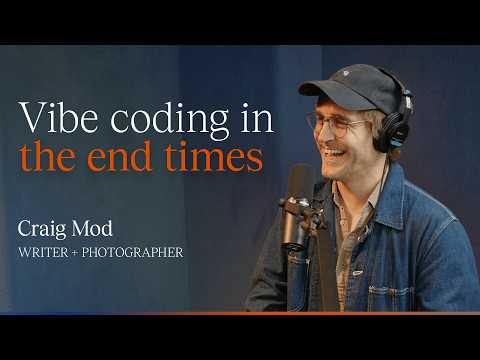
“This feels like it’s 1938 and everyone has a nuclear reactor in their backyard. That’s what having Claude Code feels like. At least for me.” — Craig Mod, 33:19
Clip command
yt-dlp --download-sections "*33:19-34:20" "https://www.youtube.com/watch?v=qK3VAgDFGAo" --force-keyframes-at-cuts --merge-output-format mp4 -o "1938-nuclear-reactor-backyard.mp4"Six days to rebuild Quicken
“This is the thing about Claude is you can just imagine the thing you want in the weirdest possible shape you want it, and it can make it. And so I just thought, okay, well, how long would it really take to rebuild Quicken to do this for me? And so I just started working on it, and it turns out it was like six days, basically.” — Craig Mod, 15:52
Clip command
yt-dlp --download-sections "*15:52-16:30" "https://www.youtube.com/watch?v=qK3VAgDFGAo" --force-keyframes-at-cuts --merge-output-format mp4 -o "six-days-to-rebuild-quicken.mp4"ChatGPT found errors big enough to fire his accountant
“Last year I dumped anything my accountant sent me. I just put it straight into… then it was ChatGPT I was using. And it found serious… it found errors to the point where I fired my accountant last year.” — Craig Mod, 16:45
Clip command
yt-dlp --download-sections "*16:45-17:30" "https://www.youtube.com/watch?v=qK3VAgDFGAo" --force-keyframes-at-cuts --merge-output-format mp4 -o "chatgpt-fired-accountant.mp4"”Software that embodies my anxiety”
“Can I take that to the next level and build a piece of software that literally embodies the anxiety that I feel, so I have total insight into everything that’s happening in a way that Quicken doesn’t, bank accounts don’t, bank statements don’t.” — Craig Mod, 17:31
Clip command
yt-dlp --download-sections "*17:31-18:10" "https://www.youtube.com/watch?v=qK3VAgDFGAo" --force-keyframes-at-cuts --merge-output-format mp4 -o "software-embodies-anxiety.mp4"Bret Victor: “Code will not save you”
“His response—and I—this is paraphrasing, I don’t know if he said this—he’s like, ‘If I have given you everything you need, if you can’t build from what I’ve shown you, giving you the code will not save you.’” — Craig Mod, 29:11
Clip command
yt-dlp --download-sections "*29:11-30:00" "https://www.youtube.com/watch?v=qK3VAgDFGAo" --force-keyframes-at-cuts --merge-output-format mp4 -o "code-will-not-save-you.mp4"Candle light to stadium lighting, instantly
“It would be like you had, you know, you had candle light and then someone gives you a nuclear reactor and a bunch of stadium lighting and now you’ve… that’s your reality. You can stadium light 24 hours a day, do anything.” — Craig Mod, 43:08
Clip command
yt-dlp --download-sections "*43:08-44:00" "https://www.youtube.com/watch?v=qK3VAgDFGAo" --force-keyframes-at-cuts --merge-output-format mp4 -o "candle-to-stadium-lighting.mp4"”Everybody’s having sex with that prompt box”
“It’s been two years now, everybody’s just having sex with that prompt box and I have not seen anything like ‘Wow, that is an amazing output.’ I’ve seen all kinds of things that look like a lot of the same thing. But I’ve not seen anything exceptional.” — Rich Ziade, 39:10
Clip command
yt-dlp --download-sections "*39:10-40:10" "https://www.youtube.com/watch?v=qK3VAgDFGAo" --force-keyframes-at-cuts --merge-output-format mp4 -o "sex-with-prompt-box.mp4"Key Points
- Craig Mod’s background (2:57) - Double degree in computer science and fine art; long history with books and digital art (Fabrica, Jonathan Harris, Casey Reas, John Maeda).
- Membership program funds the walks (9:00) - Subscriber payments give him “permission” to do 40-day walks across Japan; nightly pop-up newsletters of 2-3K words become the corpus for a book.
- Random House book made him “official” (10:23) - 2025 Random House release was the legitimizing milestone.
- Japan + US tax complexity (11:02) - US citizens abroad still file; he’s also a Japanese exporter shipping books and reclaiming sales tax.
- January panic attacks (11:30) - The scarcity mindset never disappears, even after paying everything.
- Accountant as priest/therapist (12:32) - Paul’s framing: you go in expecting damnation, you walk out owing $480.
- “Software supertaster” (14:00) - Mod’s self-description: he can feel if the “back sides have been painted.”
- What’s good lately: Things, Brother laser printer (14:19) - His shortlist of software/hardware that just works.
- Quicken’s lack of imagination (15:00) - The tool can’t imagine someone like him existing — Japanese bank accounts, dollar/yen conversion, exporter forms.
- Six days to rebuild (15:59) - Most of the time wasn’t coding; it was coaxing PDF OCR to read tax returns reliably.
- ChatGPT as therapist for money anxiety (17:08) - “What’s the worst possible scenario?” — the model talks him down.
- Headless Chrome + manual login (19:55) - He logs in personally, then a Python script clicks through downloading CSVs. No credentials handed over.
- Things-style instant search (21:00) - The interface borrows Things’ instant-as-you-type search, with batch operations for categorization.
- “Nobody looks at code anymore” (23:53) - Mod’s LA friend who spends $1000/day on tokens told him to stop checking code; within two days he stopped.
- Tailwind digression (23:23) - Rich hates how “redundant and thick” it feels; Paul threatens to end the podcast.
- The virtual blackboard wish (24:53) - Mod wants an architecture map the size of a wall showing where code is being added.
- Don’t put it on GitHub (28:17) - “It’s like a shoe for like a weird foot and your foot definitely doesn’t isn’t shaped like this foot.”
- The architecture skill, not coding (30:18) - Paul: none of us are good coders; the skill is understanding the contours and genealogy of how pieces snap together.
- Coders writing daily eulogies (31:47) - Rich watches 30-50-year veterans posting “it’s done” every day.
- “I don’t think we contain the genetic code to survive” (32:34) - Rich’s bleakest framing.
- White-collar identity is the at-risk layer (35:22) - Accountants, lawyers, programmers — the verifiable, code-like jobs go first.
- The optimistic flip side (37:14) - Mod: on the other side, we’re forced to contend with deeper questions of why we’re here, without the scaffold.
- Paul’s house view: 10 years from now, similar (38:16) - AGI doesn’t arrive; human behavior keeps spilling out.
- Rich on creativity ceiling (39:10) - Two years in, he hasn’t seen anything exceptional from LLMs; the bottleneck is human creativity, not models.
- Open-book law school as the analogy (39:26) - The best tax lawyers aren’t memorizers; they’re creative deductive thinkers — the unreplaced layer.
- “Try and find God” (42:18) - Mod’s flippant answer to where to start.
- In a hundred years, version 0.0002 (45:51) - Mod’s closing optimism: humans are messy and resilient; eventually we get to a more interesting version.
- The Good Place (46:39) - His members-only Twitter alternative with Ted Danson as the logo and “early internet vibes. The Well.”
Mentions
Companies
- Aboard (0:42) - Paul and Rich’s AI transformation shop.
- Random House (10:23) - Published Mod’s most recent book in 2025.
- Wired (9:18) - Where he wrote about membership programs vs digital books.
- Substack (9:30) - The early-days reference point Mod opted out of (he runs his own membership platform).
- McSweeney’s (3:34) - The kind of indie-publishing world he was following around in the 2000s.
- Fabrica (3:20) - Northern Italy digital art collective where Mod had a fellowship.
- Amazon (3:52) - “Amazon destroys that for you so you don’t have to think about it anymore.”
- Y Combinator (implicit via Bret Victor / “very honest about it” coder culture, 29:34) - Background context for the Valley archetype Mod is critiquing.
- Anthropic (35:18) - “Anthropic is seriously hesitant about the next gen version of this stuff.”
Products & Technologies
- Claude Code (6:11) - The trigger; came out last year and reset what Mod thought was possible.
- ChatGPT (6:11) - The first wave; he used it to audit his accountant and as a therapist.
- Quicken (14:59) - The accounting software he replaced.
- Things (app) (14:19) - His paragon of good software; he borrowed its instant-search UI.
- Brother laser printer (14:32) - His everywhere-I-move hardware default.
- Tailwind (23:19) - The CSS framework Rich hates as “redundant and thick.”
- Headless Chrome / Python script (18:42) - How he scrapes bank CSVs while logging in himself.
- Google Sheets / Google Apps Script (15:09) - His old workflow for normalizing Japanese bank data into Quicken.
- CodeX (35:13) - Mentioned alongside Claude Code as the frontier of coding agents.
- Kindle / iPad (3:48) - The digital-book wave he rode and then watched Amazon kill.
- The Good Place (46:39) - Mod’s members-only Twitter-alternative.
People
- Craig Mod (1:56) - Guest; writer, photographer, publisher in Japan.
- Bret Victor (28:33) - Technologist whose famous demos and “code will not save you” line frame Mod’s argument.
- Jonathan Harris (3:34) - Digital artist; influence from the Fabrica era.
- Casey Reas (3:34) - Co-creator of Processing; digital art influence.
- John Maeda (3:34) - Designer and former MIT Media Lab figure.
- Neil Peart (34:28) - The Rush drummer; “Neil Peart’s dead” is the punchline of Paul’s “Rush needs to make them an album” joke.
- Ted Danson (46:39) - The logo of The Good Place; “Don’t tell Ted.”
- Paul Ford (0:00) - Co-host, Aboard co-founder.
- Rich Ziade (0:01) - Co-host, Aboard co-founder.
Surprising Quotes
“I’m a software super taster. I have I just I’m so sensitive to the way software works and I can kind of feel if the guts of it have been, you know, if the back sides have been painted.” — Craig Mod, 13:56
“It found errors to the point where I fired my accountant last year.” — Craig Mod, 16:45
“I just don’t think we contain the genetic code to survive what we’re doing.” — Rich Ziade, 32:34
“It’s been two years now, everybody’s just having sex with that prompt box and I have not seen anything like ‘Wow, that is an amazing output.’” — Rich Ziade, 39:10
“It would be like you had candle light and then someone gives you a nuclear reactor and a bunch of stadium lighting and now you’ve… that’s your reality. You can stadium light 24 hours a day, do anything.” — Craig Mod, 43:08
“Maybe what our thing is to like just barely get the machines over and we hand off all our knowledge and then we disappear. That could also be the next hundred year outcome.” — Craig Mod, 37:54
Transcript
Paul Ford: 0:00 Hi, I’m Paul Ford.
Rich Ziade: 0:01 And I’m Rich Ziade.
Paul Ford: 0:02 And this is the Abord Podcast, a podcast about how AI is changing the world of software and the world in general. And Rich, we have a very special guest in the studio today.
Rich Ziade: 0:10 Yeah?
Paul Ford: 0:11 We’re going to talk to him, and he has something both incredibly exciting and incredibly boring to share, and I think that’s going to be cool.
Rich Ziade: 0:17 I love both of those things.
Paul Ford: 0:19 Me too.
Rich Ziade: 0:19 Let’s do it.
Paul Ford: 0:20 Let’s play that theme song.
Rich Ziade: 0:40 Abord.
Paul Ford: 0:41 Richard.
Rich Ziade: 0:42 Yes?
Paul Ford: 0:42 What is our company? What do we do all day?
Rich Ziade: 0:44 We are Abord. We are based in New York City, but we’ve got a team around the world that comes in, understands your organization or business, puts really talented people to sort of triangulate on what you need, and then we use all these incredible tools to solve problems for you. We’re an AI transformation shop. We don’t just come in and say, ‘Come on, let’s unleash the agents!’ No, we don’t do that. We think about what you need and then we’re in all sorts of interesting places nowadays, Paul.
Paul Ford: 1:14 So first of all, things are going good. If you want to talk, it’s a wonderful time to reach out. It’s busy, the shop is busy. But you and I have shipped software for over two trillion years.
Rich Ziade: 1:21 Yes.
Paul Ford: 1:22 And I’m going to tell you something about AI, you ready?
Rich Ziade: 1:25 Go.
Paul Ford: 1:25 It’s software.
Rich Ziade: 1:27 Yes, it is.
Paul Ford: 1:27 It is just software. It’s weird, it’s different, it’s got a different shape, but if you can understand how to stand up a piece of software, you can actually get some of this exciting super-revolution into your org. So give us a yell. Abord is very reachable on the internet, on the web, via hello@abord.com. We’ll give you that email again when we get out of this podcast.
Rich Ziade: 1:46 Let’s do it. What do we got here, Paul?
Paul Ford: 1:48 Well, we have an old friend of the, of sort of everything, many companies ago I think we started talking to this person. This is Craig Mod. Craig!
Craig Mod: 1:57 Hello.
Rich Ziade: 1:58 Welcome, Craig.
Paul Ford: 1:58 It’s good to have you here.
Craig Mod: 1:59 Thanks for having me.
Paul Ford: 2:00 I want you to explain who you are in a second, but I’m going to tell you the specific reason that we reached out, even though kind of we would have you in a minute, but it’s nice to see you, was that you wrote a blog post about you - you reside in Japan and you have very complicated accounting issues as an American residing in Japan working for lots of different companies, mostly around the design and consultancy field. I remember when AI started, somebody took me aside and they were like, ‘Could we build our own QuickBooks?’ and I was like, ‘Never do that, that’s the worst idea I’ve ever heard.’
Craig Mod: 2:35 Okay.
Paul Ford: 2:35 And then you went ahead and did it, and it worked really well for you.
Craig Mod: 2:38 Yep.
Paul Ford: 2:39 And so I think we just want to talk about what it’s like to build your own accounting software, the most exciting subject that has ever been on earth.
Rich Ziade: 2:46 I mean, way to set up a cliffhanger, Paul. Before you do that, Craig, tell us about yourself, but also tell us about your - the skills you feel like you’re pretty comfortable with.
Craig Mod: 2:57 Yeah. I mean, I’ve been programming… So I have this long technical background. And then I’ve been involved with books and publishing forever as well.
Rich Ziade: 3:06 Okay.
Craig Mod: 3:07 And so those are like the two things. Books, making books, making physical books and then doing technical stuff. I actually got a degree in computer science and fine arts. It was like this weird double thing.
Rich Ziade: 3:17 Okay.
Craig Mod: 3:17 Anyway, it was good. So I’m very comfortable in the land of technology.
Rich Ziade: 3:19 Sure.
Craig Mod: 3:20 But you know, I had a fellowship at Fabrica. This is like this sort of digital art collective thing in Northern Italy.
Paul Ford: 3:30 I’m absolutely nodding as if I have any idea what that is.
Craig Mod: 3:34 Jonathan Harris, remember number 27? Anyway, like all the, Casey Reas, you know, John Maeda obviously, all the old digital art people. I was kind of like in that in that zone and trying to like emulate them and following them around the world. So I was following them, following McSweeney’s and then Kindle hits, iPad hits, you know, and then you start thinking about digital books.
Rich Ziade: 3:52 Yep.
Craig Mod: 3:52 And then Amazon destroys that for you so you don’t have to think about it anymore. It’s great. Just make physical books. Make nice physical books.
Rich Ziade: 4:00 Back to physical. To help the listeners slash viewers a little bit, we think of you really as someone who is anchored in design as well as doing all these other things. So just push back on that. Is that true?
Craig Mod: 4:14 Yeah, yeah, it is. But I mean, I think my getting involved with it was sort of a hack to make money coming from a place that had really no money. And I saw, ‘Oh well, if I can get good at this…’
Rich Ziade: 4:25 Meaning your childhood.
Craig Mod: 4:27 Meaning my childhood. Yeah, yeah. And it was sort of like, ‘Oh, if I can get good at the design side of…’ and it was a little more accessible. Like there was no degrees for web design, you know, whereas there was computer science.
Rich Ziade: 4:40 There are now.
Craig Mod: 4:43 There are now. Yeah, but no, you’re right. And so I ended up getting involved in the design world mainly because I was like, ‘Oh, this is a good hack to…’ and I was, you know, drawn to it and was pretty good at it and good enough and you know, it just kind of made sense. But it was always kind of a way to get to these other things. So to produce the art or to work on the books, because I was too afraid to write them. So I’ll design the books, or I’ll publish the books, and then finally working up to doing the writing and all that.
Paul Ford: 5:11 That is… I had the same thing where it’s archetypal broke kid thinking: ‘They’ll never let me in. I’ll never be allowed to participate. But I’ll just go stand kind of close to it just to see what’s up.’
Craig Mod: 5:22 100%.
Paul Ford: 5:23 And then one day they’re like, ‘Do you want to write a book?’ And you’re like, ‘Uh, okay.’ Right?
Craig Mod: 5:28 Exactly.
Paul Ford: 5:28 All right, so that’s for everyone, that’s the advice you need for a good career. Just be a little broken.
Rich Ziade: 5:32 Just be incredibly down on yourself for an incredibly… No, a little hunger is a good thing. I think it’s a… and a little curiosity is a good thing. And I came out of law school and I was like, ‘Wait a minute, what’s this internet thing?’ It was exactly the same.
Paul Ford: 5:44 Wait, you went to law school?
Rich Ziade: 5:46 I did.
Paul Ford: 5:47 Oh.
Rich Ziade: 5:48 This podcast is sponsored by Harvard Law School. No, went to law school and then came out and the internet just landed. I was like, ‘I’m gonna go see what’s going on over here.’
Craig Mod: 5:51 Yeah.
Rich Ziade: 5:52 And never came back. All right, let’s fast forward.
Paul Ford: 5:54 Obviously the world changed a few years ago.
Craig Mod: 5:56 Yeah.
Paul Ford: 5:57 You’re clearly frustrated with your accounting software, which you could write a book about that.
Craig Mod: 6:00 Don’t write a book about that.
Rich Ziade: 6:00 It’s like you were just handing in one W-2.
Paul Ford: 6:02 Uh, let’s frame it though. It’s not… Give us a sense. You wrote it. For people who prefer text, you can go to craigmod.com and read the whole story of his accounting software. But we’re going to try to just jazz hands it a little bit.
Craig Mod: 6:11 Well a little bit of context too, like ChatGPT comes out and I’m like, okay this is interesting but you can’t really build stuff with it and then you’re like, oh but it can write little scripts for you? That’s kind of cool. And then Claude Code comes out last year and I’m running a membership program connected with like my book stuff and writing stuff, and I’ve always hated Twitter. Like since the day it launched I was sort of anti-Twitter even before Musk and blah blah blah. And I just, I always had this philosophy, this is how Twitter should work, and Claude Code came out and I was like, let me see if I can use Claude Code as like a test project to make my own Twitter for my community. And that was the first thing I built.
Paul Ford: 6:44 What people don’t understand is that when you get annoyed and frustrated with things, you often stand up platforms. I’ve seen you do this like now more than once. And so yeah, this is a normal thing for you to just be like, I’m going to create a community platform and just see what happens.
Craig Mod: 6:58 Yeah, well usually because I’ve been pushed into the corner because yeah, I feel like I don’t have any other options, I gotta do it myself, you know.
Paul Ford: 7:05 You’re very gentle in tone, but you must get extremely annoyed. Because the average human isn’t like, I should get a database going and set up my own publishing platform. I’ll show them. So you used Claude a year ago, right? March last year it comes out, this is the first project, boom, clone Twitter. And you publish books, you have tours that you give, of walking tours around the world.
Craig Mod: 7:31 No, I don’t give tours. Absolutely not.
Rich Ziade: 7:33 Insulted the man!
Paul Ford: 7:36 I did not say that you take money for the tours. But you definitely do—
Craig Mod: 7:42 I walk with people. It’s called walking with friends, Paul. Just buds.
Paul Ford: 7:46 You enable walking communities through interesting geographies, but it doesn’t— it’s not a tour. No one should ever look in— so they can only look straight down the road.
Rich Ziade: 7:52 Insulted our guest.
Paul Ford: 7:53 Oh my god. Okay, so non-tours, but you bring together communities to go around and do things and you are a very serious photographer as you go on these very long walks.
Craig Mod: 8:04 Yeah, yeah. I mean, most of the walks are solo. Like 30, 40 days alone, which is not indicative of anything broken or weird or— it’s fine, let’s not worry about it. It’s called a guy going for a walk, Paul, just to clarify for you.
Paul Ford: 8:26 But what the whole point I was getting to before this debacle is that you are a publisher and you have a community around these sort of community-building non-tours. And that you have to manage this because obviously no money ever changes hands, but somehow money comes in and you have to manage the money and there’s all sorts of stuff going on.
Rich Ziade: 8:51 Paul, just give me a sec here, okay? I’m going to take over. Craig, how do you make money?
Craig Mod: 8:59 So I started a membership— The program. Okay. I’ve been writing a newsletter, newsletters for 15, 16 years. And eight years ago, seven and a half years ago, I hit a wall.
Paul Ford: 9:12 Mhm.
Craig Mod: 9:13 And I couldn’t get anything published where I wanted to get it published. And I thought I’m worthless and I have no value and I should go live in a dumpster.
Paul Ford: 9:18 Yep.
Craig Mod: 9:19 But membership programs were becoming a thing. And I wrote a piece for Wired about how digital books didn’t become what we thought they were going to be, but membership stuff and online publishing is kind of more interesting than—
Paul Ford: 9:30 The Substack world.
Craig Mod: 9:33 Yeah, right at the beginning of that Substack stuff. And so I launched a membership program.
Rich Ziade: 9:39 Your own?
Craig Mod: 9:40 My own thing, because I’m pathologically incapable of being on anyone else’s platform. And launched that and then from that I defined a weird permission to start going on these huge walks that I wanted to do in Japan. So I walked from Tokyo to Kyoto three times, I’ve walked thousands of kilometers all over other parts of Japan.
Paul Ford: 9:53 Okay.
Craig Mod: 9:54 And I walk and I do these pop-up newsletters and the membership program essentially funds it. It gives me permission to go do these because people are paying me.
Paul Ford: 10:00 You’ve got enough of an audience paying you, okay.
Craig Mod: 10:03 And then from those, I write books, basically. As I’m walking, I’ll do a walk for eight hours a day, I’ll talk to people along the road, photograph, I take notes and then every night I write two, three thousand words. And then that goes out every night and so it’s this weird aesthetic practice that I’ll do for 40 days in a row. And then you end up with this corpus of 60, 70 thousand words at the end of it and all these photos and then you can kind of distill that into a book. And that’s kind of been the process over the last six, seven years.
Paul Ford: 10:21 Very neat.
Craig Mod: 10:23 And I had a book come out with Random House last year, which was like kind of making me official in a way, you know? People suddenly go, as long as you can say like Random House, then people go, “Oh you are a writer now. This is real.”
Paul Ford: 10:41 Yeah, yeah.
Rich Ziade: 10:42 Yeah, yeah. So okay, so you got sources of income from the membership—members paying you to be members of your org?
Craig Mod: 10:51 So membership, book sales, that’s it basically. Yeah, that’s the big income.
Paul Ford: 10:53 Right, and so a little messy.
Craig Mod: 10:56 A little messy, well because I live in Japan, I have, you know, whatever, you have bank accounts in both countries, America and Japan.
Paul Ford: 11:02 Ah I see, so you’ve got that.
Craig Mod: 11:03 I’m a US citizen and you always have to file in America even though there’s a tax treaty, so all the taxes I pay, I pay primarily 100% in Japan, then those get carried over as part of the tax treaty so you can offset your American taxes with that, but you still have to go through the filing process. It’s just, it stinks. America’s the only country in the world except for one other little country that makes you do this if you’re not a resident but you have citizenship, you have to file the whole thing.
Paul Ford: 11:25 But you love this. This is fun. You love taxes. I know about this one.
Craig Mod: 11:28 No… There is the amount of anxiety I have in January every year…
Paul Ford: 11:34 Oh yeah.
Craig Mod: 11:35 Panic attacks…
Rich Ziade: 11:36 Really?
Craig Mod: 11:37 I’m, they’re going to take everything away from me. I’m going to lose everything. You don’t understand the scarcity mindset that like just does not disappear.
Rich Ziade: 11:42 We understand. When I got married, my wife found a box of receipts and papers. She said and it was like—it was like a year to unpack everything that had not been dealt with, you know.
Paul Ford: 11:54 Oh yeah.
Craig Mod: 11:56 No, the scarcity mindset just… it’s just crippling and— To be clear, I’d paid everything and added up… like I had like $3,000 you know in fees…
Rich Ziade: 12:02 Oh, I know exactly. We all have this common backstory.
Craig Mod: 12:06 Yeah, so I, you know, every year I’m kind of going ‘Oh my god, it’s this thing again.’ And like I, look, I hire accountants, you know, I try to keep digital records of everything, and yet every year I’m like I don’t know what’s going to happen, I can’t see anything.
Rich Ziade: 12:19 Gonna lose everything. Gonna lose everything.
Craig Mod: 12:22 Yeah, yeah. They’re going to come down on me with a hammer because I missed one form or something, you know.
Paul Ford: 12:27 But nothing beats anxiety generation more than like tax prep. It really is terrible. No, because and then you… I don’t know if you’ve had this experience. You go to the accountant and it’s like going to a mixture of priest and therapist. They’re like ‘No, this is not…’ You go in being like ‘I may be the worst person who’s ever lived on earth.’ And they’re like ‘Eh, eh, eh.’ And then they’re done. And you’re like ‘That’s it? Like there’s no part where you tell me that I should be ashamed?’ And they’re like ‘No, you owe the government like $480.’ You’re like ‘Oh, okay, so I’ve been there, I know what this is.’
Rich Ziade: 13:01 But don’t the accountants give you that relief? Like Marshes gives you that relief?
Craig Mod: 13:05 Well they do, but the organizing of all that… so it’s like you know I’m bringing mine to Japan and like you know I’ve got I’m getting some payments over here, some payments over there. You know, and it’s like I’ve got the pile of stuff that comes out of the year of work or whatever is non-trivial. And I’m producing books in Japan so I’m printing and shipping from Japan so I’m an exporter. So it means I have to file other forms as an exporter and I can get sales tax back—anyway.
Paul Ford: 13:33 So we got three things going. I have tremendous terrible anxiety about taxation, which you know about. Money in general. Just money in general.
Rich Ziade: 13:42 Hmm.
Paul Ford: 13:43 We have ‘I have a genuinely complicated international tax situation.’ And we have ‘When faced with frustrating situations, I build large web platforms.’ And it sounds like Claude Code showed up and now all three of those things could get worked out at once.
Craig Mod: 13:54 Yeah, basically. Yeah. So in January I was like ‘Well, what…’ And I have very strong opinions about software. I kind of feel like I’m like to a certain degree I’m like a software super taster. I have I just I’m so sensitive to the way software works and I can kind of feel if the guts of it have been, you know, if the back sides have been painted.
Rich Ziade: 14:17 What’s good lately? Before we get to your stuff, what’s good lately?
Craig Mod: 14:19 I mean Things is still good. Things, okay. I just every time I use Things it like never lets me down, it just feels like a really wonderful…
Rich Ziade: 14:28 It’s been around for forever. Been around for almost 20 years I think.
Paul Ford: 14:32 We talked to you once 10 years ago and you said uh it wasn’t software but you’re like ‘the Brother laser printer, now that is a piece of software’ or a piece of hardware. It just works. Yeah.
Craig Mod: 14:42 That also, yeah. It just works. Yeah, yep. I still got I everywhere I move if I’m if I’m living somewhere for more than three weeks I just buy a Brother and put it in there.
Rich Ziade: 14:54 Interesting. So so right now we you so about 0.000001% of software and hardware is good so far.
Craig Mod: 14:57 Yeah, that’s it doesn’t go too much further than that does it. So I’ve been using Quicken, and Quicken’s terrible. And then so my…
Paul Ford: 15:00 Terrible. Why is Quicken terrible?
Craig Mod: 15:01 Well, it doesn’t… for someone like me, it’s… it quick lacks imagination. All this software lacks imagination. They can’t imagine a person like me existing in the world.
Rich Ziade: 15:07 Yeah, always.
Craig Mod: 15:09 And it… and so it has no affordances for someone like me. And so I have to jump through all these wild hoops, you know, and I’ve got Google Sheets, and then I run Google scripts to, you know, normalize the data from my Japanese bank accounts that are in Google Sheets, and then I export that, and then I can bring that into Quicken and make a fake, you know, bank account in Quicken for that. But then everything’s in dollars, and so the currency conversion’s going back… anyway.
Rich Ziade: 15:32 So this is like you have to read forum posts to learn how to use your accounting software.
Paul Ford: 15:37 It’s just not designed for it. It’s just… it is. It’s a narrow… a very narrow thing.
Craig Mod: 15:41 So this is the thing about Claude is you can just imagine the thing you want in the weirdest possible shape you want it, and it can make it.
Rich Ziade: 15:52 Yeah.
Craig Mod: 15:53 And so I just thought, okay, well, how… how long would it really take to rebuild Quicken to do this for me? And so I just started working on it, and it turns out it was like six days, basically.
Rich Ziade: 15:59 Six days.
Craig Mod: 16:00 Yeah.
Paul Ford: 16:01 So… so what did you have to tell Claude?
Craig Mod: 16:06 So I dumped… what did I… how did we start? I have all of my taxes in this folder for the last like 20 years or whatever, and I kind of just launched Claude in the… in the root directory.
Paul Ford: 16:21 Hey buddy, you like my confidential tax information? Come to.
Craig Mod: 16:25 I don’t care. Last year… last year I dumped anything my accountant sent me. I just put it straight into… then it was ChatGPT I was using. And it found serious… it found errors to the point where I fired my accountant last year.
Rich Ziade: 16:45 That’s cool.
Paul Ford: 16:46 Wow.
Craig Mod: 16:46 And it was like, here’s a… here’s a non-trivial amount of money that you should not be losing on this, you know, you should not be paying.
Rich Ziade: 16:47 Was it accurate or did it hallucinate someone else’s taxes?
Craig Mod: 16:52 No, no, it was… it was… it was accurate. It was…
Rich Ziade: 16:53 Okay.
Craig Mod: 16:54 I mean, this is the thing is like you just… you’re not… it’s not telling you something that you just give to the IRS. You’re filtering it through people. And like my accountant was like, oh yeah, you’re right. And I was like, great, you’re fired.
Paul Ford: 17:03 I mean that’s so okay.
Rich Ziade: 17:05 Yikes.
Paul Ford: 17:07 This is terrible.
Craig Mod: 17:08 No, but the… last year, the real insight was all of this anxiety I have about money, I can use ChatGPT as a therapist for it. So I would say to ChatGPT, like, I’m really worried that I’m making a mistake here and I’m going to lose all my money. What’s like the worst possible scenario that can… it’d be like, what are you talking about? You’re not going to lose all… it’s not like the… the chances of you getting audited or this or that or whatever. It’s like… anyway, it reduced the anxiety.
Rich Ziade: 17:29 Yeah, sure.
Craig Mod: 17:31 And then this year it was like, well, can I take that to the next level and build a piece of software that literally embodies the anxiety that I feel, so I have total insight into everything that’s happening in a way that Quicken doesn’t, bank accounts don’t, bank statements don’t. So this holistic view, where is my money, what’s happening, what should I anticipate at the end of the year, that sort of thing.
Rich Ziade: 17:49 Now I asked if you could demo it, and you pointed out that you can’t because it contains all of your personal financial information.
Paul Ford: 17:55 But how does… so I go into Quicken and it’s kind of like spreadsheet-y with a bunch of buttons… it’s really confusing. Link up your bank account.
Rich Ziade: 18:03 Yeah, and his menus and it’s just etcetera, etcetera.
Paul Ford: 18:06 What is your thing? What does it look like?
Craig Mod: 18:07 My thing’s like a it’s just a big dashboard and it has income, expenses, expected tax estimates, just so like a running tax estimate for the year. And then medical, there’s like a thing where I can just dump medical, any kind of medical receipt form. So it’s collecting that. And then it knows what forms I submitted last year. And so it has a run it has like another category where it’s like, here are your to-do’s of things you haven’t submitted yet this year. So just keeping in mind you’re going to need to get this this form together, that form together, whatever. And then you can click into any of those things and then it loads up. Here’s all your income for the last year and you can obviously filter by month or quarter or whatever.
Paul Ford: 18:41 So you’re feeding it stuff.
Craig Mod: 18:42 I feed it stuff. And the way I feed it stuff, Quicken also is annoying because it’s like connect to your bank account using our thing. And it always breaks and then you lose a month or whatever. So what I realized is that you can automate headless Chrome to to click for you and so you just show it, here’s where you download all the CSV files for your bank account, for your credit cards.
Paul Ford: 19:03 Okay, so we have to we have to break that down a little bit for the audience.
Rich Ziade: 19:06 So this is like co-work. This is like you’ve given your you’ve given Claude desktop access.
Paul Ford: 19:08 Kind of, yeah.
Rich Ziade: 19:09 So so what you can do, one of the things you can do with with any programming but Claude really it does get very powerful is you can say, hey, run a web browser. And when when Craig says headless, what you mean is it’s not on my desktop. It might even be on a server somewhere. It’s running a it’s running the web browser. It can log in as you, it can do all the things a web browser can do, but there’s no screen. Nobody’s actually controlling it.
Paul Ford: 19:31 Nobody’s pointing and clicking, yeah.
Rich Ziade: 19:33 But but you but Claude and Claude kind of directly controls it, but more often what it does is that you automate using the browser and so in this case, I can see it really clearly like you’re going to tell it, go here, this is where the CSV’s are, go go do that once a month, you know, if it if you can’t log in, send me an email and I’ll come tell you how to log in.
Craig Mod: 19:54 Not even that complex.
Rich Ziade: 19:55 Okay.
Craig Mod: 19:56 So it’s a Python script and then it loads the login for me. I log in and I say it’s ready. And then it goes and does it. So I don’t give it any credentials. I’m logging in.
Rich Ziade: 20:05 Oh, okay. Okay.
Paul Ford: 20:06 So you’re in front of it.
Craig Mod: 20:07 I’m in front of it. Yeah. And but it turns out that you can download way more CSV files and and they kind of make it annoying. It’s like you have to do this and click this because they don’t want you to do that. But but, you know, Claude does it really well or Python script does it really well. And so I’m able to just get all these files like basically in five minutes I can get all of my financial information for the last couple of months together and then it just processes through it.
Paul Ford: 20:27 Which is frankly, when you are an anxiety driven person you have to get your taxes done. That becomes like a point of procrastination and pain.
Craig Mod: 20:36 100 percent.
Paul Ford: 20:37 Like I’ve been there where you’re like I have to do what? And you just you literally will find yourself getting into sports you don’t care about instead of doing this, right? So instead the robot you’re you just point it and you’re like robot go get my my CSV’s from my bank. Okay.
Craig Mod: 20:51 Which Quicken is supposed to do but it doesn’t do for my Japanese bank accounts and it doesn’t do for certain other bank it’s like anyway it just doesn’t work.
Paul Ford: 20:57 My guess is if you have an account at Wells Fargo and you work as a security guard, Quicken is like really good.
Rich Ziade: 21:00 Yes, if you have the simplest setup. One bank account, you get a W2 or whatever, it’s like everything’s clear. So no, so set that up and it ingests it all and then it
Craig Mod: 21:07 learns, so it knows, okay, these historically, these items have been this category, this is business, this is personal. And so it will pre-categorize everything. And then I just go through and approve. So there’s an interface that shows here’s what’s been imported recently. Let me approve, approve, approve, or change, you know, whatever. And the whole interface is pulling a card from things, if you just start typing, it loads a search instantly and will search through everything, expenses and income for the year. And the search shows you, it brings up in a spreadsheet cell form and you can do batch operations. So I can search for like blue bottle and then it’ll just, boom, I’ll get all my blue bottle receipts. And then I can say all these coffee shop, whatever, categorize them. Yeah. So it’s not only is it giving me insight into like what exists, but I can go through the data so fast.
Paul Ford: 22:05 All right, so let’s talk. So that sounds very nice. That sounds delightful, actually, especially for taxes. And we’ve learned there that you were driven by frustration and anxiety. Here’s what I’m observing. The coding part is actually pretty easy now. Like it just gets a lot of the, like the complicated database schema that would have probably ever kept you from even starting this.
Rich Ziade: 22:22 100%.
Paul Ford: 22:23 You get that in like an hour. You just kind of feed your docs, you’re like, I’m going to need to do this and so on. So that part’s pretty straightforward. But then you are very sensitive to software, you said. You want a particular experience and you just described a very particular experience. How do you go from it has scaffolded it and done pretty much, you know, it’s got things kind of set up to now this is something I am willing to use all day? And how long did that take and what was that like?
Craig Mod: 22:42 It’s pretty quick. I mean, I’m very MVP focused. Like I just want the bare bones of the thing as quickly as possible. And I feel like in the same way programming has been kind of solved for most of these things where we’re just taking this piece and this piece and putting it together in a new way. You know, we’re not inventing, we’re not solving like programming cancer or something like this. We’re not inventing new CRISPR technology.
Paul Ford: 23:07 Yeah, this I refer to it as no science. There’s no science to do. You just gotta put the pieces together.
Craig Mod: 23:11 Exactly. Exactly. And so I think in the design universe too, there is like kind of a base scaffolding, a base kind of like design language, you know, Tailwind or whatever, that it can just do.
Paul Ford: 23:23 Rich hates Tailwind.
Craig Mod: 23:24 Or what, which one do you like? Which one should we be using?
Paul Ford: 23:27 No, he just hates Tailwind.
Craig Mod: 23:28 He just hates Tailwind.
Rich Ziade: 23:29 I don’t. It’s not a matter of CSS framework. I just don’t know. It feels so redundant and thick.
Craig Mod: 23:35 Oh, you mean like having all the classes in the everywhere. Yeah, I don’t even know. I just said Tailwind randomly. It’s whatever is the simplest CSS-
Paul Ford: 23:40 That’s the end of this podcast. We’re done.
Rich Ziade: 23:44 No, there’s another tell here, which is, and I have this too because everything I’ve been building is Tailwind, you just don’t look in anymore.
Craig Mod: 23:52 You don’t look at it.
Rich Ziade: 23:53 Yeah. So I was in February, I was still looking at code in January. February, I’m in LA at my buddy’s office and he’s gone. His budget for AIs, like he’s spending a thousand dollars a day sometimes. Like tokens and weird API things and doing this and… Anyway, he’s going bananas. I spent four days with him in his office. And I got in there and he looked at my screen, he’s like, ‘What are you doing?’ I’m like, ‘Yeah, I’m checking the code, I’m making…’ He’s like, ‘You… what? No, you don’t do that anymore. We don’t check the code anymore.’ And I was like, ‘Oh no, I’m always going to be a guy who checks the code,’ and then within two days I haven’t looked at code in months.
Paul Ford: 24:24 Yeah. No, no. Fair enough. Fair enough. I will say though, one of my frustrations… I’m not looking at the code as much as I would even like to, but you lose track of the actual internal structure of the application and that part is hard. Like, I need… I may not need to look at individual lines of code but God, I wish there was a nice outline view that I could always get to.
Rich Ziade: 24:43 Yeah, and sometimes also when you’re trying to like, when it’s getting stubborn about a tweak…
Craig Mod: 24:48 You knowing how you can narrow the space you want it to go work on is necessary. I want a virtual blackboard that… that’s huge. That’s huge, like the size of this wall here and I want it to be showing me the architecture of what’s being built, where it’s being added. That would be heaven.
Rich Ziade: 25:06 I mean, you can actually have it. It’s just like… you can ask for it, but it’s a chore. Like, you’re right. Like if it could just kind of be like, ‘Hey, let me give you the bird’s-eye view of this whole application so you can understand all the pieces’ because it can build so much so quickly.
Paul Ford: 25:19 Okay. So wait, a couple weeks are going by. Okay. Took you how long to do all this?
Craig Mod: 25:23 Not even. It was… I mean, like six days. Like, honestly. And it was more… it was more kind of like getting… getting it to look at the information properly and like when you start giving it like tax returns, it can hallucinate when it’s looking at it. And so it was kind of coaxing it through that and trying to find the best way to read the PDFs, the return PDFs and you know, is it doing PDF OCR detection, is it using… anyway, there’s like three or four different tools you can try. So a lot of it was like testing, checking, is it hallucinating, is it not? A little paranoid about it. You’re not going to just take a swing. But there’s always going to be an accountant in the loop. Like I’m never… it’s never going to be like push a button, go to the IRS.
Paul Ford: 25:58 Alright, let’s zoom out. Well, no, and actually what… here’s what I want. Craig, I want you to be a consultant for a minute around building custom finance solutions. Okay? Now, I’ll tell you why because… because people are… I think people are going to be surprisingly interested. I’m sure they were, right? Like, I’ve had people come to me and they say, ‘I’m building some restaurant stuff and I would like to replace QuickBooks. I would like to have my own system.’ And they’re pretty smart, they’re pretty capable, they have had software built for them before, they just don’t want to spend that money in the olden times, but now they’re like, ‘Well, if it’s cheap, I kind of do.’ What would you say to them? Would you be like, ‘Yeah, absolutely’? What would you…?
Craig Mod: 26:22 I mean, if you’re like me, maybe. But I think for the average person, it’s an impossible lift. It’s still really hard.
Paul Ford: 26:44 Okay. How come?
Craig Mod: 26:46 Well, because you just need to know what’s happening. Even though we’re not looking at the code, we know how it works. Like we programmed enough.
Paul Ford: 26:51 This… this is what I want to get at. I want to focus on this for a second because I think people could listen to this and say, ‘Well, I… I can do this.’ And the truth is… Well, then 80% to 95% of AI projects depending on which depressing study you read are failing, right? And so it’s like here we all are getting—
Rich Ziade: 27:07 Well, you guys are terrible samples of users around this stuff.
Paul Ford: 27:11 No, but— but our company is also shipping things to clients.
Rich Ziade: 27:14 Like our company?
Paul Ford: 27:15 Yeah.
Rich Ziade: 27:16 Yeah, it’s because we’ve— we’ve hired some of the best technologists.
Paul Ford: 27:21 No, but we’re finding ourselves— Craig is finding himself, I’m finding myself in the 15%, right?
Rich Ziade: 27:27 You are in the 5% I’d say, but yes.
Paul Ford: 27:30 Regardless, I think it’s kind of incumbent on all of us to start explaining why we think we’re there. Because I think the other 85 are using this stuff and going, “Why couldn’t I build my own QuickBooks?”
Rich Ziade: 27:43 Oh they hit that wall, right? And— and the truth is—
Paul Ford: 27:45 And maybe they need to go learn something for a year if they want that. That’s okay, like it’s an okay outcome.
Rich Ziade: 27:51 I think a lot of people won’t. Not— I’m not implying they’re lazy.
Paul Ford: 27:53 Back to Craig.
Craig Mod: 27:54 Well the problem with talking about this too is that the tools change so quickly. So I think a year from now we will have some kind of visual version of this, there’ll be some better overview, you’ll be able to plug and play and drop things. I think— I think we’re in this nascent weird— you’re still text— using text command line, you have to know what Python is, like that’s all going to go away. That’s going to be abstracted away I think pretty quickly. And so it almost doesn’t even make sense to talk about this. But I’ve had so many people respond to the QuickBooks thing and be like, “Hey, can I have it? Can you put it on GitHub?” And I’m like, “No, because it won’t make sense for you.”
Paul Ford: 28:25 Yeah.
Craig Mod: 28:26 Yeah. This is so bespoke. This is like a shoe for like a weird foot and your foot definitely doesn’t— isn’t shaped like this foot. It’s not going to help you.
Paul Ford: 28:32 Totally.
Craig Mod: 28:33 And if you don’t know how to do it— like Bret Victor used to annoy me. Bret Victor is like this technologist guy.
Rich Ziade: 28:36 We know. We’ve had him on.
Craig Mod: 28:37 Well I’m explaining for the audience.
Rich Ziade: 28:38 Why is Bret annoying?
Craig Mod: 28:40 So Bret— Bret is an old friend and Bret would do these— these demos, right? He’d do these incredible demos.
Paul Ford: 28:45 Insane demos.
Craig Mod: 28:46 He’s like, you know, he’s like making a music video in real time, etc. etc.
Paul Ford: 28:48 Oh, and it was like— just for people to, like, imagine. This is just someone, a very nice, kind of soft-spoken guy. And he’d be like, “Let me show you how the heart of the computer beats.” Like, not that he would say those words, but that’s what it was like.
Craig Mod: 29:00 He would kind of say that.
Paul Ford: 29:01 Yeah, and you would just sort of be— you’d be watching and be like, “This is everything I ever wanted.” And then— and then you could never go home and reproduce it because you’re not Bret Victor.
Craig Mod: 29:11 Because you’re not Bret Victor. And I remember, you know, having coffee with Bret after he gave this talk at Adobe and just being like, “Why don’t you release the source code?” And his response— and I— this is paraphrasing, I don’t know if he said this— he’s like, “If I have given you everything you need, if you can’t build from what I’ve shown you, giving you the code will not save you.”
Paul Ford: 29:31 I swear to God this is—
Craig Mod: 29:33 Code will not save you.
Paul Ford: 29:34 No, any— also, every Lisp programmer, like every— like it’s just— this is real, man. There’s a— there’s a class of engineer and they— they tend to be almost suspiciously excellent. And they— they’re very honest about it, they’re like, “Yes, I choose a set of tools that really helps me think, but the thinking is the part.”
Craig Mod: 29:51 Yeah.
Rich Ziade: 29:52 So okay. So here we are. So you are not— like, you’re a good coder, I’m a good coder, but like, you’re not one of those coders. I know this about you, right? Who were able to do the kind of thing that one of those coders could do, which would be like, I’m annoyed with my accounting software, therefore I shall have my own. And…
Paul Ford: 30:09 So, I want to correct you.
Rich Ziade: 30:10 Okay.
Paul Ford: 30:11 I don’t think either of you, I don’t know this for sure, I don’t think either of you, nor am I, a good coder. I think what the skill that we have, which I think if there are moms and dads who want to guide their teenage kids in the future, is that we just understand the contours and the concepts of this stuff. And the truth is, code is very deceptive.
Rich Ziade: 30:38 Honestly, it’s the genealogy of it, like we know where it came from.
Paul Ford: 30:41 That’s right. That’s, that’s absolutely helpful because then it makes more sense as you learn it. But I have, I have pre-teens and they’re going to go to school and the world is changing really fast. What are we going to dive into Python? A Python 101? That’s not going to be the relevant thing. What’s going to be the relevant thing? It’s going to be these sort of large-shaped objects that seem to snap together, they have been snapping together for 50 years, right? And we understand that intimately, right? Like don’t ask me about React or the latest updates to it. That’s not where I am. Where I am is understanding how those pieces snap together.
Rich Ziade: 31:14 I will ask you about React. I will take you aside right now.
Paul Ford: 31:18 You will not do that.
Craig Mod: 31:21 So, zoom out. You’re both actually interesting here. I’m just a nobody, but you guys are both interesting in that…
Rich Ziade: 31:29 It’s cool that we’re interesting.
Craig Mod: 31:31 You tend to oscillate from tech to culture. Like that’s kind of, that’s something you two have in common. Zoom out of your project here. And just take a look at the world and where the world is going. And what are you seeing? Like how does this land for you as people?
Rich Ziade: 31:43 Well, I, yeah at the beginning of this year I was definitely feeling existential angst to a degree I haven’t really felt before. And because I think I’m looking at the front line of what AI is eating and I’m watching the coders write eulogies every day. These people have been coding for 30, 40, 50 years. Every single day saying ‘it’s done.’ And going, ‘Wow, okay, what does that mean?’ And this is, this really feels like the front line of what other, other things are going to fall. It’s just really good at programming because it’s verifiable and yada yada.
Paul Ford: 32:13 It is weird to watch a lot of people who previously were posting about their everyday tactical carry, like turn into a bunch of soggy little babies. But yes, yeah no, I know, I know what you’re talking about.
Rich Ziade: 32:22 But so many eulogies around this stuff and…
Paul Ford: 32:26 Rush needs to make them an album.
Craig Mod: 32:28 Okay. Rush. Neil Peart’s dead.
Rich Ziade: 32:30 I think it already made them a lot about…
Craig Mod: 32:32 Okay, so you’re seeing that…
Rich Ziade: 32:34 Seeing that, it’s strange and it really does… and then you look at the broader kind of political issues and everything. You go, I don’t think we contain the genetic code to survive what we’re doing. It just feels like humans aren’t going to make it. And maybe the thing we’re… yeah, it just feels like maybe the thing, this is like being…
Craig Mod: 32:54 Whoa. Should we do the sponsor bridge first before he says this?
Paul Ford: 32:58 Absolutely. That’s great. No, I love it.
Rich Ziade: 33:00 Really, Craig? You went from accounting software to humanity?
Paul Ford: 33:00 The end of system… end of human-human-human…
Rich Ziade: 33:02 It kind of- it feels- it feels a little bit like that.
Craig Mod: 33:04 That’s an incredibly organic jump though. I absolutely… in an interesting way.
Paul Ford: 33:08 All right, keep going with this thought.
Craig Mod: 33:10 No, just like… okay, look, obviously nuclear- the way- the metaphor I like to use with all this too is…
Rich Ziade: 33:16 Yeah, obviously nuclear.
Paul Ford: 33:17 You better draw this dotted line fast, dude.
Craig Mod: 33:19 No, I mean, this feels like it’s 1938 and everyone has a nuclear reactor in their backyard. That’s what having Claude Code feels like. At least for me.
Paul Ford: 33:27 Wait, you threw a few things together. Like it’s right before the Anschluss because nuclear reactors didn’t exist yet? So you’re like, ‘Hey, this is like right on the edge of it. This is like World War II, discoveries are happening…’
Craig Mod: 33:34 I know. It’s right on the edge of it. Discoveries are happening, splitting the atom…
Paul Ford: 33:39 Put the Nazi stuff aside.
Craig Mod: 33:41 Put the Nazi stuff aside, but it’s… keep going. No, but it’s like, you know, you- read ‘The Making of the Atomic Bomb’ Richard Rhodes. I mean, that book is incredible. It’s such a compelling- it’s one of the most, you know, driving reads I’ve ever read. But this idea that you can take two inert rocks, put them near each other, and make infinite energy is pretty wild, right? So that’s what we invented. And we kind of didn’t know what to do with that. And so we made bombs, and yada- and it’s like, should we have made bombs? All the- and it feels like now we have sand that we can talk to us and give us therapy. You know? And that feels weird as well. It’s like…
Paul Ford: 34:21 So, what is your favorite CSS framework? Back to Tailwind.
Craig Mod: 34:26 Anyway, it just feels like a really interesting moment where this is a really- I don’t think people understand how powerful this technology is. I know whatever all the guys are saying, ‘It’s the end of the world’ or ‘It’s going to create Valhalla’ or whatever. But I think folks like us who are using it and kind of see, okay, the thing it can do best earliest, which is probably programming… you just see how powerful it is. And you go- and how it’s scaling. And how quickly it’s getting better. And you go, ‘Okay, what does that mean if it gets better at everything else too?’ And it’s just kind of this weird- weird moment.
Rich Ziade: 34:55 Well, the reality is there are two or three cycles at least left in this current kind of technology where it will get dramatically better. Like we just kind of know from the frontier labs that they’re sort of not done with what LLMs can do. And so what a year from now Claude Code will probably be much better. So will CodeX, so will…
Paul Ford: 35:18 I mean, to the point where Anthropic is seriously hesitant about the next gen version of this stuff. They’re actually only giving it to certain people and they’re being very, very cagey about it, right? I mean, mythos and all that.
Rich Ziade: 35:32 So so now wait- okay. So you- yes. And so obviously the world is ending. And so…
Paul Ford: 35:38 But you got your- a version of the world is ending. A version of the world is ending.
Rich Ziade: 35:42 Okay, let’s- let’s not predict the new world. But what would you love to see in a new world that is being reborn after the destruction?
Paul Ford: 35:49 Wait, but no, before you answer that… I mean, first of all, let me apologize to the audience about the first 20 minutes of this podcast and talking about accounting software. Cause now we’re at it. Now we’re doing it.
Rich Ziade: 36:00 Accounting software! For the love of God! 22. Very good. Go ahead. Go ahead.
Paul Ford: 36:01 You said the world is ending for this corner.
Craig Mod: 36:04 No, for this… for this version, this iteration of it. I think where… and look, I don’t think it is or it’s not, but—
Rich Ziade: 36:09 Are we… is this world 1.0 or 2.0?
Craig Mod: 36:11 This is like… this is 0.001. I think we’re way… we’re not even close to a version 1. Okay. No, but for this… for this universe where I think identity and purpose is so intrinsically tied to a certain kind of like white-collar work, right? So it’s like, I’m an accountant and this is… this is my identity. It’s… I mean, it’s the same thing that happened with blue-collar work in America over the last 50 years.
Rich Ziade: 36:30 I just think, you know—
Paul Ford: 36:33 Or agrarian society before that.
Craig Mod: 36:35 Yeah, exactly. Yeah. So different… so this, we’ve, you know, really doubled down on white-collar identity and, you know, sort of like family building and all that stuff. And I just think accountants, lawyers, programmers, I mean these are the things that just feel like this soft… this new intelligence or whatever is acutely great at because it’s so verifiable. And it’s essentially code. I mean law is code, you know? That’s what kind of makes it so special.
Paul Ford: 36:58 Yeah, I mean, let me… let me make a more optimistic counter-argument here.
Rich Ziade: 37:03 Let me… let me… reduce the pessimism for a second. Go… all right, go. Go ahead.
Paul Ford: 37:07 Go ahead. Go ahead. I’m done. Finish your thought.
Rich Ziade: 37:10 I don’t want to hear from you anymore. I want to hear from Craig.
Paul Ford: 37:11 He’s staring into the dark… what’s up?
Craig Mod: 37:13 Yeah, I am. I am. I have a lot. And but I think what’s interesting is I think actually on the other side of this is a place of deeper, more interesting meaning where it’s like we’re forced to contend with these questions of why are we here, what are we doing without this kind of scaffold.
Paul Ford: 37:32 You think humans are going to do that, Craig?
Craig Mod: 37:34 I’m saying that… this is the optimistic view. This is the optimistic view. I’m looking at the people who have great abundance and we’re all looking at them and I don’t think any of us are going, I want to do that or be that. And so that’s weird that maybe there’s a certain kind of educational component or spiritual component that’s missing, right? And it may just be in our code. And that’s why I say I don’t know if we get over the finish line here, you know? And maybe what our thing is to like just barely get the machines over and we hand off all our knowledge and then we disappear. That could… that could also be, you know, the next hundred year outcome.
Rich Ziade: 38:02 Okay. Okay, no, no, no, I actually… like, okay. But I have a different point of view. I know where you’re going to go. You’re going to… but I’ll tell you what.
Paul Ford: 38:11 You know where I’m going to go?
Rich Ziade: 38:12 Don’t speak for me, Paul.
Paul Ford: 38:13 I’ll speak for you.
Rich Ziade: 38:14 Tell me where you go here. Yeah, and then I’ll do… I’ll do me.
Paul Ford: 38:16 Good. I increasingly am of the opinion that if you come and if you came into this room ten years from now, this company’s still going, you know, maybe we’ve grown a little bit, and you sit down and you talk to someone and you talk about how they’re using AI, it will be very legible and many human behaviors will be exactly the same and we won’t have achieved AGI and everyone will be sort of on the cusp of another big thing. Like I really… I see this one kind of slowly starting to get eaten up by culture. And so I’m just like, I know where you… I’ve been where you been. Like I go back and forth on it just kind of like you do, I’m sure and just like…
Craig Mod: 39:00 Is this it? Are we done here? Is this, you know, all those things I learned, do they matter? But every time we pressure test them, just more and more human behavior spills out and it turns out we’re not going to change.
Rich Ziade: 39:11 So… I mean that overlaps with my perspective on this. And my perspective—
Paul Ford: 39:15 Why? You don’t even need to state it then, do you?
Rich Ziade: 39:18 You know… Whoa, that’s a good point.
Paul Ford: 39:21 No, you go ahead.
Rich Ziade: 39:22 Thanks for listening everyone! It’s been—
Paul Ford: 39:23 How does it overlap and then we’ll clear it out.
Rich Ziade: 39:26 No, when I got to law school, I was really thrown off by the fact that everything was open book.
Paul Ford: 39:32 Rich went to law school by the way.
Rich Ziade: 39:33 I went to law school.
Craig Mod: 39:34 Okay.
Rich Ziade: 39:35 All my exams in law school were open book. Every single one. Which was like not unusual at all. I think a couple I had like legal writing, that were not obviously, but most were open book. And it threw me off. And when you look at law, you mentioned the law, right? And how good it is at like writing a brief or a memo that’s, you know, in legalese and that makes an argument. The truth is the best lawyers are very creative. Now, can the models get there? Let’s park that question for a second. We can always ask that question. But the truth is, the really thoughtful, creative thinkers around all this stuff, and that is where all the quality lies. Like the best tax lawyers, which are the most expensive lawyers, like not only know the code but know how to like piece together strategies around tax strategy, for example. Really boring shit, but that is a product not of any knowledge, but a product of their creative and sort of deductive thinking, right? And I think you can find that in a lot of things. And I think all of this stuff, I have not seen a lot of quality, frankly. Like it’s been two years now, everybody’s just having sex with that prompt box and I have not seen anything like ‘Wow, that is an amazing output.’ I’ve seen all kinds of things that look like a lot of the same thing. But I’ve not seen anything exceptional. And why? Craig, and you know this as well as anyone, and the truth is you have to come at it from such a different place and reset a lot of assumptions to do something exceptional. That’s still the case, right? Whether it be product or design or anything else. And so I think the limitations we’re hitting are not the systems, they’re the humans falling into a lull here because they’re just… we’re just blown away by this right now, right? And—
Paul Ford: 41:24 Well, I mean, let’s throw it back to Craig. Which is you have… you sat down and consulted with yourself and you made a piece of software that you are using to achieve a goal and it’s working because you’re paying your taxes I’m assuming on time and you’re getting money back and things are working. Okay. So you are in that 5% of people now and it’s you and you know the whole stack and you’ve been doing it for a while, right? But let’s just coach people a little bit at the end of this. If you want to get over from that 5% back into that… if you want to get out of that 95%…
Rich Ziade: 42:00 There’s also this assumption that the five, the tools will get better and the five will be 10 and will be 15. It’ll probably welcome more people in.
Paul Ford: 42:03 Fine. But I don’t think anybody has an instant answer for this. I don’t either. Where should people start? Where do you… if you were to sit somebody down who is interested in this world and wanted to do something like what you did, where would you start them?
Craig Mod: 42:17 Catholic Church maybe?
Paul Ford: 42:18 Okay. There you go.
Rich Ziade: 42:19 Let’s go.
Craig Mod: 42:20 Try and find God.
Rich Ziade: 42:21 It’s hard. I think it’s a hard answer. I think it’s a really hard answer.
Paul Ford: 42:24 It is and I’m not… I’m throwing it out because I don’t think anybody… I mean my… I don’t have a starting point right now because every time I try to come up with a starting point for someone, it involves taking apart the history of tech over the last 25 years.
Craig Mod: 42:41 Absolutely. I mean this is the starting point is being really curious when you’re young and just being in love with this stuff. I mean I just love… I think we’re lucky. I just love it. I love and so for me getting this this God-like, you know, piece of software that I can go deeper than I’ve ever been able to go, building things I have wanted to build as quickly as I can build in the exact way I want to build them to me feels… that’s what feels so magical. And that’s what… and that’s why for the, you know, the 95 percent that aren’t touching all this stuff or using it, it’s hard to explain how special that feels. It would be like you had, you know, you had candle light and then someone gives you a nuclear reactor and a bunch of stadium lighting and now you’ve… that’s your reality. You can stadium light 24 hours a day, do anything.
Rich Ziade: 43:21 Without a… we lucked out in a way.
Paul Ford: 43:23 Without like flashlights in the middle like straight to incredible. Yeah I feel the same. I think we did. I think like… You know when I think about the domain knowledge necessary for you to pull off what you did. It is web architecture, it is the difference between APIs and websites, it is servers, it is clients, it is Python, it is JavaScript front end, like I’ve got 20 things that you kind of need to conceptually understand in the abstract. And I think, here’s what I do believe. I do believe that architecture can be taught, but it’s been taught and learned in terms of specific implementations and that’s how people picked it up. You get on a project and we’re going to use Tailwind. What’s Tailwind? Here we go. Okay. And I think that all that’s going to get really abstract and but teaching that kind of architecture and blueprint for how software comes together, like nobody does that. That’s not how we teach it. We teach it as a job.
Rich Ziade: 44:13 There’s also this… is a 45-year-old bookkeeper want to go learn that?
Paul Ford: 44:18 No.
Rich Ziade: 44:19 Right. No. But there are plenty of mid-size orgs that might make a… I think organizations is another podcast we could talk about how orgs can help people as you kind of elevate.
Paul Ford: 44:30 I was talking to somebody in publishing and it’d be really amazing for them to get more of their backlist exposed so they could do stuff with it, etc. Anyway, okay.
Rich Ziade: 44:39 There’s another option, Paul.
Paul Ford: 44:40 What’s that?
Rich Ziade: 44:41 You can call Aboard.
Paul Ford: 44:42 Yeah, or you could call Craig.
Rich Ziade: 44:43 See what he did there?
Paul Ford: 44:44 Craig’ll probably say no, but Aboard will say yes. This was a really fun conversation, Craig. I think we feel like we could keep talking.
Craig Mod: 44:51 Yeah. Well can I just inject something at the end?
Paul Ford: 44:53 Absolutely.
Craig Mod: 44:54 Like the just like… the negative whatever thinking or like humanities is coming to an end. Like I don’t really believe that. I like the messiness of it. I think we’re always going to be messy like you’re saying, Paul. It’s like—
Paul Ford: 45:02 10 years from now, it’s not going to be that different.
Craig Mod: 45:03 But I do think there is like a fun thought experiment because these things do feel so alien in in what you can do. And like you say, from—
Rich Ziade: 45:09 No, yeah. Like you say, from candle light to stadium lighting instantly.
Craig Mod: 45:15 Just thinking about, okay, what does that really mean? You know, what does it mean to be given this almost accidentally? Because, you know, this was sort of like accidentally discovered, you know, and ChatGPT’s launch was essentially an accident.
Rich Ziade: 45:23 Yep.
Craig Mod: 45:24 So anyway, all this stuff kind of coming together, it does feel like we’ve stumbled, you know, into the into the mine, the, you know, the clown car that fell into the mine full of gold or whatever.
Paul Ford: 45:34 So you are optimistic in a sense?
Craig Mod: 45:37 I am optimistic just in the sense that humans are messy, we’re sort of resilient, and I kind of see a lot of these movements as like natural disasters in a way. So it’s like you’re not going to you’re not going to like push back and stop what’s happening right now. Like this is going to happen, this is part of like the flow of humanity right now is like these tools are going to come online and things are going to change. But I do think in the end we will find a way out the other side, and I think it will be interesting. And I and I actually think it’ll be a more interesting version, we’ll be at like .0002 of humanity, and I think it will be a potentially better version. That’s, but it could be hundreds of years before we get there.
Paul Ford: 46:08 We’re still way pre-alpha.
Rich Ziade: 46:10 Craig, if somebody wanted to reach out, maybe even take a walk with you—
Paul Ford: 46:15 Or become part of a community online that that supports you in your work, where would they go?
Craig Mod: 46:21 They go to craigmod.com.
Rich Ziade: 46:24 Oh, that’s actually really simple to remember.
Paul Ford: 46:26 Somehow you got it. Well it will be on the show notes.
Craig Mod: 46:29 And the special projects is the membership program.
Paul Ford: 46:31 Cool.
Craig Mod: 46:32 And if you join special projects, you get discounts on my fancy books. I make beautiful books printed in Japan about these big walks.
Paul Ford: 46:37 They are beautiful.
Rich Ziade: 46:38 They’re very pretty.
Craig Mod: 46:39 And you can also join the Good Place, which is my members-only Twitter, which Ted Danson is the logo, his head. Don’t tell Ted.
Rich Ziade: 46:45 Don’t say Ted Danson’s in it.
Craig Mod: 46:47 He’s not. He might be lurking. I don’t check.
Paul Ford: 46:49 How many people are in the Good Place?
Craig Mod: 46:51 Lots of people. I don’t look at numbers. I don’t ever look at my membership numbers.
Rich Ziade: 46:54 But it’s active and alive?
Craig Mod: 46:55 Oh, it’s super active and they’re doing like Good Place meetups around the world. It’s cool. It’s a cool community. It’s like it’s good, it’s good stuff. It’s like early early internet vibes. The Well.
Paul Ford: 47:04 It’s a good thing you’re so extroverted.
Rich Ziade: 47:07 Craig, thanks again. This was a great conversation.
Paul Ford: 47:10 All right, have a lovely week.
Rich Ziade: 47:11 Oh, and hello at aboard.com if you need us. Bye!
Paul Ford: 47:14 Bye!