New Words for a New Industry
New Words for a New Industry
Summary
Paul Ford and Rich Ziade abandon their usual guest format for a freewheeling two-hander about what to even call the work the AI era is producing. Paul opens by recapping a talk he gave to designers at Newsday where he confessed — on stage — that he doesn’t actually know what the future of his industry looks like, and decided to compensate by inventing the dumbest possible portmanteaus. Customer + client = “clustomer” (already taken by MailChimp, sadly). Or “custolient.” Designer + engineer + product manager = “deer duct.” Product + agency = “pragency” (with a Y in there, P-R-A-Y, because that’s where we’re at). And the worst one: agency where the workers are AI agents = “agentrification.” The bits land like a workshop set at the Gotham Comedy Club, but they’re a Trojan horse for a serious conversation about boundary collapse.
Rich pushes the conversation toward the economics. The labor market sells two things, he reminds Paul: goods and services. White-collar high-margin work depends almost entirely on the “expertise delta” — the gap between what an expert knows and what their client doesn’t. Tax attorneys can charge $2,000 an hour because there are very few of them and the rest of us cannot read the IRS code. Radiologists can charge their fees because we cannot read our own X-rays. But that delta is closing fast: people are now going home at 8pm, asking ChatGPT for a contract review or tax strategy, and bringing what they got back into their next billable meeting. Rich’s perception of his own tax lawyer’s value, he admits, has shifted after one ChatGPT session. The natural reaction from incumbents — “that’s cute, but you can’t put that into production / use it for diagnosis / sign your name to it” — is reasonable but, like the Microsoft-vs-Linux moment of the 90s, ultimately doomed. Boundaries are threatened. Product managers are designing. Designers are coding. Engineers are doing product. A designer at Aboard, given a Claude Code task, popped out a full React Storybook component library in two hours.
The episode lands on a hard, honest non-answer. Rich asks: how do you price in the new world? Paul replies it’s the wrong question. Asking “how do I keep the tax attorney worth $2,000” is a defense of the status quo that capitalism has never permitted. The right question is: how can I use the change in the world to drive value to the people who can most take advantage of it — nonprofits, local press, mid-sized businesses, the under-served? Professionals will need to “self-commoditize” — learn what business they’re actually in (not just which discipline they’re in), and partner with the AI tools rather than yelling at them. The hosts close with the Aboard pitch: a project that used to be four months and $500-600K with a team of five is now done in a month for a fraction of the cost. They’re not hiding that value — they’re sharing it with their clients. Aboard Launch (30/60/90-day shipping) and Aboard Transform (talented teams embedded inside your org) are how they’re operationalizing the new deal.
Highlights
”Clustomer, custolient, deer duct”
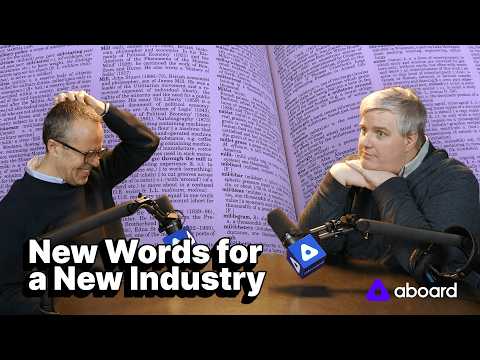
“Put them together and you get clustomers… That didn’t work because apparently MailChimp uses clustomers as a term. Customer plus client. Custolient… You can take the DE from designer, the ER from engineer, and the duct from product manager, and then that new job is called a deer duct.” — Paul Ford, 2:12
Clip command
yt-dlp --download-sections "*2:12-5:45" "https://www.youtube.com/watch?v=_av0gfBqqrE" --force-keyframes-at-cuts --merge-output-format mp4 -o "_av0gfBqqrE-2m12s.mp4"”The expertise delta is the white-collar economy”
“A huge percentage of the economy is driven by the delta between my expertise and your non-expertise. That is the definition of white collar of high margin… one of the reasons I think people are so anxious about AI is that gap, that labor gap right there, where I really get to charge you a lot of money because I will deliver that much value to you from what’s in my brain.” — Paul Ford, 7:31
Clip command
yt-dlp --download-sections "*7:31-8:30" "https://www.youtube.com/watch?v=_av0gfBqqrE" --force-keyframes-at-cuts --merge-output-format mp4 -o "_av0gfBqqrE-7m31s.mp4"”My perception of my tax lawyer has changed”
“I’ve asked ChatGPT to give me some tax advice on a business that is located in a certain city, in a certain state… It wrote it in plain English. I have a call the next day with my tax lawyer. My tax lawyer charges $2,000 an hour. My perception of that person’s value after my session with ChatGPT on this stuff has changed.” — Rich Ziade, 20:47
Clip command
yt-dlp --download-sections "*20:32-21:30" "https://www.youtube.com/watch?v=_av0gfBqqrE" --force-keyframes-at-cuts --merge-output-format mp4 -o "_av0gfBqqrE-20m32s.mp4"”How do you price? It’s the wrong question.”
“It’s the wrong question. Nobody knows. And everybody who tells — everybody who says that they know is absolutely lying… How do you price refers to the old world. Refers to like, how do I keep a tax attorney worth $2,000? That is absolutely not the question that capitalism has ever allowed to be asked.” — Paul Ford, 21:47
Clip command
yt-dlp --download-sections "*21:47-22:45" "https://www.youtube.com/watch?v=_av0gfBqqrE" --force-keyframes-at-cuts --merge-output-format mp4 -o "_av0gfBqqrE-21m47s.mp4"”Pragency, agentrification”
“We have a product and we are an agency and you put that together and you get a pragency… Yeah, you put a Y in there. P-R-A-Y. Put a Y in there… what they really want for the company — the services-oriented platform company to become — is just an agency but you put a T in there. It’s the agent-cy… Agentrification.” — Paul Ford, 15:30
Clip command
yt-dlp --download-sections "*15:30-16:40" "https://www.youtube.com/watch?v=_av0gfBqqrE" --force-keyframes-at-cuts --merge-output-format mp4 -o "_av0gfBqqrE-15m30s.mp4"”A designer popped a Storybook out in two hours”
“One of our designers asked for a good task with Claude Code because they’re learning. I said make a component system and then build the full React Storybook library so that engineers could cut and paste those elements… Well, the designers wouldn’t work on React Storybook. They would never touch it. Like two hours later he’s like ‘check it out.’” — Paul Ford / Rich Ziade, 18:28
Clip command
yt-dlp --download-sections "*18:28-19:20" "https://www.youtube.com/watch?v=_av0gfBqqrE" --force-keyframes-at-cuts --merge-output-format mp4 -o "_av0gfBqqrE-18m28s.mp4"Key Points
- Paul confesses he doesn’t know the future (1:23) — Even running an AI firm, he stood up at Newsday and admitted nobody has the answers
- Boundaries are blurring — not roles disappearing (3:52) — Designer, engineer, PM disciplines are bleeding into each other; the boundaries are what’s threatened
- The “asterisk” trap (4:40) — Everyone in the AI space is hunting for the one thing the model “can never really do” — and it’s the wrong way to think
- Goods vs services (6:00) — Rich frames the labor market: a thing you sell (mint gum) vs an expertise you sell (law, radiology)
- The expertise delta is the high-margin economy (7:31) — White-collar margins exist because of the gap between what experts know and what their clients don’t
- Specialists’ defensiveness is rational, not just protective (8:28) — Lawyers and doctors warning “don’t sign that, don’t diagnose that” are doing their job; the tech really did land too fast
- Doctors as the model (9:15) — Medicine has 100+ years of protocols, so doctors know exactly where AI is allowed in (cuts down on bureaucracy) and where it isn’t (diagnosis). Most other professions don’t have that clarity
- Product managers, designers, engineers as a three-legged stool (9:58) — Always interdependent, always tense; AI is amplifying the tension
- Skill simulators (10:37) — Paul compares LLMs to flight simulators — you still can’t certify in one, but the line is blurring
- Status-quo defense is human, not bad (15:07) — “If I’ve got a pretty good spot in the status quo and a threat shows up…” you defend it. You have to pay for college tuition
- SaaS flipped to “service as a software” (15:41) — The Noah Brier (or maybe Paul) coinage for the era where service work is increasingly delivered as just-in-time software
- Agentrification (16:34) — Paul’s portmanteau for an agency staffed by AI agents
- LinkedIn is angry (17:08) — Paul’s professional feed is filled with engineers and software people processing the AI moment with hot takes; people are pissed
- The Linux-in-the-closet analogy (14:00) — 90s Microsoft saw open-source web servers as existential. Now Linux runs inside Windows. Eventually it converges. But the moment was real
- Storybook in two hours (18:46) — Designer, learning Claude Code, built a full React Storybook component library two hours after being given the task — something designers traditionally never touched
- The $2,000/hour tax lawyer (21:00) — Tax attorneys are the canonical case of expertise scarcity; ChatGPT now writes plain-English tax strategy in seconds
- “How do you price?” is the wrong question (21:47) — It’s a defense-of-the-old-world question. Capitalism never lets you ask “how do I stay valuable forever”
- The right question (22:27) — “How can I use the change in the world to drive value to the people who can most take advantage of it?” — nonprofits, local press, mid-sized business
- Self-commoditize (22:44) — Tax attorneys should embrace the tools, validate clients’ LLM chats as a free service, stay in the workflow
- There may not be a perfect victory (26:13) — “Multi-trillion dollar aircraft carriers coming into port” — the scale of the change makes neat resolutions impossible
- Aboard Launch & Aboard Transform (29:22) — The 30/60/90-day shipping product, and the embedded-team transformation product — their answer to the new pricing question
Mentions
Companies & Organizations
- Newsday (0:40) — Long Island / Queens-focused publication where Paul gave the talk that seeded this episode
- MailChimp (2:44) — Already used “clustomers” as a term, killing Paul’s coinage
- Microsoft (14:00 / 15:03) — 90s status-quo case study; threatened by Linux web servers, eventually adapted
- Wendy’s (7:51) — Paul’s go-to example for low-margin business
- Aboard (27:46) — Paul and Rich’s firm; pitches Aboard Launch and Aboard Transform
- OpenAI / ChatGPT (20:47) — The tool Rich used to second-guess his tax lawyer
- Anthropic / Claude Code (18:28 / 29:00) — Used by Aboard’s designer for the React Storybook task and as a core tool in Aboard’s stack
- The IRS (20:23) — Tax attorneys “love the IRS code”; “an album dropping” when new code lands
- LinkedIn (17:25) — Where Paul tracks the AI-anxiety zeitgeist
- BlueSky (18:00) — Mentioned as not-LinkedIn (more amenable crowd)
- Gotham Comedy Club / Dangerfield’s / Giggle Hut / Chuckle Hut (2:51 / 18:18) — Joke venues where Paul allegedly workshops his keynote material
Products & Technologies
- React Storybook (18:28) — UI component catalog; the test case for cross-discipline AI-assisted output
- Linux (14:00) — Stand-in for “the open threat to the incumbent stack” in 90s Microsoft analogy
- Windows / Windows for Workgroups (14:11) — The closed incumbent stack
- Flight Simulator / 737 simulators (10:46) — Used as the analogy for skill simulation: getting better but not yet certifiable
- VR headsets (13:37) — Cited as an example of a bolt-on technology that AI is not
People
- Paul Ford — Co-host
- Rich Ziade — Co-host
- Robert Reich (5:49) — Sarcastic name-drop when Rich gets serious about labor economics
- Noah Brier (15:41) — Cited (maybe) as the originator of “service as a software”
Themes & Concepts
- Boundary collapse — The thesis of the episode
- The expertise delta (7:31) — The economic gap that AI is closing
- Self-commoditize (22:44) — Paul’s prescription for survival
- The asterisk (4:40) — The “yeah, but it can’t do this” trap
- Goods vs services (6:00) — Rich’s labor framing
- Currency exchange of expertise (19:21) — Rich’s framing of professional transactions
Portmanteaus coined or referenced
- Clustomer — Client + customer (already taken by MailChimp)
- Custolient — Customer + client (Paul’s preferred form)
- Client-mer — Rich’s failed alternative
- Deer duct — Designer + engineer + product manager
- Pragency / Praygency — Product + agency (Y is for “pray”)
- Agentrification — Agency + agent + gentrification
- Service as a software — Inverted SaaS
Surprising Quotes
“I really don’t know exactly what the future looks like. I don’t know what the present looks like.” — Paul Ford, 1:23
“If you have skills and expertise, you’re by default a little exhausting because you’re getting lectured by people who don’t have your skills. And now the people who don’t have your skills are giving it a whirl at home.” — Rich Ziade, 10:25
“It’s the wrong question. Nobody knows. And everybody who says that they know is absolutely lying.” — Paul Ford, 21:51
“Multi-trillion-dollar aircraft carriers coming into port.” — Paul Ford, 26:00
“The vibes are bad, man. Like it’s a lot of stuff. The country’s at war. It’s a mess right now. And so this just is one more freaking thing that keeps coming.” — Paul Ford, 17:26
“Don’t worry, the boundaries are going to collapse, but we’re still going to be nice.” — Paul Ford, 31:19
Transcript
Paul Ford: 0:00 Hi, I’m Paul Ford.
Rich Ziade: 0:01 And I’m Rich Ziade.
Paul Ford: 0:02 And this is the Aboard Podcast, the podcast about how AI is changing the world of software. Rich, how are you doing?
Rich Ziade: 0:08 I ay-ay-ay-ay-ay-ay. I’m so sorry that just happened. Let’s play the theme song and I want to make some dumb jokes.
Paul Ford: 0:16 I love jokes!
Paul Ford: 0:34 The other day I was asked to come talk to a prominent local media organization, to their designers.
Rich Ziade: 0:40 Newsday?
Paul Ford: 0:41 Yes, Newsday. For those who don’t know New York City, Newsday was a really special publication actually, because it had a little tabloid to it, but it was very Long Island focused.
Rich Ziade: 0:54 It was Queens, Long Island.
Paul Ford: 0:56 And this is why people are tuned in to this episode. They want to hear us talk about Newsday.
Rich Ziade: 1:00 Don’t talk about Newsday.
Paul Ford: 1:01 No, Newsday was a good paper.
Rich Ziade: 1:02 A prominent New York City-based but really truly global organization.
Paul Ford: 1:08 Yes, exactly. I gave a talk to designers, and I have to say, when you are asked to give a talk, there’s a little bit of an assumption that you might have some answers.
Rich Ziade: 1:21 You better have some answers.
Paul Ford: 1:23 I had to go up there and say, “It’s all changing really fast and I just want to tell you, as someone who’s operating a firm around AI, that I really don’t know exactly what the future looks like. I don’t know what the present looks like.”
Rich Ziade: 1:37 Hmm.
Paul Ford: 1:38 “And I just want to talk about some of the ways that categories and boundaries are blurring and collapsing.” And the way I did that was by making up the dumbest words I could.
Rich Ziade: 1:50 Fun.
Paul Ford: 1:52 I’ll give you an example. When you’re a company, you have two kinds of potential people who might buy your product or services.
Rich Ziade: 2:00 Okay.
Paul Ford: 2:01 We used to run an agency. What are the buyers of an agency?
Rich Ziade: 2:06 Clients.
Paul Ford: 2:07 That’s right. And then if you sell a product, what’s that?
Rich Ziade: 2:11 Customers.
Paul Ford: 2:12 Put them together and you get clustomers.
Rich Ziade: 2:17 Oh my.
Paul Ford: 2:18 Yeah, I know. But that apparently…
Rich Ziade: 2:19 You ran with this?
Paul Ford: 2:20 I did. I ran with this. And, you know, people laughed.
Rich Ziade: 2:24 Okay.
Paul Ford: 2:25 Well, they had to. I told them I got into a little bike accident on the way up. So if they didn’t find me funny…
Rich Ziade: 2:30 Out of sympathy.
Paul Ford: 2:31 Yeah, you need to just laugh. It was bad too, like I just slammed into a car. But I didn’t really hurt myself, it just vumpfed. It’s midtown. I shouldn’t be riding a bike in midtown in the middle of the day.
Rich Ziade: 2:42 Certain parts. Anyway, regardless.
Paul Ford: 2:44 Chaos. That didn’t work because apparently MailChimp uses clustomers as a term.
Rich Ziade: 2:48 Really?
Paul Ford: 2:49 Yeah, that’s what people have told me. Because I workshop all this at the Gotham Comedy Club. I go at 2 and I give…
Rich Ziade: 2:56 Dangerfield’s?
Paul Ford: 2:58 Yeah, I give keynote decks at the Giggle Hut. Alright, let’s go a different direction. Customer plus client.
Rich Ziade: 3:04 Client-mer?
Paul Ford: 3:05 No, custoliant.
Rich Ziade: 3:07 Oh.
Paul Ford: 3:08 Yeah! But the point is…
Rich Ziade: 3:09 Yeah, what’s your point here, Ford?
Paul Ford: 3:11 I don’t have a point. No, I think that what’s happening, I just want to put a name to it. Most companies think of having customers for their products or having clients for their services. But when you can deliver a product as a service along the way — which you can do when you can build an app in two hours — okay, what is that? What we’re finding as a firm and as I’ve been going out and talking to more and more people, this is very common in the industry right now: wait a minute, everything we understand — we still are providing value, we’re still shipping stuff, we’re still making stuff, but the ways and the boundaries around what we thought we were doing, like a designer designs and an engineer writes code and a product manager makes them talk to each other — everybody’s finding that it’s all blurring. And producing software is, it’s not cheap exactly because product and thinking is still hard. Thinking’s still hard, but the coding and the building is easy. We’ve gone through this a bunch of times in the podcast. When the news first showed up it was a lot of engineers going, “Okay, wow, I can code really fast.”
Rich Ziade: 4:28 Yeah.
Paul Ford: 4:29 But I’m getting emailed to me relatively complicated code artifacts from people who write articles.
Rich Ziade: 4:35 Yeah.
Paul Ford: 4:36 They’re smart, they’re technical.
Rich Ziade: 4:37 They’re building software.
Paul Ford: 4:39 Yes.
Rich Ziade: 4:39 And they’re not engineers.
Paul Ford: 4:40 It’s functional deployed software. They want to show it to me. And it’s okay. One of the things I’m starting to realize is everything in this space, we’re all looking for what I call the asterisk, and the asterisk is the reason where you go, “Well, it can never really do this one thing.” But that’s not actually necessarily the right way to think about it. Because what happens is you basically set yourself up because then someone will be like, “Ah, you just write a certain kind of loop and now it does that thing.” It’s more about where can I provide value to people who are talking to me right now? How can I move stuff along? So designer, you add engineer, you add product manager.
Rich Ziade: 5:20 You’re putting all three together.
Paul Ford: 5:21 Because that’s I think what you got. What do you call that? You call that a design-gineer manager?
Rich Ziade: 5:27 Sure.
Paul Ford: 5:27 No, you can actually take the DE from designer, the ER from engineer, and the duct from product manager, and that new job is called a deer duct.
Rich Ziade: 5:40 Have you lost your mind?
Paul Ford: 5:41 A little bit. What would you call the job?
Rich Ziade: 5:43 I want to say something interesting instead. I want to talk about for a moment labor.
Paul Ford: 5:49 I came in with cheerful wordplay to approach a complicated subject and you say, “No, go, Robert Reich, please tell me.”
Rich Ziade: 5:59 We sell two things. Two things. Goods?
Paul Ford: 6:01 Yes.
Rich Ziade: 6:01 And services.
Paul Ford: 6:02 Yes.
Rich Ziade: 6:03 Goods is like I have chewing gum that tastes like mint.
Paul Ford: 6:07 That sounds delicious.
Rich Ziade: 6:08 I will take care of packaging it, I’ll make sure it’s not poison, and I will sell it to you.
Paul Ford: 6:13 Can you spend hundreds of millions of dollars on a campaign about twins?
Rich Ziade: 6:17 Sure. Okay. Services breaks down like this: I am an expert in — let me pick an industry, the law. You are not. You will pay me for my expertise.
Paul Ford: 6:29 As a lawyer you like to bring this up.
Rich Ziade: 6:30 I am an expert, I make custom drapery. You’re a radiologist.
Paul Ford: 6:35 I’m a radiologist.
Rich Ziade: 6:36 You are not.
Paul Ford: 6:39 No, I’m not.
Rich Ziade: 6:40 I will sign off on my results and my interpretation of those results. You will pay me a lot of money. The less of me there are, the more you will pay me. You know what I hate? I hate the heavy smock.
Paul Ford: 7:00 Hmm?
Rich Ziade: 7:01 You know when you go to the radiologist, you gotta lie down and they put that heavy smock on you?
Paul Ford: 7:04 Oh so the radiation doesn’t make it through to you?
Rich Ziade: 7:07 Doesn’t mess up your giblets. As I was saying, radiologist — heavy smock.
Paul Ford: 7:12 So here’s what’s happening: the buyer of my expertise who needs a contract or an X-ray read is, late at night — not even late at night, it’s eight o’clock, taking the problem that they would have taken to the expert and giving it a go.
Rich Ziade: 7:29 Yes.
Paul Ford: 7:31 And they’re like, “Check it out.” One of the dumbest things you can do is go back to your lawyer or your radiologist and say, “Hey, what do you think? Pretty good, huh?” Why? Because a huge percentage of the economy is driven by the delta between my expertise and your non-expertise.
Rich Ziade: 7:49 This is real.
Paul Ford: 7:51 That is the definition of white collar of high margin. If you run a Wendy’s, the amount of money you make per hamburger is really low, like probably pennies or nickels.
Rich Ziade: 8:08 It’s low margin.
Paul Ford: 8:11 One of the reasons I think people are so anxious about AI is that gap, that labor gap right there between where I really get to charge you a lot of money because I will deliver that much value to you from what’s in my brain.
Rich Ziade: 8:28 Yes. Now, what you’re finding people say, and there’s skepticism when they say it, is, “That’s cute.” They minimize. Engineers when they first saw cool-looking demos coming out, they’d be like, “It’s not real. You can’t put that in production. You can’t rely on that. You can’t run your business on that.” That’s a natural reaction. A lawyer will say, “Please do not attach that to an email. That needs to be reviewed by a proper, experienced attorney.” Is it defensive? It’s actually not because this stuff has landed so fast that it’s a normal reaction for either a doctor or a lawyer to say slow down. This is dangerous stuff that can cause harm and we should review it.
Paul Ford: 9:15 One place to learn here is from the doctors who are like, “Wow, this cuts down on bureaucracy. I’m going to use it that way, but obviously it will not be able to diagnose, and if any of my students try to diagnose with it, I will hit them with a stick.” Because I have this set of 100-plus years of protocols and systems. I stayed awake 72 hours in a row in order to internalize — so I’m pretty confident that I know how this needs to behave. I think what’s really tricky is in a lot of other spaces, we don’t have the confidence that the doctor has. Lawyers know how a lawyer’s supposed to behave. So the minute the LLM doesn’t behave like a lawyer, they go, “Uh-uh.” But most people don’t really know how a product manager is supposed to behave, including most product managers.
Rich Ziade: 9:58 Product managers, designers, engineers, that’s sort of the three-legged stool. There has always been interdependence between their core skills and there’s always been a bizarre tension between all three of them. The product manager has effectively felt somewhat powerless, but depending on the setting, could have real authority. Everybody’s exhausting because they have skills.
Paul Ford: 10:23 Mm-hmm.
Rich Ziade: 10:25 If you have skills and expertise, you’re by default a little exhausting because you’re getting lectured by people who don’t have your skills. And now the people who don’t have your skills are giving it a whirl at home.
Paul Ford: 10:37 Well, they have skill simulators.
Rich Ziade: 10:39 If the outputs would have just plateaued, I would have been like, “Ah, you still need the expert,” but boy, they keep getting better.
Paul Ford: 10:46 There’s an analog here in flight simulator. Early versions of flight simulator I wouldn’t necessarily put you behind the cockpit. But current versions are pretty good.
Rich Ziade: 10:56 I think they use them for training.
Paul Ford: 10:57 They do. Like the big 737s and so on, they have big simulation environments.
Rich Ziade: 11:00 Sure.
Paul Ford: 11:01 The boundaries between being really good at flying a plane and simulating flying a plane, if you have some of the right equipment, you get the tactile feeling and you really study it, those start to blur. We’ve been down paths a little bit like this; it’s just they’re so hyperspecific.
Rich Ziade: 11:14 Yes.
Paul Ford: 11:15 That said, you cannot certify as a pilot in flight simulator.
Rich Ziade: 11:22 No.
Paul Ford: 11:23 We make you go up with another pilot into the sky.
Rich Ziade: 11:25 Yes.
Paul Ford: 11:28 And I think your exercise…
Rich Ziade: 11:29 …here of mushing words together is because those protocols between expertise have been threatened.
Paul Ford: 11:37 They are threatened.
Rich Ziade: 11:38 They just are. Product managers feel it — everybody’s feeling empowered for the thing they’ve been told to stay away from because they can mess around with it. Engineers are designing, product managers are doing everything, designers are coding. All the normal niceties and boundaries that existed have been threatened.
Paul Ford: 11:58 So let me be clear here, I hear from a lot of people about their reaction to this technology.
Rich Ziade: 12:03 Yes.
Paul Ford: 12:03 Sometimes like a dozen a day. I get emails and signals. There’s no one consistent response. But what is very clear to me, and the reason why we’ve been pushing a certain direction, is that the days of saying that boundary collapse won’t happen, or it will happen under certain sets of rules, and that buyers and customers will want things to be the way they were — that is fading and we can’t change that.
Rich Ziade: 12:34 I agree.
Paul Ford: 12:34 It’s very hard because every fiber of my being wants to say, “Don’t you worry. People are what matter.” But I actually think it’s more complicated than that.
Rich Ziade: 12:46 Yeah, it’s more complicated than that.
Paul Ford: 12:48 We’re getting kind of into the weeds, but we’re reacting to this just like anyone else. Two years ago, we were like, “We’re going to make a thing, we’ll put it on the web, people will use it, they’ll tell us if they like it or not.” So look, here’s where we are. I’m just a little tuckered because I’ve been on a lot of podcasts recently.
Rich Ziade: 13:09 Oh, here we go. The name-dropping.
Paul Ford: 13:11 No, no, this is my job. One of the reasons I’m smooshing together the words is just trying to make it kind of like something we can talk about. These words have so much weight associated with them. We used to run an agency together and people would be like, “Oh, you’re an agency. What kind of agency?”
Rich Ziade: 13:29 People need to frame you to understand you.
Paul Ford: 13:31 They really do. And no one can frame what’s happening right now because it’s changing so fast.
Rich Ziade: 13:37 I think what’s crazy is it’s not a new tech. It’s not a VR headset, which is additive. It’s something you introduce into culture and into social dynamics. I don’t think I’ve ever seen anything that has actually threatened the status quo quite like this. Meaning, it’s not a new technology that you bolt on. It’s something that is empowering everyone to question the way things are.
Paul Ford: 14:00 I’ll give you one example of a thing that was this threatening: Linux servers running web browsers in the closet. We are an all-Microsoft shop. The web is not to be trifled with. We are very secure. 25,000 people hacked into our system on Windows for Workgroups in the last two hours, but doesn’t matter. We’re not publishing no website and the last thing we’re doing is letting some Unix machine, open source, come into our system. And actually what happened is nerds kept setting them up. They kept setting up these little servers with free software and the web bloomed on those.
Rich Ziade: 14:35 Yeah.
Paul Ford: 14:36 What happens now is you can run Linux inside of Windows. Eventually it kind of all reconverges. But at the moment, they saw that as existential threat because it was going to take their market share. It was unimaginable that things would get too much bigger than they already were.
Rich Ziade: 15:00 If I’ve got a pretty good spot in the status quo and a threat shows up…
Paul Ford: 15:03 …which was Microsoft in the 90s. That was the status quo.
Rich Ziade: 15:07 And then again later, Microsoft was threatened multiple times. But let’s go back to the individual or a particular profession is being threatened. There are certain tactics you do to preserve your place. You have to try to preserve your place because you gotta pay for college tuition. It’s just normal stuff.
Paul Ford: 15:26 So here’s humans — and the term I keep coming up with is…
Rich Ziade: 15:29 I love it.
Paul Ford: 15:30 …we have a product and we are an agency and you put that together and you get a pragency.
Rich Ziade: 15:36 Pragency.
Paul Ford: 15:37 Yeah, you put a Y in there. P-R-A-Y. Put a Y in there.
Rich Ziade: 15:41 Yeah, because that’s where we’re at. Let’s pause on that for a second. Over a year ago, I think it might have been Noah Brier who said SaaS is “software as a service” and he flipped it — or maybe it was you who said “service as a software.”
Paul Ford: 15:54 I don’t know who said anything anymore. Could have been Noah. Could have been me.
Rich Ziade: 15:58 I think the rigidity of products that you buy and lease or license is being called into question because you assume that those require massive investment and they’re requiring a lot less of it today. So much of the assumptions we made are being turned upside down. That’s just reality. You got another one for me?
Paul Ford: 16:17 Well, this is the worst, because what they really want for the company — the services-oriented platform company — to become is just an agency, but you put a T in there. It’s the agent-cy.
Rich Ziade: 16:31 Oh.
Paul Ford: 16:31 And you know what that’s called?
Rich Ziade: 16:33 What?
Paul Ford: 16:34 Agentrification.
Rich Ziade: 16:36 Oh boy. Yeah. I’ve been working hard.
Paul Ford: 16:41 This is tough ball.
Rich Ziade: 16:42 I know. Sorry. We’re going to stop that because I really thought that would be fun and light. All right, I agree with you. I like what you’re doing here because you’re clever, you’re a clever guy.
Paul Ford: 16:48 Oh, thanks.
Rich Ziade: 16:50 You essentially are highlighting that the walls and the boundaries — by the way, you’re making a joke of it, but boundaries are oftentimes, and enforcement of boundaries is, how people make a living.
Paul Ford: 17:08 That’s why I’m making a joke about it, because it’s so real and I’m seeing it happen and people are absolutely pissed. They’re so pissed.
Rich Ziade: 17:16 Are they? Oh God. Like, explain.
Paul Ford: 17:20 “Software could never do that.” It’s very threatening. This is a very threatening moment to people who are — and you don’t even get direct —
Rich Ziade: 17:25 Everybody?
Paul Ford: 17:26 Yeah, sure. The vibes are bad, man. Like it’s a lot of stuff. The country’s at war. It’s a mess right now. And so this just is one more freaking thing that keeps coming. I keep an active LinkedIn feed of articles that are related to this subject that are interesting. There’s a lot of engagement these days. And it’s not my words, I’m just sort of, “this is interesting signal,” not endorsing it or not. But it’s a lot of engineers, a lot of software people, just trying to internalize what’s going on. And there’s a lot of hot responses to it — “Wow, this is all a bunch of crap.” This is LinkedIn. It’s not BlueSky.
Rich Ziade: 18:09 Are you surprised?
Paul Ford: 18:10 No, I’m not surprised at all. That’s why I’m making little jokes, because it’s a way to just kind of get the conversation going. I would say I wouldn’t give my delivery the highest marks today. But give me a couple more rounds at the Chuckle Hut and I’ll be able to land these ideas.
Rich Ziade: 18:27 No, I think you’re hilarious.
Paul Ford: 18:28 But we got to make it possible to talk about the fact that — one of our designers asked for a good task with Claude Code because they’re learning. I said, “Make a component system and then build the full React Storybook library so that engineers could cut and paste those elements.”
Rich Ziade: 18:46 React Storybook is UI components neatly organized in a catalog.
Paul Ford: 18:51 For those who don’t know, this would be like designers work a whole lot on the component library and then the engineers set it up inside of React Storybook, and there’s a high cost of change in this world.
Rich Ziade: 19:00 The designers wouldn’t work on React Storybook. They would never touch it.
Paul Ford: 19:04 And what happened?
Rich Ziade: 19:05 Popped right up.
Paul Ford: 19:05 What popped right up?
Rich Ziade: 19:06 Like two hours later he’s like, “Check it out.”
Paul Ford: 19:07 On his own?
Rich Ziade: 19:08 Yeah, right? You got to like — that’s an artifact that’s real.
Paul Ford: 19:09 And it looked good. I showed it to you, it looked good. That’s an artifact that’s real that exists.
Rich Ziade: 19:17 Let me close this with a question. Pretty hard one. I don’t think you have the answer to it.
Paul Ford: 19:21 I hope not.
Rich Ziade: 19:21 When I think about people and their expertise and how they transact with one another, it’s like a currency exchange.
Paul Ford: 19:27 Often it is.
Rich Ziade: 19:28 It is a currency exchange. My currency, as — let me be a lawyer for a second — costs this much. Here’s a running joke, like it’s a known thing: tax attorneys are the most expensive attorneys. Real expertise around tax law is very expensive.
Paul Ford: 19:49 Because they constantly kill themselves so there’s only like three left.
Rich Ziade: 19:54 There’s not many.
Paul Ford: 19:56 They probably have amazing lifespans.
Rich Ziade: 19:58 They might have amazing lifespans.
Paul Ford: 19:59 That’s not a job that takes you… you don’t do a lot of heli-skiing.
Rich Ziade: 20:05 Let me stereotype for a second: they’re rarely the rainmakers. They’re kind of weird. They like the IRS code. They like to get in there. But they’re very, very expensive. And the reason they’re expensive is there are very few of them and very few people have an appetite for tax law. When the new code lands, they’re all over it. It’s like an album dropping for them.
Paul Ford: 20:29 This is kind of the worst thing I’ve ever heard in my life.
Rich Ziade: 20:32 Right. So now, fast forward to today. I’ve done this. I’ve asked ChatGPT to give me some tax advice on a business that is located in a certain city, in a certain state, in a certain country.
Paul Ford: 20:47 Okay, you’re a lawyer and you’re pretty good at receiving tax advice. You’re an entrepreneur and a lawyer.
Rich Ziade: 20:51 It wrote it in plain English. It didn’t think I was a lawyer, it didn’t assume I was a lawyer. And I have a call the next day with my tax lawyer. My tax lawyer charges $2,000 an hour. Not unusual in higher-end corporate tax law. My perception of that person’s value after my session with ChatGPT on this stuff has changed. How do you price? How do you adjust currency exchange in amidst all of this? How do you price your value?
Paul Ford: 21:28 You’re asking me, Paul?
Rich Ziade: 21:29 Yeah. Not the tax lawyer, but anyone. We are — full transparency — as a shop that is about as good as it gets in shipping software rapidly, are trying to figure this out. How do you price?
Paul Ford: 21:47 It’s the wrong question.
Rich Ziade: 21:49 Ooh, you went there.
Paul Ford: 21:51 Yeah, it’s the wrong question. Nobody knows. And everybody who tells — everybody who says that they know is absolutely lying. The deal is different than it used to be.
Rich Ziade: 22:07 The deal is different.
Paul Ford: 22:10 “How do you price” refers to the old world. Refers to “how do I keep a tax attorney worth $2,000?” That is absolutely not the question that capitalism has ever allowed to be asked.
Rich Ziade: 22:19 I’m okay with him getting cheaper. Fine. But what’s the new —
Paul Ford: 22:22 Here’s the question I want you to ask every day when you wake up.
Rich Ziade: 22:26 Okay.
Paul Ford: 22:27 How can I use the change in the world to drive value to the people who can most take advantage of it? To me, that often comes down to nonprofits, local press organizations, things like that. But it also is medium-sized businesses and parts of large businesses. The tax attorney at some level is going to have to stand up for themselves and figure out where they live, and they’re going to have to identify the value they provide, and this seems unfair — and it is — but they have to identify the value they provide, and they have to self-commoditize. We have this world where everyone has been told what their ticket is and what they’re going to cost, and they line up. That’s what I did. I was a consultant for many years. I was $150 an hour when things were going okay, and I got more expensive as time went on. When I was a freelance writer in my 20s, I was 50 an hour. I know my value. It’s gone up. People will do the math on that, but then you’re paying your own healthcare and you’re really only able to get work for about three weeks out of the month. So it sort of balances out.
Rich Ziade: 23:24 Okay. Explain self-commoditize. I think that’s a very exciting way to end this podcast.
Paul Ford: 23:34 You’re in a market and you go and you learn how the market works. If you’ve never freelanced — here’s what was always tricky about running an agency: people didn’t know what business they were in because they were aligned with their discipline.
Rich Ziade: 23:49 When you say people, you mean people in the agency.
Paul Ford: 23:51 Yes, of course, like designers, and this is not to pick on designers, product managers too, and engineers. Our job was to find and identify leads, bring them in, ask them for as much money as they would give us, and then turn that into a project that people would then bring their labor to it. If they paid us a little more than the labor cost, we could have some money.
Rich Ziade: 24:12 We were profitable.
Paul Ford: 24:13 Well, after rent, CapEx and OpEx, etcetera. So what happens — and I would always advocate for this, and it’s really not something that people find interesting. I think this is where so much pain is coming from. Most people don’t know what business they’re in. They know what discipline they’re in. They know that they work at an agency and they get projects from their boss.
Rich Ziade: 24:30 Okay.
Paul Ford: 24:31 When you are in your 20s, that’s really normal. I’ll be frank, I didn’t know what business I was in half the time when I was in my 20s.
Rich Ziade: 24:41 You’re just doing good work.
Paul Ford: 24:43 You’re outputting. I got some freelance work. But when I went freelance as I got into my mid-20s —
Rich Ziade: 24:46 Now you’re closer to the sun.
Paul Ford: 24:48 There used to be a culture around freelancing where there was a book of rates. There was an understanding in the industry. You’d get hired by large orgs and small orgs and they paid differently. So you developed an internalized sense of what you cost, what you could attract.
Rich Ziade: 25:04 That’s right.
Paul Ford: 25:05 Your price is wholly dependent on what people are willing to pay.
Rich Ziade: 25:09 That’s right.
Paul Ford: 25:09 So now, fast-forward to this madness today.
Rich Ziade: 25:12 The tax attorney, if anyone should be able to figure out what they should cost in a new world, it is a tax attorney. What value are they going to bring?
Paul Ford: 25:21 If I was a tax attorney, I would double down on, “Let me validate any of your LLM chats as a free service to you. Let me stay in your world.”
Rich Ziade: 25:32 So you’re telling him or her to embrace the tools.
Paul Ford: 25:36 I’m not telling anybody to do anything. I’m just telling you that it’s coming. If Rich is here, a regular purchaser of tax strategy, sitting here telling me and the 2 million people who listen to this podcast that it’s okay to get on ChatGPT, you can be there as the tax attorney, you can be like, “God, no, ChatGPT gives the worst advice. Don’t do it.” But you’re yelling at this podcast and it can’t hear you. And everybody else is like, “Well, maybe I will ask it.” And that’s happening. It’s just happening and happening and happening. I can’t fix it. Nobody can fix it.
Rich Ziade: 26:00 Yeah.
Paul Ford: 26:00 Yeah. Even if you had a perfect strategy for explaining why this is a really bad idea — you’re losing the spiritual aspect of taxing — you’ve got multi-trillion-dollar aircraft carriers coming into port.
Rich Ziade: 26:12 Yeah, yeah.
Paul Ford: 26:13 At some level, can everyone just admit there may not be a perfect victory on the other side of this?
Rich Ziade: 26:19 We’re agency people. There are never perfect victories.
Paul Ford: 26:22 Agency, people don’t understand, jobs usually cycle through in about two years. It’s pretty punishing. The people who are good at it are freaking weird. That’s just real. Like you and I are —
Rich Ziade: 26:32 We are.
Paul Ford: 27:00 …a kind of special and painful form of business person.
Rich Ziade: 27:02 Yeah. I agree with your non-answer.
Paul Ford: 27:10 I think a lot of your mushing words together — it’s not an answer. It’s “Figure out, if the boundaries are blurring, how can you preserve what’s good and drive the value?” Because I swear to God, if you’re really valuable and you drive the value and you don’t try to hold it, and you don’t be the person who uses GPT and keeps telling them, “Don’t ever, blah, blah” — if you do that, they will reward you.
Rich Ziade: 27:30 Yeah, I agree. But it won’t look like the billing sheet from back in the day. That’s real confusing.
Rich Ziade: 27:37 Let’s pitch people. We always end this with a little bumper ad on Aboard. We’ve got a couple of offerings now. Do you want to tell them about them?
Paul Ford: 27:46 This is the irony of the firm: while I am telling you I do not have answers about what’s happening in culture —
Rich Ziade: 27:53 Yeah, but if you’re going to give us money, we can give you answers.
Paul Ford: 27:55 Not about culture, not gonna pretend.
Rich Ziade: 27:58 No, no, no. We’re not therapists here.
Paul Ford: 27:59 But I can help you really quickly ship a platform on a variety of different technologies.
Rich Ziade: 28:03 Exactly. While all this is going on, we keep honing and honing our skills. A project that I’m thinking about, related to a really sticky billing issue we just unlocked — how long would that have taken at the agency?
Paul Ford: 28:21 Four months. And what would we charge? We can just be upfront about that price.
Rich Ziade: 28:26 Half a million bucks. 600 grand.
Paul Ford: 28:28 That’s right. And it would have been a team of five. So how long did it take?
Rich Ziade: 28:32 A month.
Paul Ford: 28:33 How much did it cost?
Rich Ziade: 28:34 Much less.
Paul Ford: 28:35 A fraction. In fact, we finished a lot of it before we finished the contract.
Rich Ziade: 28:41 Yes. That’s real.
Paul Ford: 28:43 We’re very good at these tools now. We have our own custom technology, we have a very structured way of building and understanding data models inside of AI in order to get very predictable results. And then we put the foot on the gas, and we go to our good friend Claude Code and say, “Take the smarts here and let’s get an app.”
Rich Ziade: 29:11 We’re experienced enterprise software people that know how to use these tools to ship to production.
Paul Ford: 29:17 And we are not trying to hide the value. We are sharing the value with our customers.
Rich Ziade: 29:22 You can hire us and give us a goal line, and we ship software. 30, 60, 90 days. We call it Aboard Launch. It’s a very goal-driven, “Let’s get you to production as fast as possible.” Except it’s reliable, it’s secure, we test it — but it’s five times faster than it used to be.
Paul Ford: 29:41 In the future we’ll actually talk through this process because I think our listeners will care to hear how you get a big platform in 90 days that’s very reliable.
Rich Ziade: 29:49 Yes.
Paul Ford: 29:51 Another way you can work with us is a product offering we call Aboard Transform, which is us putting our talented teams into your org helping you sort of deal with all this change.
Rich Ziade: 30:02 Yep.
Paul Ford: 30:03 …and just accelerating across your org, shipping much more quickly. We don’t have the legacy and the history that slows us down, and we’re glad to help.
Rich Ziade: 30:13 There is no pricing sheet.
Paul Ford: 30:16 Well, there is. It’s in a briefcase and when you open it, it glows. And I would say, if you want this kind of transformation and you want to talk to us, it wouldn’t be bad to get in touch soon — not because we want your money, but it’s hectic out there.
Rich Ziade: 30:33 It’s hectic out there.
Paul Ford: 30:34 We really want to talk to people who connect to this story, so if you’re interested, get in touch. And if you have questions, podcast topics — hello@aboard.com.
Rich Ziade: 30:46 Sounds amazing.
Paul Ford: 30:47 Rich, our goal is to reach lots and lots of people with an inclusive and thoughtful message about how to build stuff with these new technologies, even when it is confusing.
Rich Ziade: 30:59 All right.
Paul Ford: 31:01 I want more and more people to pay attention to that. Share, like, subscribe, five stars, thumbs, all of it, every thumb you have, I need it.
Rich Ziade: 31:12 Okay.
Paul Ford: 31:13 But anyway, it would be nice if you did it. Thank you. All right friends.
Rich Ziade: 31:18 Have a wonderful week.
Paul Ford: 31:19 Yep. Don’t worry, the boundaries are going to collapse, but we’re still going to be nice.
Rich Ziade: 31:23 You can’t say “don’t worry, collapse.”
Paul Ford: 31:26 Yes you can. Okay, have a great week.
Rich Ziade: 31:28 Bye.