Design Beyond the Prompt: A panel on AI, craft, and the next era of product design.
Design Beyond the Prompt: A Panel on AI, Craft, and the Next Era of Product Design
Summary
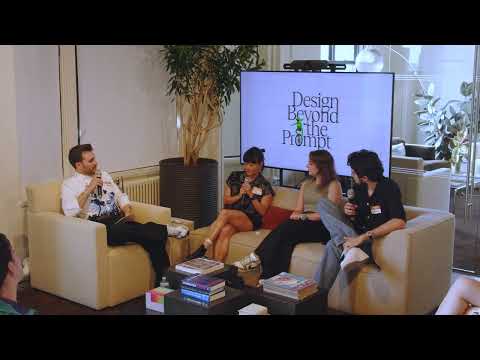
Aboard’s Director of Design, Liran Okanon, moderates a live panel on what AI is doing to the craft of product design. The panelists span three very different design environments: Dana Jefferson, a product designer working on generative AI inside Photoshop at Adobe (and an adjunct professor at Parsons); Haka Mashayekhi, who leads design across product, engineering, brand, and content at HBO Max; and Liz Tan, a former Slack and Square designer who has since left to start her own e-commerce stationery business, Siets Stationers. The framing question is blunt: with tools like Claude able to generate a working interface in the time it takes to open Figma, and PMs, engineers, and founders “vibe-coding” their way to functional products, who thrives in 2026 and what parts of the craft survive?
The panel is broadly optimistic. Asked whether half the designers in the room will be out of work in three years, almost no one raises a hand. The panelists argue that the bar to entry has dropped — “we don’t have to look at ugly shit anymore” — but that this makes judgment, strategy, and taste more valuable, not less. Junior designers, one panelist notes, have been their best hires in the last 16 months precisely because they grew up with these tools. The uncomfortable new pattern is the “idea janitor”: a PM, engineer, or CEO ships a polished AI prototype and pulls a designer in afterward to say it’s not doable or off-brand. The advice is to look under the bad execution for the real problem the person was trying to communicate — the prototype is just their way of speaking your language.
Much of the conversation turns to where interaction is heading (chat is a “stepping stone” nobody wants baked into every product), whether Figma stays relevant (probably, if it keeps its promise on precision and design systems), and how streaming and music apps use LLMs for content understanding and hyper-personalized recommendation — with a spirited detour into how Spotify and Netflix trap users in an “echo chamber.” The recurring theme is human curation, empathy, and taste as the things AI can’t supply. The panel closes on practical guidance: use AI to do the things you don’t want to do, keep it “additive, not load-bearing,” don’t use it to side-step learning fundamentals, and remember that designers are still, at bottom, just trying to solve a human problem with some creativity — AI is one tool in the set.
Highlights
”The best hires that we had in the last 16 months, they were junior designers”
“I think the best hires that we had in the last 16 months, they were junior designers. And I think a part of that is because… these designers, the younger one, they are growing up with them.” — Aresh Enayati, 9:18
Clip command
yt-dlp --download-sections "*9:18-10:15" "https://www.youtube.com/watch?v=JQuMX9o5uaQ" --force-keyframes-at-cuts --merge-output-format mp4 -o "junior-designers-best-hires.mp4"”Is a new design job becoming an idea janitor?”
“The question is, is a new design job becoming an idea janitor? … Someone on a team, like a PM or an engineer or a CEO even, generates a polished prototype with AI and they send it out… and then a designer gets pulled in and has to give their take and it’s usually like, this is not doable or off-brand or not good.” — Aresh Enayati, 13:03
Clip command
yt-dlp --download-sections "*13:03-14:00" "https://www.youtube.com/watch?v=JQuMX9o5uaQ" --force-keyframes-at-cuts --merge-output-format mp4 -o "idea-janitor.mp4"”Nobody wants to talk to a freaking chat box”
“We shouldn’t be putting chat boxes in all of our experiences because nobody wants to talk to a freaking chat box. They just want you to know what it is that they’re trying to do and do it for them.” — Dana, 24:31
Clip command
yt-dlp --download-sections "*24:31-25:30" "https://www.youtube.com/watch?v=JQuMX9o5uaQ" --force-keyframes-at-cuts --merge-output-format mp4 -o "nobody-wants-a-chat-box.mp4"”Someone decided to turn Blockbuster to digital experience… making tiles and rails”
“We’re doomed because someone decided to turn Blockbuster to digital experience and the definition of turning like those DVDs to digital experience was making tiles and rails. So you are right, the interfaces are very similar.” — Aresh Enayati, 35:07
Clip command
yt-dlp --download-sections "*35:07-36:00" "https://www.youtube.com/watch?v=JQuMX9o5uaQ" --force-keyframes-at-cuts --merge-output-format mp4 -o "tiles-and-rails.mp4"”It thinks it knows me, but I am multifaceted, multidimensional”
“I hate Spotify. I use it, I don’t have any other options. I hate it. Because it even thinks it knows me, but I am multifaceted, multidimensional… it so far pigeonholes — like puts me into this one category that I absolutely cannot get out of.” — Dana, 38:38
Clip command
yt-dlp --download-sections "*38:38-39:30" "https://www.youtube.com/watch?v=JQuMX9o5uaQ" --force-keyframes-at-cuts --merge-output-format mp4 -o "spotify-echo-chamber.mp4"”AI should be additive, not load-bearing”
“I heard recently that AI should be additive, not load-bearing. … For the most part, it should be like sprinkled in when it’s really going to help, not just to use it.” — Dana, 43:57
Clip command
yt-dlp --download-sections "*43:57-44:50" "https://www.youtube.com/watch?v=JQuMX9o5uaQ" --force-keyframes-at-cuts --merge-output-format mp4 -o "additive-not-load-bearing.mp4"Key Points
- The panel and the three questions (1:24) - Liran frames the night around the craft of design in an AI-native era: who thrives in 2026, what changes when anyone can ship product, and where design tooling goes next.
- Optimistic show of hands (4:31) - Almost no one thinks half the designers in the room will be jobless in three years.
- Learning to code with Claude Code (5:14) - Becoming more fluent in coding to better communicate with prototyping engineers, learning basic commands via Anthropic training courses.
- Designing for agents, not just humans (6:26) - A brand-new skill set: creating and improving agentic workflows. “16 months ago… I’m going to do and design for a bot, I had no idea.”
- Will design fragment or generalize? (7:11) - Likely a mix; freelancers now wear every hat — designer, engineer, shipping pull requests — “I’m going to have to revisit my pricing.”
- Junior designers as best hires (9:18) - The market is smaller short-term, but designers who grew up with these tools shouldn’t panic.
- Did we win or lose the seat at the table? (10:45) - Designers gained influence over product decisions but lost the monopoly on execution; strategy and judgment matter more.
- AI democratizes design (12:00) - Lower bar to entry means “we don’t have to look at ugly shit anymore”; “we don’t need to fight for a seat at the table… just sit down.”
- The idea janitor problem (13:03) - Non-designers ship polished AI prototypes and pull designers in only for cleanup; look under the execution for the real intent.
- “You are unlocked” goes wrong (15:01) - A well-meaning product leader told PMs and engineers to “just go make ideas”; a week later, random ideas were “all over the app.”
- Is craft becoming a luxury? (17:02) - “Craft is craft”; even as AI reaches passable output, you need people who speak the design vocabulary to push, iterate, and curate.
- The missing link between AI output and human need (19:36) - AI produces beautiful design but often misses real, usable solutions without enough context.
- Chat is a stepping stone (21:16) - An OpenAI exec called chat “dead”; the panel expects interaction to move to something not yet named — spatial, gestural, more personalized.
- Is Figma still relevant in 2-3 years? (26:22) - Probably yes, if it keeps its promise on precision and design-system variables; Figma’s MCP feeds components into Claude Code today.
- Claude as a business partner (30:28) - Running a solo stationery business with “Claudia”: LLC filing, inventory lists, and auto-filling Shopify product listings.
- How AI design tools actually get built (32:58) - The goal is supplementing tedious tasks (e.g., Photoshop’s one-click distraction removal), not shiny tech; features run on 6-12 month backlogs.
- LLMs for streaming: understanding + recommendation (36:00) - Two angles: LLMs tag and understand content faster than humans, and give better recommendations than classic algorithms (see Spotify’s taste profile).
- The echo chamber and human curation (41:30) - Editorial curation still commands respect and money; empathy, conviction, and reading the room are things AI can’t supply.
- Closing advice (43:03) - Use it wisely for what you don’t want to do; keep it additive, not load-bearing; don’t side-step learning fundamentals; AI is a tool, not a title.
- Getting a team on the same page (51:26) - Adobe’s “Proto Pack” starter templates, hackathons, and tiered office hours; find on-the-ground advocates at every level as a “Trojan horse.”
Mentions
Companies
- Aboard (0:24) - The host software company; builds software “fast and reliably,” some AI-native, some not.
- Adobe (3:41) - Where Dana works on generative AI in Photoshop; design org of ~1,000 people.
- HBO Max (3:00) - Where Haka leads design across product, engineering, brand, and content.
- Slack / Square (2:24) - Where Liz did product design before leaving in March to start her business.
- Postlight (2:24) - The agency where Liran and Liz met.
- Twitter / Nasdaq (2:24) - Industries Liz worked across at boutique product agencies.
- MTV (3:41) - Where Dana started as an animator.
- Meta (3:41) - Dana led design at Meta’s creative shop.
- Parsons (3:41) - Where Dana is an adjunct professor.
- RGA, Nike, Uber, Magic Leap, Moda Operandi (3:00) - Haka’s agency and startup career path.
- Anthropic (6:00) - Comes in to give Claude Code training courses.
- Figma (26:22) - Debated for future relevance; ran a “Design is Dead” event; its MCP feeds components into Claude Code.
- Sketch, InVision, Adobe XD (27:54) - Figma’s former competitors; InVision “died over like a six-month… after Figma joined.”
- Netflix (36:00) - Former ML/algorithm leader; famed for paying people to watch and tag movies — now an LLM job.
- Spotify (36:00) - Cited as best current example of an LLM taste profile — and of the echo-chamber problem.
- Shopify (30:28) - Liz set up her shop with it; delightful “I’ll just do this for you” AI moments.
- Canva (46:30) - “Pretty decent” tool contributing to design sameness in vernacular design.
- OpenAI (21:16) - An executive quoted in the Financial Times saying “chat is dead.”
- Paramount Plus / Apple TV (35:07) - Streaming apps indistinguishable from HBO Max in research when the brand is hidden.
- Apple / Nothing (48:05) - Referenced for generated shortcuts and generating miniature apps.
- Expedia, Skyscanner, TUI (23:05) - Companies that slapped chat experiences into their apps early.
- Siets Stationers (2:24) - Liz’s e-commerce stationery company (shop-siets.com).
Products & Technologies
- Claude / Claude Code (5:14) - Used for coding fluency, business tasks, and prototyping; affectionately “Claudia.”
- Claude Design (26:22) - Named alongside Claude Code as challenging Figma.
- Photoshop (Gen AI / Beta) (3:41) - Dana’s product; features like one-click “distraction removal.”
- MCP (17:25) - Discussed for authentic experience creation and feeding Figma components into Claude Code.
- Adobe connectors in Claude/ChatGPT (49:43) - Photoshop and Express connectors let you edit a photo from inside ChatGPT.
- Proto Pack (51:26) - Adobe prototyping team’s starter templates connected to internal APIs.
- DJX (Spotify) (39:54) - AI DJ feature Dana and Aresh both like but find hard to steer out of a mood.
- Agentic workflows (6:26) - A new design surface: designing for and improving agents.
People
- Liran Okanon (0:06) - Design director at Aboard and the panel’s moderator.
- Dana Jefferson (3:41) - Product designer for generative AI in Photoshop at Adobe; adjunct professor at Parsons (Instagram @dj.draw).
- Haka Mashayekhi (3:00) - Design leader at HBO Max (transcript labels his contributions “Aresh Enayati”).
- Liz Tan (2:12) - Former Slack/Square designer, now founder of Siets Stationers.
- Gabe, Matt, Kevin (1:12) - Aboard team members available to answer questions after the event.
- Eli (10:32) - Aboard’s intern, praised as fantastic to work with.
Surprising Quotes
“Now it’s worse because now they’re like, ‘You’ll be designer and engineer and everything else… you will ship code and make pull requests.’ And I’m like, ‘Okay, okay. I’m going to have to revisit my pricing.’” — Liran Okanon, 8:01
“I honestly feel like we don’t need to fight for a seat at the table. Like the table is there, like just sit down.” — Liran Okanon, 12:00
“My business partner is Claude or Claudia as I like to call her… I was like, how do I file an LLC? What do I need to do tomorrow?” — Liran Okanon, 30:28
“I don’t know how much money I’ve wasted on arguing about the date. And I will not let it go. I’m like, today is June 11th. And it’s like, of course, it’s Sunday, June 10th, 2025.” — Liran Okanon, 32:16
“You can always download like a taste skill for Claude, you know? And I don’t know if that’s helpful, but you could try.” — Aresh Enayati, 47:19
Transcript
Liran Okanon: 0:00 Hello. Thank you all for coming. Very hot day today.
Liran Okanon: 0:06 Uh, I’m Liran Okanon, I’m the design director at Aboard and your moderator tonight. I’m glad you’re all here. Got a busy week with the, the big win last night and…
Liran Okanon: 0:19 …we got the World Cup tonight, so thank you all for making it.
Liran Okanon: 0:24 Uh, so I’m going to just do a little quick uh plug for Aboard, what we do and then we’ll get right into the event, introduce our nice panelists over here. Uh, so Aboard is a software company. Uh, we build software fast and reliably. Uh, some of it looks like tools that you already know. Uh, some of it’s all brand new. Uh, some of it’s AI native and some of it’s not.
Liran Okanon: 0:53 Uh, like everyone in this room, we’ve been, you know, trying to figure out how we work with these tools without losing our minds and without everything looking like it’s part of the same design system. Uh, and that’s kind of what tonight’s about. We’ll try to figure that out.
Liran Okanon: 1:12 Uh, check out our site aboard.com, any case studies and if you want to work together, you can flag me down or uh, where we got Gabe and we got Matt and we got Kevin. They’ll answer all your questions after this.
Liran Okanon: 1:24 So let’s get started with our event. Uh, oh, there we go. So, uh, tonight’s going to be a conversation about the craft of design in an AI native era. Uh, what changes and what stays and what comes next.
Liran Okanon: 1:46 Uh, we have three designers with really strong opinions and uh, great experience to to back them up. Uh, we got HBO Max and Adobe and Slack and Square. Uh, and we got three questions that we kind of want to answer: who thrives in 2026? Uh, what changes when anyone can ship product? And uh, where does design tooling go next?
Liran Okanon: 2:07 Uh, and at the end we’ll have a 15-minute Q&A, uh, so save any questions that uh come up and we’ll ask them at the end.
Liran Okanon: 2:12 So wanted to introduce our lovely panelists. Uh, we have Liz Tan over here.
Liran Okanon: 2:24 Uh, she started at boutique uh product agencies around the city, working on a variety of industry, variety of industries like Twitter and Nasdaq, which is how we met at Postlight. Uh, she then moved into product design at Slack and Square, and now, very cool, she is, she started her own e-commerce uh company called Siets Stationers, uh selling stationery online. Uh, you could find it at shop-siets.com uh or on Instagram at siets_stationers. Very cool.
Liran Okanon: 3:00 We have Haka Mashayekhi. Haka’s career has been a tour of three different design environments. Started in the agency world at RGA, working with Nike and Uber and Magic Leap. Then moved into startup mode at Moda Operandi and now he’s at HBO Max, moving from an IC all the way to leading design across product, engineering, brand, content, creative. So really spending his day talking to teams that really don’t agree with each other, which sounds fun, you know?
Liran Okanon: 3:41 And then lastly we have Dana Jefferson. She started in motion as an animator at MTV, which is very, very cool. Then moved into brand and emerging tech as leading design at Meta’s creative shop, which was I think just across the way here. And then now she is in AI and education as a product designer for generative AI within Photoshop at Adobe and an adjunct professor at Parsons. Awesome. And you should check out her digital illustrations of athletes and artists on Instagram @dj.draw and she’d love for you to check out the new Gen AI features in Photoshop Beta.
Liran Okanon: 4:29 Tell me what you hate about it please.
Liran Okanon: 4:31 Alright, so let’s get into our event. So I feel like there’s been a lot of discussion over the past year about AI disrupting industries, taking away jobs. Show of hands over here, who thinks that half the designers in this room won’t have a job in three years? Oh, okay. We have a very optimistic group which is great, very telling and moves us into our first topic, who’s surviving 2026? So I’ll start with you Dana. What’s a skill that you are investing in right now that you weren’t a year ago?
Liran Okanon: 5:14 Being more fluent in coding for sure because Claude code, I’m using that a lot. I find that really fun but I don’t have any background in coding at all. So when I’m working with like our prototyping engineers, I usually just have to believe that what they’re saying is true and not… they’re cool, they’re not lying, but like I don’t have any basis to like argue or push back or say like ‘No, I think that’s easy’ or ‘Oh yeah, that’s true, I think that’s easy but that would take a long time’. So it’s been cool to kind of get like more fluent in their language too but from a more approachable way because it’s more like design friendly now. So that’s been fun.
Liran Okanon: 5:51 That’s interesting. You’re learning different languages and syntaxes or what specifically?
Liran Okanon: 5:58 That’s even too big for me right now but just trying to…
Liran Okanon: 6:00 The basic Claude code work and Claude code, like, intro courses and Anthropic comes to us sometimes and gives, like, some training courses. So just trying to learn, like, the basic commands and what to write in a command line and how to kind of read that without just having to plug it back into code and be like, or into Claude and be like, ‘What does this mean?’ so I can actually, like, write in it a little bit better.
Liran Okanon: 6:23 Nice. Is that something that’s interesting to you as well?
Liran Okanon: 6:26 I think definitely coding is a big thing and, um, we all know we know that we need to get into that one for sake of communication. The other thing that is very interesting and I’m seeing that a lot in my day-to-day is thinking and creating these agentic workflows. And I’m learning that there are a lot of new skill sets that I need to develop around them, you know, we are not only designing for human now, you are designing for agents. What does that mean? How you can create the agents, how you can improve them? So like 16 months ago, if you told me that, like, I’m going to do and design for a bot, I had no idea. So I think that’s definitely new. Yeah.
Liran Okanon: 7:11 That’s interesting and actually I have a question about that. I wonder what you think. Do you think design is going to fragment into specialties like research, AI prompting, taste curation, or will have more generalists, or people sort of building agents to do whatever they need? Where do you see things going?
Liran Okanon: 7:30 I don’t know. I mean, we’re sitting right at the crossroads of all of that. I think it’s—I mean, that’s what we had before, right? We did have researchers and we did have, like, very specific kind of things. And now you can do all of that as one person and one entity and you can deploy a bunch of that. Um, I don’t know. What is your question again?
Liran Okanon: 7:57 Do you think design’s going to fragment into different specialties because of AI?
Liran Okanon: 8:01 I don’t—I think, I think there’ll be a mix, you know? Some people will be more generalists and handle everything. Um, I mean, so now that I’m not at Square, I have a stationary store, but I also am still freelancing. And so I think now I’m wearing all the hats again. But now it’s worse because now they’re like, ‘You’ll be designer and engineer and everything else that,’ you know, ‘you will ship code and,’ you know, ‘make pull requests.’ And I’m like, ‘Okay, okay. I’m going to have to revisit my pricing.’ Um, but yeah. So I think, you know, and then depends on where you are, right? It’s like different, different structures and different companies are going to do different things depending on what your needs are. So I don’t I don’t think there’s like a definitive like ‘we’re going to be one or the other.’
Liran Okanon: 8:51 Yeah, and we’re dealing a lot with that here at Abord. We kind of wear many different hats as solution engineers. Haque, I have a question for you, you—
Liran Okanon: 9:00 Manage a big team at HBO. I feel like I hear on the internet that junior designers are panicking. Do you think that they should be? And what would you tell a 22-year-old starting their career right now? What do you think they should know to get hired?
Aresh Enayati: 9:18 Okay, I don’t want to sugarcoat that. I think there are, there are challenges, no doubt. But is it crazy if I say that the best hire that we had, I mean my boss is here and like my partner in crime in our company is here, they can confirm this. I think the best hires that we had in the last 16 months, they were junior designers. And I think a part of that is because they are, we are living, we are panicking about the things that coming towards us, but these designers, the younger one, they are growing up with them. And they are seeing them, they are seeing the evolution of them. And if the mindset is correct, which is I’m a designer to solve a problem and they are educated with those tools how they can use those tools to unlock their path, I think actually they shouldn’t be very worried. The challenge is definitely market is getting smaller for the short term at least, but I don’t think that’s going to be a long-term problem. We’re going to see how the market evolves, but yeah, I think they shouldn’t panic.
Liran Okanon: 10:32 That’s a great answer and I tend to agree. We have a new intern here and he’s been fantastic to work with. So yeah, thank you Eli.
Liran Okanon: 10:45 Question for you Dana, regarding sort of vibe coding and generating things on your own. You know, designers have spent years arguing for a seat at the table. Now anyone can build their own table. Did we lose or did we win?
Dana: 11:05 I mean, I think we’ve always wanted more of like influence over product decisions and I think that we have more of that now, but maybe the leverage that we’re losing a little is that we used to be the only ones that could execute that thing and now more people can do that. So it has to be that we’re contributing more than just like, I hate when people diminish it to like a pixel pushing thing. So like we have to be contributing to strategy and stuff like that too even more so now. But I think because we’ve been doing both sides of it for so long, we have more of like an inside baseball view into like what that actually takes so our judgment is like valued more maybe than others because we have both sides of that. But yeah, everyone can build whatever they want now, so it’s more important that we know if it’s worth pursuing or why we’re building it in the first place.
Liran Okanon: 12:00 Hey, I think it’s kind of an interesting question. Um, just, just that like, I’m excited about AI. I mean, it’s like hot, I’m like, I hate it and I love it. But I think it does like democratize design. Like at the very least, like the bar to entry is so much lower. Now anyone can kind of get a pretty decent thing out into the world. That’s really good. Like, we don’t have to look at like ugly shit anymore. Like that’s really exciting. Um, and then at the same time, it’s, it’s yeah, definitely like now we have to balance like the, you know, and kind of touching on the question that you have for Haka too, which is the experience that you have as a seasoned practitioner versus a new person coming into the field is you take with you all the, like you have this knowledge of how to build products, you know all these things and it does kind of bleed all over the place. Um, I honestly feel like we don’t need to fight for a seat at the table. Like the table is there, like just sit down.
Aresh Enayati: 13:03 That’s a, that’s a good answer. Uh, and it’s, it segues me to a question that I’ve been dealing with and I’m sure other people have been dealing with. Uh, the question is, is a new design job becoming an idea janitor? Uh, like a pattern that I keep hearing about is someone on a team, like a PM or an engineer or a CEO even, uh, generates a polished prototype with AI and they send it out and, uh, you know, it’s like, open to feedback. Uh, and, uh, clearly not wanting, you know, much feedback. Uh, and then a designer gets pulled in and has to give their, their take and it’s usually like, this is not doable or off-brand or not good. Uh, have you dealt with this, either of you? And, you know, is this a job or a role that you want?
Dana: 14:00 Yeah. Next. Um, yeah, at previous jobs, I remember getting really, even before like AI and they were able to kind of do that if someone that was in like a non-creative role would send something that was like a, uh, something they designed or something that they would want you to do or make it pop or whatever and you’re kind of like… mmm… yeah. Uh, but one of my like art directors at the time was like they’re, they’re just trying to like speak your language and like meet you halfway and communicate with you. So like forget about the execution of it because that’s really bad. But just look under that and try to figure out like what the root of the thing they were trying to solve is and like go off of that. It doesn’t have to be what they made, that’s just their way of like speaking to you. So it’s kind of the same now but they have like a lot more power to do that because like… but it’s still kind of the same thing where you’re like, oh, I see what the issue was or I see what you were trying to do, this, like I understand it.
Dana: 15:00 Quicker.
Aresh Enayati: 15:01 I can’t—I can give an example that is very similar to the things that Dana mentioned. We have this lovely product leader in our company and—he is genuinely a great guy, and he, with a very good and positive intention, he brought every product manager and some of the engineers together and was like, ‘Guys, you are unlocked. Just go and make ideas.’
Aresh Enayati: 15:28 And he gave them some courses of, ‘This is the way that you can use Cloud, go and make things.’ A week later, we were just receiving random ideas, like, all over the app. And it was very fascinating because, at the same time, there were some designers that we were seeing that they are starting to designing tools that are for making our process more efficient. Which was very interesting, like, it should be the other way, you know?
Aresh Enayati: 16:04 And I think the message got in the wrong way to those engineers and PMs, like, ‘You are unlocked’. You have million problems in your areas that you can solve. You don’t need to go and solve consumer-facing problems. It’s the sexiest part, I know, that everyone has an idea and opinion about that and definitely you should do that, and it should be an opportunity and a theater for everyone to collaborate on that one.
Aresh Enayati: 16:33 But I think if each of us look at the day-to-day workflow that we have, there are million opportunities that we can solve with these tools. And I think sometimes people are getting just too much excited about the technology and just creating headache.
Liran Okanon: 16:43 Yeah, I mean, it’s the first time, you know, they have a seat at the design table and even our engineers are running wild, like, designing frontends and, you know, we have to figure out how to work together and have a symbiotic relationship.
Liran Okanon: 16:54 Are they here?
Aresh Enayati: 16:55 They’re not here, not tonight.
Liran Okanon: 16:58 But that also leads to another question I have, which is, like, they can get to a certain point, right? And then maybe the craft is missing. And do you guys think, like, craft is becoming a luxury and sort of one of the few that we have left?
Dana: 17:22 (laughs) Yeah.
Aresh Enayati: 17:25 I think craft is craft. And still, like, with all AI, there are—I mean, we are dealing with all of the challenges that we have. Like, ‘Oh, we need to have MCP now. We have MCP now. Let’s just solve more authentic experience creation and just be more aligned with the design system.’
Aresh Enayati: 17:46 We know that technology is not there yet. And even if technology gets there, I think still pixel is pixel, and still you need to have some sort of a talent to think out of the box. And still, I think there is a value for those type of designers, and they’re gonna survive.
Aresh Enayati: 18:00 survive definitely.
Dana: 18:02 Yeah, it’s like trying to think of it in a different sense that like everyone here can write, but some people write a lot better than others and that’s why we have content strategists and copywriters and the way that like everyone can now design up to like a median mediocre point, we still need the people that are really good at it to push it beyond that. So I don’t, I mean eventually AI will probably get to like a much more passable design
Aresh Enayati: 18:30 but you still need the people that like speak the design vocabulary to iterate and push it and curate it that way.
Dana: 18:32 Yeah.
Liran Okanon: 18:33 Do you think that at some point in the future once design AI does catch up, that only certain products or companies will be able to afford that craft and it’ll be sort of this, you know, highly unattainable sort of feature?
Liran Okanon: 18:52 Yeah, premium.
Aresh Enayati: 18:53 I think it might just turn out to be that there’s, like everyone, it’s less of a role and more of a capacity of something. So it, you just will kind of like you were talking about like the archetypes on a team. You just need someone who’s really gravitates towards that and is really good at that on your team versus people that don’t have that foundational training. So you can tell like right off the bat if a design is good or not, right? So it’s kind of like if a note is off key, so it feels like that’s still like AI can’t save you from like as a someone coming up like not going to school or something, you still need those fundamentals to get it to the right place.
Dana: 19:36 Yeah, I think there’s still a missing, at least in today’s version of the tools that we’re using, a big missing link between what AI is producing and what humans actually need, like how we’re actually using it. And I think the role, the craft is not just like beautiful design but also very usable design, things that actually solve a real problem and not just solve the problem at its like basic level, you know, like it really addresses what that human need is that why we made it to begin with, you know. And I think sometimes AI misses that if you don’t give it enough context or it’s missing that one brief from its like, you know, its like portfolio or something. And that’s where like that’s where I think the designers or anyone really can still play a role in this process.
Liran Okanon: 20:29 Yeah, that’s, that actually segues me into a question I was going to ask you guys which is when I designed the branding for this, I wanted to create something completely nonsensical that AI could never do on its own. Can you tell me about a detail in a product that you love that no AI could output? Anything come to mind?
Dana: 20:50 Sorry, detail in?
Liran Okanon: 20:54 In like a digital product that AI just couldn’t output? Yeah, or could
Dana: 21:00 Could not have. Maybe things have changed.
Dana: 21:08 It’s a tricky one.
Liran Okanon: 21:10 It’s a tricky one. We can come back to it.
Dana: 21:12 Yeah.
Dana: 21:13 It could be like a, you know, it could be a participation one for later.
Liran Okanon: 21:16 Uh, so I have a question, uh, you know, right now we interact primarily with AI through like a chat box, uh, that’s the sort of mechanism we all know. Uh, over the weekend an OpenAI executive was quoted as saying that chat is dead in the Financial Times. Uh, if you had to bet in a few years, do you think that we’re going to interact with software mostly through prompts or some sort of new UI or something that we don’t have a name for yet? Have you thought about this? Maybe for you Dana since you sort of are building these products.
Dana: 21:51 Yeah, I think it’ll be something we don’t probably have a name for yet. I think it was the right move for 2022, 2023 when it like kind of came out because that’s, it’s such a natural way that we all communicate now, whether it’s text or email, whatever, like it’s pretty intuitive and approachable. Um, but for design, like it’s not great because you’re, I don’t know, like when you’re working on a canvas, like you have like three half ideas over here that you’re holding onto and then there’s stuff here that you’re picking, like it’s more spatial. And then when you’re working in chat, it’s so like sequential and linear that you have to like search through it. It feels like you’re like tunnel vision on it. So I don’t find that helpful. But I think even in Photoshop for example, already there’s, um, it’s already expanding to like image input and, um, sketch or annotation or, you know, you can use your voice in different ways. So I think it’ll, it’ll break out of that. But for, for the time that it was made, I think it was especially like for so many products that use it, for a user to have to learn some new mental model for each thing would have been a pretty steep learning curve. But I think it’ll probably be a lot more agentic, maybe not in a like tech way, but more personalized for sure.
Aresh Enayati: 23:05 Yeah, I’m… I’m not def… I’m definitely not the prompt-based type of experiences. I think it was like a early reaction to the technology. Like, um, when LLM became a like commercialized product a few years ago, everyone was trying to just slap like a chat experience into their like app from Expedia, Skyscanner, I remember, to TUI… uh, like everyone was trying to just like figure out like what is this, but definitely I think a part of that is experience as you mentioned, a part of that is like the ROI of that experience, you know, like you’re just burning tokens for what? And there are smarter way that I can use, you can use LLM to create experiences that is tailored and personalized for users versus just like giving them the chat experience. Uh, like for o…
Aresh Enayati: 24:00 the things that we are dealing with that is just like okay we have this content that we need to have deep understanding of them so how LLM can help us to understand them and how we can serve them to user so I think definitely as we are progressing and as LLM is getting better and better I think the product teams they’re getting more creative to how they can use technology to not only provide that personalized hyper-personalized experiences but also in a way that the business part of it makes sense.
Liran Okanon: 24:24 Yeah, that makes sense. Any ideas from you on sort of future interaction methods?
Dana: 24:31 I mean that’s so exciting right? It’s like yeah like we’d probably don’t know we haven’t seen it yet. I think I love the idea of like gestural or even like sound or a color or a emotion that cannot be really articulated with words. I mean honestly I feel like sometimes I struggle with just prompting because I’m you know I just design on like you said like on a canvas and it has like I don’t speak out loud a lot of my thought process and now I have to slow way down right because I have to put everything into words. Um and that yeah it’s not it’s not the best right. Uh so I think if there’s any way to kind of really interpret what it could be, uh that could be really interesting. And then I think I think there’s like different paradigms to this conversation right one is um what we use to build our tools for our users who we’re serving and then for our users they may not need the chat box as much as we do right? Like we want the full control and the full like dashboard of like our AI agents doing all kinds of things but for the user it should just be more invisible like we shouldn’t be putting chat boxes in all of our experiences because nobody wants to talk to a freaking chat box. They just want you to know what it is that they’re trying to do and do it for them. Yes right now we’re saying use your words and then we’ll figure out what you need but I think it’s just a stepping stone um and I’m very excited to see that go away.
Liran Okanon: 26:22 Yeah, uh I think I tend to agree uh and we’re seeing things like Claude Code and Claude Design take over uh do you guys think Figma is still going to be as relevant as it is in two to three years?
Dana: 26:32 Is Figma dead? No. Um didn’t they have like a thing recently? They had their little like event? I think it was a few weeks. No, it was No, no, not Config but the they had like a ‘Design is Dead’ thing uh recently um and they made like t-shirts and stuff. Uh I wish I had one. Um I No I mean no offense but Photoshop’s still around right like 35 sorry sorry 35 years strong so a little dig. I mean it’s still it’s still relevant it still has its uses. Um Figma will still have I mean Figma has a lot I’m very curious why they never did…
Dana: 27:00 Get into like the canvas, the AI pieces that I just don’t understand why I probably don’t, won’t go into it. But I think if they can keep up, they will probably still be relevant. I mean, Sketch is still around, apparently.
Liran Okanon: 27:19 That is impressive.
Dana: 27:20 I know! I just found that out recently. So, you know, maybe just not as relevant, but I don’t think it’ll die.
Liran Okanon: 27:29 Do you agree?
Dana: 27:31 Yeah.
Liran Okanon: 27:33 Yeah and until I can get like that precision somewhere else, no. And even like the things I’m building in cloud code, they’re coming from components from Figma that the MCP is feeding into. So it’s until that can or if that can get that precise and have so many variables for like a design system, it’s still really necessary, I think.
Aresh Enayati: 27:54 I think they can stay in business if they stay focused on the initial promise that they had. If you think about the moment that Figma became a thing, like we had Sketch, InVision, Adobe XD. So there were a lot of competitors, right? And Figma—
Dana: 28:15 Rest in peace.
Liran Okanon: 28:17 I’m pretty sure that you guys are like had a huge learning from that one.
Aresh Enayati: 28:23 Uh sure. Let’s frame it that way. The things that Figma did and none of those products were doing it—I mean there was like a timing problem—but the things that they were very good was like the seamless experience that they created for the product development process from ideation to design to development. And they did it at the right time with the right people, with the right audience, like all of those things they were perfect timing. And that was the reason that like Sketch and InVision, they got huge problem. I think definitely LLM is a challenge for them and cloud design definitely is challenging them right now. But again, it’s going back to those users’ needs. The design process I think is changing, the product development process is changing. If Figma can stay on top of that and still deliver the type of experience that serves those type of processes, I think they can survive. But we saw how what happened to InVision. It was an amazing product that died over like a six-month, eight-month after Figma joined.
Liran Okanon: 29:24 That’s true. Yeah, I think I tend to agree with you there. I have some specific questions for each of you. Liz, you’re one of the only panelists here that’s actively working with analog products. How do you use AI to optimize your business selling paper goods?
Dana: 29:44 Yeah, so a little bit of context. I, after I left Square in March, I was like, I’m going to… Thank you. I was like, I’m going to do something else just for a minute. I, I was like…
Liran Okanon: 30:00 I love, I love stationery. I love pens, I love paper. Uh, always have. Um, obsessed with like quality of how the ink bleeds into a piece of paper, all this stuff and I’m like, I need to do something with this. Uh, so I started a business, um, and I bought inventory. I looked at brick and mortar, like I went to talk to real estate, you know, I looked at locations, um, all these things. So that’s kind of the background of that.
Liran Okanon: 30:28 But you know what? My business partner is Claude or Claudia as I like to call her. Um, and uh, she is great. Uh, that’s my business partner. I was like, how do I file an LLC? What do I need to do tomorrow? Um, today I was like, how, I’m making a, a stamp, like, you know, because you need stuff like that. Uh, I was like, which one? You know, and, and it provided me some feedback and so I, I am using it. And then I set up my shop with um, Shopify, um, for those who know, you know. Uh, and it was, there’s like some very delightful like AI things where they’re like, I’ll just do this for you and I’m like, great, go for it. I don’t need to do, and I think that’s where AI is really powerful and where that like whole or what we’re saying earlier where I don’t want to tell you to do stuff, I want you just to do it. Or, or just give me your best shot and then I’ll tell you if you got it right or wrong.
Aresh Enayati: 31:27 More proactive.
Liran Okanon: 31:28 Yeah, more proactive. Uh, I used, I used Claude to create my inventory list. And then I used Claude to um, fill out all the stuff on Shopify so that all my product listings is accurate. I didn’t have to do, I was like, you do it. It was like, do you want me to, and I was like, no, you do it. Like why am I sitting here doing data entry? Like this is what you’re built for. Um, so yeah, I mean it’s been really instrumental in doing this uh, alone really. Um, and like yeah, and sometimes I’m like, oh my god, like I’m just like this robot is like, my, I’m like oh my god, am I insane right now? Like just like, you’ve know, I’m like this is all hinging on this robot like not lying to me. Uh, and it sometimes does, so.
Aresh Enayati: 32:14 Uh, I love, I love it when it corrects itself, ‘Oh, you’re totally right, Liran.’
Liran Okanon: 32:16 Don’t! How much, I don’t know how much money I’ve wasted on arguing about the date. And I will not let it go. I’m like, today is June 11th. And it’s like, of course, it’s Sunday, June 10th, 2025. And I’m like, what? And then, and then I’m like oh my god, how, how many tokens are we doing now? So, yeah.
Aresh Enayati: 32:42 Uh, thank you. Dana, you have a view into AI design tools that almost no one in this room has. Uh, what’s the biggest gap right now between how designers talk about these tools and how they actually get built?
Dana: 32:58 I think…
Dana: 33:00 A lot of designers now are like pretty anxious obviously about getting replaced and we’ve been talking about that. Um, but when we’re like in these vision sprints developing these features, like I promise that’s not the goal. Like we’re trying to figure out like what’s the most annoying thing in your process or what’s tedious or what can be automated and how do we um, like supplement that with GenAI or even, you know, from hearing from people what kind of tools that they want. Um, like it’s never just because it’s like a shiny new piece of tech and we just like want to force it in. It has to fit a user need and uh, like for example, I’m working on something called distraction removal so you can take out in like one click, uh, wires and cables or tourists in the background, trash, whatever is in there. Like that’s not fun stuff. Like you know, you just want that gone so you can work on the creative things and like sculpt the work and do the stuff you really want to do. Um, that’s a big one and then I think uh, probably like the timeline of it. I think if if like company A releases this feature and then Adobe releases it, something similar a week later or vice versa, everyone’s like super reactive about it and they’re like oh, this one copied this one or like I wish we could do it in like two weeks. Like this is probably a six to 12 month backlog for a feature and there’s so much research and pre-releases and betas and all of these things that are going into it that like it would be so cool if we could do that in that span of time, but yeah, that’s not true.
Liran Okanon: 34:30 That’s interesting. So essentially you see it as a way to like empower designers and make life easier for them.
Dana: 34:36 Yeah, I think that’s the sweet spot. Like I’m not really into the stuff that just is like a prompt and it generates one whole big thing. Like I’d rather it be more in your workflow meeting you where you are.
Liran Okanon: 34:45 Nice. Uh, and Aresh, uh, you’re building entertainment products and they need to differentiate themselves uh, from one another because they have pretty similar interfaces at times. Uh, AI tends to build things that are tried and true. Uh, it’s pretty repetitive. Uh, how do you innovate using AI within some of these constraints?
Aresh Enayati: 35:07 Um, you are right. Like all of these streaming apps, like they’re very similar. Like we are seeing that in a research. If you just like hide the brand and put it in front of users, probably half of people they don’t care is like a HBO Max or Paramount Plus or Apple TV. They are all tiles and video in the background and this is very similar thing and we are always joking internally that like this is like we’re doomed because someone decided to turn Blockbuster to digital experience and the definition of turning like those DVDs to digital experience was making tiles and rails. So you are right, the interfaces are very similar and all of these brands they’re trying to innovate and just like oh, what’s the most usable, uh, delightful way of creating content discovery for users. But the thing is…
Aresh Enayati: 36:00 The thing that I think AI and LLM has added to the game is not about only designing the interfaces, that’s just a process thing, that’s just getting faster. I think it’s coming to that how we can create more hyper-personalized content discovery and content recommendation to the user. Give you to two like angles here. The first one is understanding the content, I briefly mentioned that one, that’s a huge thing. Like before LLM, like maybe you guys remember Netflix had this job posting and there was a lot of articles about that, that Netflix is paying you to watch movie, right? That was like four years ago. That was like replacing, like basically doing the LLM job, right? So basically watching something, generate tags, facet information about the content. Now LLM can do that work much faster and much better. So I think all of these companies are trying to use LLM to learn about their content and create meaningful information that can help users to have a better content discovery. So that’s the first angle. The second angle, I want to say is more about the logic and the DNA and the philosophy behind the content recommendation. So we are coming from a age that machine learning was a big deal and everything was algorithm-driven. And Netflix was the best one in the industry and they were like creating a lot of algos and they were using algos. But we are getting to this era that LLM can provide a better recommendation than a classic algo. I think the best reflection of that in a current experience is Spotify. So now you are seeing that Spotify is providing that taste profile for you, that you open that one and you are seeing Spotify in a text format is saying ‘Oh, you are this type of user, you are listening to this type of music.’ That shows that they have a deeper understanding of your behavior and that deeper understanding can help them to a deeper and more personalized content recommendation. Again, the biggest question is cost and the ROI of that one, when that makes sense to turn the business completely toward that direction. But I think the future of streaming, especially like if we talk about the impact of LLM, these are the two areas that you’re going to see the impact of that.
Liran Okanon: 38:33 Content personalization and sort of content understanding and content recommendation.
Aresh Enayati: 38:37 Content understanding and content recommendation.
Dana: 38:38 Can I ask, or can I throw something spicy in there? Sorry, you know. I- I- I hate Spotify. I use it, I don’t have any other options. I hate it. Because it- even it- it thinks it knows me, but I am multifaceted, multidimensional…
Dana: 39:00 Well, I have different moods, I have different phases in life seasons, even. And it so far pigeonhole- like puts me into this one category that I absolutely cannot get out of. And that is so annoying. Like…
Liran Okanon: 39:16 It’s very annoying.
Dana: 39:17 And I almost want to just listen to the radio, because I would like something else.
Liran Okanon: 39:22 Someone curated for you, that’s exactly…
Dana: 39:24 Yeah. Yeah. And even and same with like Netflix in in that sense or or any kind of streaming content. It’s it’s just this horrible like echo chamber of like ‘oh you like this? Here’s more of the same thing’. So I think all all it needs to do is just give you a wildcard somewhere, right? It’s just like here’s something completely not in your like area, maybe you’ll like it. Um, but I think right now that’s my big struggle with with all of it. It’s just so the same all the time.
Aresh Enayati: 39:54 You are 100% right and I mean DJX is a clear example of that. I love that feature but oh gosh it just gets to a mood and as you cannot remove it like ‘I’m I’m done with this song, you know, like just move on’. Um and they are trying to add the features but you are right like when they are getting to that echo chamber it’s very hard to come out of that one. Um I think there are like again two ways that uh we are facing with that problem. One is like I think still in 2026 there is a huge value of editorial curation. Still there are people that they are paying money to get a curated recommendation. And actually with our brand we are seeing that a lot like there’s HBO, there is like a respect for the recommendation that comes from HBO. So that’s definitely the first thing. Um but the second thing I want to say is is actually kind of interaction problem as well. All of these content recommendation is based on signals, right? And Spotify and any music app they are very lucky because they can collect a lot of signals from you very quickly because every music is the 4 minutes, right? Uh still you are seeing that they are they are facing with all of these echo chamber problem. I think when it comes to streaming is much bigger problem because for every single signals we need to wait for two hours, right? And maybe you give us a signal now and six months later you come back and you give us another signal. And now we are trying to do this gymnastic to connect the dots and like ‘oh you six months ago you like sinners and now you are watching White Lotus. So what does that mean?’ So we are trying to judge you basically. And um so that’s not cool, I know. Yeah, it’s exactly. Yeah.
Dana: 41:30 Yeah, I I love that you touched on that piece about curation. That’s a piece that I think we didn’t really touch too much about on today is and I think that’s kind of the most important thing is like what we bring like as humans, like you know, designers, PMs, doesn’t matter whoever um to the conversation. Like curating the experiences, like having an opinion. Like I used to love being like ‘oh AI write my emails’ and now I’m like ‘use this is so this is so devoid of emotion and humanity that I would rather write an…’
Liran Okanon: 42:00 email, and be terrible at it. Um, but at least it reflects human. Like, I, it knows that this is something real, someone did this. Um, but yeah, I think, I think curation is definitely like, it will be so interesting to see how we use AI and, like, merge that with curation. Like, I think that’s where the sweet spot is really.
Dana: 42:22 I think the empathy part of it too because, like, if you’re in, if you’re trying to sell your idea to somebody and you have, like, the conviction to say, like, ‘this is, these are the reasons why’, and then you’re met with some kind of constraint. Like, AI’s not going to know, ‘oh, that’s actually a technical constraint’, or it’s a political one, or it’s, like, how to manage people’s emotions and stakeholders in the room. You can’t just have it, like, plugged into your ear, like, ‘no, that person’s having a bad day, read the room’.
Aresh Enayati: 42:48 Well, I appreciate the alternate perspective. I tend to agree with it. Uh, thanks for chiming in. Uh, we’re almost out of time, so I just wanted to close out so we have time for audience Q&A.
Aresh Enayati: 43:00 Uh, what’s advice, what advice do you have about the role that AI plays in design and what should the audience leave with tonight?
Liran Okanon: 43:03 I’ll go because I just, I just said it, so I don’t want you guys to steal my answer. Um, but yeah, just, just like, use it wisely. Use it to do the things that you don’t want to do. It’s so great for that. Um, but don’t lose touch of, like, what you’re here to solve. We’re not just trying to slap technology on top of whatever it is that we’re building. We are, like, we are, you know, our, our titles have changed over time, but it’s user experience, or product design, whatever, and it’s like, but ultimately we’re designers. We are just trying to solve a human problem with some creativity. And that’s all that we’re trying to do. And AI is just a tool in our toolset.
Aresh Enayati: 43:54 I think very well said. Dana?
Dana: 43:57 Um, I heard recently that, um, AI should be additive, not load-bearing. And I think depending on what you’re working on, like, if it’s a code prototype, maybe it’s pretty load-bearing. But for the most part, it should be like sprinkled in when it’s really going to help, not just to use it. And I don’t think that the kind of, the, aside from, like, kind of learning, or maybe it’s part of what I was also talking about, trying to learn more coding and that before, that if you’re using AI to, like, side-step learning something, try not to, because there’s, like, the more trained in something you are, the, the deeper the, the more depths of decision-making you have, or the smarter choices you can make. So if you’re doing it just to kind of bypass something because you’re like, ‘I don’t… it’ll do it for me’, but it’s something you should actually probably learn, then I think that’s a good reason not to use it.
Aresh Enayati: 44:51 I think another great take. Haka?
Liran Okanon: 44:54 I mean, you guys covered everything. Um…
Liran Okanon: 45:00 I want to say like you both mentioned that AI is a tool, AI is a tool. I hate actually, I’m seeing this job posting that like, ‘Oh, AI designer.’ What does that mean? Like, is—are we saying Figma designer? Or like… Um, so, yeah, AI is a tool. Ask question, be authentic. We’re gonna pass this time. Another cool things will come up. We’re gonna get get together again here and talk about that, but—
Aresh Enayati: 45:29 That’s the cycle. Yeah.
Aresh Enayati: 45:31 Awesome, thank you. Um, we want to open it up if anyone has any questions for these lovely people. We have a question over over here.
Dana: 45:43 Hi. Um, so in the beginning you talked about one of the benefits of AI being that it sort of elevated the worst design, like the the lower bar. But I find as like a person in the world, I’m seeing more and more like examples of vernacular design, like a school flyer or like a a new restaurant sign. And everything looks like it’s like a Memoji style. Um, do you have any advice for the local neighborhood designers of the world who need to make a school flyer that does look more professional than maybe it did a couple years ago, but so that it doesn’t look like this Memoji or, or like a, you know, an anime style restaurant sign?
Dana: 46:30 Yeah, I’ve noticed that with my kid’s school, the PTA, they’ve really gone, gone deep. Um, I mean, before that it was like Microsoft Word though, so we’re better. Like, you know, we’re like, we’re on an airplane with Wi-Fi, like come on, right? Like things are better. Right? We’re not on the horse. Um, I think pick your battles, right? Like it’s some things you’re like, alright, you did this, that’s fine. Like there’s Canva, right? And Canva’s pretty decent too. Um, but there is like a kind of sameness to it. Um, I mean, honestly, this may not be very satisfying of an answer, but I think just look away. Just be like something else, you know? Just look away. It’ll, something else will come.
Aresh Enayati: 47:19 You can always, you know, download like a taste skill for, for Claude, you know? And I don’t know if that’s helpful, but you could try.
Liran Okanon: 47:31 Also like handmade things really stick out a lot more now. I knew someone who had their parents owned a bodega and their parents made a sign that said like ‘best coffee in the world’ or ‘best coffee in the city’ and they like drew a coffee cup on it. And people, like more than one, people would come in and be like, ‘It’s so cute that you hung up the local school’s drawing for you.’ And they were like, ‘Thank you.’ But it like made people come in and it was like a little human connection thing. So I don’t know, maybe the advice is also like make your own or make it cute.
Liran Okanon: 48:00 Do we have any other questions from the audience? Zach?
Liran Okanon: 48:05 Yeah, in a world of hyper-personalization and with like what Apple just announced with generating a shortcut and like Nothing’s whole idea of like generating miniature apps. Do you think there’s a world where there’s a good chunk of designers that are designing primarily for agents and robots and no longer users because users’ UI will be personalized and generated for them?
Liran Okanon: 48:31 So the question is…
Liran Okanon: 48:36 Is there a world where there’s like a whole team of designers who will be generating only for agents?
Liran Okanon: 48:41 Are designers going to be designing interfaces just for agents? What do you think?
Aresh Enayati: 48:46 Um, I think that’s the… that’s a new thing in our… in our life. I don’t want to say that’s going to replace completely designing for human, but yes, designing for agent I think it’s… it’s going to be a thing and… we need to… we need to accept it and I… I think someone will come with some like iOS style book of like ‘Design Process for Designing for Agents’. And so we should wait for that one. And… but yes, I think we’re gonna… we’re gonna document that and we’re gonna learn, but like that’s I… I think that’s going to be a thing and… it has its own thing like it’s… it’s very similar with the… for designing for human, but now you need to train it and you need to create this feedback loop and like there’s a whole thing for that one. Yes, I think it’s going to be a thing that we need to as a design community we need to accept it and we need to just adopt it.
Dana: 49:43 Um, one thing to add to that is, as you might know already, Adobe has connectors in Claude and in ChatGPT with Photoshop and Express and I think maybe some others. So you could just be in ChatGPT, pop in a photo and say like, ‘Fix the crop and change the lighting to whatever,’ and it’ll do that on the back end and then send it back to you. So in that way they’re… um, like the designers who worked on it are sort of designing for like a user and an AI system at the same time. But I think the part of it that we still like need the book for is like when it’s just a user, you can assume it’s… it’s like a coherent human who’s like making an individual decision on things. But when you’re throwing AI in there too, you’re kind of designing for something that’s partly a system. So like you have to be really careful on things like… like trust and comprehension or even consent of like which one of these agreed to this or who did this. So yeah, that’s going to be the next hard thing I think.
Liran Okanon: 50:41 Great take. Look out for that white paper in 2027. Uh, yes?
Liran Okanon: 50:47 I’ve noticed a lot of people on architecture talk about AI-based and… probably on top of different models in the base and…
Liran Okanon: 51:00 …various levels of adaptiveness to the platform, do you guys have any advice on how to keep in better shape? And how they’re using, some people are like wizards at it, some people are like still learning. So how do you get everyone on the same level?
Liran Okanon: 51:17 How do you get your team on the same page with AI from a skills perspective?
Dana: 51:26 Um, so at Adobe we, our design org is centralized, so there’s maybe like a thousand people, it’s pretty big. But we have a prototyping team within that, and they’re the engineers that kind of build like, you know, the prototypes for us before they go to Photoshop, just for background context. But they’ve also built this thing called Proto Pack, which is kind of like starter templates for us to build off of. So you don’t have to rebuild the Photoshop app chrome every time you’re building something or even blank slate things. It’s connected to our APIs and we can just all kind of jump in there and have the same starting point. And we’ve had a couple hackathons at this point where we’ve paused all the other work and just, they were just like, just build something. Like the first one was like, doesn’t have to be anything work-related, it could be personal, just get in there and like kind of learn it. And I think people were pretty intimidated at first if they hadn’t touched any of it yet. And then once they started, as you guys know, like you’re like, oh this is fun, this is like, it switched from like intimidation to empowerment I think. But while we did those hackathons, we had a ton of like trainings, not from Anthropic or anything, but just like within our own teams and a lot of like open office hours where people could join like a beginner, intermediate or advanced track. So no one felt shitty if they hadn’t even opened it yet and the people that were advanced didn’t feel like they were being like held back or anything. And I think now it’s, that was probably like two months ago or so when we started that, three months, and it’s like kind of evened out now I think. So it just, it’s really hard to like pause work for a whole week and like have everyone agree to that. And it was nice the first time because PMs and engineers did it too. So everyone was focused. And then the second one was just designers and we were still like padding away everything, so. If you can carve out that time for it, I think it’s helpful to, it just felt much more like community learning than it was like go figure this out and if you’re running into errors, there’s all these engineers who are like really chill and willing to help you on it and not make you feel stupid about it.
Aresh Enayati: 53:24 Um, I think Dana’s point of view is very, very valid and um, the the things that I want to add is um, I’m coming from a company that is like a media legacy company, right? So and it’s media and then there is AI and like definitely there is like a wall between a lot of people and and AI. So as this is still like a process that we are going through that we have a lot of challenges, but I think the first step for us was like let’s make sure people understand that AI is our friend.
Liran Okanon: 54:00 is not our enemies and that feels like a first step. But I want to say, I mean, then access, giving them access, make sure they have access to all tools. But I want to say the things that start to started to unlock people to use AI was finding people in every level that they can be the advocate for these tools. And as soon as they start to use it, I think their peers they’re gonna see that and they’re gonna get the motivation because you can bring all leaders of the company and they can give you all hands that like oh AI is the future you should use it and everyone’s like sure and then move on. Um but as soon as you have the people on the ground that they are using it in every level, you know, like junior level, senior level, you need to find those people, make sure they are empowered, they have confidence to go and build things. And then their peers are gonna see and they’re gonna get the motivation and they’re gonna go do the same thing. So I think like it’s like a kind of a Trojan horse strategy for those legacy company. But I think in a tech company definitely like you guys are dealing with a completely different beast, yeah.
Dana: 55:05 I think great answers. We have a much smaller team here at Abode, so we have a weekly meeting where we sort of share what we’ve learned, uh people here are sort of building or vibe coding apps and uh and products and tools. Uh and so it’s really exciting to sort of share knowledge in a small environment, but great advice for a sort of a larger enterprise.
Dana: 55:31 Uh, any other questions before we we close out?
Dana: 55:38 No? Okay, great.
Dana: 55:40 Uh well thank you all for coming. This was really really great.
Dana: 55:44 Thank you all for coming.
Aresh Enayati: 55:46 Thank you.
Liran Okanon: 55:47 Thank you.
Dana: 55:50 Please uh enjoy some drinks. We also have desserts uh and uh have a great night and and we’ll see you again soon.
Dana: 56:01 Okay. Thank you.