Docs Heart Bots
Docs Heart Bots
Summary
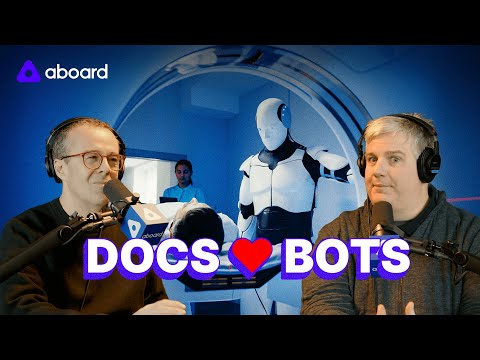
Fresh off hosting a healthtech event in Aboard’s Manhattan offices, Paul Ford and Rich Ziade discuss how AI is reshaping healthcare — one of the largest sectors of the American economy. The episode opens with a comedic reflection on the doctor visit experience (gowns, waiting, the “scruffy nurse”) before diving into the real substance: where AI is actually making a difference in medicine versus where it’s all hype.
The hosts identify three major areas where AI is impacting healthcare. First, and perhaps most surprisingly, the biggest immediate impact is on paperwork and administrative burden. Doctors spend enormous amounts of time on documentation, billing codes, and insurance communications, and AI is proving remarkably effective at reducing this burden. Second, AI is showing promise in diagnostics — particularly in radiology and pathology where pattern recognition in images can augment human expertise. Third, and most controversially, patients are increasingly showing up to appointments armed with AI-generated diagnoses from ChatGPT and other tools, creating a new dynamic in the doctor-patient relationship.
Paul and Rich explore the tension between AI’s potential to democratize medical knowledge and the very real risks of patients self-diagnosing with AI tools. They discuss how the healthcare system’s complexity — insurance, regulations, liability — creates unique challenges for AI adoption that don’t exist in other sectors. The conversation returns to Aboard’s own work with healthcare organizations like the Child Center of New York, where they built a platform that uses AI to help clinics make better decisions without requiring technical expertise. The episode concludes with a nuanced take: AI in healthcare is not going to replace doctors, but it might finally free them from the paperwork that keeps them from actually practicing medicine.
Highlights
”AI’s real superpower in healthcare is… cutting down on paperwork”
Clip command
yt-dlp --download-sections "*7:00-8:00" "https://www.youtube.com/watch?v=J3yr8LMAqGE" --force-keyframes-at-cuts --merge-output-format mp4 -o "J3yr8LMAqGE-7m00s.mp4"“Everyone wants to talk about AI diagnosing diseases and it’s like, the biggest thing AI is doing in healthcare right now is helping doctors spend less time filling out forms. That’s not sexy but it’s genuinely transformative because doctors are spending 50% of their time on paperwork.” — Paul Ford, 7:00
”Every patient now arrives with a ChatGPT diagnosis”
Clip command
yt-dlp --download-sections "*15:00-16:00" "https://www.youtube.com/watch?v=J3yr8LMAqGE" --force-keyframes-at-cuts --merge-output-format mp4 -o "J3yr8LMAqGE-15m00s.mp4"“What happens when every patient arrives at their appointment armed with a diagnosis from Dr. ChatGPT? The doctor-patient relationship is fundamentally changing because the patient now walks in with an opinion. And sometimes it’s right, which is the really scary part.” — Rich Ziade, 15:00
”Healthcare is the sector where AI hype is most dangerous”
Clip command
yt-dlp --download-sections "*20:00-21:00" "https://www.youtube.com/watch?v=J3yr8LMAqGE" --force-keyframes-at-cuts --merge-output-format mp4 -o "J3yr8LMAqGE-20m00s.mp4"“In most industries, if AI gets something wrong, you lose some money or waste some time. In healthcare, if AI gets something wrong, someone could die. The stakes are completely different and anyone who treats healthcare AI like any other tech deployment is being irresponsible.” — Paul Ford, 20:00
”Dashboards suck for a lot of people”
Clip command
yt-dlp --download-sections "*3:00-3:50" "https://www.youtube.com/watch?v=J3yr8LMAqGE" --force-keyframes-at-cuts --merge-output-format mp4 -o "J3yr8LMAqGE-3m00s.mp4"“Dashboards suck for a lot of people. They’re hard to digest. They’re hard to make decisions off of. And so we wanted to build a platform that allows people who are not technical, who are not used to looking at data all day, to make better decisions.” — Rich Ziade, 3:00
Key Points
- The doctor visit experience (0:30) - Comedic opening about the indignity of medical appointments
- Aboard’s healthcare work (2:00) - Built a platform for the Child Center of New York to help clinics make better data-driven decisions
- Dashboards that don’t suck (3:00) - Platform allows non-technical clinicians to ask questions of their data naturally
- Healthcare as massive sector (5:00) - Healthcare is one of the largest segments of the American economy
- Paperwork is the killer app (7:00) - AI’s biggest immediate impact is reducing administrative burden, not diagnostics
- Doctors spend 50% on paperwork (8:00) - The documentation, billing codes, and insurance communication burden is enormous
- Diagnostic AI promise (10:00) - Radiology and pathology are areas where AI pattern recognition can augment human expertise
- Dr. ChatGPT phenomenon (15:00) - Patients arriving with AI-generated diagnoses is changing the doctor-patient dynamic
- Accuracy concerns (17:00) - AI diagnoses are sometimes right, which complicates the picture for physicians
- Stakes are different (20:00) - Healthcare AI errors can be lethal, unlike most tech sector mistakes
- Regulatory complexity (22:00) - Insurance, liability, HIPAA, and regulations create unique adoption challenges
- EHR integration (24:00) - Electronic health records systems need to integrate AI tools effectively
- Democratizing medical knowledge (26:00) - AI could give underserved populations access to medical expertise
- AI won’t replace doctors (30:00) - AI will free doctors from paperwork, not replace the practice of medicine
Mentions
Companies
- Aboard (2:00) - Built healthcare dashboard platform for the Child Center of New York
- Child Center of New York (2:00) - Northeast clinics providing counseling for kids and families; Aboard client
- OpenAI (15:00) - Referenced via ChatGPT as a patient self-diagnosis tool
Products & Technologies
- ChatGPT (15:00) - Used by patients for self-diagnosis before doctor visits
- Electronic Health Records (EHR) (24:00) - Systems that need AI integration
- Aboard platform (2:00) - Dashboard and decision-making tool for healthcare organizations
People
- Paul Ford (0:00) - Co-host, recently hosted a healthtech event at Aboard’s offices
- Rich Ziade (0:00) - Co-host, Aboard CEO
Surprising Quotes
“Please don’t search ‘scruffy nurse’ in Google or anywhere else. Really anywhere. You can use ChatGPT. It’ll make you a picture.” — Paul Ford, 0:45
“Doctors are spending 50% of their time on paperwork. AI isn’t going to replace the doctor — it’s going to replace the paperwork that’s keeping the doctor from being a doctor.” — Paul Ford, 8:00
“Sometimes the ChatGPT diagnosis is right. And that’s the really scary part for the medical establishment, because now they have to take it seriously.” — Rich Ziade, 17:00
“In most industries, if AI gets something wrong, you lose money. In healthcare, someone could die. That’s not a difference of degree — it’s a difference of kind.” — Paul Ford, 20:00
Transcript
0:00 Hello, I’m Paul Ford. And I’m Rich Ziade. And this is the Aboard Podcast. It’s the podcast about how AI is changing the world of software. Sure is. Pick a sector. Any sector. Well, we’ll get to that in a sec. I didn’t know we were recording today. So, I didn’t get a haircut. You look great. Oh, Jesus. All right, let’s play that theme song. I want to talk about healthcare. Let’s talk about healthcare.
0:30 You can put your shirt back on. Oh, thank God. Isn’t it great going to the doctor and you just get turned back into a child. They tell you, get in the gown and then they leave you there for 10 minutes because they’re hopping across six rooms. And it’s cold and then that scruffy nurse comes in. There’s always one who’s like, “Yeah, okay. Let’s get you on the scale. Let’s get you weighed and blood pressure and all that.” It’s good times.
0:45 Yeah, it’s good times. I love it. That minute when you’re just waiting for judgment. Let’s help people out though. Please don’t search “scruffy nurse” in Google or anywhere else. Really anywhere. You can use ChatGPT. It’ll make you a picture.
1:30 So, first of all, let’s take a step back. What is Aboard? Aboard is a world-changing software building platform that ships reliable, extensible software for people. We work with you, ask you what your problems are, what you need. We whip up some software, good, credible software, not just slop stuff, and then we ship it for you, and we get it to you faster and cheaper. It’s awesome.
2:00 I won’t go into why, but we’re not a vibe coding tool. We’re a software assembly tool. We use AI in very strategic ways. I’m also going to share a little case study — our work with the Child Center of New York. The Child Center of New York is clinics in the northeast that provide counseling services for kids and families. One of the challenges they have is that as an organization they can’t tell which clinics are running well, where the problems are.
2:30 They approached us and said, can we gather information from all these clinics to a central place and help us make better decisions and put our energy and focus to the clinics that need our help the most.
3:00 So we started working with them to put together a platform that looks like a dashboard. Dashboards suck for a lot of people. They’re hard to digest. They’re hard to make decisions off of. And so we wanted to build a platform that allows people who are not technical, who are not used to looking at data all day, to make better decisions. So it looks like a normal charts and graphs dashboard, but it also has actions that clinicians and operators can take to improve how the clinics are run. It even has the ability to just ask questions. How are we doing? Is the visit time too high?
5:00 Now let’s talk about healthcare more broadly. Healthcare is one of the largest segments of the American economy. It’s massive. And it’s one of the sectors where AI is being talked about the most. But the question is: what’s actually working?
7:00 Everyone wants to talk about AI diagnosing diseases and it’s like, the biggest thing AI is doing in healthcare right now is helping doctors spend less time filling out forms. That’s not sexy but it’s genuinely transformative because doctors are spending 50% of their time on paperwork. Documentation, billing codes, insurance communications — that’s where the time goes.
8:00 Think about that. You go to medical school for 8 years, you do residency, you become this incredibly trained professional, and then you spend half your day doing data entry. AI can listen to a patient conversation and generate the notes. It can suggest billing codes. It can draft insurance communications. That’s not replacing the doctor — it’s freeing the doctor to be a doctor.
10:00 The diagnostic stuff is real too, but it’s further out. Radiology is the most advanced — AI can look at medical images and flag potential issues. Same with pathology. These are areas where pattern recognition in images is something AI is genuinely good at. But it’s augmenting radiologists, not replacing them.
12:00 The tricky part is that healthcare isn’t like other industries. You can’t just move fast and break things. There are lives at stake, there are regulations, there’s HIPAA, there’s liability. Every AI tool has to be validated, tested, and integrated into existing workflows that are already complicated.
15:00 And then there’s the patient side. What happens when every patient arrives at their appointment armed with a diagnosis from Dr. ChatGPT? The doctor-patient relationship is fundamentally changing because the patient now walks in with an opinion. And sometimes it’s right, which is the really scary part for the medical establishment.
17:00 Sometimes the ChatGPT diagnosis is right. And that’s genuinely challenging for doctors because now they have to engage with it. They can’t just dismiss it. But they also can’t validate it without doing their own assessment. It’s a new kind of conversation that most doctors weren’t trained for.
20:00 In most industries, if AI gets something wrong, you lose some money or waste some time. In healthcare, if AI gets something wrong, someone could die. The stakes are completely different and anyone who treats healthcare AI like any other tech deployment is being irresponsible. That’s not a difference of degree — it’s a difference of kind.
22:00 The regulatory complexity is real. Insurance companies, HIPAA, liability frameworks — these all create friction for AI adoption that doesn’t exist in other sectors. And that friction isn’t necessarily bad. It’s there for a reason. The challenge is figuring out how to adopt AI in ways that work within these constraints, not in spite of them.
24:00 EHR integration is another huge challenge. Electronic health records systems are the backbone of modern healthcare and they need to integrate AI tools effectively. But these systems were built decades ago and weren’t designed for this. So you’ve got this massive infrastructure modernization challenge on top of the AI challenge.
26:00 There’s a democratization angle too. AI could give underserved populations access to medical expertise they don’t currently have. If you’re in a rural area without a specialist, an AI tool that can do initial screening or triage could be genuinely life-saving. That’s a use case where the benefit clearly outweighs the risk.
28:00 What we’re seeing from hosting these healthtech events at our office is that the practitioners are excited but cautious. They see the potential. They also see the risks. And they’re looking for partners who understand both — not just the technology but the context.
30:00 The bottom line is: AI isn’t going to replace doctors. It’s going to replace the paperwork that keeps doctors from being doctors. That’s the real story. And yes, diagnostics will improve, and yes, patient interactions will change, but the immediate transformation is in freeing up physician time.
33:00 If you’re in healthcare and you need software that actually works, that’s built with care and attention, get in touch with Aboard. We build real tools for real organizations. Hello at aboard.com. Have a great week.