LevAIthan? A Hobbesian Look at AI | The Aboard Podcast 2026-06-16
LevAIthan? A Hobbesian Look at AI
Summary
Rich Ziade hands Paul Ford a 17th-century framing for the AI moment: Thomas Hobbes’s Leviathan. Hobbes, writing amid the chaos of the English Civil War, argued that absolute individual freedom produces a life that is “solitary, poor, nasty, brutish, and short” — and that people must surrender some autonomy to a common authority to have any order at all. Rich’s thesis: the AI industry is currently in a “pre-Hobbesian” state, a disruption phase where AI has so profoundly empowered the individual that collaboration and coordination have broken down. Everyone shows up to the meeting with their own private build, their own AI-generated requirements doc, their own eight-second demo, each convinced they’ll stop the room in its tracks — while everyone else did the exact same thing.
The hosts, who run the software consultancy Aboard, describe living this in real time. Rich has been asking his team for weekly point releases and release notes for months and been “summarily ignored” because nobody wants to get out of the race car and back into a Ford Fiesta. Paul confesses he built a CRM alone and made “ten times too much software,” realizing he should have gone on bike rides and thought about what he actually needed instead. They diagnose the results as slop: expertise marginalized, engineers designing with no taste, “the sepia-toned internet that is the product of Claude,” and one-man bands all crowding into the orchestra pit until it “sounds like shit.” AI, they argue, “punishes laziness” — anything made without full comprehension tends to be bad.
The way out isn’t a monarch but a “pinch of process”: speed bumps that force people to check in, respect for specialized disciplines like UX and product management, and humility about relinquishing some control. Paul reaches for William Morris’s line that “you can’t have art without resistance in the material” — creativity needs constraints, and slop is what happens when work slips out of the form an audience can perceive. Software used to carry the natural constraints of cost and difficulty; now that those are gone, people have to reimpose the discipline themselves. Their business pitch lands on exactly this: Aboard slows things down just a bit, puts great people on it, and gets them working together — which, it turns out, is what clients actually want.
Highlights
”We are right now in the pre-Hobbesian stage”
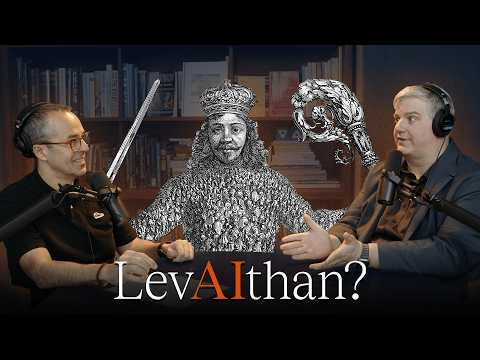
“So I would argue that we are right now in the story arc of AI in the pre-Hobbesian stage. Let me explain.” — Rich Ziade, 15:13
Clip command
yt-dlp --download-sections "*15:13-16:00" "https://www.youtube.com/watch?v=GsfTz2LgVJw" --force-keyframes-at-cuts --merge-output-format mp4 -o "pre-hobbesian-stage.mp4"”Whenever anybody demos me anything, I can’t be impressed”
“Whenever anybody demos me anything they built with AI, I can’t be impressed. … ‘Oh, I kind of see the prompt that you did to do that. You didn’t really build a system, you just slapped some words in a box.’” — Paul Ford, 18:00
Clip command
yt-dlp --download-sections "*18:00-18:55" "https://www.youtube.com/watch?v=GsfTz2LgVJw" --force-keyframes-at-cuts --merge-output-format mp4 -o "cant-be-impressed.mp4"”You’re telling them their baby’s ugly”
“People are really hurt because you’re essentially telling them their baby’s ugly, even though it was a baby they gave birth to in about six hours instead of nine months.” — Rich Ziade, 19:47
Clip command
yt-dlp --download-sections "*19:47-20:25" "https://www.youtube.com/watch?v=GsfTz2LgVJw" --force-keyframes-at-cuts --merge-output-format mp4 -o "babys-ugly.mp4"”AI punishes laziness”
“My slogan: AI punishes laziness.” — Rich Ziade, 21:05
Clip command
yt-dlp --download-sections "*21:05-21:40" "https://www.youtube.com/watch?v=GsfTz2LgVJw" --force-keyframes-at-cuts --merge-output-format mp4 -o "ai-punishes-laziness.mp4"”One-man bands showing up to the orchestra pit”
“We have decided that I have all the skills and I don’t need anyone else. And what’s happened is these one-man bands are all showing up to the orchestra pit and it sounds like shit.” — Rich Ziade, 30:00
Clip command
yt-dlp --download-sections "*30:00-30:35" "https://www.youtube.com/watch?v=GsfTz2LgVJw" --force-keyframes-at-cuts --merge-output-format mp4 -o "one-man-bands-orchestra-pit.mp4"”You can’t have art without resistance in the material”
“He had a great line, and the line was ‘you can’t have art without resistance in the material.’ … And you cannot have creativity without constraints.” — Paul Ford, 33:54
Clip command
yt-dlp --download-sections "*33:54-34:45" "https://www.youtube.com/watch?v=GsfTz2LgVJw" --force-keyframes-at-cuts --merge-output-format mp4 -o "resistance-in-the-material.mp4"Key Points
- Getting philosophical (4:29) - Paul admits he knows almost nothing about Thomas Hobbes beyond “very gloomy British philosopher” and the Leviathan.
- Rich’s Brooklyn College origin story (5:04) - A guidance counselor steered a “left back,” authority-hating high schooler into CUNY to “get you off the streets.”
- First exposure to philosophy (8:01) - A professor asked Rich to major in philosophy; he declined for practical, modest-means reasons but did well and won political science awards.
- Who Thomas Hobbes was (11:07) - A 1600s English philosopher who witnessed the English Civil War, Oliver Cromwell, and the collapse of the framework for living together.
- The Leviathan defined (12:35) - The state, the entity that holds power and keeps order — “needed to keep order but is not good in a way.”
- The famous quote (13:36) - “Life without a common authority is solitary, poor, nasty, brutish, and short.”
- We are pre-Hobbesian (15:13) - AI has empowered the individual so profoundly that everyone produces alone and no one collaborates.
- Everyone brings their own build (15:37) - Five-person meetings where each person has their own version of the product on their own laptop.
- The irony (16:38) - The thing Aboard is building is a collaboration tool.
- Unreadable AI documents (16:55) - Clients arrive with hundred-page AI-generated requirements docs that Aboard must use AI to interpret because no one read them.
- The 80-page requirements doc (20:01) - A prospect proudly delivered a dense doc she clearly didn’t write; “things created without full comprehension with AI tend to be not good.”
- Process is dead (21:00) - No speed bumps force people to slow down and work together; expertise is thrown by the wayside.
- Ignored release notes (21:32) - Rich has asked for weekly point releases for months and been “summarily ignored.”
- Race car vs. Ford Fiesta (22:41) - People feel so productive individually they won’t slow down, even though that productivity isn’t additive to the broader goal.
- Ten times too much software (24:02) - Paul built a CRM alone and realized he should have gone on bike rides and figured out what he needed first.
- Expertise marginalized (25:25) - Designers with ten years of UX experience know what to cut and how to empathize with users; AI can’t replace that.
- The branding-guide argument (26:12) - “Hey Claude, make me something” versus owning a compliant, accessible, right-to-left design system as a discipline unto itself.
- Pulling people back to their disciplines (27:00) - Aboard let everyone use lots of tokens, then slowly pulled them back to what they know best.
- We’re hitting a wall of slop (31:31) - Relinquish some control, keep some humility, respect others’ expertise to scale beyond the slop.
- LLMs as access to the computer (32:10) - Rich’s thesis: LLMs mostly get you broader access to the old power inside the computer — databases, ML, statistics, visualization.
- What to advocate for (33:00) - Not a monarchy: respect each other’s capabilities, a pinch of process, speed bumps, and leaning on each other’s skills.
Mentions
Companies
- Aboard (3:11) - The hosts’ consultancy; hiring solution engineers, engineers, and designers (hello@aboard.com / jobs@aboard.com).
- Citibank (1:41) - Paul’s analogy for the expensive Yankees losing.
Products & Technologies
- Claude (25:09) - Named for its homogenizing look: “the sepia-toned internet that is the product of Claude.”
- Figma (21:32) - Designers using Figma outputs to generate code and bring it straight to meetings.
- Vibe coding (18:00) - Paul vibe codes constantly to understand the tools and their limits.
- Agile methodologies (35:57) - Framed as “almost economic methods” for managing the cost of software.
- Vaporwave song generation (32:37) - Rich’s example of teaching a computer to make music via LLM access.
People
- Thomas Hobbes (11:07) - 1600s English philosopher, author of Leviathan, central metaphor of the episode.
- Oliver Cromwell (11:26) - Invoked as the “ugly, ugly stuff” of the English Civil War stomping through the countryside.
- René Descartes (10:10) - Read by Rich in his existential-philosophy coursework; jokingly credited as a sponsor at the end.
- Professor Taylor (8:41) - The Brooklyn College professor who urged Rich to major in philosophy.
- William Morris (33:25) - Late-1800s socialist and craftsman quoted on resistance in the material and creative constraints.
- Steven Spielberg (31:08) - “I made it, I’m Spielberg” — the pre-Hobbesian delusion of the solo AI creator.
- Robert Caro (37:13) - The Power Broker invoked as the exception to “a 5,000-page book is not good.”
- Reggie Jackson (1:05) - Referenced in the lore of the 1977–78 Yankees.
Surprising Quotes
“Life without a common authority is solitary, poor, nasty, brutish, and short.” — Paul Ford (quoting Hobbes), 13:36
“If you let people go wild they will hit each other in the head with a baseball bat to take the other person’s banana.” — Rich Ziade, 14:01
“There is nothing but shit product being put out right now because everybody is spinning up demos and glomming them together and hoping for the best.” — Rich Ziade, 22:41
“You play it back and you’re like a dog threw up on the keyboard and then jumped on the throw up. Like, it’s so bad. And I really think that’s what’s happening when people generate things.” — Paul Ford, 30:43
“Slop is a slip out of the form that somebody’s expecting.” — Paul Ford, 34:13
“Don’t pick up the colorful thing you made at your desk and walk it into a meeting. It’s not helping.” — Rich Ziade, 33:00
Transcript
Paul Ford: 0:00 Hi, I’m Paul Ford.
Rich Ziade: 0:02 And I’m Rich Ziade.
Paul Ford: 0:03 And this is the Aboard podcast. It’s the podcast about how AI is changing the world of software, and boy is it. Today we’re going to get philosophical.
Rich Ziade: 0:12 We sure are.
Paul Ford: 0:13 Let’s play the theme song and get philosophical. Rich.
Rich Ziade: 0:35 Yo.
Paul Ford: 0:35 Do you want to talk about Aboard or do you want to talk about the Mets?
Rich Ziade: 0:37 Aboard.
Paul Ford: 0:37 Okay. You really would rather… Just tell…
Rich Ziade: 0:42 I’m not a Mets fan.
Paul Ford: 0:45 No, boy you’re not.
Rich Ziade: 0:45 But when they lose, it puts me in a good mood. I’m not a Mets hater, even. I don’t think I hate the Mets.
Paul Ford: 0:50 I gotta tell you, there’s some trick… I don’t care much about baseball.
Rich Ziade: 0:52 Hate the 7 train.
Paul Ford: 0:53 First of all, we have to tell everyone that you were a Yankees fan back when they sucked.
Rich Ziade: 0:58 I don’t need to explain myself anymore.
Paul Ford: 1:00 You do. And no, because honestly, being a Yankees fan is like being a Republican party fan. Like, there’s no…
Rich Ziade: 1:05 I was too young for the 77-78 Yankees, Reggie Jackson and all the whole lore of that. But I jumped on because everybody loved the Yankees, but the year I jumped on, which is like 1980, they went through a 16-year drought.
Paul Ford: 1:13 Yeah, you were there. You were there for 16 years.
Rich Ziade: 1:16 I was there. And then one of the most impressive dynasties ever, 96 to 2000, they just decimated everyone. And I’ve been a Yankee fan ever since.
Paul Ford: 1:21 Then you go to Queens and you got another team.
Rich Ziade: 1:24 The Mets. The Metropolitans.
Paul Ford: 1:26 The Metropolitans.
Rich Ziade: 1:28 They got that baseball head mascot. They’re such dorks.
Paul Ford: 1:31 They’re pretty… People love them. People love them. I don’t care much about football, but there’s a funny thing. Yankees lose, everyone’s like ‘that sucks, Yankees lose. It’s an expensive team.’ It’s like Citibank losing. They’re like ‘No, shouldn’t happen’.
Rich Ziade: 1:40 Yeah.
Paul Ford: 1:41 Mets lose, there’s actually infrastructure in the city for the Mets sucking. Like there are… there’s probably like a hundred people who make a significant portion of their income just talking about how horrible it is to be a Mets fan.
Rich Ziade: 1:46 That’s real. That is real.
Paul Ford: 1:47 It’s a business, it’s part of our culture.
Rich Ziade: 1:53 That’s real. And there’s a charm to the Mets. That’s the thing. They’re kind of… the colors are tacky, they are tacky, they’re just corny.
Paul Ford: 2:01 Well, and when they lose, it’s funny. It’s very funny because those people come out and overreact.
Rich Ziade: 2:06 They do. They do.
Paul Ford: 2:08 Anyway, if you’re not in New York City, you’re kind of missing one hilarious thing, which is every time the Mets lose when there’s like a bad losing streak.
Rich Ziade: 2:14 Yeah, there’s people who are trying to… I mean, they’re building personal brands around being angry fans, and it’s funny.
Paul Ford: 2:19 It’s just one of those new media jobs that we don’t talk about enough. Anyway, Aboard… Aboard doesn’t just talk about the Mets all day. And we know some of you are out there listening because you’ve been writing in and…
Paul Ford: 3:00 You’re hearing what we’re doing, but we’re going to say it again even so, because it’s good for- good for everyone to know what this is all about.
Rich Ziade: 3:07 Yes.
Paul Ford: 3:08 And so, I- I’ll try and then I think you could fill it.
Rich Ziade: 3:10 I’ll try.
Paul Ford: 3:10 Thank you, please.
Rich Ziade: 3:11 Aboard is a consultancy. You call us up, we have a lot of great software and tools that we’ve built ourselves, but not only that, we use all the big vibe coding tools, we use all the new wonderful AI-driven software, and the end result is that you come to us with a problem and it comes into view very quickly, like a week or two, and then we figure out how to build from there. So, it’s solution engineer—
Paul Ford: 3:36 Engineers, designers, AI therapists.
Rich Ziade: 3:38 Mhm. Yeah.
Paul Ford: 3:39 And we help your org get its head around this new change, but also we just really try to drive value back into your org through software. We’re proud of that. I like that. We’re doing it for more and more clients to the point that, Rich, what do we need more than anything else in the world?
Rich Ziade: 3:52 People.
Paul Ford: 3:54 That’s right.
Rich Ziade: 3:55 We need solution engineers, yes, which are— it’s a new term we like to use, which are product managers that are— like to touch the technology, care about experience and design. Everyone’s empowered right now, but product management at its core. We also need engineers, engineers, classic engineers. So, we’re hiring, reach out.
Paul Ford: 4:14 Designers too, check the website.
Rich Ziade: 4:16 Designers too. Hello at aboard.com or jobs at aboard.com.
Paul Ford: 4:21 So we’re growing. We’re growing and we’re excited.
Rich Ziade: 4:24 Yeah, it’s been— it took us a minute to get to this point of focus, but boy it’s humming.
Paul Ford: 4:29 It’s humming. So, today we have a very special topic.
Rich Ziade: 4:34 Oh jeez.
Paul Ford: 4:35 I don’t know anything here, anything. You’re like ‘I got this, I’m going to drive it’ and then you turn to me and you said, ‘do you know about Thomas Hobbes?’ and here’s what I know about Thomas Hobbes: very gloomy British philosopher who came up with the idea of like the Leviathan, which I can’t even remember exactly what it is.
Rich Ziade: 4:54 I’ll tell you about Hobbes in a second.
Paul Ford: 4:56 Okay, so please can you educate me? Yeah, I mean I’ve been thinking a lot— when did you first come across Thomas Hobbes in your life journey as a Lebanese Yankees fan?
Rich Ziade: 5:04 I was part of the Brooklyn College core program.
Paul Ford: 5:07 Oh, let’s— let’s give it a minute. Let’s give it a minute for the— tell people what that is.
Rich Ziade: 5:11 It is 10 classes of liberal arts education crafted by Ivy Leaguers actually for CUNY, the City University of New York.
Paul Ford: 5:20 So let’s— let’s take this back because it’s really important, it’s very special. You are a knucklehead high schooler.
Rich Ziade: 5:26 I got left back in high school.
Paul Ford: 5:28 Yeah, you are not— you’re not quite sure why you’re in high school. You—
Rich Ziade: 5:32 I hated authority.
Paul Ford: 5:34 You came over when you’re five. Like, it’s just a mess. It’s a mess.
Rich Ziade: 5:37 Yeah, I mean you would think I would sort it out after 16 years, you know, 12 years… That’s not— that’s not how people are.
Paul Ford: 5:44 And so guidance counselor takes you aside, ‘Yadi, you’re smart. Let’s get you off the streets.’ It’s literally what he said. And then what, like kind of gave you a pen to sign something?
Rich Ziade: 5:55 City of New York… I don’t know if they still do this because this is 50 years ago… If they see you’re going to… graduate, you don’t seem to have a plan. They put you into the- into CUNY. CUNY is the City University of New York.
Paul Ford: 6:06 It’s essentially like, look, no matter what, let’s get you off the streets.
Rich Ziade: 6:11 And they’re like, “Hey, what’s your plan, Rich?” And I’m like, “What? I’m gonna have a cheeseburger later,” like was my answer or some snarky, obnoxious response.
Paul Ford: 6:18 They’re like, “You going to college?”
Rich Ziade: 6:22 And this is December. Why? Because I got left back, so I’m in the middle of the next year.
Paul Ford: 6:28 Not the greatest grades.
Rich Ziade: 6:30 They’re like, “You’re smart when you go to class.” I had like 90s if I liked the teacher and liked the class and I failed miserably, to the point where some teachers gave me like 25s because they wanted revenge because I would be like, “Go to hell,” and I’d walk out of the class. It was just a bad scene.
Paul Ford: 6:45 And they’re like, “You’re going to go to college?”
Rich Ziade: 6:46 And I’m like, “I think so.” And I hadn’t applied to anywhere.
Paul Ford: 6:51 Wait, in actual- where is this? What neighborhood?
Rich Ziade: 6:53 I’m in Canarsie, Brooklyn.
Paul Ford: 6:55 Okay, so this is the- the neighborhood equivalent of getting punched in the face. Like this- you’re not- you’re not the only kid who’s like this.
Rich Ziade: 7:02 No, no, no, no, no. I- I hung out at the handball courts. I was that guy. How are we talking about this? I was about to get philosophical.
Paul Ford: 7:08 Well, I- I gotta- I gotta help people understand how we get from you the- the mess-
Rich Ziade: 7:14 All right, let me- let me cut through this.
Paul Ford: 7:18 No, no, but I- I think it’s really important. They literally said, “You’re going to college, bud.” They said, “You’re going to college,” like, “If you sign here, you start next week.” And then you go- you go to the liberal New Deal university that’s almost free with every other kind of human being on Earth, which is Brooklyn College.
Rich Ziade: 7:26 Amazing experience.
Paul Ford: 7:28 One of the great institutions in the world.
Rich Ziade: 7:31 The only reason I did well in college is because nobody cared. And nobody told me what to do. Like, if I was gonna fail in life-
Paul Ford: 7:38 It’s on you, buddy.
Rich Ziade: 7:40 It’s on me. And that’s all I needed, it turns out. And I took philosophy-
Paul Ford: 7:44 Yeah. ‘Cause you were required to. So they threw you in the swimming pool and you’re like, “Okay, I’m swimming.”
Rich Ziade: 7:54 Yeah. I- I- I graduated like 3.8 something out of college. I did very well.
Paul Ford: 7:58 So philosophy, first- I’m assuming this is your first exposure to philosophy.
Rich Ziade: 8:01 It is, but the philosophy professor called me into his office and said, “I really would like you to major in philosophy.”
Paul Ford: 8:11 Thank God. You are exhausting as a lawyer. If you had become a graduate in philosophy, I can’t even imagine. Just lunch would be a nightmare.
Rich Ziade: 8:21 And I said, I said, “What are you talking about, dude?” And I grew up in modest means. Yeah. I was like, “I don’t know about any philosophy jobs,” so I was like, “I’m not doing that.”
Paul Ford: 8:32 Hey- Hey, dad- your- your dad is like working as a jeweler.
Rich Ziade: 8:37 He’s a diamond setter. Yeah, yeah.
Paul Ford: 8:40 Okay.
Rich Ziade: 8:41 So I was like, “Cool idea, Professor Taylor.” I enjoyed the class, interestingly.
Paul Ford: 8:44 What a- what a spec- I live very close to Brooklyn College. It’s a very special world. The city colleges are wonderful. Because it’s like- it’s like kids from the Bronx in a backpack, they’re the first like to- to get past high school in their entire history. It’s a beautiful thing.
Rich Ziade: 9:00 Yeah. First generation City University of New York is a beautiful thing. I think it was $300 a semester. Oh god, it was incredible and it put me on the track and it put me in law school and… …and I won awards for political science because I had- I did real well there. I could have done anything from there, I think, because they put me on a- on a good path.
Paul Ford: 9:21 It’s a great- great public university. And so they opened your Bay Ridge brain. Literally, and like lots of other students from Bay Ridge.
Rich Ziade: 9:27 Yeah, yeah.
Paul Ford: 9:28 And what was inside was a pub.
Rich Ziade: 9:29 Yeah.
Paul Ford: 9:30 No, but let’s be clear, you’re not in this situation, right? I think people think like, oh scholarship student, like you’re kind of the- you were very normal for that college. Like they’re taking-
Rich Ziade: 9:41 Everybody’s normal.
Paul Ford: 9:43 They’re taking like Brooklyn kids and they’re saying you’re going to learn a little bit about philosophy.
Rich Ziade: 9:47 Yeah, I didn’t understand that most of the students in Brooklyn College were not aspiring to go to Brooklyn College. I thought they let me in to the school.
Paul Ford: 9:58 Yeah, you- you thought you’d hit the Harvard of Midwood, right? Yeah, yeah, absolutely.
Rich Ziade: 10:03 I did. I didn’t know that it was like a place to go so you weren’t on the streets. And- mind you, there are good students who went there, but it was an incredible mix of people. Anyway, in that philosophy class, I learned about Thomas Hobbes. I actually learned about Thomas Hobbes- I was a poly-sci major and I learned about him there as well. So I actually knew- I had read a lot of the political philosophers. I wasn’t like- I mean we’d read Descartes and existential philosophy and all that, but it was mostly in political philosophy.
Paul Ford: 10:31 I gotta tell you, I’m a bright enough fellow, we know that. I find this stuff impenetrable. I just get so bored. I’m a fiction guy, I’m a data guy, I can do all- but there’s just a certain thing about philosophy, and a little bit with contracts too. Like there’s I think your lawyer brain… I just am like boof, it just bounces right off.
Rich Ziade: 10:52 It’s unbearable. No, I think it is for most people, right? It’s just kind of horrible. Um, and I’ve been thinking a lot about the AI boom.
Paul Ford: 11:03 Yeah.
Rich Ziade: 11:04 And Thomas Hobbes comes to mind.
Paul Ford: 11:05 Okay, tell us who Thomas Hobbes is.
Rich Ziade: 11:07 Thomas Hobbes was an English philosopher who lived…
Paul Ford: 11:10 Okay. When are we talking? Kings?
Rich Ziade: 11:12 Like the 1600s.
Paul Ford: 11:15 Okay, so Kings in charge, got a little parliament, okay.
Rich Ziade: 11:18 Yeah, yeah, yeah. And what he saw was the English Civil War in the 1600s, early 1600s.
Paul Ford: 11:25 Okay.
Rich Ziade: 11:26 Oliver Cromwell, ugly, ugly stuff.
Paul Ford: 11:32 Ugly, ugly stuff.
Rich Ziade: 11:33 And, I mean, he observed the mayhem of a civil war. Like-
Paul Ford: 11:40 Okay.
Rich Ziade: 11:41 People at each other’s throats, chaos, anarchy. A lot of ideas were percolating too around individual liberties and whatnot. And what he found was-
Paul Ford: 11:52 But stuff is also burning down all the time.
Rich Ziade: 11:55 All the time, right? And because the framework for how people can live together had broken down, he was like, how do we even put this back together? religious and cultural things and I— how like no one can even look each other in the eye and if they do they kill each other.
Paul Ford: 12:04 So- so the civil in civil war. So like our society has fractured over all kinds of- Yeah, and he saw— he saw the military like really being the only path to order. I’m like how’d we get here? That like now the generals are running everything because we can’t behave ourselves. So he saw like mayhem, right? And he wrote a book, very famous book called the Leviathan.
Rich Ziade: 12:27 Okay.
Paul Ford: 12:28 Have you heard of it?
Rich Ziade: 12:28 Yes, that I’ve heard of it.
Paul Ford: 12:30 Alright. So I’m going to read you a quote.
Rich Ziade: 12:32 Okay, the Le— okay, so Leviathan. What is the Leviathan, by the way?
Paul Ford: 12:35 The Leviathan is a book— it’s a book on political philosophy. It’s just his observation—
Rich Ziade: 12:41 Okay, so Leviathan, and if I remember correctly, the Leviathan is kind of like the state? Like that’s the— it’s the system.
Paul Ford: 12:46 It’s the state of things, the state that holds power, the people that hold power. Yeah, it’s— it’s sort of this entity that is needed to keep order but is not good in a way. And I think he was reacting to, by the way, this is a period where a lot of individual empowerment and liberty was like starting to get espoused in the world and everyone was like, well if you just give everyone individual power, everything will be great. And it turns out it’s chaos, right? And so we have to all give up a little, right? And— and I’m going to actually draw a dotted line back to AI right now.
Rich Ziade: 13:26 Okay, so essentially, hey, wouldn’t it be amazing if we all had total freedom and could do what we want? Answer— Hobbesian answer: no, not really.
Paul Ford: 13:36 Yeah, it’s the famous quote, I’ll read it to you. It’s: life without a common authority is solitary, poor, nasty, brutish, and short.
Rich Ziade: 13:46 Okay, so the function of the state— this is a very famous quote, I’ve heard this many times. Okay, so— so the function of the state is to make life less brutish, less short, more like make things better.
Paul Ford: 13:58 I mean, it can do that through tyranny.
Rich Ziade: 14:01 Yeah, but if you let people go wild they will hit each other in the head with a baseball bat to take the other person’s banana.
Paul Ford: 14:06 Correct. And I think look, he’s in the middle of like, if you look at the arc of history, like one of the most disruptive times in terms of our understanding of people relative to power and relative to the state. So it’s a reboot, it’s disruption. Like I’m going— like disruption literally in a Silicon Valley sense. Like the old rules of like someone being anointed by God as your leader and everyone just— just revere them and that’s how we keep order were thrown out effectively, or being thrown out.
Rich Ziade: 14:41 Oh and just— just think about your life back then. Like things do not change. There’s relative— there might be a war over here and there’s a little news here and there’s a plague and a fire, so there— stuff happens, but in general there’s this sense of like got the king in the castle, life goes on, you pray. Yeah, you pray to the king and the God and now Oliver Cromwell’s got on a pair of boots and he’s just stomping. …up through the countryside.
Paul Ford: 15:01 Now what? Now… Okay.
Rich Ziade: 15:02 So, very, very different world than the one that he was expecting.
Paul Ford: 15:08 Yes. Yes. And it’s like, okay, we don’t know the next chapter here. Like, this is not good.
Rich Ziade: 15:13 Okay. And again, he lived through that Civil War where everybody was grabbing power, and it was messy, and it was chaos, etc. So I would argue that we are right now in the story arc of AI in the pre-Hobbesian stage. Let me explain.
Paul Ford: 15:33 Okay. Pre-Hobbesian, meaning the Civil War hasn’t happened yet?
Rich Ziade: 15:37 No, we’re in the middle of it. We’re in the middle of the disruption stage. Okay. And what I mean is this: AI has empowered the individual so profoundly, right? And everyone, everyone is feeling really, really… just… they’ve leveled up everything. So much so that we’re each as individuals producing all kinds of things. Alone. Mostly. Pretty much right now. And we are not very collaborative, right? And I’m going to actually… this isn’t an observation. We are experiencing this. I have experienced this at a board. I’ve come to meetings—let’s go to the basics here—and every individual in a five-person meeting has their own version of where the product should go, an internal tool we’re building, and not only has their own ideas, they even have like their own build on their laptop and they’re telling us that they have… it’s going to be awesome tomorrow when I show this to everyone else.
Paul Ford: 16:38 The hilarious thing is, the thing we’re building is a collaboration tool.
Rich Ziade: 16:43 It is, okay?
Paul Ford: 16:44 No, I’m seeing that, but I’m also seeing other things, which is, a potential client comes in with an incredibly detailed AI-generated product requirements document. Maybe it’s in the hundreds of pages.
Rich Ziade: 16:54 There’s that too. I want to get to that.
Paul Ford: 16:55 Okay. No, but they come in and then we use AI to understand what’s inside of it because it’s unreadable because it’s AI-generated. So it’s essentially data. So like, a lot of things, there’s all this weird stuff where everybody’s acting like they’re deeply empowered, but ultimately everybody’s just kind of using these tools to interpret like what the other person is doing and no one’s reading things half the time.
Rich Ziade: 17:18 And the every—everyone… we are humans. One of the ways we think we can bring order is by impressing other people. Yeah. We love to impress other people. And what we’re coming to realize is that we’re like… it’s… this revolution has numbed us. Everyone thinks that if I walk into the room with this, everyone’s going to stop in their tracks. Meanwhile, everyone else came in with their own toy that they’ve been creating.
Paul Ford: 17:46 I think… so go back to the original idea and let’s restate it and bring it to this because I think… I wasn’t quite sure where you were going with this, but I get it. So, the pre-Hobbesian era means that… Okay, and we talk a lot about regulations, rules for AI. And there’s—but this is a little different. This is like, wait a minute, everyone has been given this new power and there is no set of rules and guidance for it. And so they’re kind of maximizing their own influence, their own ability to show off and impress others and take control and kind of gain a little territory using these tools. And look, most of us live in a society and we’re doing it at work and we’re saying look, I made a PowerPoint deck in five minutes, aren’t I—aren’t I a good person, right? And—and maybe the—and the boss is saying, ‘Hey, I want you to do more and more of that,’ right? And so we’re in this state where we are just kind of manufacturing all this content that looks like the right stuff because that’s going to make everybody think that we’re really smart. And I do—I want to describe something that I see a lot of. And it’s terrible because I decide to go in super, super deep on this stuff. And I vibe code all the time and I really want to understand it, I’ve written about it, I’ve talked about it, and there is this moment where you—you make something happen and you go, ‘Oh, I cracked it,’ because it just used to take so long. And what it’s meant is that whenever anybody demos me anything they built with AI, I can’t be impressed.
Rich Ziade: 19:23 You can’t be?
Paul Ford: 19:25 I can’t. I—it’s one of the number one reasons I think everyone should use these technologies just to understand them because what it means is when somebody shows up with something, you go, ‘Oh, I kind of see the prompt that you did to do that. You didn’t really build a system, you just slapped some words in a box. It’s cool output, good for you.’ Like if that’s good for you, but it doesn’t do anything for me.
Rich Ziade: 19:47 Yeah, that’s right. And then it’s hard because you’re actually—people are really hurt because you’re essentially telling them their baby’s ugly, even though it was a baby they gave birth to in about six hours instead of nine months.
Paul Ford: 19:58 Yes. So anyway, that’s our—we’re in this pre-Hobbesian state.
Rich Ziade: 20:01 Yes, we are. There’s a few things that have happened here. One, we’re producing too much stuff. We had a prospect come to us and say, ‘I have the requirements, I just need you to build it.’ She gave us, I kid you not, a dense 80-page requirements document. Clearly she didn’t write it. It was so complex and and vast that no one read it. I told her, ‘We’re not going to read this. It’s too much stuff.’
Paul Ford: 20:30 Well, let’s be clear, she didn’t write it.
Rich Ziade: 20:32 She didn’t write it. She didn’t write it. She was very proud of it. She didn’t write it. She’s not a technologist, out of fairness to her, she’s a business stakeholder, but she’s like, ‘Wow, I just skipped three months. Go build this.’ And it wasn’t good. We actually sifted through it because it was just generated, right? Number one.
Paul Ford: 20:52 She doesn’t have the necessary—she had the intent to create it, but she didn’t have the necessary intent to fully understand it. I think things that are created without full comprehension with AI tend to be not good.
Rich Ziade: 21:00 Process is dead right now. There are no speed bumps that force you to slow down a bit and to work together. The coordination that often, it’s a little bit of friction, because the expertise that’s necessary to slipstream into a project is kind of been thrown by the wayside. My slogan: AI punishes laziness.
Paul Ford: 21:08 It does, right?
Rich Ziade: 21:09 Always. Yeah. Problem one: so we’re producing stuff, we’re not impressing each other, we’re probably creating more confusion than anything. Problem two, and this is a big one. And I am all about velocity, let’s go, small teams, etc.
Paul Ford: 21:20 Valley hates process, baby. Just hates it.
Rich Ziade: 21:23 Valley hates process, but complex things require coordination.
Paul Ford: 21:29 You’re not, you’re preaching to the choir here.
Rich Ziade: 21:32 I’m not even saying let’s go back to more bureaucracy here. What I’m saying is, here’s what has been happening and it’s a perfect storm. The engineers are showing up with designs. The designers are annoyed and they’re like, I’ll show you, and they’re using Figma outputs to make code. And they’re coming to the meeting with that, right? I’m the customer, I’m the stakeholder. I’m like, what is all this? And everyone is doing everything. And because process is broken down, and I’m going to say something and I’ve said this to the team, so I’m allowed to say it. I have been asking for release notes and a point release structure, like once a week, call it 0.1, for months. And they summarily ignore me. I don’t know if I sound old and boring in this new world, but I’m for, and all I’m trying to do—
Paul Ford: 22:26 No, let’s, first of all, we’ve talked about this with the team. This is not, no one’s going under the bus here. But wait a minute. Be the empathetic leader, I know that you are. Why? Why is it so hard for people to do that right now?
Rich Ziade: 22:41 I know how to drive a race car. Yes. And you want me to get back in a Ford Fiesta? I don’t want to do it. They can’t believe how productive they feel. But it’s an individual productivity that is not additive to a broader goal. Everyone needs to slow down a minute here. Look, I’m not saying this because I’m being high-minded. I’m saying this because there is nothing but shit product being put out right now because everybody is spinning up demos and glomming them together and hoping for the best. We’re working on a really amazing product right now and most of the work left is to shave off the nonsense.
Paul Ford: 23:08 Well this is, you know I keep, so I’m building a CRM for the company.
Rich Ziade: 23:26 You are.
Paul Ford: 23:27 Fun for me. Yes. And I’m doing it totally alone because other people are occupied. Yes. It’s got to come into the org.
Rich Ziade: 23:30 Yes.
Paul Ford: 23:31 So I keep showing you where I’m at and you keep going—
Rich Ziade: 23:33 It’s a little much.
Paul Ford: 23:35 And I’m like, I absolutely agree. All I’m doing is taking things away from it, right? And it’s so hard because what I’d rather do is just build new functions. The only problem is I started using it every day.
Rich Ziade: 23:44 Yeah.
Paul Ford: 23:45 And as I started using it every day, it became to confuse me and I’m like, I need so much less product. I need to be able to just chat with this thing, I need to be able to move some cards around.
Rich Ziade: 23:51 Yes.
Paul Ford: 23:52 Now, it does some wonderful things that you can only do with AI. Really proud of that part. It really helps me manage relationships. Ship’s not just data.
Rich Ziade: 24:01 It’s all incredible.
Paul Ford: 24:02 It’s all incredible. But the larger issue is I probably built, I would say easily ten times too much software. And I probably should have gone for a bunch of bike rides and thought about what I needed and what I wanted.
Rich Ziade: 24:15 Yes.
Paul Ford: 24:16 And I might have- I might have shaved a month or two off this process ‘cause it’s taken a long time.
Rich Ziade: 24:22 Yes. Do you feel like you want people involved to make it better?
Paul Ford: 24:28 Absolutely now.
Rich Ziade: 24:29 Okay.
Paul Ford: 24:30 Part of this was I really-
Rich Ziade: 24:31 Well, you’re a special case, by the way, also because you’ve been working alone.
Paul Ford: 24:36 I also need to understand the technologies if I’m gonna be in the cultural position of explaining them.
Rich Ziade: 24:41 Yes.
Paul Ford: 24:42 So I’m like, I gotta just kind of have my hands really in the clay.
Rich Ziade: 24:46 I want you to imagine, you ever see the like the one-man band outfit?
Paul Ford: 24:50 Oh yeah, like the guy’s got the cymbals between the knees and all that silliness.
Rich Ziade: 24:53 Exactly. Playing the kazoo. This is the equivalent of rather than- oh, let me make the point first and then use this analogy. Expertise has been marginalized. I’m really glad that the engineers, who have no taste- no taste whatsoever-
Paul Ford: 25:06 Not all of them, but there’s- they have their own taste.
Rich Ziade: 25:09 They have their own taste- are designing now. The sepia-toned internet that is the product of Claude is among- we are witnessing its glory.
Paul Ford: 25:21 We are really- people are missing something about humans in this situation, yeah.
Rich Ziade: 25:25 This is the really- the point of all of this. The expertise has been marginalized. Designers with ten years of user experience experience are really useful. They are really useful. They understand what to cut out, they understand how to empathize with the user, they understand all those things.
Paul Ford: 25:42 Look, my friend, there are moments where I was looking at this technology- I wrote about this, where you go ‘Whoa. I don’t know what happens now’ because it did things that people used to work on for weeks.
Rich Ziade: 25:56 Yes.
Paul Ford: 25:57 It just actually isn’t landing that way. It’s landing as like, ‘Boy, we need some UX people in on this stat’ because everything looks kind of the same.
Rich Ziade: 26:09 Yes. Everything looks the same. It’s not even just looks, by the way. There’s bad usability everywhere right now.
Paul Ford: 26:12 Well, it’s not controlled, right? Like, let’s just actually take a second for the listener, because I think we should compare ‘Hey Claude, will you make me something?’ Okay, versus ‘We took the brand and we synthesized it into a really nice branding guide that’s online. You can cut and paste the components to build compliant, attractive components for all of our users. And it’s accessible and it works in right-to-left and left-to-right languages.’ Now, I can use AI to do all of that. But thinking about it holistically and owning that part of the product as a sub-product unto itself, advocating for it, caring about how it actually walks over to the user and how they use it, is a discipline unto itself. AI, for whatever reason, cannot kill that. And everybody was worried it could, but it just can’t. At least so far. So it’s this very funny moment. Because everybody’s super empowered. Yeah. But we’re actually and I’ll tell you what you and I are trying to do as an org, we have let everybody have lots of tokens. They’re doing all kinds of stuff. And now we are slowly pulling them back to the actual disciplines that they know best.
Rich Ziade: 27:14 Absolutely necessary.
Paul Ford: 27:15 It’s really necessary. And so like if you’re a product manager out there, it’s great that we have you here. It’s great that you know how to use this stuff. We need your product management brain more than we need you to just be really good slamming words into the Claude box.
Rich Ziade: 27:28 Yes.
Paul Ford: 27:29 This is coming. And no, but we’re also like, this is what our clients want us to do. Like we’re getting this demand to solve these problems.
Rich Ziade: 27:34 People are not working together right now.
Paul Ford: 27:37 That’s what we got to fix. Right. So, so that’s, you need, that is not us, by the way.
Rich Ziade: 27:45 No. That is happening. That is happening in the world.
Paul Ford: 27:48 We just don’t lie about it. We don’t lie about it. And we’re experiencing it and we’re going to work through it and we’re going to tilt our culture to towards towards a different place. This is another element too, which is I’m just like patient zero here. Like I started messing around with it. I was like, whoa. Yeah, yeah, yeah. I’ve been through all of it and I kind of have a lot of empathy for where people are landing.
Rich Ziade: 28:02 Yeah, yeah, yeah.
Paul Ford: 28:07 All right. So Rich. Yeah. Hobbes. Do we we’re pre-Hobbesian, not good. Everybody’s running in a bunch of different directions.
Rich Ziade: 28:13 Yeah.
Paul Ford: 28:14 Now Hobbes gets here. It’s all good. What does that even mean?
Rich Ziade: 28:19 Sort of.
Paul Ford: 28:20 Okay.
Rich Ziade: 28:21 Hobbes advocated for the monarchy as sort of the source of order.
Paul Ford: 28:24 Do you ever think though that maybe it would be better if we just had a king and just called it a day here in democracy?
Rich Ziade: 28:32 Well, I got news for you.
Paul Ford: 28:34 Like I just, you know what I think about, I think about the British like having the that it’s almost like an interface for people who cannot understand anything more complicated than a king. They go, we got one. It’s okay. Don’t you worry about a thing.
Rich Ziade: 28:45 They do.
Paul Ford: 28:46 Yeah. And then over here we got the prime minister and it’s like they’re they’re always really boring.
Rich Ziade: 28:51 Very boring. The cabinet.
Paul Ford: 28:52 Yeah. But if you if that is too boring for you, you look over here and you have some of the the goofiest people on earth.
Rich Ziade: 28:58 Yeah. Wearing crowns. Yeah. Yeah. Exactly.
Paul Ford: 28:59 Anyway, it’s an interface to culture. All right. Wait, are you pro-monarchy now?
Rich Ziade: 29:02 No.
Paul Ford: 29:04 Okay.
Rich Ziade: 29:05 I am pro, oh boy, as a caveat. I am pro better outcomes and pro people working together. And the reason I say that is if you look at what gets flashed around right now, it’s small things. It’s demos, it’s videos, usually eight seconds long. It’s images, it’s it’s stuff that you can do on your own to make a point.
Paul Ford: 29:29 No, no. I’m building a large new platform. A large new platform is not radically simpler.
Rich Ziade: 29:34 Yeah, exactly.
Paul Ford: 29:35 Building core pieces of it is radically simpler, but assembling it into one coherent product is kind of as hard as it ever used to be.
Rich Ziade: 29:46 A lot of this is about software, but I if you think about I’m going to make a movie using AI, there are people who are great at soundtracks, great at sound effects, great at visuals. Visual effects, great at lighting, there are cinematographers that think about how light should be cast, there’s all these skills that are out there. We have decided that I have all the skills and I don’t need anyone else. And what’s happened is these one-man bands are all showing up to the orchestra pit and it sounds like shit.
Paul Ford: 30:20 Mhm.
Rich Ziade: 30:21 And the truth is there is an orchestration and a coordination that is going to lead us to another place with all this stuff.
Paul Ford: 30:27 I’m reading a book about a guy who’s trying to teach himself Bach, okay, on the piano. Okay? And I’m doing that too.
Rich Ziade: 30:34 Okay.
Paul Ford: 30:35 And you know what your teacher will tell you to do is, ‘Hey, you gotta record yourself so you can hear it’.
Rich Ziade: 30:39 Must be bad.
Paul Ford: 30:40 And you record yourself, and it sounded pretty good.
Rich Ziade: 30:43 Uh-huh.
Paul Ford: 30:43 Yeah. Then you play it back and you’re like a dog threw up on the keyboard and then jumped on the throw up. Like, it’s so bad. And I really think that’s what’s happening when people generate things. Like, they’re like, ‘Here it is, look, I am the director’.
Rich Ziade: 31:03 I’m gonna give myself a gold star. This is pretty darn good.
Paul Ford: 31:06 It’s so gratifying.
Rich Ziade: 31:08 Yes. And then you send it out to be perceived and people are like, ‘I hate it’. And then everybody gets hostile about that. They’re like, ‘Wait, what do you mean you hate it? It looks just like a movie.’ And they’re like, ‘It doesn’t.’ ‘Why not? It’s got really good lighting.’ Bar-bar-bar. So what you just described, right? And I think you’ve got the pre-Hobbesian brain going like, ‘I made it, I’m Spielberg’.
Paul Ford: 31:31 We’ve got to relinquish some control, as per Hobbes. We can’t have absolute freedom. We need some humility. We still need to respect other people’s expertise. That still matters. So I have opinions about branding and colors, but there are people who really think that stuff through and they’re really good at it and I’d rather they present back to me. I know I can whip together a logo. I can whip together a hundred logos. It’s not the point, right? And that is going to still matter because we’re hitting a wall. We’re hitting a wall of slop. And to go beyond it and to scale up with all this amazing stuff, we actually have to work together.
Rich Ziade: 32:10 You know my thesis, which is increasingly that LLMs—they’re really good at parsing and making sense of natural language, but that most of what they’re doing as far as I’m concerned is getting me access to more of the power inside of the computer. So I can use a database more effectively and more broadly. I can use machine learning models, I can do things with statistics and visualization, which are essentially old computer things using the new computer thing.
Paul Ford: 32:35 You do that a lot, I’ve noticed.
Rich Ziade: 32:37 And it’s—that loop is very virtuous because you end up getting more and more stable as time goes on. I did teach a computer to make vaporwave songs.
Paul Ford: 32:46 That’s great. Let’s go back to Hobbes.
Rich Ziade: 32:49 We’re done. That’s the message here.
Paul Ford: 32:51 Okay, so—so we need a monarchy.
Rich Ziade: 32:54 No.
Paul Ford: 32:55 What do we need? Come on, man. Okay, tell—tell us what to advocate for. You just told us we can’t make cool movies.
Rich Ziade: 33:00 We need to respect each other’s capabilities. We need a pinch of process. We need some speed bumps so that we can check in on each other. We need to lean on each other’s skills and experience so we can have better, bigger outcomes. Right now we have these cute little outcomes that, yeah, you are productive at your desk. Don’t pick up the colorful thing you made at your desk and walk it into a meeting. It’s not helping.
Paul Ford: 33:25 Let me tell you something that everybody knows in the world of the creative arts. It was a great quote. It was a socialist and builder named William Morris, a legendary person in the late-
Rich Ziade: 33:36 Here comes the name dropping from the other guy. This is my show!
Paul Ford: 33:41 Late 1800s UK, and he was- he was writing to a friend, and he was actually complaining about typewriters. He’s like, ‘this isn’t- you gotta use a quill pen.’
Rich Ziade: 33:53 Sure, sure, sure. I’m sounding a little old school.
Paul Ford: 33:54 No, no, he was very old school. And he had a great line, and the line was ‘you can’t have art without resistance in the material.’
Rich Ziade: 33:58 There it is.
Paul Ford: 34:00 And you cannot have creativity without constraints. And it’s not just- it’s not just that the constraints can give you a to-do list. The form and the structure of things are how people understand what you’re doing. If I suddenly start singing a song right now, that would seem bananas. But if I said, ‘Rich, I’ve been composing funny little songs. I want you to hear a couple of them,’ you’d be like, ‘All right, I’ll evaluate based on what I think a song should sound like.’
Rich Ziade: 34:13 Yes.
Paul Ford: 34:13 Software was so expensive that we had zillions of processes to manage the costs because failure was a normal and natural constraint, and we lived inside of that. And now people no longer feel that constraint. They don’t feel it in making videos and images and prose. But if- if the constraints aren’t there, no one can perceive what you’re doing. It’s just more slop. That’s what slop is. Slop is a slip out of the form that somebody’s expecting. You’re like, ‘I thought that would be a nice picture of a girl, but her face is all kind of like- it’s like a little glowy. I don’t know, it feels weird.’ And so I see it with the hobbyist-ism. I think you don’t even need the monarch. You just need people to start to assert the value of the form. And one of the forms that has value is good, simple software that doesn’t have eight million features, but is actually focused on a particular group of people achieving a shared goal.
Rich Ziade: 35:20 Yes. And I think that right now for all the power of these tools, they are not optimized for building that. We’ve talked in the past about how enterprises are having a hard time with this stuff, not a lot of success stories, and I’m pretty convinced it’s because you just don’t glom together individual contributions into one giant thing. It doesn’t work.
Paul Ford: 35:40 Well, it used to be that the different forms and the different disciplines would come together and be like-
Rich Ziade: 35:47 They would.
Paul Ford: 35:47 Okay, we only get this many story points. We have to do this meeting every-
Rich Ziade: 35:50 And we’re going to get designs, and then engineering will take the designs. I’m not saying go back to that. It’s a new world, but-
Paul Ford: 35:57 No, but literally, that was the world. If you think about like agile methodologies, they’re almost economic methods.
Rich Ziade: 36:00 That’s right.
Paul Ford: 36:00 That not being necessary has what you’d think would open this great flowering and unfolding.
Rich Ziade: 36:07 It’s not.
Paul Ford: 36:07 But it’s just a lot of mess, and what it means is that people on the other side can’t get their artifacts and get their work done. Correct?
Rich Ziade: 36:13 So, okay. All right, so it’s time to get out of that Hobbesian state.
Paul Ford: 36:18 Yes. And build a little, build a little monarch in your heart.
Rich Ziade: 36:22 That’s cute.
Paul Ford: 36:23 Yeah.
Rich Ziade: 36:24 Today’s podcast was brought to you by Thomas Hobbes and Brooklyn College and René Descartes.
Paul Ford: 36:29 Oh, yes.
Rich Ziade: 36:31 Reach out. We love to talk to companies, organizations, nonprofits. At Aboard, we slow things down just a bit. We leverage all these tools and we put great people on it. They work together to ship amazing solutions for our clients.
Paul Ford: 36:46 Turns out that’s what our clients want.
Rich Ziade: 36:48 Yeah. They’re like, ‘Okay, good, you’re taking this step by step. I feel a lot better about that.’ Yeah. All right, so that’s what we do. We like doing it. I like helping people. I like building with these new tools. I do love the acceleration. It is fun.
Paul Ford: 37:00 It is fun, but I mean you build too much software and it doesn’t do anybody any good.
Rich Ziade: 37:05 Doesn’t do anybody any good.
Paul Ford: 37:06 No, it’s like, you know what? You know what’s not good? A 5,000-page book. Right? You need to… let’s get editing in there.
Rich Ziade: 37:13 Except for The Power Broker by Robert Caro.
Paul Ford: 37:17 You hear that’s only like 1600. I couldn’t get through. He was like in swim class in page 70 and I was like, ‘I can’t do this.’
Rich Ziade: 37:24 It’s just, yeah. I’m like, ‘I’ll just, I’ll just go to the beach instead.’
Paul Ford: 37:26 hello@aboard.com. Give us five stars, thumbs up, whatever ways you can express your positive impression.
Rich Ziade: 37:35 Go to the website if you want to learn about us and if you want to work here. aboard.com. Apply to work here. We’d love to talk to you.
Paul Ford: 37:42 Yeah, have a great week. Bye.